



MD-222
Based on 1 publication(s) in Google Scholar
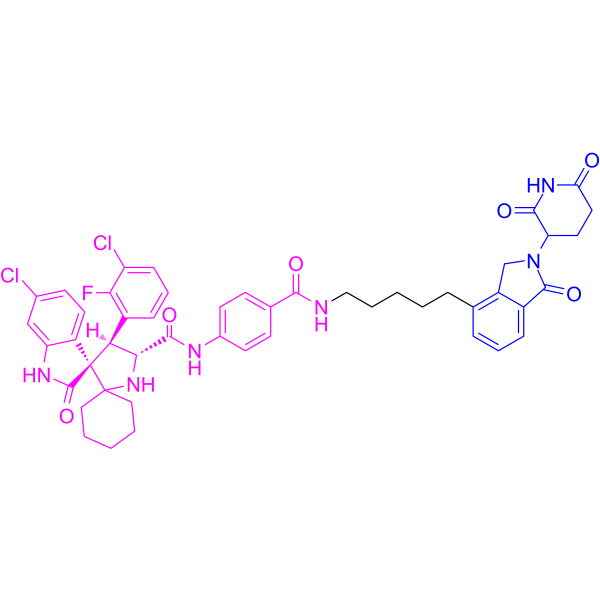
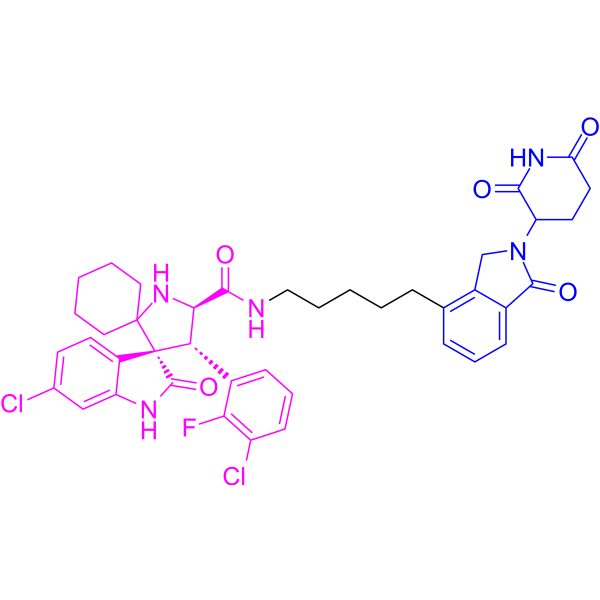
MD-222 is a potent MDM2 PROTAC degrader. MD-222 recruits the CRBN E3 ubiquitin ligase to target and degrade MDM2, and activates the wild-type p53 pathway in cells. MD-222 is used in relevant research on leukemia and breast cancer.
(Pink: MDM2 ligand (HY-125858); Blue: Cereblon ligand (HY-138793); Black: linker).
For research use only. We do not sell to patients.
- Purity : 98.03%
- CAS No.: 2136246-72-3
- Formula: C48H47Cl2FN6O6
- Molecular Weight:893.83
-
Storage:
-20°C, sealed storage, away from moisture
* In solvent : -80°C, 6 months; -20°C, 1 month (sealed storage, away from moisture)

To place orders, for customer services and technical support, please contact: MedChemExpress USA
Tel: 609-228-6898 E-mail: [email protected] [email protected]


-
 Biological Activity
-
Chemical Information
-
Solvent & Solubility
- Protocols
- Purity & Documentation
- References
-
 Help & FAQs


-
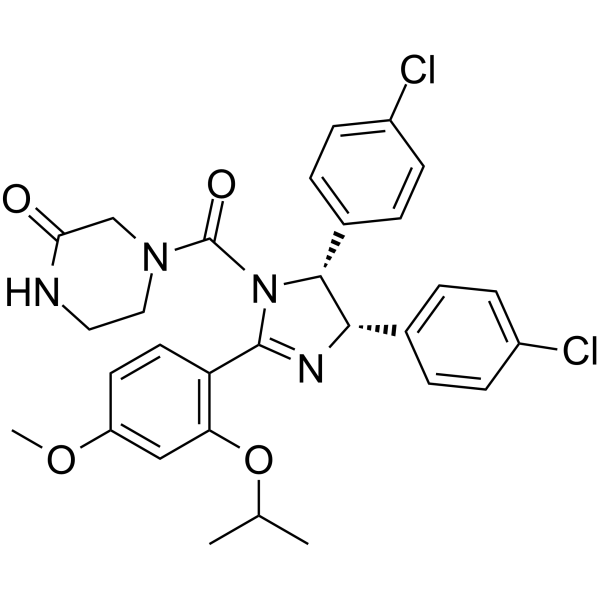
HY-10029
Nutlin-3aMDM2 Antagonist -
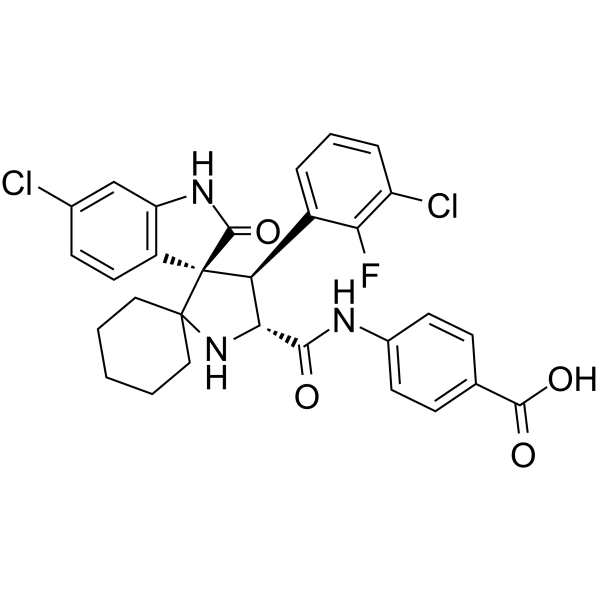
HY-125858
MI-1061MDM2-p53 Interaction Inhibitor -
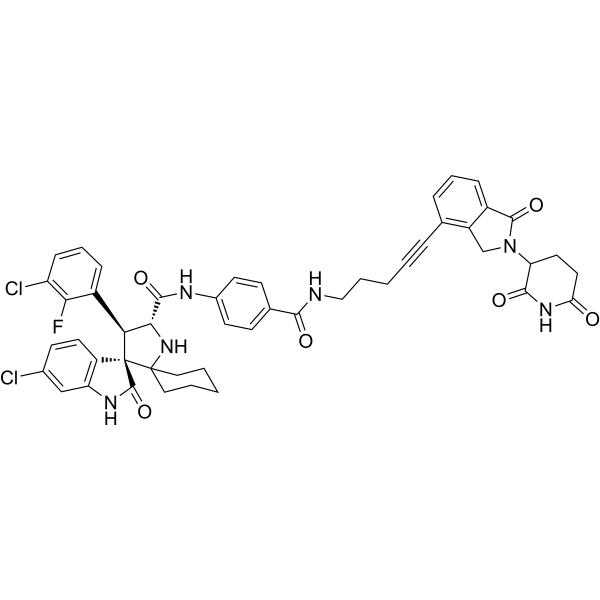
HY-114312
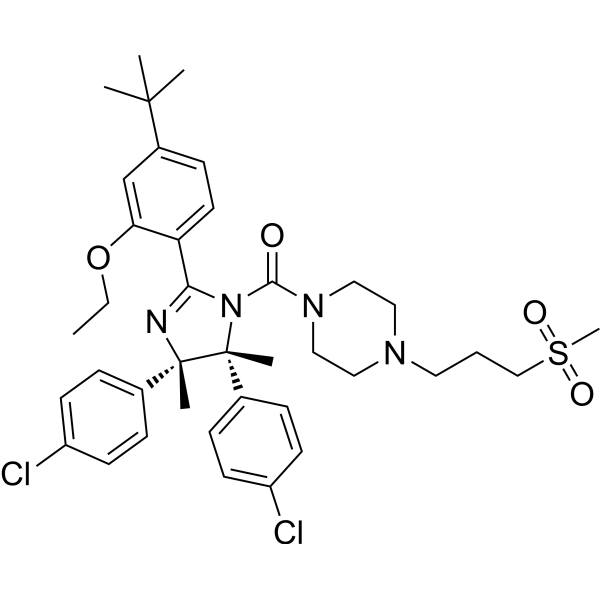
MD-224PROTAC MDM2 Degrader -
HY-10959
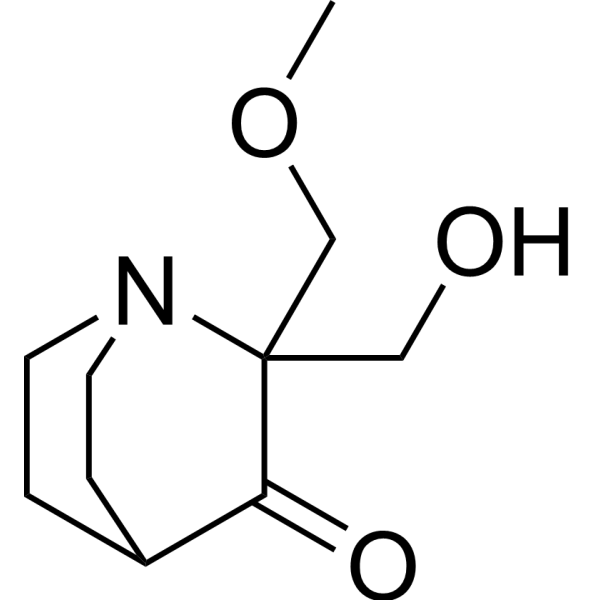
RG7112MDM2 Antagonist -
HY-19980
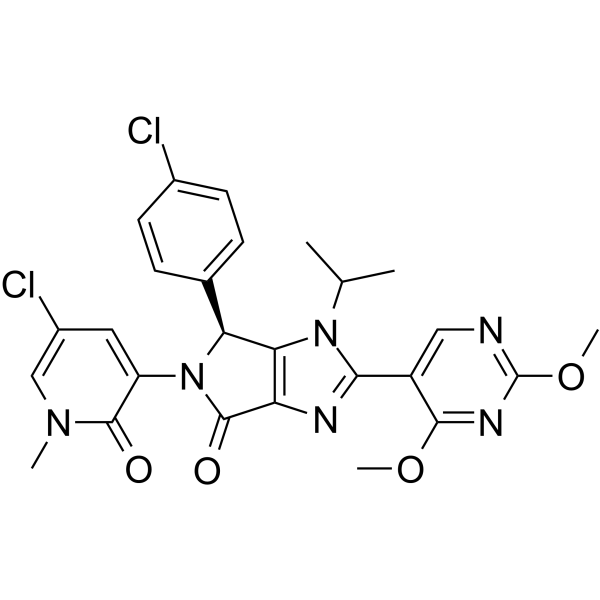
Eprenetapoptp53 Activator -
HY-130122
MG-277PROTAC GSPT1 Degrader -
HY-18658
Siremadlinp53-MDM2 Inhibitor -
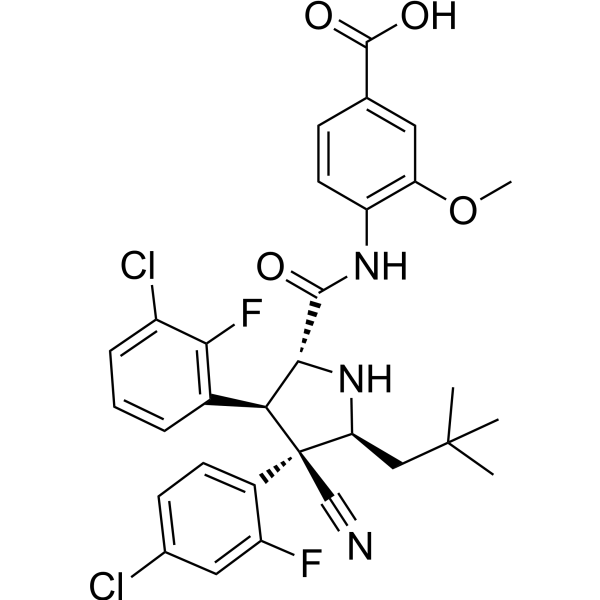
HY-15676
IdasanutlinMDM2 Inhibitor -
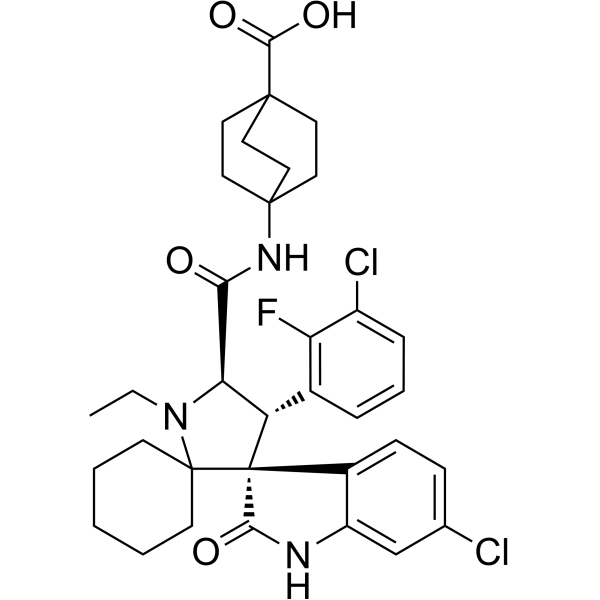
HY-101518
AlrizomadlinMDM2 Inhibitor -
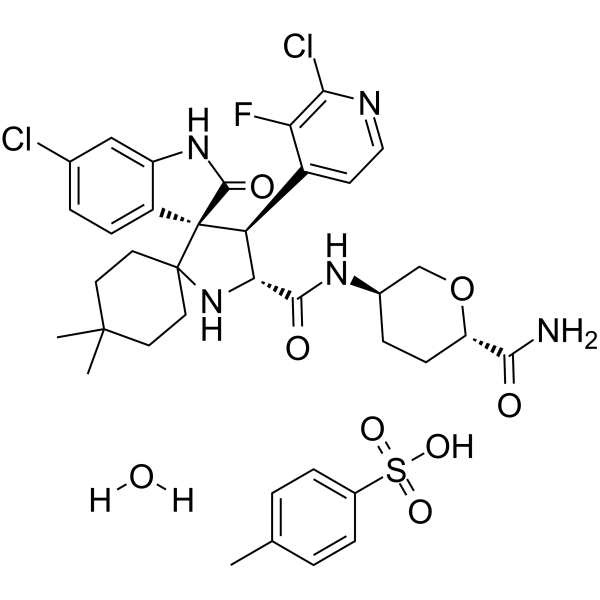
HY-101266B
Milademetan tosylate hydrateMDM2 Inhibitor -
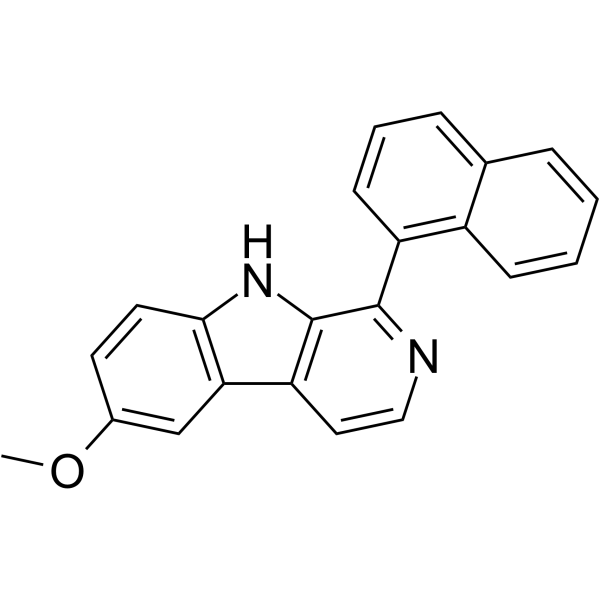
HY-110182
SP-141MDM2 Inhibitor -
HY-12296
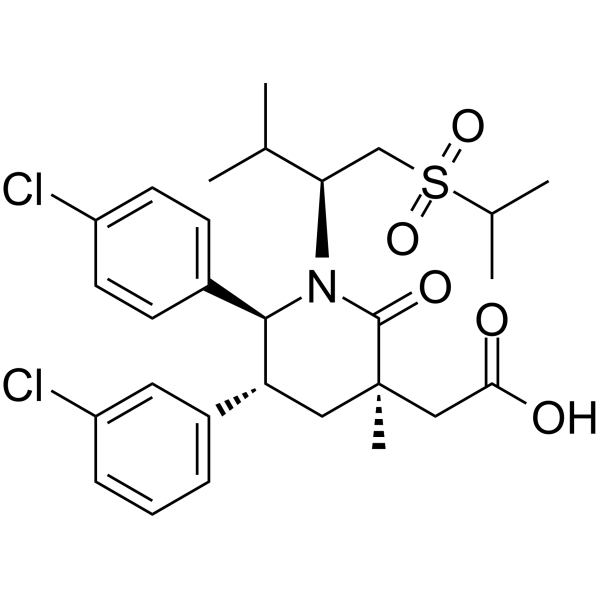
NavtemadlinMDM2-p53 Interaction Inhibitor
Publications Citing Use of MedChemExpress (MCE) MD-222
MoreAll PROTACs Isoforms
More

Biological Activity
Description
IC50 & Target
[1]|
MDM2 |
Cereblon |
Cellular Effect
|
Cell Line

|
Type | Value | Description | References |
|---|---|---|---|---|
| RS4-11 | IC50 |
2.8 nM
|
Inhibition of viability in human RS4;11 leukemia cells assessed by cell viability assay.
Inhibition of viability in human RS4;11 leukemia cells assessed by cell viability assay.
|
s00044-020-02574-9 |
| MOLM-14 | IC50 |
22.5 nM
|
Growth inhibition against human MOLM-14 acute myeloid leukemia cells (wild-type p53) assessed as reduction in cell viability incubated for 4 days by WST-8 assay.
Growth inhibition against human MOLM-14 acute myeloid leukemia cells (wild-type p53) assessed as reduction in cell viability incubated for 4 days by WST-8 assay.
|
s00044-020-02574-9 |
| SIG-M5 | IC50 |
29.9 nM
|
Growth inhibition against human SIG-M5 acute myeloid leukemia cells (wild-type p53) assessed as reduction in cell viability incubated for 4 days by WST-8 assay.
Growth inhibition against human SIG-M5 acute myeloid leukemia cells (wild-type p53) assessed as reduction in cell viability incubated for 4 days by WST-8 assay.
|
s00044-020-02574-9 |
| ML-2 | IC50 |
11.5 nM
|
Growth inhibition against human mL-2 acute myeloid leukemia cells (wild-type p53) assessed as reduction in cell viability incubated for 4 days by WST-8 assay.
Growth inhibition against human mL-2 acute myeloid leukemia cells (wild-type p53) assessed as reduction in cell viability incubated for 4 days by WST-8 assay.
|
s00044-020-02574-9 |
| OCI-AML-5 | IC50 |
58.2 nM
|
Growth inhibition against human OCL-AML-5 acute myeloid leukemia cells (wild-type p53) assessed as reduction in cell viability incubated for 4 days by WST-8 assay.
Growth inhibition against human OCL-AML-5 acute myeloid leukemia cells (wild-type p53) assessed as reduction in cell viability incubated for 4 days by WST-8 assay.
|
s00044-020-02574-9 |
| MONO-MAC-6 | IC50 |
>10 μM
|
Growth inhibition against human mono-Mac-6 acute myeloid leukemia cells (p53-mutated) assessed as reduction in cell viability incubated for 4 days by WST-8 assay.
Growth inhibition against human mono-Mac-6 acute myeloid leukemia cells (p53-mutated) assessed as reduction in cell viability incubated for 4 days by WST-8 assay.
|
s00044-020-02574-9 |
| KG-1 | IC50 |
>10 μM
|
Growth inhibition against human KG-1 acute myeloid leukemia cells (p53-mutated) assessed as reduction in cell viability incubated for 4 days by WST-8 assay.
Growth inhibition against human KG-1 acute myeloid leukemia cells (p53-mutated) assessed as reduction in cell viability incubated for 4 days by WST-8 assay.
|
s00044-020-02574-9 |
| RS4-11 | IC50 |
2.5 nM
|
Antiproliferative activity against p53 wild-type RS4;11 leukemia cells assessed as reduction in cell growth incubated for 4 days by WST assay.
Antiproliferative activity against p53 wild-type RS4;11 leukemia cells assessed as reduction in cell growth incubated for 4 days by WST assay.
|
31560543 |
| MOLM-13 | IC50 |
15.4 nM
|
Antiproliferative activity against p53 wild-type MOLM-13 leukemia cells assessed as reduction in cell growth incubated for 4 days by WST assay.
Antiproliferative activity against p53 wild-type MOLM-13 leukemia cells assessed as reduction in cell growth incubated for 4 days by WST assay.
|
31560543 |
| MV4-11 | IC50 |
10.8 nM
|
Antiproliferative activity against p53 wild-type MV-4-11 leukemia cells assessed as reduction in cell growth incubated for 4 days by WST assay.
Antiproliferative activity against p53 wild-type MV-4-11 leukemia cells assessed as reduction in cell growth incubated for 4 days by WST assay.
|
31560543 |
| RS4-11 | IC50 |
>10 μM
|
Antiproliferative activity against p53 mutant RS4;11/IRMI-2 leukemia cells assessed as reduction in cell growth incubated for 4 days by WST assay.
Antiproliferative activity against p53 mutant RS4;11/IRMI-2 leukemia cells assessed as reduction in cell growth incubated for 4 days by WST assay.
|
31560543 |
| HL-60 | IC50 |
>10 μM
|
Antiproliferative activity against p53-deleted HL-60 leukemia cells assessed as reduction in cell growth incubated for 4 days by WST assay.
Antiproliferative activity against p53-deleted HL-60 leukemia cells assessed as reduction in cell growth incubated for 4 days by WST assay.
|
31560543 |
| MDA-MB-231 | IC50 |
>10 μM
|
Antiproliferative activity against p53 mutant MDA-MB-231 breast cancer cells assessed as reduction in cell growth incubated for 4 days by WST assay.
Antiproliferative activity against p53 mutant MDA-MB-231 breast cancer cells assessed as reduction in cell growth incubated for 4 days by WST assay.
|
31560543 |
| MDA-MB-468 | IC50 |
>10 μM
|
Antiproliferative activity against p53 mutant MDA-MB-468 breast cancer cells assessed as reduction in cell growth incubated for 4 days by WST assay.
Antiproliferative activity against p53 mutant MDA-MB-468 breast cancer cells assessed as reduction in cell growth incubated for 4 days by WST assay.
|
31560543 |
In Vitro
MD-222 (1 nM-10 μM; 4 days) potently inhibits cell growth in RS4;11 (IC50 = 2.5 nM), MOLM-13 (IC50 = 15.4 nM), and MV-4-11 (IC50 = 10.8 nM) cells, but exhibits no activity in HL-60, MDA-MB-231, MDA-MB-468 and other cell lines (IC50 > 10 μM)[1].
MD-222 (4 days) exhibits significant cell growth inhibitory effects in cell lines including MOLM-14 (IC50 = 22.5 nM), SIG-M5 (IC50 = 29.9 nM), mL-2 (IC50 = 58.2 nM), and OCL-AML-5 (IC50 = 150.7 nM) [3].
MD-222 (1-30 nM; 2-6 h) induces MDM2 degradation and p53 protein accumulation, and upregulates the mRNA expression of p53 target genes in MV-4-11 cells[3].
MedChemExpress (MCE) has not independently confirmed the accuracy of these methods. They are for reference only.
-
Cell Line:RS4;11, RS4;11/IRMI-2 cells
-
Concentration:1, 3, 10, 30 nM
-
Incubation Time:1, 3, 6, 9, 12, 24 h
-
Result:Significantly reduced MDM2 protein levels and increased p53 protein expression. Degraded MDM2 without affecting GSPT1 protein levels.
-
Cell Line:RS4;11 cells
-
Concentration:10 nM
-
Incubation Time:3 h, 6 h, 12 h
-
Result:Effectively upregulated the mRNA expression levels of p53 downstream target genes (MDM2, CDKN1A, PUMA, BAX).
-
Cell Line:RS4;11and MV-4-11 cells
-
Concentration:0.03 μM, 0.1 μM
-
Incubation Time:6 h
-
Result:Greatly promoted the transcriptional upregulation of p53 target genes (MDM2, p21, Puma) mRNA, without affecting the mRNA level of TP53 itself.


Chemical Information
-
CAS No. 2136246-72-3
-
Appearance Solid
-
Molecular Weight 893.83
-
Formula C48H47Cl2FN6O6
-
Color White to off-white
-
SMILES
O=C1[C@]2(C3=CC=C(Cl)C=C3N1)C4(CCCCC4)N[C@H]([C@]2([H])C5=C(C(Cl)=CC=C5)F)C(NC6=CC=C(C=C6)C(NCCCCCC7=C8C(C(N(C9C(NC(CC9)=O)=O)C8)=O)=CC=C7)=O)=O
-
Shipping
Room temperature in continental US; may vary elsewhere.
-
Storage
-20°C, sealed storage, away from moisture
* In solvent : -80°C, 6 months; -20°C, 1 month (sealed storage, away from moisture)


Publications (1)
-
Journal Impact Factor
-
Most Recent
-
Nat Commun
PROTAC repurposing uncovers a noncanonical binding surface that mediates chemical degradation of nuclear receptors. [Abstract]2025 Nov 6;16(1):9805. PMID: 41198675


Solvent & Solubility
In Vitro:
DMSO : 200 mg/mL (223.76 mM; Need ultrasonic; Hygroscopic DMSO has a significant impact on the solubility of product, please use newly opened DMSO)
Please refer to the solubility information to select the appropriate solvent. Once prepared, please aliquot and store the solution to prevent product inactivation from repeated freeze-thaw cycles.
Storage method and period of stock solution: -80°C, 6 months; -20°C, 1 month (sealed storage, away from moisture). When stored at -80°C, please use it within 6 months. When stored at -20°C, please use it within 1 month.
Please refer to the solubility information to select the appropriate solvent. Once prepared, please aliquot and store the solution to prevent product inactivation from repeated freeze-thaw cycles.
Storage method and period of stock solution: -80°C, 6 months; -20°C, 1 month (sealed storage, away from moisture). When stored at -80°C, please use it within 6 months. When stored at -20°C, please use it within 1 month.
Concentration (start) × Volume (start) = Concentration (final) × Volume (final)
In Vivo:
Select the appropriate dissolution method based on your experimental animal and administration route.
- For the following dissolution methods, please ensure to first prepare a clear stock solution using an In Vitro approach and then sequentially add co-solvents:
- To ensure reliable experimental results, the clarified stock solution can be appropriately stored based on storage conditions. As for the working solution for In Vivo experiments, it is recommended to prepare freshly and use it on the same day.
- The percentages shown for the solvents indicate their volumetric ratio in the final prepared solution. If precipitation or phase separation occurs during preparation, heat and/or sonication can be used to aid dissolution.
Add each solvent one by one: 10% DMSO 40% PEG300 5% Tween-80 45% Saline
Solubility: 5 mg/mL (5.59 mM); Suspended solution; Need ultrasonic
This protocol yields a suspended solution of 5 mg/mL. Suspended solution can be used for oral and intraperitoneal injection.
Taking 1 mL working solution as an example, add 100 μL DMSO stock solution (50.0 mg/mL) to 400 μL PEG300, and mix evenly; then add 50 μL Tween-80 and mix evenly; then add 450 μL Saline to adjust the volume to 1 mL.
Preparation of Saline: Dissolve 0.9 g sodium chloride in ddH₂O and dilute to 100 mL to obtain a clear Saline solution.
In Vivo Dissolution Calculator
Please enter the basic information of animal experiments:
-
-
-
-
Recommended: Prepare an additional quantity of animals to account for potential losses during experiments.
Please enter your animal formula composition:
-
%DMSO +
Recommended: Keep the proportion of DMSO in working solution below 2% if your animal is weak.
-
%+
-
+%Tween-80 + +
-
%Saline +
The co-solvents required include: DMSO, . All of co-solvents are available by MedChemExpress (MCE). , Tween 80. All of co-solvents are available by MedChemExpress (MCE).
Working solution concentration: 0.22 mg/mL
Method for preparing stock solution: mg drug dissolved in μL DMSO. Stock solution concentration: mg/mL. * In solvent : -80°C, 6 months; -20°C, 1 month (sealed storage, away from moisture)
1. Take μL DMSO stock solution;
2. Add μL .
μL , mix evenly;
3. Then add μL Tween 80, mix evenly;
4. Then add μL
Please ensure that the stock solution in the first step is dissolved to a clear state, and add co-solvents in sequence. You can use ultrasonic heating (ultrasonic cleaner, recommended frequency 20-40 kHz), vortexing, etc. to assist dissolution.


Purity & Documentation
-
Data Sheet (286 KB)
-
SDS (252 KB)
- English - EN (252 KB)
- Français - FR (252 KB)
- Deutsch - DE (252 KB)
- Norwegian - NO (252 KB)
- Español - ES (252 KB)
- Swedish - SV (252 KB)
- Italian - IT (252 KB)
- Korean - KR (252 KB)
- Portuguese - PT (252 KB)
-
Handling Instructions (2659 KB)
References
[1]. Yang J, et al. Simple Structural Modifications Converting a Bona fide MDM2 PROTAC Degrader into a Molecular Glue Molecule: A Cautionary Tale in the Design of PROTAC Degraders. Journal of medicinal chemistry. 2019 Nov 14;62(21):9471-9487. [Content Brief]
[3]. Li Y, et al. Discovery of MD-224 as a First-in-Class, Highly Potent, and Efficacious Proteolysis Targeting Chimera Murine Double Minute 2 Degrader Capable of Achieving Complete and Durable Tumor Regression. Journal of medicinal chemistry. 2019 Jan 24;62(2):448-466. [Content Brief]


Complete Stock Solution Preparation Table
Please refer to the solubility information to select the appropriate solvent. Once prepared, please aliquot and store the solution to prevent product inactivation from repeated freeze-thaw cycles.
Storage method and period of stock solution: -80°C, 6 months; -20°C, 1 month (sealed storage, away from moisture). When stored at -80°C, please use it within 6 months. When stored at -20°C, please use it within 1 month.
| Optional Solvent | Concentration Solvent Mass | 1 mg | 5 mg | 10 mg | 25 mg |
|---|---|---|---|---|---|
| DMSO | 1 mM | 1.1188 mL | 5.5939 mL | 11.1878 mL | 27.9695 mL |
| 5 mM | 0.2238 mL | 1.1188 mL | 2.2376 mL | 5.5939 mL | |
| 10 mM | 0.1119 mL | 0.5594 mL | 1.1188 mL | 2.7970 mL | |
| 15 mM | 0.0746 mL | 0.3729 mL | 0.7459 mL | 1.8646 mL | |
| 20 mM | 0.0559 mL | 0.2797 mL | 0.5594 mL | 1.3985 mL | |
| 25 mM | 0.0448 mL | 0.2238 mL | 0.4475 mL | 1.1188 mL | |
| 30 mM | 0.0373 mL | 0.1865 mL | 0.3729 mL | 0.9323 mL | |
| 40 mM | 0.0280 mL | 0.1398 mL | 0.2797 mL | 0.6992 mL | |
| 50 mM | 0.0224 mL | 0.1119 mL | 0.2238 mL | 0.5594 mL | |
| 60 mM | 0.0186 mL | 0.0932 mL | 0.1865 mL | 0.4662 mL | |
| 80 mM | 0.0140 mL | 0.0699 mL | 0.1398 mL | 0.3496 mL | |
| 100 mM | 0.0112 mL | 0.0559 mL | 0.1119 mL | 0.2797 mL |


MD-222 Related Classifications
HY-134823 Related Classifications
 Powered by Bioz