



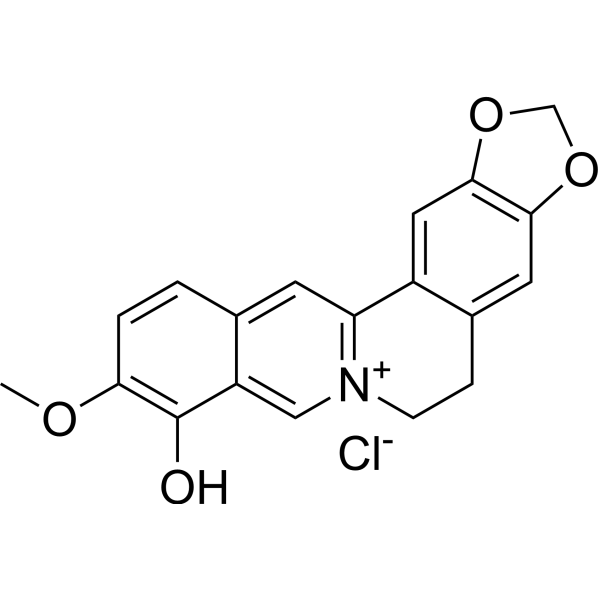
Berberrubine chloride
Based on 3 publication(s) in Google Scholar
Berberrubine chloride is an orally active metabolite of berberine. Berberrubine chloride alleviates mucosal lesions and inflammation in mouse colitis models. Berberrubine chloride has anti-inflammatory, anti-tumor, and antiviral activities.
For research use only. We do not sell to patients.
- Purity : 99.28%
- CAS No.: 15401-69-1
- Formula: C19H16ClNO4
- Molecular Weight:357.79
-
Storage:
4°C, sealed storage, away from moisture and light
* In solvent : -80°C, 6 months; -20°C, 1 month (sealed storage, away from moisture and light)

To place orders, for customer services and technical support, please contact: MedChemExpress USA
Tel: 609-228-6898 E-mail: [email protected] [email protected]


-
 Biological Activity
-
Chemical Information
-
Solvent & Solubility
- Protocols
- Purity & Documentation
- References
-
 Help & FAQs


-
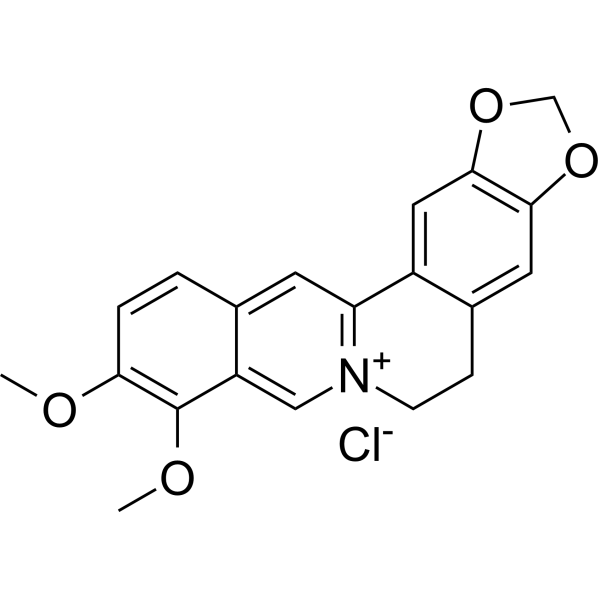
HY-18258
Berberine chlorideAntibiotic -
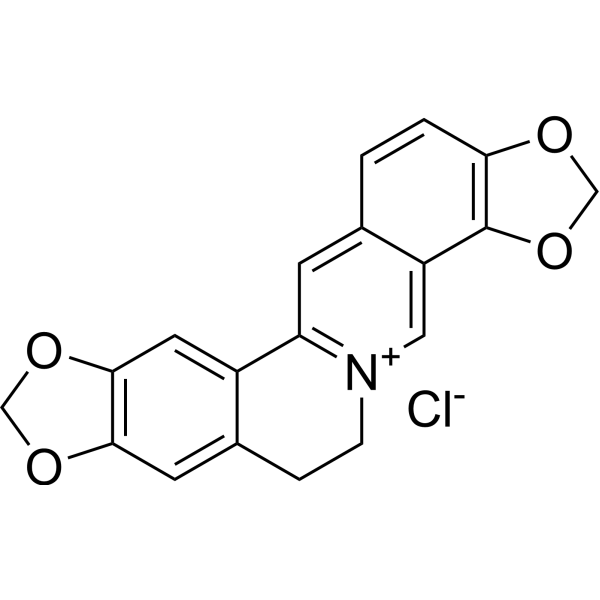
HY-N0736
Coptisine chlorideBacterial Inhibitor -
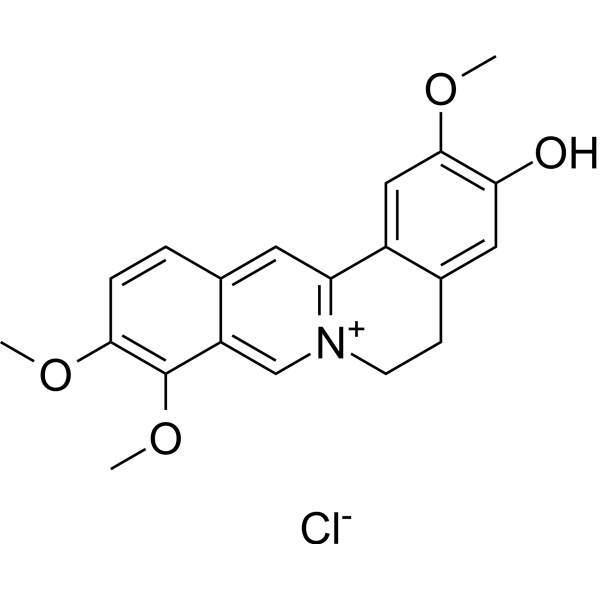
HY-N0740
Jatrorrhizine chlorideBioactive Alkaloid -
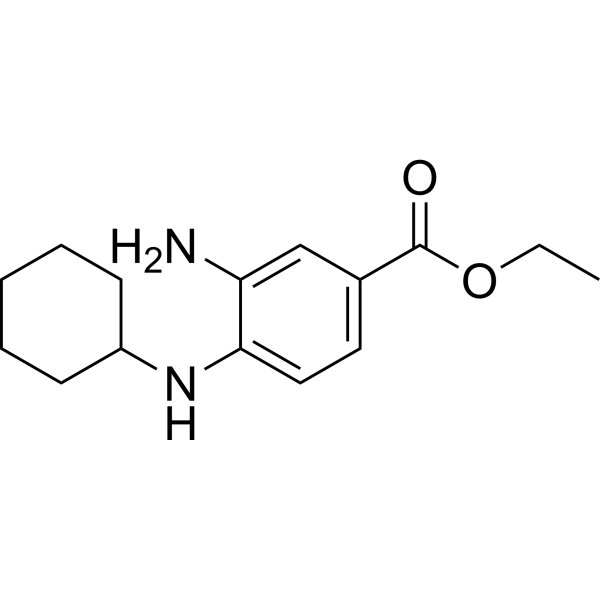
HY-100579
Ferrostatin-1Ferroptosis Inhibitor -
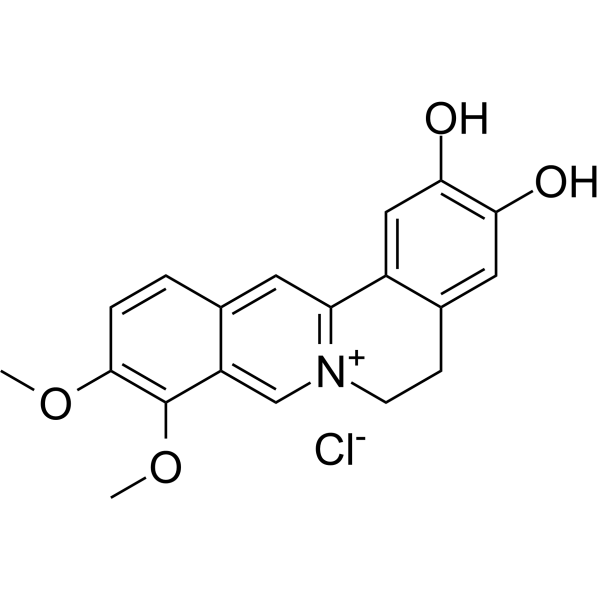
HY-N0592A
Demethyleneberberine chlorideAntioxidant -
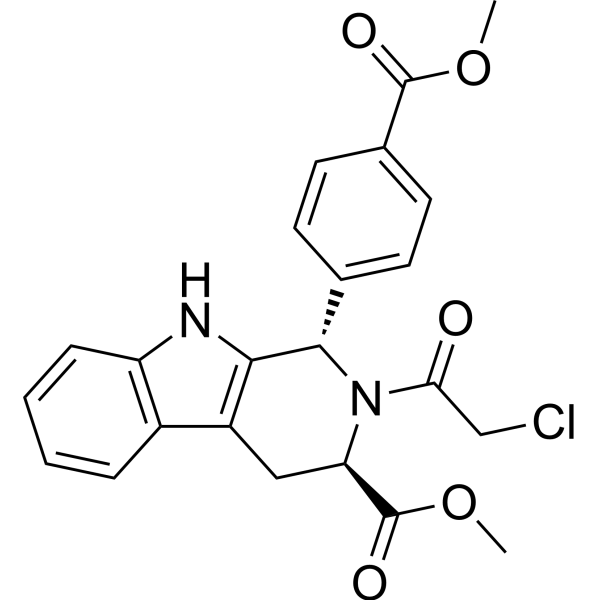
HY-100218A
RSL3GPX4 Inhibitor -
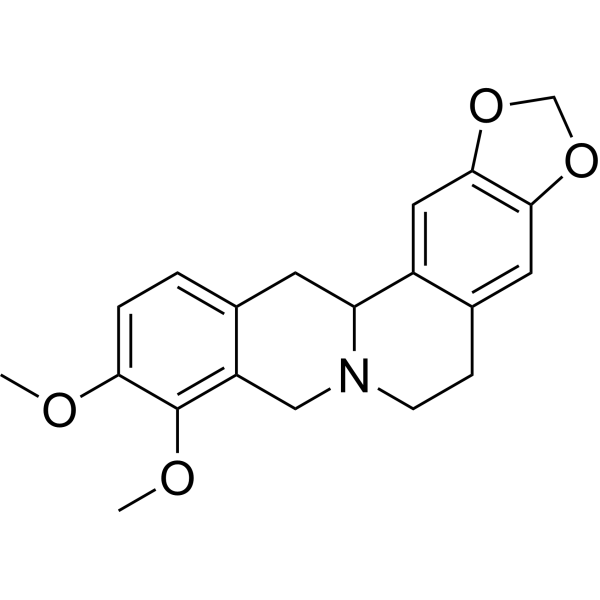
HY-N0925
TetrahydroberberineDopamine Receptor Antagonist -
HY-D0816
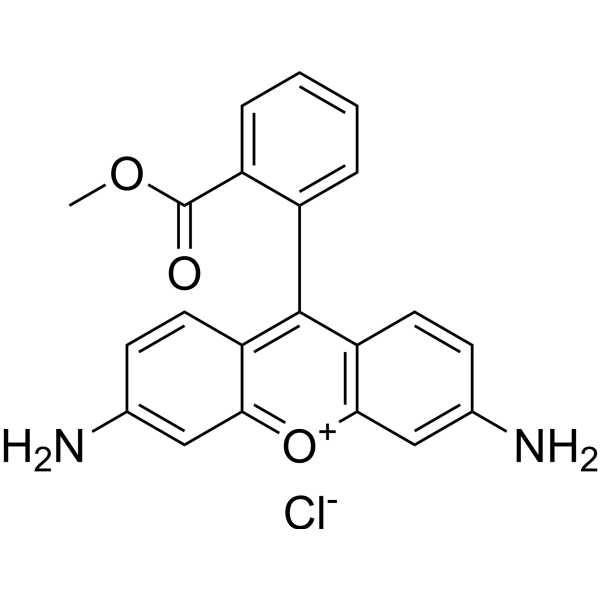
Rhodamine 123Fluorescent Dye -
HY-N0055
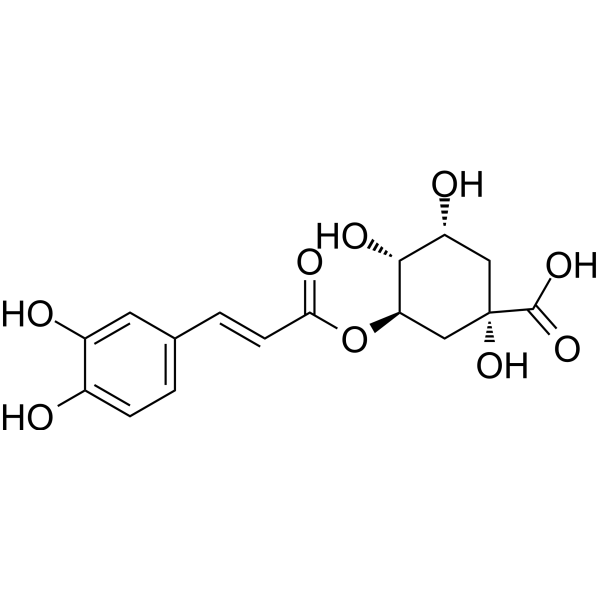
Chlorogenic acidAntioxidant -

HY-P7058
TNF-alpha/TNFSF2 Protein, Human -
HY-N0716B
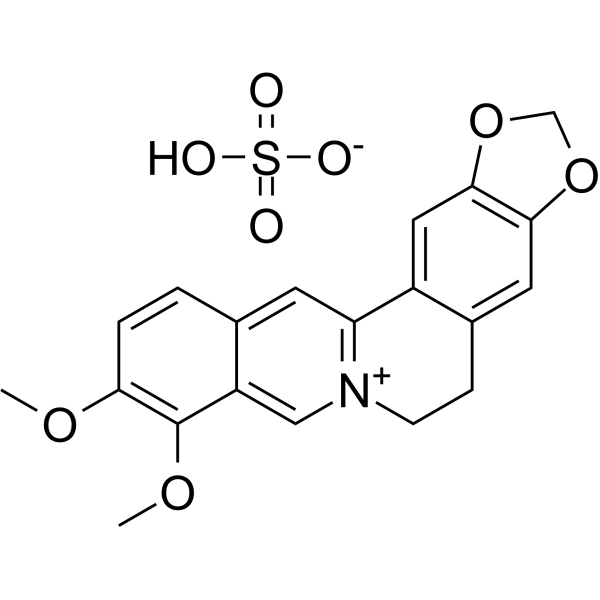
Berberine sulfateAntibiotic -
HY-N4103
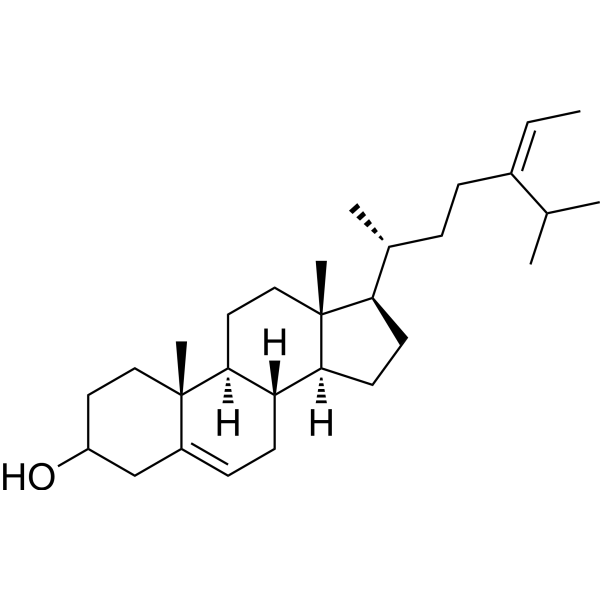
FucosterolBioactive Sterol
Publications Citing Use of MedChemExpress (MCE) Berberrubine chloride
More

Biological Activity
Description
Cellular Effect
|
Cell Line

|
Type | Value | Description | References |
|---|---|---|---|---|
| Bel-7402 | IC50 |
34.31 μM
Compound: 2, Berberrubine
|
Cytotoxicity against human Bel7402 cells after 48 hrs by MTT assay
Cytotoxicity against human Bel7402 cells after 48 hrs by MTT assay
|
10.1007/s00044-013-0796-9 |
| BGC-823 | IC50 |
7.66 μM
Compound: 2, Berberrubine
|
Cytotoxicity against human BGC823 cells after 48 hrs by MTT assay
Cytotoxicity against human BGC823 cells after 48 hrs by MTT assay
|
10.1007/s00044-013-0796-9 |
| CCRF-CEM | CC50 |
169.2 μM
Compound: 5
|
Cytotoxicity against human CEM cells expressing green fluorescent protein after 48 hrs by MTT assay
Cytotoxicity against human CEM cells expressing green fluorescent protein after 48 hrs by MTT assay
|
[PMID: 21295891] |
| CCRF-CEM | EC50 |
2.8 μM
Compound: 5
|
Antiviral activity against 0.05 MOI Human immunodeficiency virus 1 NL4.3 infected in human CEM cells expressing green fluorescent protein assessed as p24 antigen production measured 7 days post infection by ELISA
Antiviral activity against 0.05 MOI Human immunodeficiency virus 1 NL4.3 infected in human CEM cells expressing green fluorescent protein assessed as p24 antigen production measured 7 days post infection by ELISA
|
[PMID: 21295891] |
| HepG2 | IC50 |
>50 μM
Compound: 2, Berberrubine
|
Cytotoxicity against human HepG2 cells after 24 hrs by MTT assay
Cytotoxicity against human HepG2 cells after 24 hrs by MTT assay
|
[PMID: 23182088] |
| HepG2 | IC50 |
>50 μM
Compound: 2, Berberrubine
|
Cytotoxicity against human HepG2 cells after 48 hrs by MTT assay
Cytotoxicity against human HepG2 cells after 48 hrs by MTT assay
|
[PMID: 23182088] |
| HL-60 | IC50 |
11.36 μM
Compound: 2, Berberrubine
|
Cytotoxicity against human HL60 cells after 48 hrs by MTT assay
Cytotoxicity against human HL60 cells after 48 hrs by MTT assay
|
10.1007/s00044-013-0796-9 |
| HT-29 | IC50 |
>50 μM
Compound: 2, Berberrubine
|
Cytotoxicity against human HT-29 cells after 24 hrs by MTT assay
Cytotoxicity against human HT-29 cells after 24 hrs by MTT assay
|
[PMID: 23182088] |
| HT-29 | IC50 |
36.93 μM
Compound: 2, Berberrubine
|
Cytotoxicity against human HT-29 cells after 48 hrs by MTT assay
Cytotoxicity against human HT-29 cells after 48 hrs by MTT assay
|
[PMID: 23182088] |
| KB | IC50 |
6.92 μM
Compound: 2, Berberrubine
|
Cytotoxicity against human KB cells after 48 hrs by MTT assay
Cytotoxicity against human KB cells after 48 hrs by MTT assay
|
10.1007/s00044-013-0796-9 |
In Vitro
Berberrubine (48 h) inhibits HT-29 cells with an IC50 of 36.93 μM[1].
Berberrubine (7 days) againsts HIV-1 NL4.3 virus in CIM-GFP cells with an EC50 of 2.8 μM[2].
MedChemExpress (MCE) has not independently confirmed the accuracy of these methods. They are for reference only. Further protocols information, click here.
In Vivo
MedChemExpress (MCE) has not independently confirmed the accuracy of these methods. They are for reference only.
-
Animal Model:DSS (HY-116282) treated male Balb/c mice aged 6 weeks old[3]
-
Dosage:10 and 20 mg/kg
-
Administration:Oral administration (p.o.); 7 days
-
Result:Significantly reduced the disease activity index (DAI) with prolonged colon length and increased bodyweight at dose of 20 mg/kg.
Significantly ameliorated the DSS-induced colonic pathological alternations and decreased histological scores.
Markedly attenuated colonic inflammation by alleviating inflammatory cell infiltration and inhibiting myeloperoxidase (MPO) and cytokines (TNF-α, IFN-γ, IL-1β, IL-6, IL-4 and IL-10) productions in DSS mice.
Substantially upregulated the expression of tight junction proteins (zonula occludens-1, zonula occludens-2, claudin-1, occludin) and mRNA expression of mucins (mucin-1 and mucin-2), and decreased the Bax/Bcl-2 ratio.


Chemical Information
-
CAS No. 15401-69-1
-
Appearance Solid
-
Molecular Weight 357.79
-
Formula C19H16ClNO4
-
Color Brown to black
-
SMILES
COC1=C(O)C2=C[N+]3=C(C(C(CC3)=C4)=CC5=C4OCO5)C=C2C=C1.[Cl-]
-
Structure Classification
-
Initial Source
-
Shipping
Room temperature in continental US; may vary elsewhere.
-
Storage
4°C, sealed storage, away from moisture and light
* In solvent : -80°C, 6 months; -20°C, 1 month (sealed storage, away from moisture and light)


Publications (3)
-
Journal Impact Factor
-
Most Recent
-
Molecules
Discovery of Nine Dipeptidyl Peptidase-4 Inhibitors from Coptis chinensis Using Virtual Screening, Bioactivity Evaluation, and Binding Studies. [Abstract]2024 May 14;29(10):2304. PMID: 38792165 -
-
bioRxiv
2026 Feb 13:2026.02.12.705375. PMID: 41727032


Solvent & Solubility
In Vitro:
DMSO : 5 mg/mL (13.97 mM; ultrasonic and warming and heat to 60°C; Hygroscopic DMSO has a significant impact on the solubility of product, please use newly opened DMSO)
Ethanol : 2 mg/mL (5.59 mM; Need ultrasonic)
H2O : < 0.1 mg/mL (insoluble)
Please refer to the solubility information to select the appropriate solvent. Once prepared, please aliquot and store the solution to prevent product inactivation from repeated freeze-thaw cycles.
Storage method and period of stock solution: -80°C, 6 months; -20°C, 1 month (sealed storage, away from moisture and light). When stored at -80°C, please use it within 6 months. When stored at -20°C, please use it within 1 month.
Please refer to the solubility information to select the appropriate solvent. Once prepared, please aliquot and store the solution to prevent product inactivation from repeated freeze-thaw cycles.
Storage method and period of stock solution: -80°C, 6 months; -20°C, 1 month (sealed storage, away from moisture and light). When stored at -80°C, please use it within 6 months. When stored at -20°C, please use it within 1 month.
Concentration (start) × Volume (start) = Concentration (final) × Volume (final)
In Vivo:
For the following dissolution methods, please prepare the working solution directly:
It is recommended to prepare fresh solutions and use them promptly within a short period of time.
The percentages shown for the solvents indicate their volumetric ratio in the final prepared solution. If precipitation or phase separation occurs during preparation, heat and/or sonication can be used to aid dissolution.
Add each solvent one by one: 0.5% CMC-Na/saline water
Solubility: 5 mg/mL (13.97 mM); Suspended solution; Need ultrasonic

Protocols
-
Research Protocol for Infectious Diseases
Infectious-disease experiments test how pathogens interact with host barriers, innate immune receptors, inflammatory signaling, pathogen replication, and tissue injury; pattern-recognition receptors such as TLRs, RIG-I-like receptors, NOD-like receptors, and inflammasomes detect microbial molecules and activate NF-κB, interferon, and cytokine responses. The central hypothesis is that infection severity reflects the balance between pathogen burden and host response: protective inflammation restricts pathogen growth, whereas excessive or mislocalized inflammation contributes to tissue damage and disease phenotype. Unresolved questions include which host pathways are protective versus pathogenic, why some infection models fail to translate to human disease, and which combined readouts best predict clinically relevant infection outcomes.
-
DSS-Induced Colitis
Dextran sulfate sodium (DSS)-induced colitis is generated by administering DSS in mouse drinking water, producing epithelial injury, barrier disruption, weight loss, diarrhea, fecal blood, colon shortening, histologic mucosal damage, and inflammatory mediator changes; the model is mainly used to study acute or chronic intestinal inflammation resembling selected features of ulcerative colitis. DSS injury is interpreted through clinical and tissue readouts rather than a single molecular endpoint: daily body weight, stool consistency, and bleeding are combined into a disease activity index, while colon length, histology, cytokines, myeloperoxidase activity, intestinal permeability, and tight-junction markers provide complementary measures of inflammation and barrier damage.
-
TNBS-Induced Colitis
TNBS-induced colitis is produced by intrarectal delivery of 2,4,6-trinitrobenzene sulfonic acid in ethanol, where ethanol disrupts the mucosal barrier and TNBS haptenates colonic proteins, generating immune-mediated colonic inflammation with weight loss, diarrhea, ulceration, transmural injury, inflammatory-cell infiltration, and cytokine responses. The model is used as an experimental intestinal inflammation model with Crohn’s disease–like features, especially when Th1-type responses, IL-12–dependent inflammation, chronic relapsing inflammation, or fibrosis-related endpoints are studied.
-
Research Protocol for Inflammation-related Diseases
The NLRP3 inflammasome is a cytosolic innate immune signaling platform that integrates priming signals and danger-signal activation to promote caspase-1 activation, maturation of IL-1β and IL-18, and gasdermin D-mediated pyroptotic cell death. The core experimental logic is to determine whether inflammatory disease phenotypes are driven by increased NLRP3 expression, ASC-containing inflammasome assembly, caspase-1 cleavage, GSDMD cleavage, and extracellular release of IL-1β/IL-18 rather than by nonspecific cell injury alone. The pathway is strongly linked to inflammation-related disease phenotypes because monosodium urate crystals activate NALP3/NLRP3 inflammasome signaling in gout-like crystal inflammation, cholesterol crystals activate NLRP3 inflammasomes in atherogenesis models, and DSS-induced intestinal inflammation has been reported to involve NLRP3 inflammasome activity. However, experimental colitis studies also show context-dependent protective effects of NLRP3 inflammasome co


Purity & Documentation
-
Data Sheet (278 KB)
-
SDS (392 KB)
- English - EN (392 KB)
- Français - FR (392 KB)
- Deutsch - DE (392 KB)
- Norwegian - NO (392 KB)
- Español - ES (392 KB)
- Swedish - SV (392 KB)
- Italian - IT (392 KB)
- Korean - KR (392 KB)
- Portuguese - PT (392 KB)
-
Handling Instructions (2659 KB)
References
[1]. Lo CY, et al. Synthesis and anticancer activity of a novel series of 9-O-substituted berberine derivatives: a lipophilic substitute role. Bioorg Med Chem Lett. 2013 Jan 1;23(1):305-9. [Content Brief]
[2]. Bodiwala HS, et al. Synthesis of 9-substituted derivatives of berberine as anti-HIV agents. Eur J Med Chem. 2011 Apr;46(4):1045-9. [Content Brief]
[3]. Yu XT, et al. Berberrubine attenuates mucosal lesions and inflammation in dextran sodium sulfate-induced colitis in mice. PLoS One. 2018 Mar 14;13(3):e0194069. [Content Brief]


Complete Stock Solution Preparation Table
Please refer to the solubility information to select the appropriate solvent. Once prepared, please aliquot and store the solution to prevent product inactivation from repeated freeze-thaw cycles.
Storage method and period of stock solution: -80°C, 6 months; -20°C, 1 month (sealed storage, away from moisture and light). When stored at -80°C, please use it within 6 months. When stored at -20°C, please use it within 1 month.
| Optional Solvent | Concentration Solvent Mass | 1 mg | 5 mg | 10 mg | 25 mg |
|---|---|---|---|---|---|
| Ethanol / DMSO | 1 mM | 2.7949 mL | 13.9747 mL | 27.9494 mL | 69.8734 mL |
| 5 mM | 0.5590 mL | 2.7949 mL | 5.5899 mL | 13.9747 mL | |
| DMSO | 10 mM | 0.2795 mL | 1.3975 mL | 2.7949 mL | 6.9873 mL |


Berberrubine chloride Related Classifications
HY-125850 Related Classifications
 Powered by Bioz