



Angiotensin I (human, mouse, rat)
Based on 3 publication(s) in Google Scholar
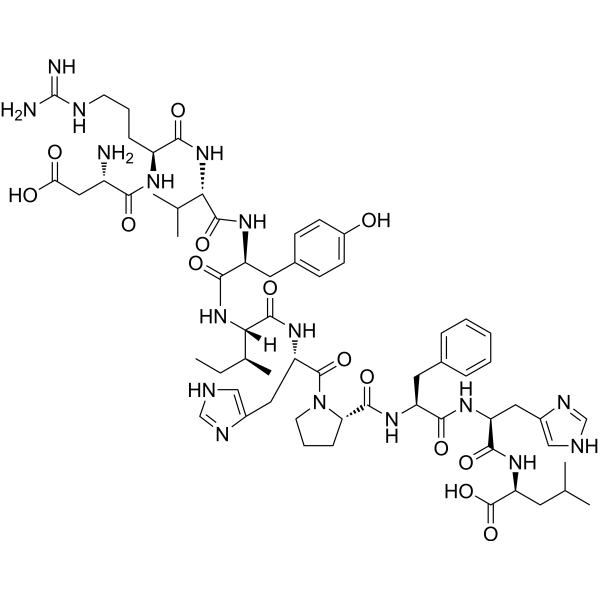
Angiotensin I is a decapeptide hormone. Angiotensin I is the precursor of Angiotensin II (HY-13948). Angiotensin I can be used in the study of cardiovascular diseases such as hypertension and vasospasm.
For research use only. We do not sell to patients.
- Purity : 99.70%
- CAS No.: 484-42-4
- Formula: C62H89N17O14
- Molecular Weight:1296.48
-
Storage:
Sealed storage, away from moisture.
Powder -80°C, 2 years , -20°C, 1 year* In solvent : -80°C, 6 months; -20°C, 1 month (sealed storage, away from moisture)

To place orders, for customer services and technical support, please contact: MedChemExpress USA
Tel: 609-228-6898 E-mail: [email protected] [email protected]


-
 Biological Activity
-
Chemical Information
-
Solvent & Solubility
- Protocols
- Purity & Documentation
- References
-
 Help & FAQs


-
HY-13948
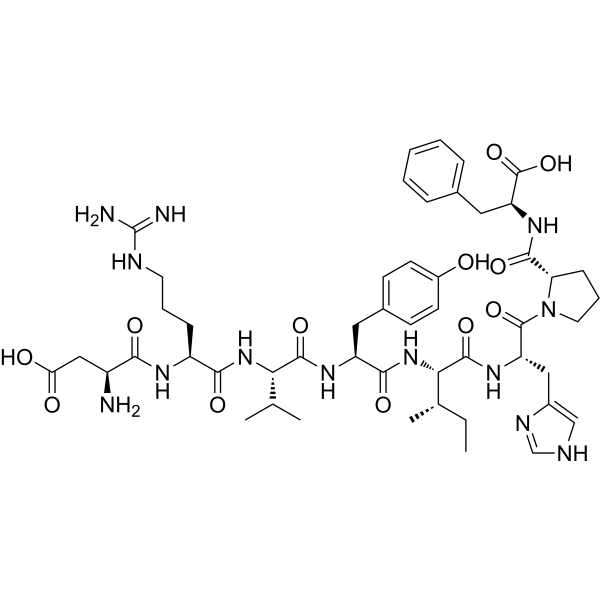
Angiotensin II humanVasoconstrictor -
HY-P1540
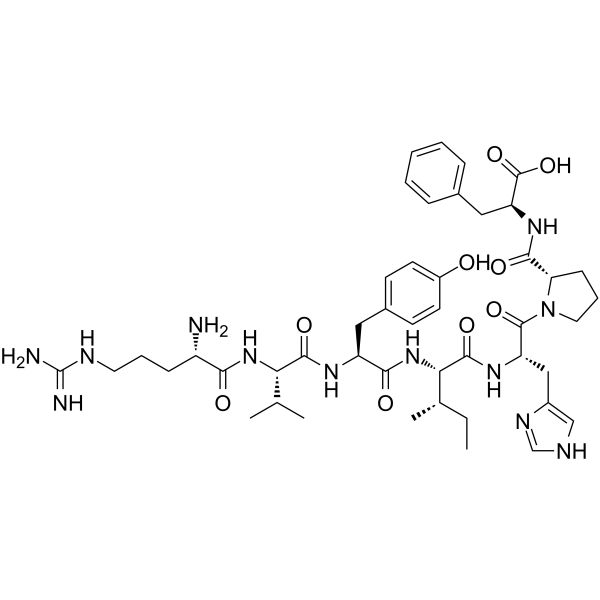
Angiotensin III, human, mouseAT2R Agonist -
HY-12403
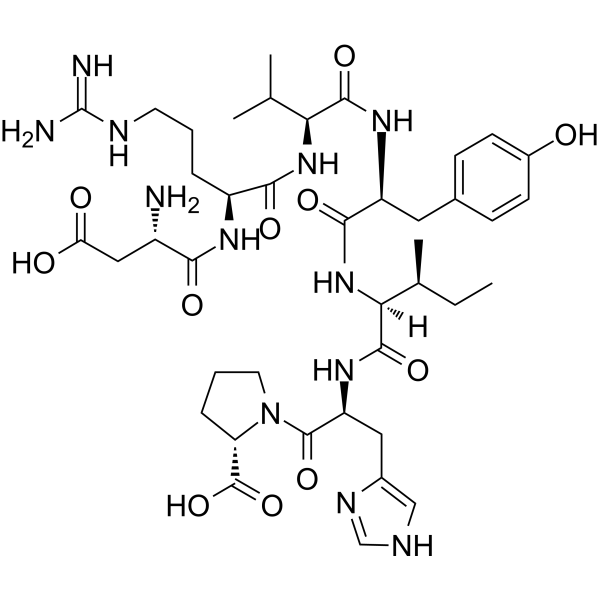
TalfirastideVasodilator Agent -
HY-B0368
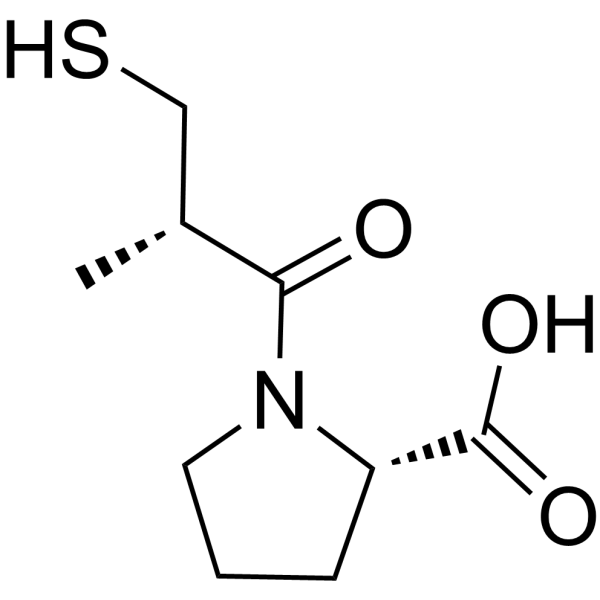
CaptoprilACE Inhibitor -
HY-P0206
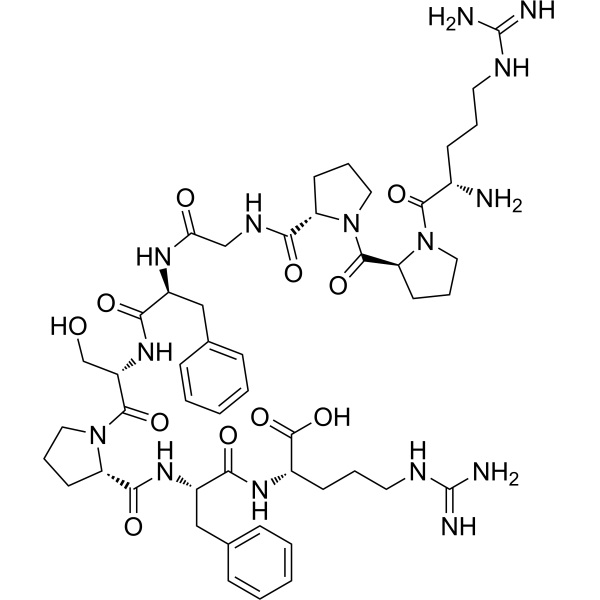
BradykininBradykinin Receptor Modulator -

HY-P0059
TeriparatideParathyroid Hormone Agonist -
HY-13948A
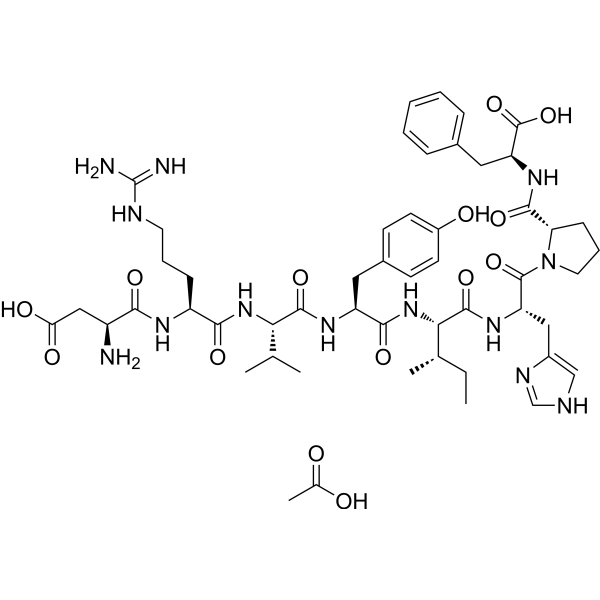
Angiotensin II human acetateVasoconstrictor -
HY-P1515A
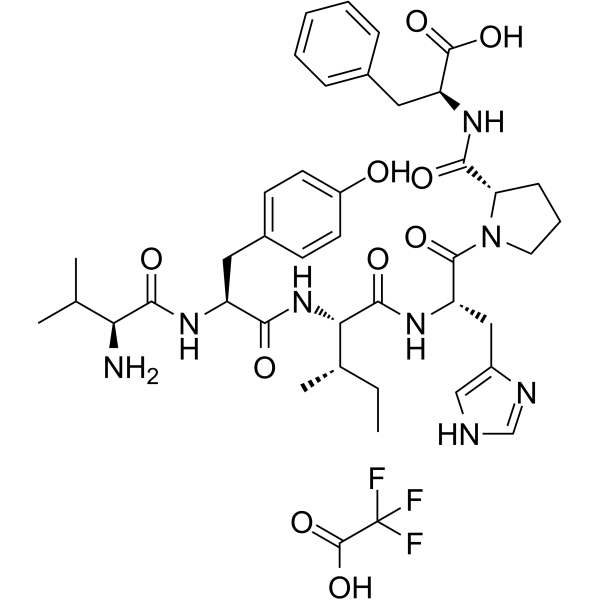
Angiotensin II (3-8), human TFAAngiotensin Receptor Agonist -
HY-P1839
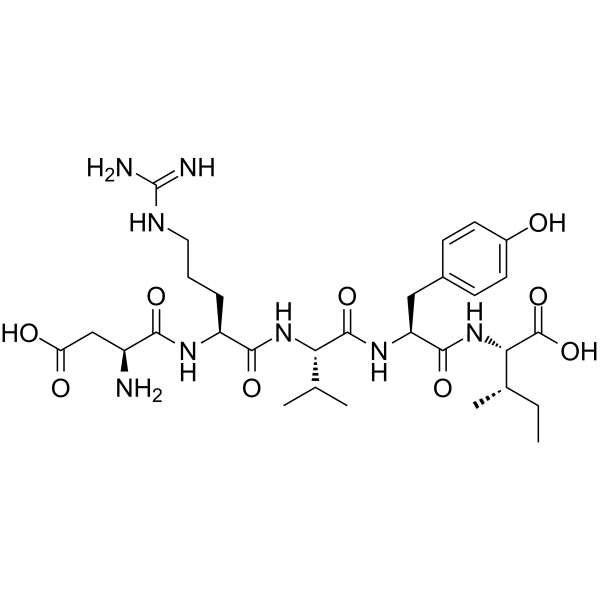
Angiotensin I/II (1-5) -
HY-P1829
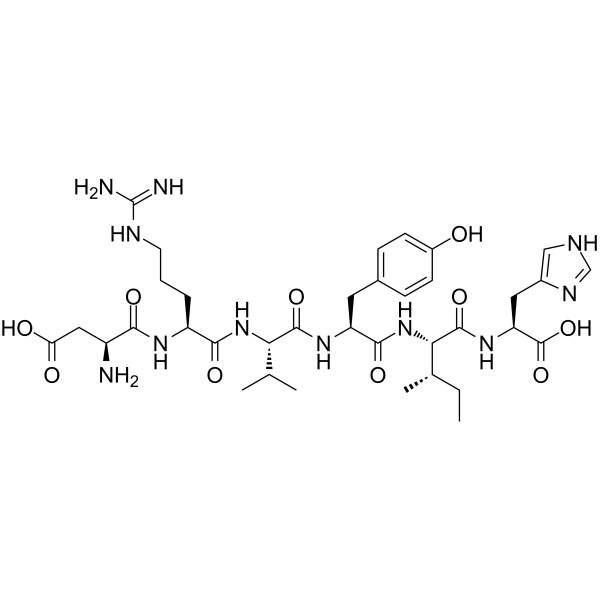
Angiotensin I/II (1-6)Hormone -

HY-P1050
COG 133ApoE Mimetic Peptide -
HY-17512
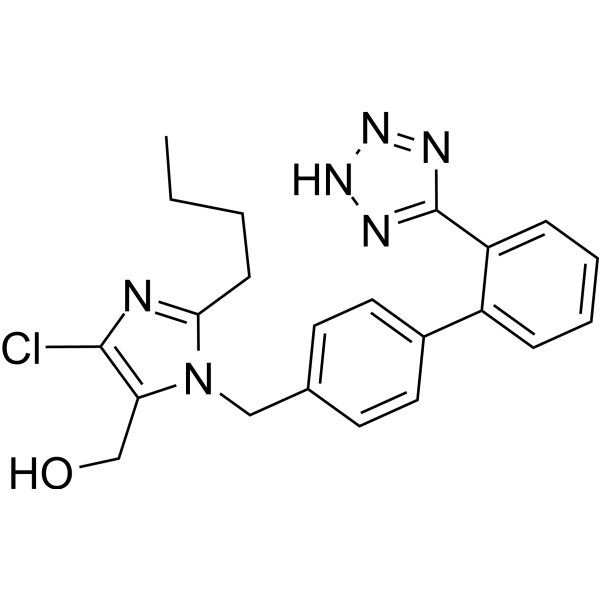
LosartanAngiotensin II Receptor Antagonist
Publications Citing Use of MedChemExpress (MCE) Angiotensin I (human, mouse, rat)
MoreAll Endogenous Metabolite Isoforms
More

Biological Activity
Description
IC50 & Target
|
Human Endogenous Metabolite |
In Vitro
Angiotensin I (10 nM-1 μM) causes dose-dependent contraction in helical strips of canine cerebral artery with intact endothelium[1].
MedChemExpress (MCE) has not independently confirmed the accuracy of these methods. They are for reference only.


Chemical Information
-
CAS No. 484-42-4
-
Appearance Solid
-
Molecular Weight 1296.48
-
Formula C62H89N17O14
-
Color White to off-white
-
Sequence
Asp-Arg-Val-Tyr-Ile-His-Pro-Phe-His-Leu
-
Sequence Shortening
DRVYIHPFHL
-
Shipping
Room temperature in continental US; may vary elsewhere.
-
Storage
Sealed storage, away from moisture
Powder -80°C 2 years -20°C 1 year * In solvent : -80°C, 6 months; -20°C, 1 month (sealed storage, away from moisture)


Publications (3)
-
Journal Impact Factor
-
Most Recent
-
Phytomedicine
Bioactive equivalent combinatorial components of Xiao-Xu-Ming decoction inhibit the calmodulin-mediated MLCK/MLC axis to attenuate coronary artery spasm. [Abstract]2025 Jul:142:156713. PMID: 40349422 -
Talanta
A robust polymetallic-coated sheathless interface with high acid and alkali resistance for coupling capillary electrophoresis with mass spectrometry. [Abstract]2025 Jan 1:282:127045. PMID: 39418980 -
ACS Omega
2023 Jun 14;8(25):22603-22612. PMID: 37387790


Solvent & Solubility
In Vitro:
H2O : 25 mg/mL (19.28 mM; Need ultrasonic)
Please refer to the solubility information to select the appropriate solvent. Once prepared, please aliquot and store the solution to prevent product inactivation from repeated freeze-thaw cycles.
Storage method and period of stock solution: -80°C, 6 months; -20°C, 1 month (sealed storage, away from moisture). When stored at -80°C, please use it within 6 months. When stored at -20°C, please use it within 1 month.
* Note: If you choose water as the stock solution, please dilute it to the working solution, then filter and sterilize it with a 0.22 μm filter before use.
Please refer to the solubility information to select the appropriate solvent. Once prepared, please aliquot and store the solution to prevent product inactivation from repeated freeze-thaw cycles.
Storage method and period of stock solution: -80°C, 6 months; -20°C, 1 month (sealed storage, away from moisture). When stored at -80°C, please use it within 6 months. When stored at -20°C, please use it within 1 month.
* Note: If you choose water as the stock solution, please dilute it to the working solution, then filter and sterilize it with a 0.22 μm filter before use.
Concentration (start) × Volume (start) = Concentration (final) × Volume (final)
In Vivo:
For the following dissolution methods, please prepare the working solution directly:
It is recommended to prepare fresh solutions and use them promptly within a short period of time.
The percentages shown for the solvents indicate their volumetric ratio in the final prepared solution. If precipitation or phase separation occurs during preparation, heat and/or sonication can be used to aid dissolution.
Add each solvent one by one: PBS
Solubility: 100 mg/mL (77.13 mM); Clear solution; Need ultrasonic


Purity & Documentation
-
Data Sheet (280 KB)
-
SDS (252 KB)
- English - EN (252 KB)
- Français - FR (252 KB)
- Deutsch - DE (252 KB)
- Norwegian - NO (252 KB)
- Español - ES (252 KB)
- Swedish - SV (252 KB)
- Italian - IT (252 KB)
- Korean - KR (252 KB)
- Portuguese - PT (252 KB)
-
Handling Instructions (2659 KB)
References
[1]. Manabe K, et al. Endothelium-dependent contractions induced by angiotensin I and angiotensin II in canine cerebral artery. J Pharmacol Exp Ther. 1989 Oct;251(1):317-20. [Content Brief]
[2]. Kawaguchi H, et al. Endothelin stimulates angiotensin I to angiotensin II conversion in cultured pulmonary artery endothelial cells. J Mol Cell Cardiol. 1990 Aug;22(8):839-42. [Content Brief]


Complete Stock Solution Preparation Table
Please refer to the solubility information to select the appropriate solvent. Once prepared, please aliquot and store the solution to prevent product inactivation from repeated freeze-thaw cycles.
Storage method and period of stock solution: -80°C, 6 months; -20°C, 1 month (sealed storage, away from moisture). When stored at -80°C, please use it within 6 months. When stored at -20°C, please use it within 1 month.
| Optional Solvent | Concentration Solvent Mass | 1 mg | 5 mg | 10 mg | 25 mg |
|---|---|---|---|---|---|
| H2O | 1 mM | 0.7713 mL | 3.8566 mL | 7.7132 mL | 19.2830 mL |
| 5 mM | 0.1543 mL | 0.7713 mL | 1.5426 mL | 3.8566 mL | |
| 10 mM | 0.0771 mL | 0.3857 mL | 0.7713 mL | 1.9283 mL | |
| 15 mM | 0.0514 mL | 0.2571 mL | 0.5142 mL | 1.2855 mL |
* Note: If you choose water as the stock solution, please dilute it to the working solution, then filter and sterilize it with a 0.22 μm filter before use.


Angiotensin I (human, mouse, rat) Related Classifications
HY-P1032 Related Classifications
 Powered by Bioz