



B I09
Based on 1 publication(s) in Google Scholar
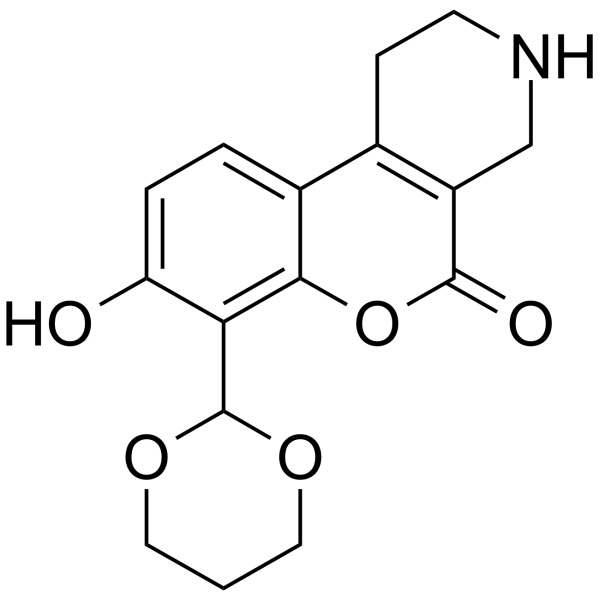
B I09 is an IRE-1 RNase inhibitor, with an IC50 of 1230 nM.
Nos produits utilisent uniquement pour la recherche. Nous ne vendons pas aux patients.
- Pureté : 99.35%
- CAS No.: 1607803-67-7
- Formule: C16H17NO5
- Masse moléculaire:303.31
-
Stockage:
4°C, protect from light
* The compound is unstable in solutions, freshly prepared is recommended.

To place orders, for customer services and technical support, please contact: MedChemExpress USA
Tel: 609-228-6898 E-mail: [email protected] [email protected]


-
 Activité biologique
-
Chemical Information
-
Solvant et solubilité
- Pureté et documentation
- Références
-
 Help & FAQs


-
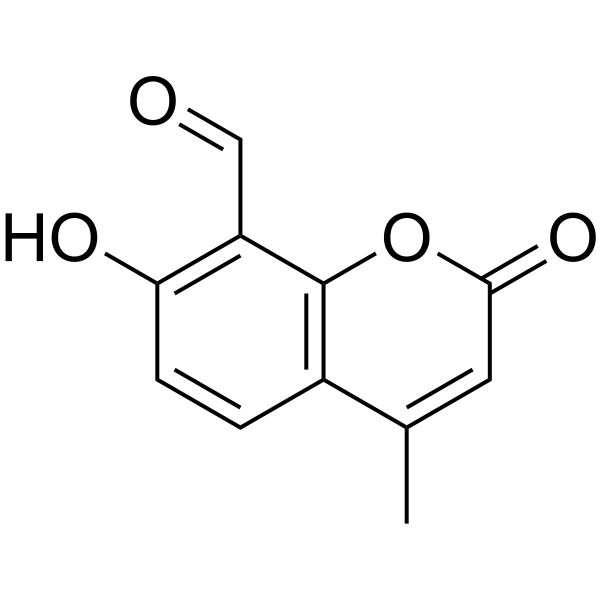
HY-19707
4μ8CIRE1 Inhibitor -
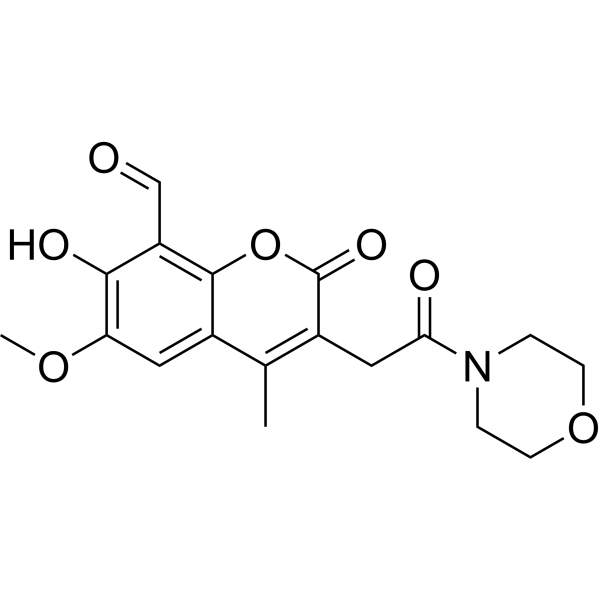
HY-104040
MKC8866IRE1α RNase Inhibitor -
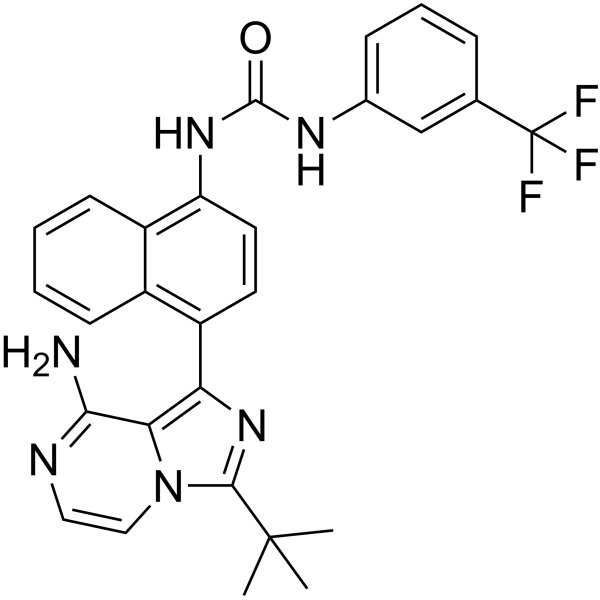
HY-19708
KIRA6IRE1α RNase Inhibitor -
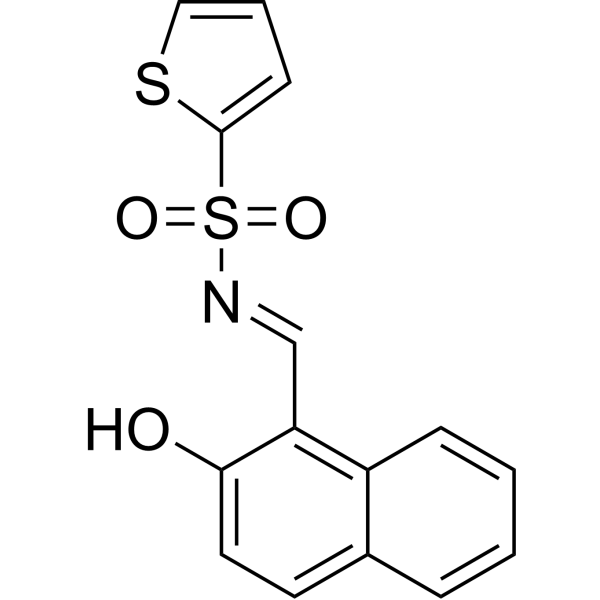
HY-15845
STF-083010IRE1 Inhibitor -
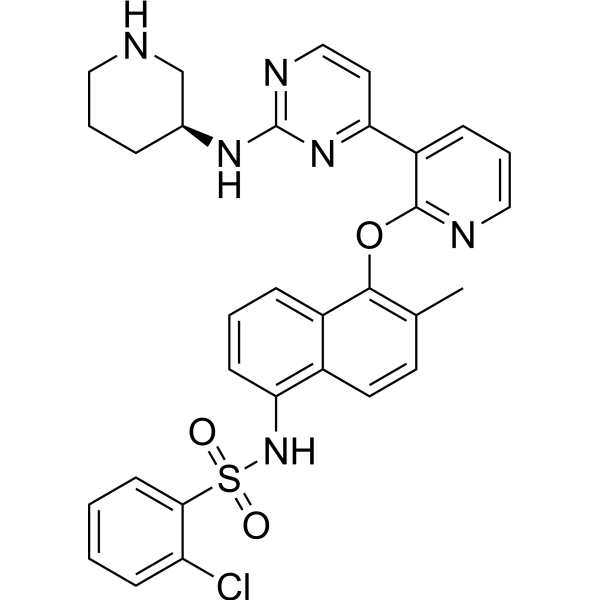
HY-114368
Kira8IRE1α Inhibitor -
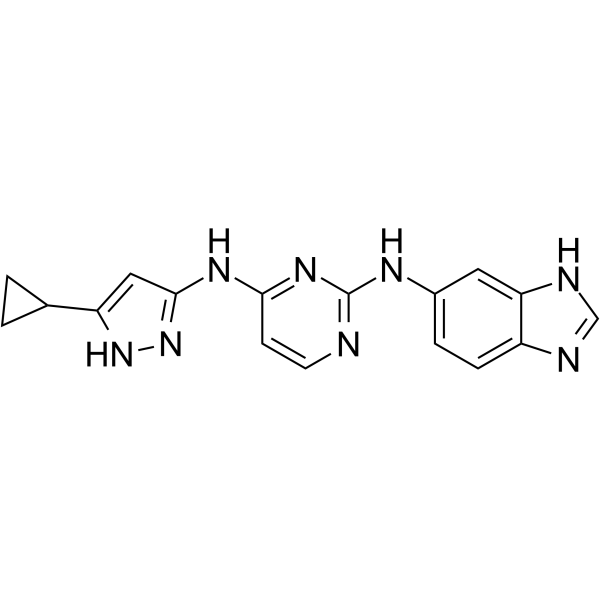
HY-17537
APY29IRE1 Inhibitor -
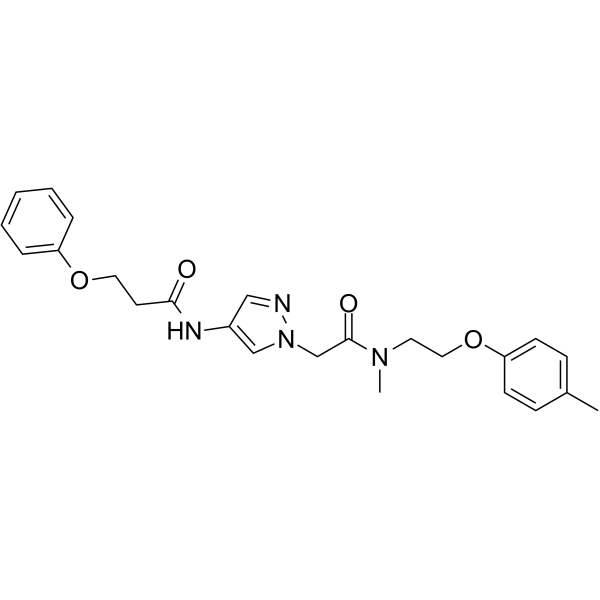
HY-139214
IXA4IRE1/XBP1s Activator -
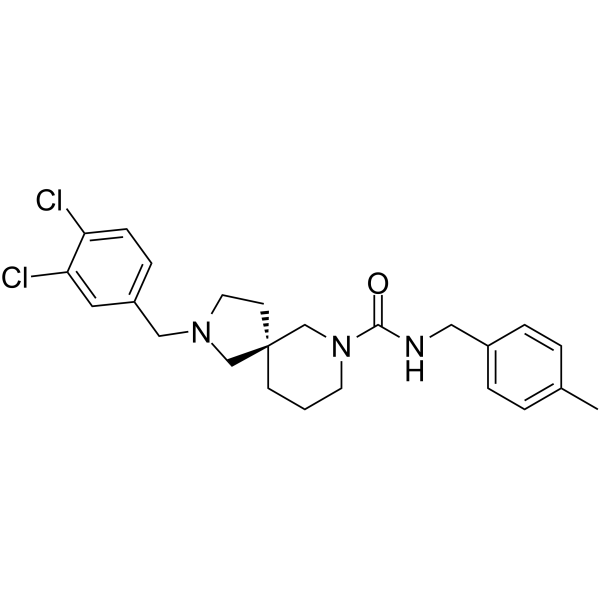
HY-U00459
GSK2850163IRE1α Inhibitor -
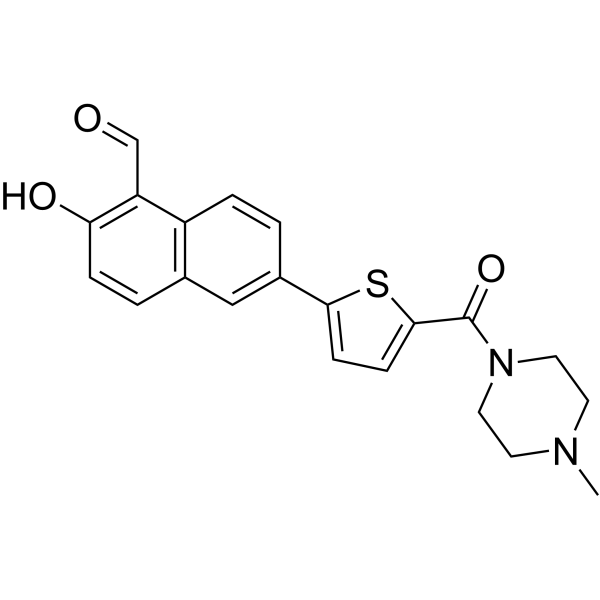
HY-19710
MKC3946IRE1 Inhibitor -
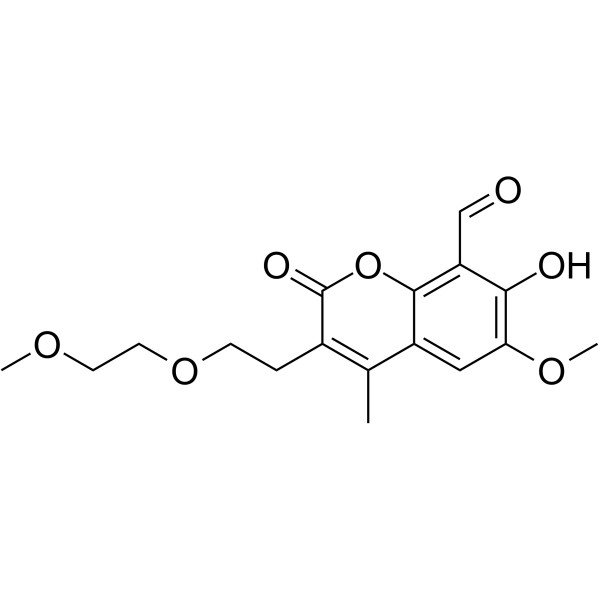
HY-12399
MKC9989HAA Inhibitor -
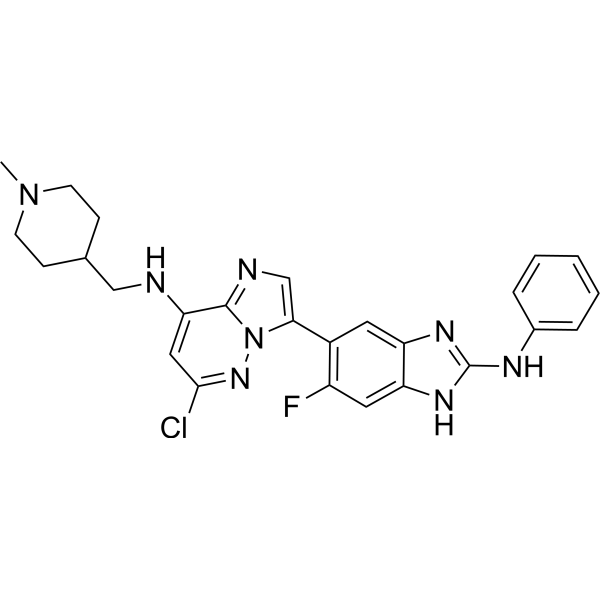
HY-136735
IRE1α kinase-IN-1IRE1α Inhibitor -
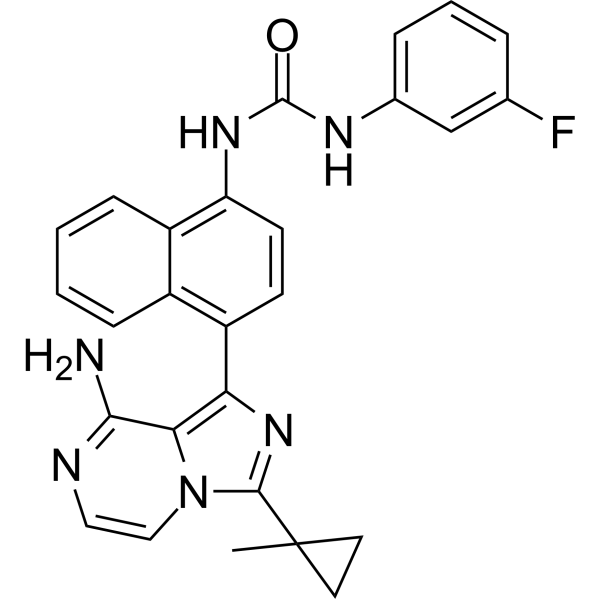
HY-124646
KIRA-7IRE1α Inhibitor
Publications Citing Use of MedChemExpress (MCE) B I09
More

Activité biologique
Description
IC50 & Target
IC50: 1230 nM (IRE-1 RNase)[1].
Cellular Effect
|
Cell Line

|
Type | Value | Description | References |
|---|---|---|---|---|
| Sf21 | IC50 |
1230 nM
Compound: 28
|
Inhibition of human recombinant puritin-His-tagged IRE-1 RNase expressed in SF21 cells using XBP-1 RNA stem loop as substrate incubated for 30 mins prior to substrate addition measured after 2 hrs by FRET-suppression assay
Inhibition of human recombinant puritin-His-tagged IRE-1 RNase expressed in SF21 cells using XBP-1 RNA stem loop as substrate incubated for 30 mins prior to substrate addition measured after 2 hrs by FRET-suppression assay
|
[PMID: 24749861] |
In Vitro
B I09 is an IRE-1 RNase inhibitor, with an IC50 of 1230 nM[1]. Treatment of CLL cells with this inhibitor (B I09) mimick XBP-1 deficiency, including upregulation of IRE-1 expression and compromised BCR signaling. B I09 is highly effective in inhibiting splicing of XBP1 mRNA in human WaC3 cells and the expression of XBP-1s in LPS stimulated B cells[2].
MedChemExpress (MCE) has not independently confirmed the accuracy of these methods. They are for reference only.
In Vivo
MedChemExpress (MCE) has not independently confirmed the accuracy of these methods. They are for reference only.


Chemical Information
-
CAS No. 1607803-67-7
-
Appearance Solid
-
Masse moléculaire 303.31
-
Formule C16H17NO5
-
Color Light yellow to brown
-
SMILES
OC1=CC=C(C2=C(CNCC2)C3=O)C(O3)=C1C4OCCCO4
-
Livraison
Room temperature in continental US; may vary elsewhere.
-
Stockage
4°C, protect from light
* The compound is unstable in solutions, freshly prepared is recommended.


Publications (1)
-
Journal Impact Factor
-
Most Recent


Solvant et solubilité
In Vitro:
DMSO : 11.11 mg/mL (36.63 mM; Need ultrasonic; Hygroscopic DMSO has a significant impact on the solubility of product, please use newly opened DMSO)
Please refer to the solubility information to select the appropriate solvent. The compound is unstable in solutions, freshly prepared is recommended.
Please refer to the solubility information to select the appropriate solvent. The compound is unstable in solutions, freshly prepared is recommended.
Concentration (start) × Volume (start) = Concentration (final) × Volume (final)
In Vivo:
Select the appropriate dissolution method based on your experimental animal and administration route.
- For the following dissolution methods, please ensure to first prepare a clear stock solution using an In Vitro approach and then sequentially add co-solvents:
- To ensure reliable experimental results, the clarified stock solution can be appropriately stored based on storage conditions. As for the working solution for In Vivo experiments, it is recommended to prepare freshly and use it on the same day.
- The percentages shown for the solvents indicate their volumetric ratio in the final prepared solution. If precipitation or phase separation occurs during preparation, heat and/or sonication can be used to aid dissolution.
Add each solvent one by one: 10% DMSO 90% (20% SBE-β-CD in Saline)
Solubility: ≥ 1.11 mg/mL (3.66 mM); Clear solution
This protocol yields a clear solution of ≥ 1.11 mg/mL (saturation unknown).
Taking 1 mL working solution as an example, add 100 μL DMSO stock solution (11.1 mg/mL) to 900 μL 20% SBE-β-CD in Saline, and mix evenly.
Preparation of 20% SBE-β-CD in Saline (4°C, storage for one week): 2 g SBE-β-CD powder is dissolved in 10 mL Saline, completely dissolve until clear.
In Vivo Dissolution Calculator
Please enter the basic information of animal experiments:
-
-
-
-
Recommended: Prepare an additional quantity of animals to account for potential losses during experiments.
Please enter your animal formula composition:
-
%DMSO +
Recommended: Keep the proportion of DMSO in working solution below 2% if your animal is weak.
-
%+
-
+%Tween-80 + +
-
%Saline +
The co-solvents required include: DMSO, . All of co-solvents are available by MedChemExpress (MCE). , Tween 80. All of co-solvents are available by MedChemExpress (MCE).
Working solution concentration: 0.22 mg/mL
Method for preparing stock solution: mg drug dissolved in μL DMSO. Stock solution concentration: mg/mL. * The compound is unstable in solutions, freshly prepared is recommended.
1. Take μL DMSO stock solution;
2. Add μL .
μL , mix evenly;
3. Then add μL Tween 80, mix evenly;
4. Then add μL
Please ensure that the stock solution in the first step is dissolved to a clear state, and add co-solvents in sequence. You can use ultrasonic heating (ultrasonic cleaner, recommended frequency 20-40 kHz), vortexing, etc. to assist dissolution.


Pureté et documentation
-
Fiche technique (281 KB)
-
SDS (252 KB)
- English - EN (252 KB)
- Français - FR (252 KB)
- Deutsch - DE (252 KB)
- Norwegian - NO (252 KB)
- Español - ES (252 KB)
- Swedish - SV (252 KB)
- Italian - IT (252 KB)
- Korean - KR (252 KB)
- Portuguese - PT (252 KB)
-
Instruction de manipulation (2659 KB)
Références
[1]. Ranatunga S, et al. Synthesis of novel tricyclic chromenone-based inhibitors of IRE-1 RNase activity. J Med Chem. 2014 May 22;57(10):4289-301. [Content Brief]
[2]. Tang CH, et al. Inhibition of ER stress-associated IRE-1/XBP-1 pathway reduces leukemic cell survival. J Clin Invest. 2014 Jun;124(6):2585-98. [Content Brief]


Complete Stock Solution Preparation Table
Please refer to the solubility information to select the appropriate solvent. The compound is unstable in solutions, freshly prepared is recommended.
| Optional Solvent | Concentration Solvent Mass | 1 mg | 5 mg | 10 mg | 25 mg |
|---|---|---|---|---|---|
| DMSO | 1 mM | 3.2970 mL | 16.4848 mL | 32.9696 mL | 82.4239 mL |
| 5 mM | 0.6594 mL | 3.2970 mL | 6.5939 mL | 16.4848 mL | |
| 10 mM | 0.3297 mL | 1.6485 mL | 3.2970 mL | 8.2424 mL | |
| 15 mM | 0.2198 mL | 1.0990 mL | 2.1980 mL | 5.4949 mL | |
| 20 mM | 0.1648 mL | 0.8242 mL | 1.6485 mL | 4.1212 mL | |
| 25 mM | 0.1319 mL | 0.6594 mL | 1.3188 mL | 3.2970 mL | |
| 30 mM | 0.1099 mL | 0.5495 mL | 1.0990 mL | 2.7475 mL |


B I09 Related Classifications
HY-107400 Related Classifications
 Powered by Bioz