



Pluripotin

Based on 1 Customer Validation
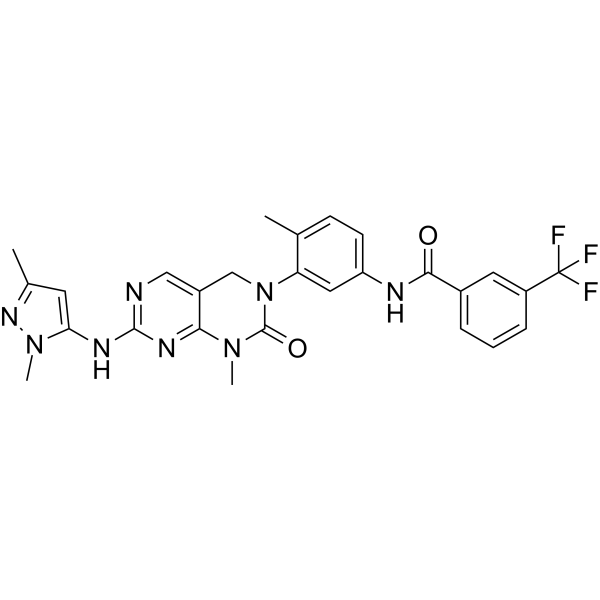
Pluripotin is a dual inhibitor of ERK1 and RasGAP with KDs of 98 nM and 212 nM, respectively. Pluripotin also inhibits RSK1, RSK2, RSK3, and RSK4 with IC50s of 0.5, 2.5, 3.3, and 10.0 μM, respectively.
Nos produits utilisent uniquement pour la recherche. Nous ne vendons pas aux patients.
- Pureté : 98.86%
- CAS No.: 839707-37-8
- Formule: C27H25F3N8O2
- Masse moléculaire:550.54
-
Stockage:Powder -20°C, 3 years , 4°C, 2 years ; In solvent -80°C, 2 years , -20°C, 1 year

To place orders, for customer services and technical support, please contact: MedChemExpress USA
Tel: 609-228-6898 E-mail: [email protected] [email protected]


-
 Activité biologique
-
Chemical Information
-
Solvant et solubilité
- Pureté et documentation
- Références
-
 Help & FAQs


-
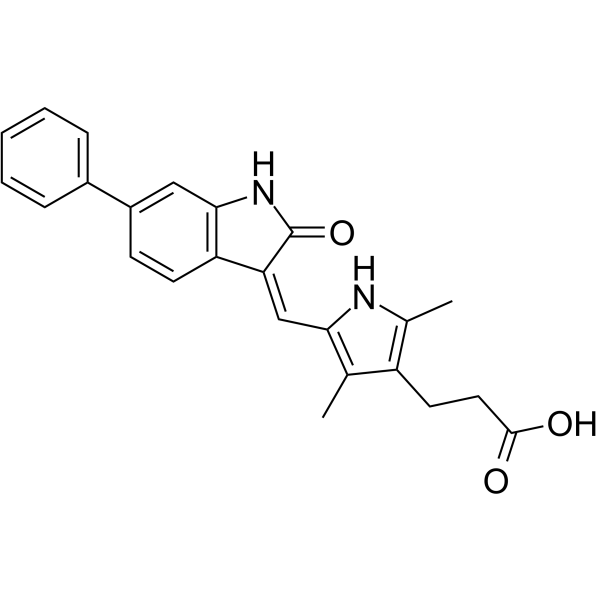
HY-108628
SU16fPDGFRβ Inhibitor -
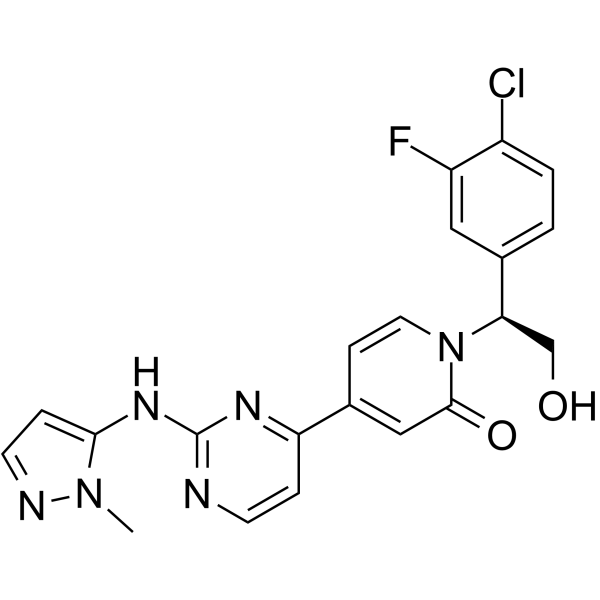
HY-15947
RavoxertinibERK1/2 Inhibitor -
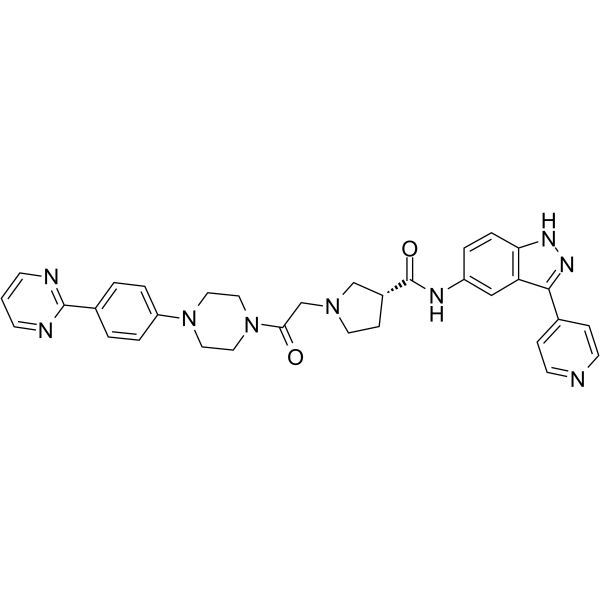
HY-50846
SCH772984ERK1/2 Inhibitor -
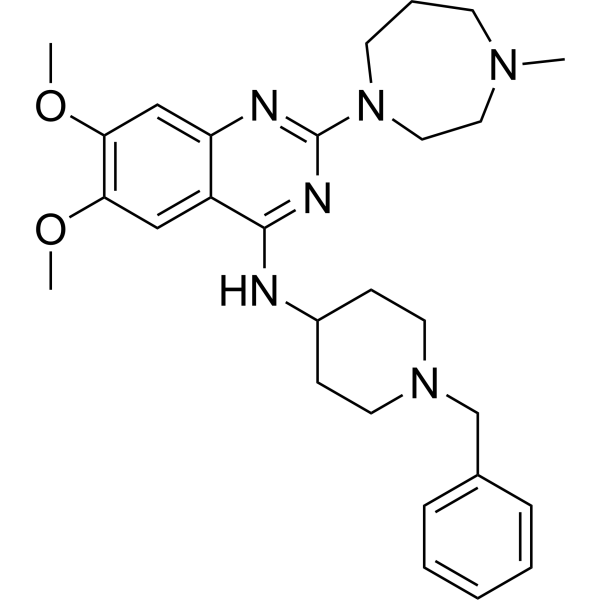
HY-10587
BIX-01294G9a/GLP Inhibitor -
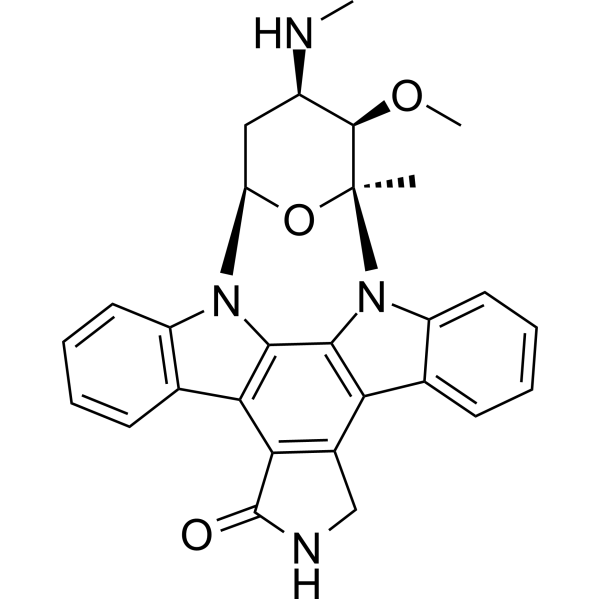
HY-15141
StaurosporinePKC/PKA Inhibitor -
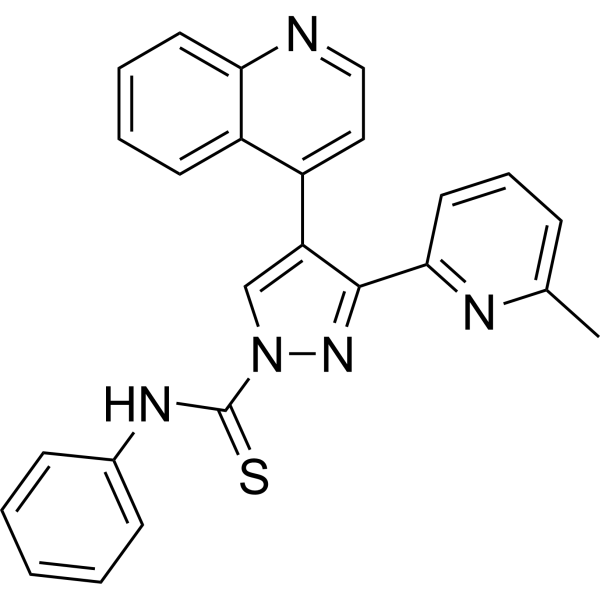
HY-10432
A 83-01ALK4/5/7 Inhibitor -
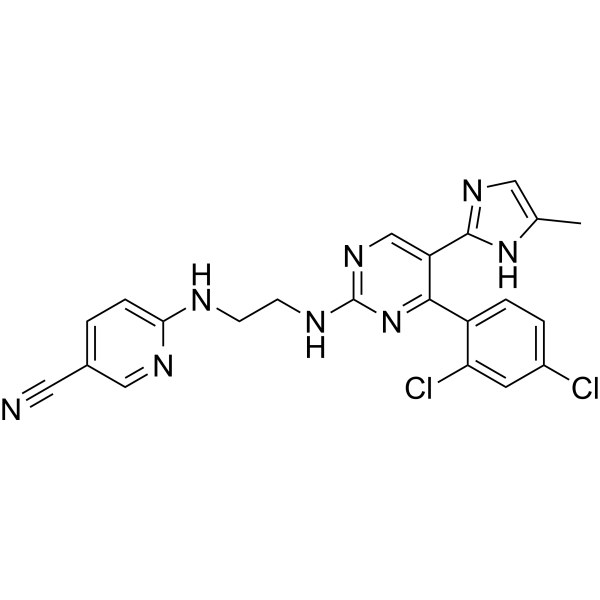
HY-10182
LaduviglusibGSK-3 Inhibitor -
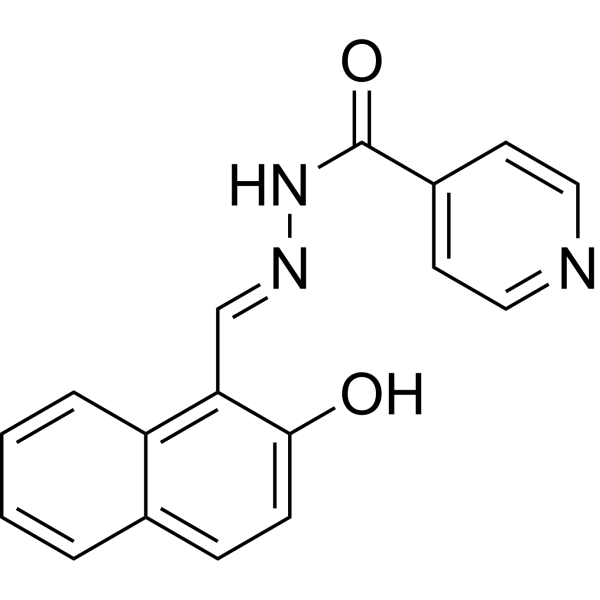
HY-100744
AS8351KDM5B Inhibitor -
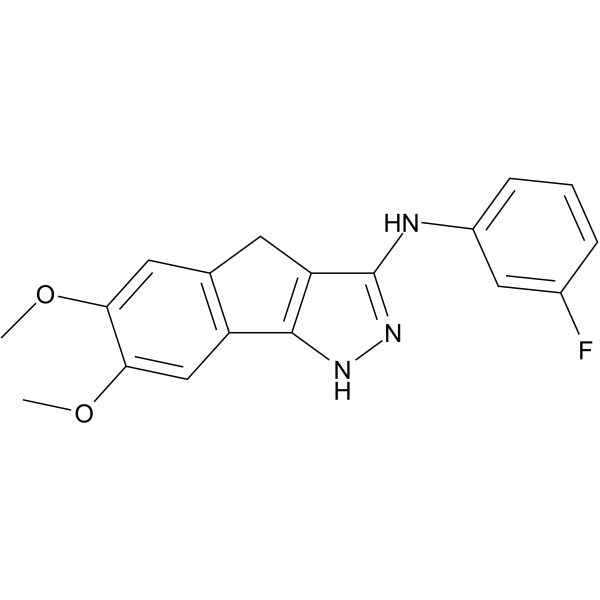
HY-W011266
JNJ-10198409 -
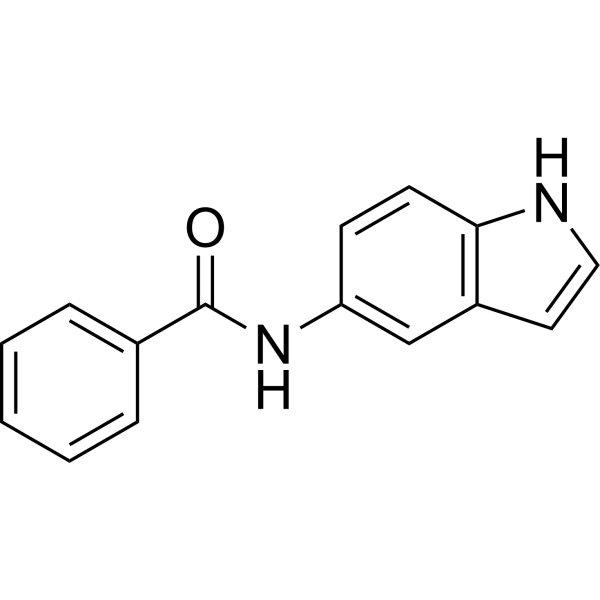
HY-12884
OAC2Oct3/4 Activator -
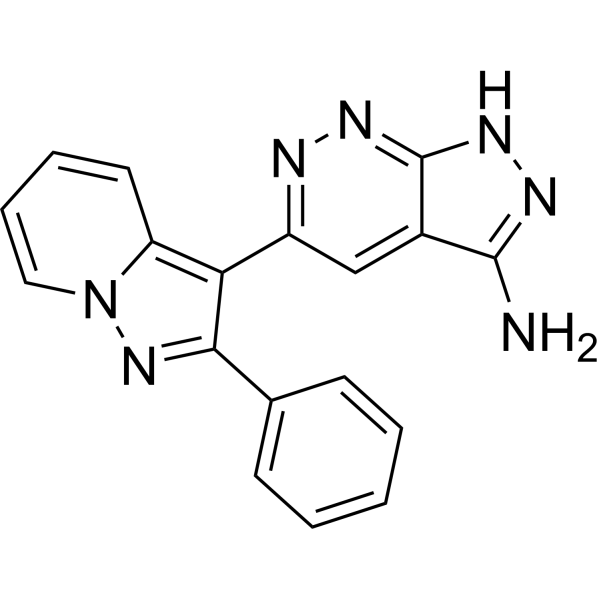
HY-12275
FR 180204ERK Inhibitor -
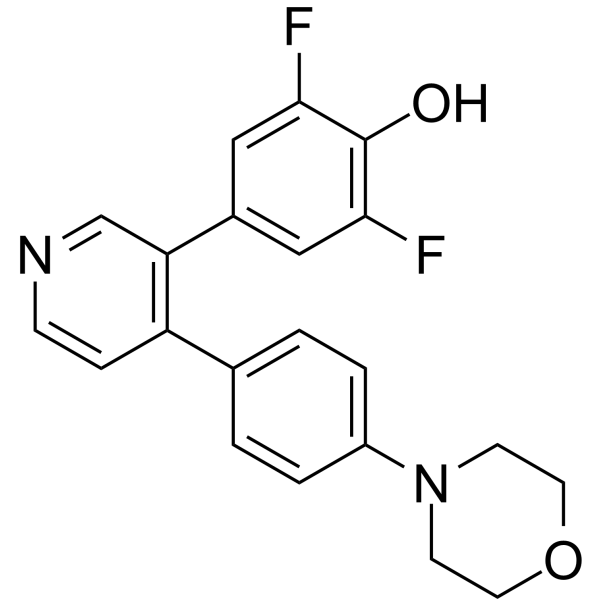
HY-19713
LJI308RSK Inhibitor


Activité biologique
Description
|
ERK1 98 nM (Kd) |
RasGAP 212 nM (Kd) |
RSK1 0.5 μM (IC50) |
RSK2 2.5 μM (IC50) |
RSK3 3.3 μM (IC50) |
RSK4 10 μM (IC50) |
Cellular Effect
|
Cell Line

|
Type | Value | Description | References |
|---|---|---|---|---|
| BaF3 | GI50 |
2.064 μM
Compound: 10g
|
Growth inhibition of parental mouse BA/F3 cells after 72 hrs by celltiter-glo assay
Growth inhibition of parental mouse BA/F3 cells after 72 hrs by celltiter-glo assay
|
[PMID: 30153003] |
| OCI-AML-3 | GI50 |
0.208 μM
Compound: 10g
|
Growth inhibition of human OCI-AML3 cells harboring NRAS-Q61L mutant after 72 hrs by celltiter-glo assay
Growth inhibition of human OCI-AML3 cells harboring NRAS-Q61L mutant after 72 hrs by celltiter-glo assay
|
[PMID: 30153003] |
| U-937 | GI50 |
2.463 μM
Compound: 10g
|
Growth inhibition of parental human U937 cells after 72 hrs by celltiter-glo assay
Growth inhibition of parental human U937 cells after 72 hrs by celltiter-glo assay
|
[PMID: 30153003] |
In Vitro
Pluripotin (SC-1) inhibits Abl1, p70S6K, PLK2, RSK1, RSK2, RSK3, RSK4 with IC50s of 0.005, 1.4, 2.2, 0.5, 2.5, 3.3, 10.0 μM,respectively. Pluripotin (SC-1) decreases cell growth for 7 colon tumor cell lines. After a five day exposure to 0.1 μM SC-1, the seven colon tumor lines are evaluated for changes in cell number and viability. There is a statistically significant decrease in cell number but >95% viability[2].
MedChemExpress (MCE) has not independently confirmed the accuracy of these methods. They are for reference only. .


Chemical Information
-
CAS No. 839707-37-8
-
Appearance Solid
-
Masse moléculaire 550.54
-
Formule C27H25F3N8O2
-
Color White to off-white
-
SMILES
CN1C(NC2=NC=C3C(N(C)C(N(C4=CC(NC(C5=CC=CC(C(F)(F)F)=C5)=O)=CC=C4C)C3)=O)=N2)=CC(C)=N1
-
Synonyms
SC1
-
Livraison
Room temperature in continental US; may vary elsewhere.
-
Stockage
Powder -20°C 3 years 4°C 2 years In solvent -80°C 2 years -20°C 1 year


Solvant et solubilité
In Vitro:
DMSO : 25 mg/mL (45.41 mM; Need ultrasonic; Hygroscopic DMSO has a significant impact on the solubility of product, please use newly opened DMSO)
Please refer to the solubility information to select the appropriate solvent. Once prepared, please aliquot and store the solution to prevent product inactivation from repeated freeze-thaw cycles.
Storage method and period of stock solution: -80°C, 2 years; -20°C, 1 year. When stored at -80°C, please use it within 2 years. When stored at -20°C, please use it within 1 year.
Please refer to the solubility information to select the appropriate solvent. Once prepared, please aliquot and store the solution to prevent product inactivation from repeated freeze-thaw cycles.
Storage method and period of stock solution: -80°C, 2 years; -20°C, 1 year. When stored at -80°C, please use it within 2 years. When stored at -20°C, please use it within 1 year.
Concentration (start) × Volume (start) = Concentration (final) × Volume (final)
In Vivo:
Select the appropriate dissolution method based on your experimental animal and administration route.
- For the following dissolution methods, please ensure to first prepare a clear stock solution using an In Vitro approach and then sequentially add co-solvents:
- To ensure reliable experimental results, the clarified stock solution can be appropriately stored based on storage conditions. As for the working solution for In Vivo experiments, it is recommended to prepare freshly and use it on the same day.
- The percentages shown for the solvents indicate their volumetric ratio in the final prepared solution. If precipitation or phase separation occurs during preparation, heat and/or sonication can be used to aid dissolution.
Add each solvent one by one: 10% DMSO 40% PEG300 5% Tween-80 45% Saline
Solubility: ≥ 2.5 mg/mL (4.54 mM); Clear solution
This protocol yields a clear solution of ≥ 2.5 mg/mL (saturation unknown).
Taking 1 mL working solution as an example, add 100 μL DMSO stock solution (25.0 mg/mL) to 400 μL PEG300, and mix evenly; then add 50 μL Tween-80 and mix evenly; then add 450 μL Saline to adjust the volume to 1 mL.
Preparation of Saline: Dissolve 0.9 g sodium chloride in ddH₂O and dilute to 100 mL to obtain a clear Saline solution.
In Vivo Dissolution Calculator
Please enter the basic information of animal experiments:
-
-
-
-
Recommended: Prepare an additional quantity of animals to account for potential losses during experiments.
Please enter your animal formula composition:
-
%DMSO +
Recommended: Keep the proportion of DMSO in working solution below 2% if your animal is weak.
-
%+
-
+%Tween-80 + +
-
%Saline +
The co-solvents required include: DMSO, . All of co-solvents are available by MedChemExpress (MCE). , Tween 80. All of co-solvents are available by MedChemExpress (MCE).
Working solution concentration: 0.22 mg/mL
Method for preparing stock solution: mg drug dissolved in μL DMSO. Stock solution concentration: mg/mL.
1. Take μL DMSO stock solution;
2. Add μL .
μL , mix evenly;
3. Then add μL Tween 80, mix evenly;
4. Then add μL
Please ensure that the stock solution in the first step is dissolved to a clear state, and add co-solvents in sequence. You can use ultrasonic heating (ultrasonic cleaner, recommended frequency 20-40 kHz), vortexing, etc. to assist dissolution.


Pureté et documentation
-
Fiche technique (273 KB)
-
SDS (393 KB)
- English - EN (393 KB)
- Français - FR (393 KB)
- Deutsch - DE (393 KB)
- Norwegian - NO (393 KB)
- Español - ES (393 KB)
- Swedish - SV (393 KB)
- Italian - IT (393 KB)
- Korean - KR (393 KB)
- Portuguese - PT (393 KB)
-
Instruction de manipulation (2659 KB)
Références
[1]. Chen S, et al. Self-renewal of embryonic stem cells by a small molecule. Proc Natl Acad Sci U S A. 2006 Nov 14;103(46):17266-71. [Content Brief]
[2]. Mertins SD, et al. A small molecule (pluripotin) as a tool for studying cancer stem cell biology: proof of concept. PLoS One. 2013;8(2):e57099. [Content Brief]


Complete Stock Solution Preparation Table
Please refer to the solubility information to select the appropriate solvent. Once prepared, please aliquot and store the solution to prevent product inactivation from repeated freeze-thaw cycles.
Storage method and period of stock solution: -80°C, 2 years; -20°C, 1 year. When stored at -80°C, please use it within 2 years. When stored at -20°C, please use it within 1 year.
| Optional Solvent | Concentration Solvent Mass | 1 mg | 5 mg | 10 mg | 25 mg |
|---|---|---|---|---|---|
| DMSO | 1 mM | 1.8164 mL | 9.0820 mL | 18.1640 mL | 45.4100 mL |
| 5 mM | 0.3633 mL | 1.8164 mL | 3.6328 mL | 9.0820 mL | |
| 10 mM | 0.1816 mL | 0.9082 mL | 1.8164 mL | 4.5410 mL | |
| 15 mM | 0.1211 mL | 0.6055 mL | 1.2109 mL | 3.0273 mL | |
| 20 mM | 0.0908 mL | 0.4541 mL | 0.9082 mL | 2.2705 mL | |
| 25 mM | 0.0727 mL | 0.3633 mL | 0.7266 mL | 1.8164 mL | |
| 30 mM | 0.0605 mL | 0.3027 mL | 0.6055 mL | 1.5137 mL | |
| 40 mM | 0.0454 mL | 0.2270 mL | 0.4541 mL | 1.1352 mL |


Pluripotin Related Classifications
HY-10579 Related Classifications
 Powered by Bioz