2438 Results for "

decrease

" in MedChemExpress (MCE) Product Catalog:
Products (2438)

2438 Results for "decrease" in MCE Product Catalog:

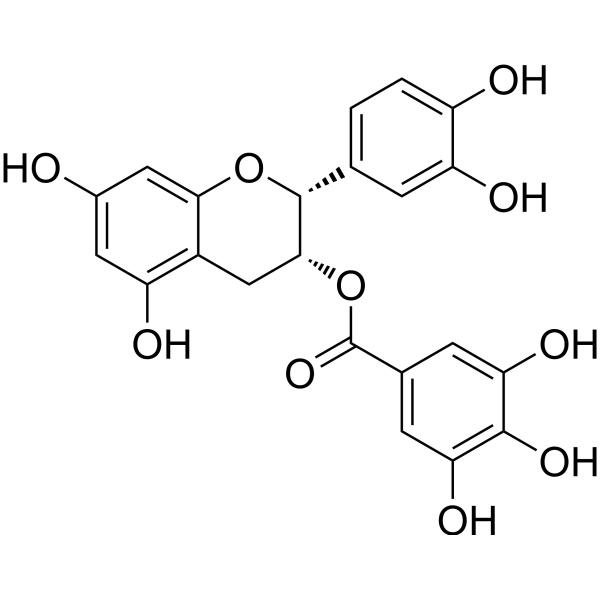
Cat. No.: HY-N0002R
CAS No.: 1257-08-5
Synonyms: Epicatechin gallate(Standard); ECG(Standard); (-)-Epicatechin 3-O-gallate (Standard)
(-)-Epicatechin gallate (Standard) is the analytical standard of (-)-Epicatechin gallate. This product is intended for research and analytical applications. (-)-Epicatechin gallate (Epicatechin gallate) inhibits cyclooxygenase-1 (COX-1) with an IC50 of 7.5 μM. (-)-Epicatechin gallate is a GLUT1 and GLUT5 inhibitor. (-)-Epicatechin gallate decreases cell growth of GLUT5-expressing hxt 0 yeast cells .
loading...
    loading...
Cat. No.: HY-N0633R
CAS No.: 541-91-3
Muscone (Standard) is the analytical standard of Muscone. This product is intended for research and analytical applications. Muscone is the main active monomer of traditional Chinese medicine musk. Muscone inhibits NF-κB and NLRP3 inflammasome activation. Muscone remarkably decreases the levels of inflammatory cytokines (IL-1β, TNF-α and IL-6), and ultimately improves cardiac function and survival rate .
loading...
    loading...
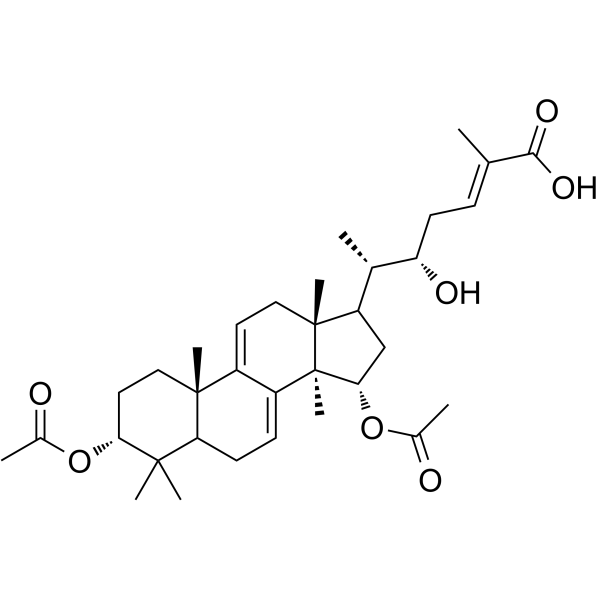
Cat. No.: HY-N11648
Ganoderic acid T1 is a deacetylated derivative of Ganoderic acid T. Ganoderic acid T1 attenuates antioxidant defense system and induces apoptosis of cancer cells. Ganoderic acid T1 decreases mitochondrial membrane potential and activates caspase-9 and caspase-3, to trigger apoptosis. Ganoderic acid T1 also increases the generation of intracellular ROS to produce pro-oxidant activities and cytotoxicity .
loading...
    loading...
Cat. No.: HY-N12788
CAS No.: 5937-11-1
T-Cadinol is a sesquiterpene isolated from C. sylvestris that exhibits anti-Trypanosoma cruzi activity, with IC50 values of 18.2 μM and 15.8 μM against trypomastigote and amastigote forms, respectively. T-Cadinol can induce mitochondrial damage in parasites, leading to membrane hyperpolarization and decreased levels of reactive oxygen species. T-Cadinol can be used for the research of Chagas disease .
loading...
    loading...
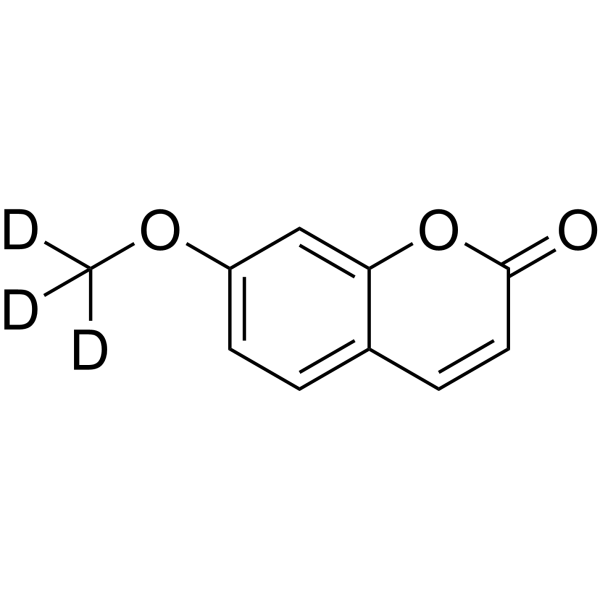
Cat. No.: HY-N1366S
CAS No.: 1600535-74-7
Synonyms: 7-Methoxycoumarin-d3; Methyl umbelliferyl ether-d3
Herniarin-d3 is the deuterium labeled Herniarin (HY-N1366). Herniarin is a natural coumarin occurs in some flowering plants with anticancer effects. Herniarin results in a significant decrease in cell viability by inducing apoptosis in MCF-7 cells. Herniarin also has anti-dermatophytic activity. Herniarin can be used for the study of bladder cancer and breast cancer .
loading...
    loading...
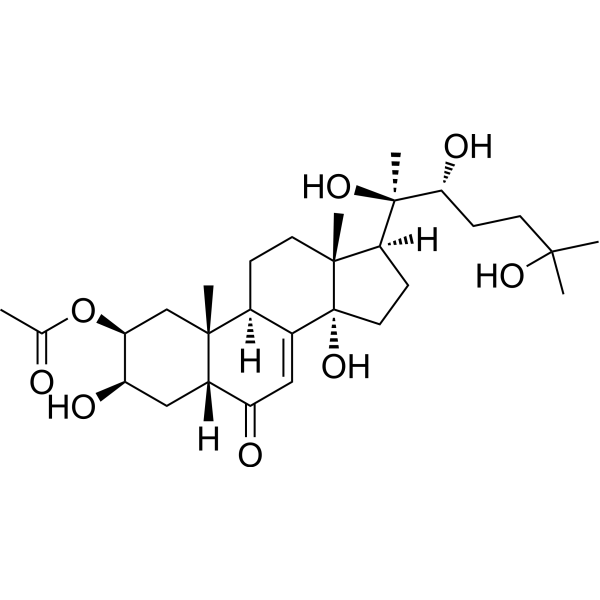
Cat. No.: HY-N6640
CAS No.: 19536-25-5
Synonyms: 20-Hydroxyeedysone 2-acetate
2-O-Acetyl-20-hydroxyecdysone, an ecdysterones in insects and terrestrial plants, inhibits amyloid-β42 (Aβ42)-induced cytotoxicity. 2-O-Acetyl-20-hydroxyecdysone could decrease Aβ oligomer formation through promotion of fibrogenesis, transforming Aβ oligomers to the low-toxicity fibrils .
loading...
    loading...
Cat. No.: HY-P10616
CAS No.: 624735-22-4
Target:  

Endogenous Metabolite

Domaines de recherche:  

Cardiovascular Disease

Salusin-α is an endogenous bioactive peptide with hemodynamic and cell proliferation activities. Salusin-α can stimulate the proliferation of quiescent vascular smooth muscle cells (VSMCs) and fibroblasts, leading to a rapid and significant decrease in blood pressure and heart rate, but its effect is weaker than that of Salusin-β (HY-P10617). Salusin-α has potential application value in cardiovascular disease research .
loading...
    loading...
Cat. No.: HY-P11588
Domaines de recherche:  

Metabolic Disease

KBP-042 is an orally active amylin receptor activator, a calcitonin receptor activator. KBP-042 induces sustained weight loss, reduces adipose tissue mass, lowers hepatic lipid deposition, increases plasma adiponectin, decreases plasma leptin, and reduces plasma glucose-dependent insulinotropic peptide levels. KBP-042 can be used for the research of obesity and insulin resistance .
loading...
    loading...
Cat. No.: HY-P11610
CAS No.: 1776112-67-4
Domaines de recherche:  

Metabolic Disease

KBP-089 is a dual Amylin and Calcitonin Receptor agonist. KBP-089 reduces body weight, decreases adipose tissue mass and improves glucose tolerance in obese rats. KBP-089 also eliminates lipid accumulation in the liver and muscle, and ameliorates glycemic homeostasis and insulin sensitivity. KBP-089 is applicable to the research of diseases such as obesity and type 2 diabetes .
loading...
    loading...
Cat. No.: HY-P990864

Target:  

CD3

Domaines de recherche:  

Inflammation/Immunology

Anti-CD3 Antibody (OKT-3) is a kind of mouse IgG2a κ antibody inhibitor, targeting to human CD3. Anti-CD3 Antibody (OKT-3) decreases T cells. Anti-CD3 Antibody (OKT-3) can be used for the research of immunology, such as graft-versus-host disease .
loading...
    loading...
Cat. No.: HY-P991445

Target:  

SARS-CoV

Domaines de recherche:  

Infection

REGN3051 is a human IgG1 monoclonal antibody (mAb) targeting MERS CoV. REGN3051 reduces viral titers in the lungs of mice expressing human DPP4. REGN3051 decreases lung disease severity and viral replication in marmosets inoculated with MERS-CoV. Recommended isotype control: Human IgG1 kappa, Isotype Control (HY-P99001) .
loading...
    loading...
Cat. No.: HY-P992336

Target:  

ADAMTS

Domaines de recherche:  

Inflammation/Immunology

CRB0017 is a recombinant monoclonal antibody targeting ADAMTS5, with high affinity for the spacer domain of ADAMTS5 and strong antigen specificity. CRB0017 binds to the spacer domain of ADAMTS5 and reduces the proteolytic activity of this enzyme. CRB0017 delays articular cartilage degradation, alleviates the pathological severity of osteoarthritis, and decreases the osteoarthritis histopathological score. CRB0017 is applicable to the research of osteoarthritis .
loading...
    loading...
Cat. No.: HY-W039315
CAS No.: 41107-82-8
2,5-Anhydro-D-mannitol, 97% is an antimetabolic fructose analogue. 2,5-Anhydro-D-mannitol, 97% depletes intracellular ATP, reduces oxygen consumption, regulates substrate oxidation, increases phosphomonoester levels, decreases inorganic phosphate levels, and promotes the release of intracellular calcium from intracellular calcium stores via phospholipase C-dependent activity in hepatocytes .
loading...
    loading...
Cat. No.: HY-W278582
CAS No.: 305343-00-4
Target:  

Topoisomerase Apoptosis

Domaines de recherche:  

Cancer

Topoisomerase II inhibitor 14 is a potent topoisomerase II inhibtor. Topoisomerase II inhibitor 14 induces apoptosis and arrests cell cycle at S phase and G2-M phases. Topoisomerase II inhibitor 14 exhibits antioxidant effect and decreases the level of GSH, MDA, and NO. Topoisomerase II inhibitor 14 can be used for the study of neck squamous cell carcinoma (HNSCC) .
loading...
    loading...
Cat. No.: HY-W800635
CAS No.: 2566404-74-6
Domaines de recherche:  

Others

4-Azide-TFP-Amide-PEG4-acid contains an aryl azide and a carboxylic acid with a PEG spacer to increase aqueous solubility and decrease steric hinderance during ligation. The aryl azide can be photo-activated with UV light (250 to 350 nm) for conjugation with biomolecules. Fluoro helps to stabilize the free radical intermediate. The carboxylic acid can be reacted with amines in the presence of an activator to form an amide bond.
loading...
    loading...
Cat. No.: HY-B0871R
CAS No.: 84087-01-4
Domaines de recherche:  

Others

Quinclorac (Standard) is the analytical standard of Quinclorac (HY-B0871). This product is intended for research and analytical applications. Quinclorac is a highly selective quinoline carboxylic acid synthetic auxin herbicide. Quinclorac weakly inhibits HPPD, accompanied by a transient decrease in carotenoids. Quinclorac upregulates ACC synthase (ACS), leading to the co-accumulation of ethylene and cyanide, while increasing the ABA/IAA ratio, which induces ROS burst, membrane lipid peroxidation (MDA) and lethal growth inhibition. Residual Quinclorac in soil can cause abnormal growth of subsequent tobacco crops. In calli of Phaseolus vulgaris, Quinclorac induces oxidative stress (increased MDA and decreased RGR), but cells after stepwise pressurized acclimation acquire a constitutive antioxidant state, which remains stable after de-acclimation and tolerates oxidative damage caused by Quinclorac. Quinclorac can be used in studies related to herbicide action mechanisms, bioremediation of soil residues, and adaptive responses of plant cells to oxidative stress .
loading...
    loading...
Cat. No.: HY-B0871S
Quinclorac- 13C is the 13C-labeled Quinclorac (HY-B0871). Quinclorac is a highly selective quinoline carboxylic acid synthetic auxin herbicide. Quinclorac weakly inhibits HPPD, accompanied by a transient decrease in carotenoids. Quinclorac upregulates ACC synthase (ACS), leading to the co-accumulation of ethylene and cyanide, while increasing the ABA/IAA ratio, which induces ROS burst, membrane lipid peroxidation (MDA) and lethal growth inhibition. Residual Quinclorac in soil can cause abnormal growth of subsequent tobacco crops. In calli of Phaseolus vulgaris, Quinclorac induces oxidative stress (increased MDA and decreased RGR), but cells after stepwise pressurized acclimation acquire a constitutive antioxidant state, which remains stable after de-acclimation and tolerates oxidative damage caused by Quinclorac. Quinclorac can be used in studies related to herbicide action mechanisms, bioremediation of soil residues, and adaptive responses of plant cells to oxidative stress .
loading...
    loading...
Cat. No.: HY-L089
1,223 compounds

Mitochondria plays an important role in many vital processes in cells, including energy production, fatty-acid oxidation and the Tricarboxylic Acid (TCA) cycle, calcium signaling, permeability transition, apoptosis and heat production. At present, it is recognized that many diseases are associated with impaired mitochondrial function, such as increased accumulation of ROS and decreased OXPHOS and ATP production. Mitochondria are recognized as one of the most important targets for new drug design in cancer, cardiovascular, and neurological diseases, etc. Some small molecule drugs or biologics can act on mitochondria through various pathways, including ETC inhibition, OXPHOS uncoupling, mitochondrial Ca2+ modulation, and control of oxidative stress via decrease or increase of mitochondrial ROS accumulation.

MCE supplies a unique collection of 1,223 mitochondria-targeted compound that mainly targeting Mitochondrial Metabolism, ATP Synthase, Mitophagy, Reactive Oxygen Species, etc. MCE Mitochondria-Targeted Compound Library is a useful tool for mitochondria-targeted drug discovery and related research.

Cat. No.: HY-100679B
CAS No.: 1821379-62-7
Target:  

Monoamine Oxidase

Domaines de recherche:  

Neurological Disease

(R)-Pirlindole mesylate is selective and reversible a Monoamine oxidase A (MAO-A) inhibitor with an IC50 of 0.43  μM for MAO-A over MAO-B. (R)-Pirlindole mesylate has an antidepressant activity. (R)-Pirlindole mesylate significantly decreases immobility time of the forced swim test and inhibits Reserpine (HY-N0480)-induced palpebral ptosis in behavioural mice models. (R)-Pirlindole mesylate can be used for depression research .
loading...
    loading...
Cat. No.: HY-101276
CAS No.: 459814-89-2
Target:  

MMP

Domaines de recherche:  

Inflammation/Immunology

AZD-1236 is a dual inhibitor of MMP-9 and MMP-12. AZD-1236 selectively inhibits the activities of MMP-9 and MMP-12. AZD-1236 regulates biomarkers, reduces elastin degradation, and decreases lymphocyte levels in sputum and blood. AZD-1236 can be used for research related to chronic obstructive pulmonary disease .
loading...
    loading...

