



1331908-02-1
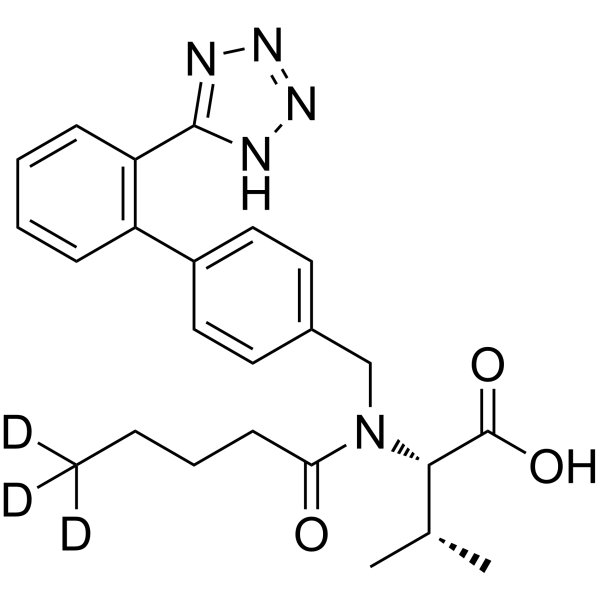
1331908-02-1
Chemical Structure
Valsartan-d3
Synonym(s): CGP 48933-d3
- CAS No.: 1331908-02-1
- Formula:C24H26D3N5O3
- Molecular Weight:438.54
IUPAC Name: N-((2'-(1H-tetrazol-5-yl)-[1,1'-biphenyl]-4-yl)methyl)-N-(pentanoyl-5,5,5-d3)-L-valine
InChIKey: ACWBQPMHZXGDFX-MVTYLIICSA-N
SMILES: CC(C)[C@@H](C(O)=O)N(C(CCCC([2H])([2H])[2H])=O)CC1=CC=C(C=C1)C2=C(C3=NN=NN3)C=CC=C2
Biological Activity: Valsartan-d3 is the deuterium labeled Valsartan[1]. Valsartan (CGP 48933) is an angiotensin II receptor antagonist and has the potential for high blood pressure and heart failure research[2].
| Cat. No. | Product Name | Purity | Description | Pricing | |||||||||||||||||||
|---|---|---|---|---|---|---|---|---|---|---|---|---|---|---|---|---|---|---|---|---|---|---|---|
|
|
Valsartan-d3 | 94.36% | Valsartan-d3 is the deuterium labeled Valsartan. Valsartan (CGP 48933) is an angiotensin II receptor antagonist and has the potential for high blood pressure and heart failure research. | ||||||||||||||||||||
|
loading...
/
|
|||||||||||||||||||||||
|
|
Valsartan (Standard) | 99.95% | Valsartan (Standard) is the analytical standard of Valsartan. This product is intended for research and analytical applications. Valsartan (CGP 48933) is an angiotensin II receptor antagonist and has the potential for high blood pressure and heart failure research. | ||||||||||||||||||||
|
loading...
/
|
|||||||||||||||||||||||
|
|
(Rac)-Valsartan-d9 | (Rac)-Valsartan-d9 is deuterium labeled Valsartan. Valsartan (CGP 48933) is an angiotensin II receptor antagonist and has the potential for high blood pressure and heart failure research. | |||||||||||||||||||||
|
loading...
/
|
|||||||||||||||||||||||
|
|
Valsartan-d9 | 99.33% | Valsartan-d9 is deuterium labeled valsartan. Valsartan is an angiotensin II receptor antagonist and has the potential for high blood pressure and heart failure research. | ||||||||||||||||||||
|
loading...
/
|
|||||||||||||||||||||||
|
|
Valsartan-d8 | 99.59% | Valsartan-d8 is the deuterium labeled Valsartan. Valsartan (CGP 48933) is an angiotensin II receptor antagonist and has the potential for high blood pressure and heart failure research. | ||||||||||||||||||||
|
loading...
/
|
|||||||||||||||||||||||
|
|
Valsartan | 99.97% | Valsartan (CGP 48933) is an angiotensin II receptor antagonist and has the potential for high blood pressure and heart failure research. | ||||||||||||||||||||
|
loading...
/
|
|||||||||||||||||||||||
Structural Analogs
-
Similarity Score 0.89
 HY-I1208D-Valsartan
-
Similarity Score 0.88
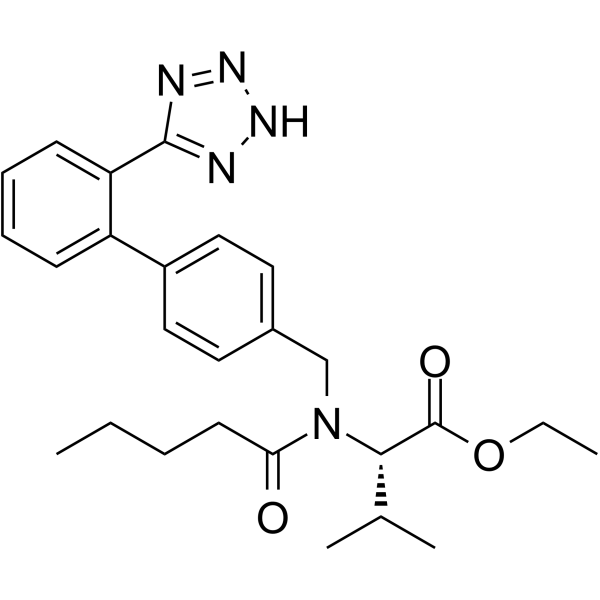 HY-135363Valsartan Ethyl Ester
-
Similarity Score 0.85
 HY-Z0062R(S)-N-Butyryl-N-[[2'-(1H-tetrazol-5-yl)biphenyl-4-yl]methyl]valine (Standard)
-
Similarity Score 0.81
 HY-W414915RValsartan methyl ester (Standard)
-
Similarity Score 0.81
 HY-W6995334-Hydroxy valsartan
-
Similarity Score 0.71
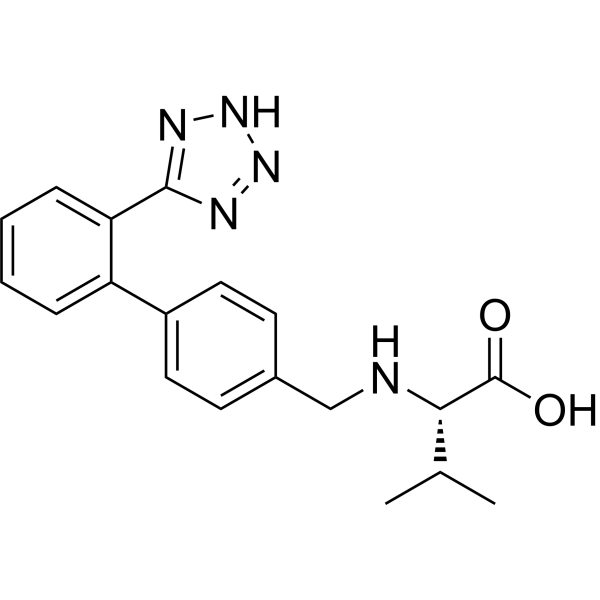 HY-131280Devaleryl Valsartan Impurity
-
Similarity Score 0.70
 HY-Z0061Valsartan benzyl ester
-
Similarity Score 0.64
 HY-118300Abitesartan
-
Similarity Score 0.58
 HY-Z0061RValsartan benzyl ester (Standard)
-

Explore the MedChemAI to find more analogs


References
- [1]. Russak EM, et al. Impact of Deuterium Substitution on the Pharmacokinetics of Pharmaceuticals. Ann Pharmacother. 2019 Feb;53(2):211-216. [Content Brief]
- [2]. Shan H, et al. Valsartan ameliorates ageing-induced aorta degeneration via angiotensin II type 1 receptor-mediated ERK activity. J Cell Mol Med. 2014 Jun;18(6):1071-80. [Content Brief]



