



201216-39-9
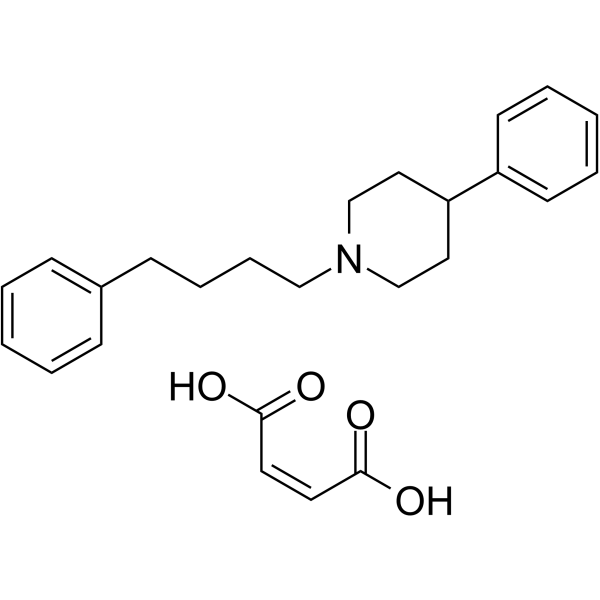
201216-39-9
Chemical Structure
4-PPBP maleate
- No. CAS: 201216-39-9
- Formula:C25H31NO4
- Molecular Weight:409.52
IUPAC Name: 4-phenyl-1-(4-phenylbutyl)piperidine maleate
InChIKey: OASPNIMFGJVLES-BTJKTKAUSA-N
SMILES: O=C(O)/C=C\C(O)=O.N1(CCCCC2=CC=CC=C2)CCC(C3=CC=CC=C3)CC1
Biological Activity: 4-PPBP maleate is a potent σ 1 receptor ligand and agonist. 4-PPBP maleate is a non-competitive, selective NR1a/2B NMDA receptors (expressed in Xenopus oocytes) antagonist. 4-PPBP maleate provides neuroprotection[1][2][3].
| Referencia número | Nombre del producto | Pureza | Descripciòn | Pricing | |||||||||||||||||||
|---|---|---|---|---|---|---|---|---|---|---|---|---|---|---|---|---|---|---|---|---|---|---|---|
|
|
4-PPBP maleate | 99.63% | 4-PPBP maleate is a potent σ 1 receptor ligand and agonist. 4-PPBP maleate is a non-competitive, selective NR1a/2B NMDA receptors (expressed in Xenopus oocytes) antagonist. 4-PPBP maleate provides neuroprotection. | ||||||||||||||||||||
|
loading...
/
|
|||||||||||||||||||||||
Structural Analogs
-
Similarity Score 0.67
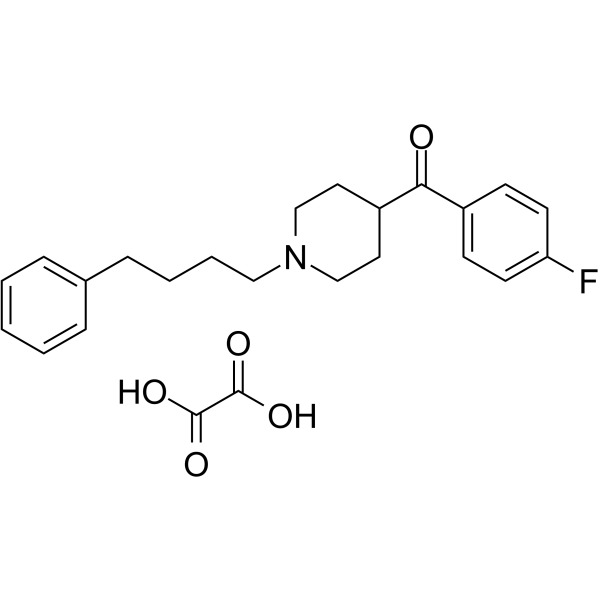 HY-1009704F 4PP oxalate
-
Similarity Score 0.64
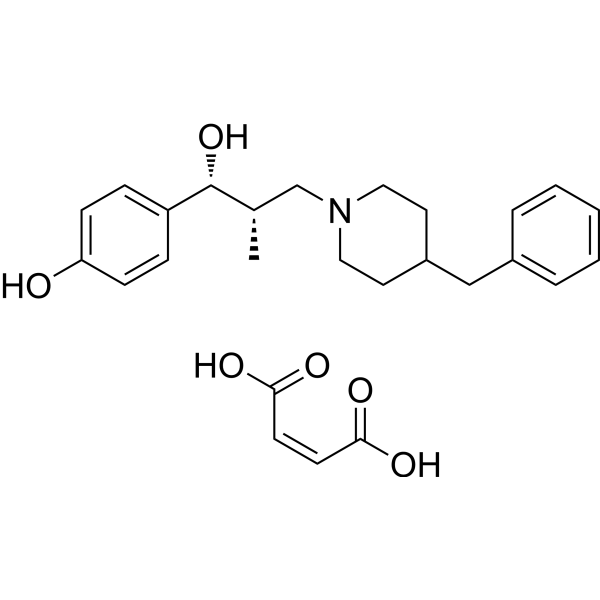 HY-13993ARo 25-6981 Maleate
-
Similarity Score 0.63
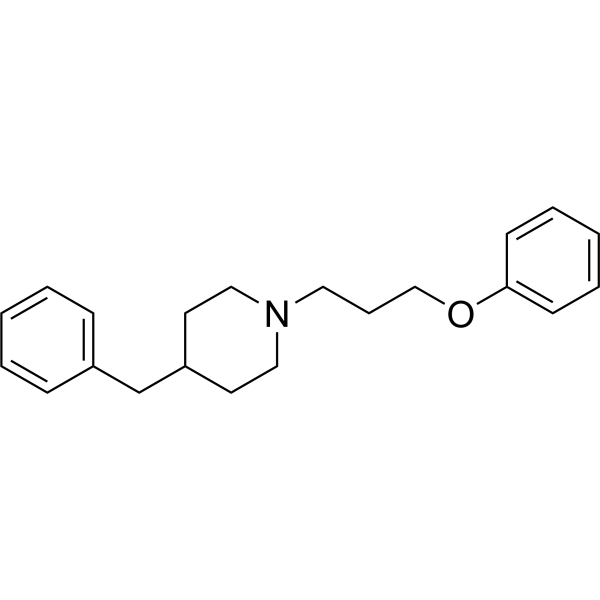 HY-149804S1R agonist 2
-
Similarity Score 0.63
 HY-122216LY 88329
-
Similarity Score 0.63
 HY-168818N-(1-Phenethyl-4-piperidyl)-N-phenethylpropanamide hydrochloride
-
Similarity Score 0.63
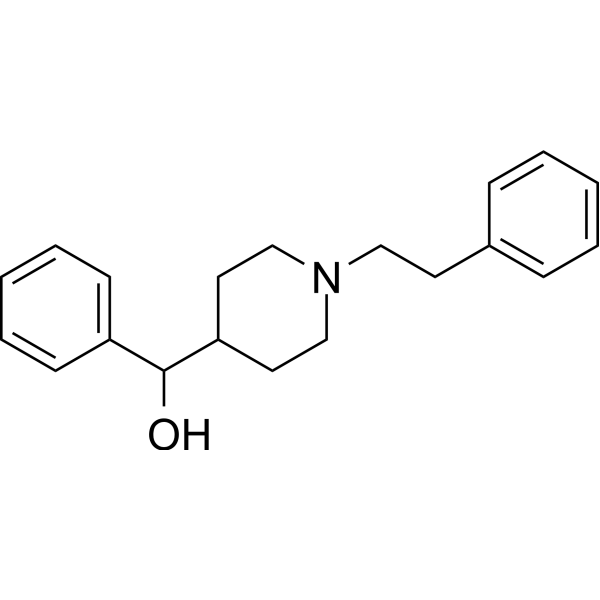 HY-101250Glemanserin
-
Similarity Score 0.62
 HY-100930L-693403 maleate
-
Similarity Score 0.62
 HY-12242BGBR 12935 fumarate
-
Similarity Score 0.62
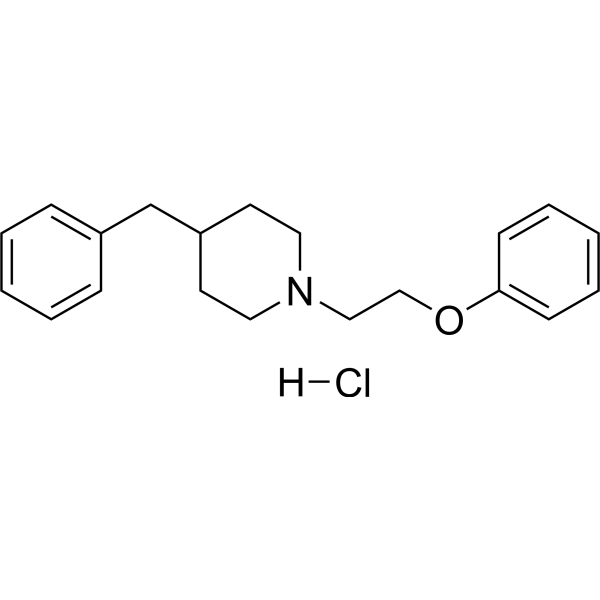 HY-149803AS1R agonist 1 hydrochloride
-

Explore the MedChemAI to find more analogs


References
- [1]. Whittemore ER, et al. Antagonism of N-methyl-D-aspartate receptors by sigma site ligands: potency, subtype-selectivity and mechanisms of inhibition. J Pharmacol Exp Ther. 1997;282(1):326-338. [Content Brief]
- [2]. Takahashi H, et al. PPBP [4-phenyl-1-(4-phenylbutyl) piperidine] decreases brain injury after transient focal ischemia in rats. Stroke. 1996;27(11):2120-2123. [Content Brief]
- [3]. Tan F, et al. The σ 1 receptor agonist 4-PPBP elicits ERK1/2 phosphorylation in primary neurons: a possible mechanism of neuroprotective action. Neuropharmacology. 2010;59(6):416-424. [Content Brief]



