



AIM-100
Based on 4 publication(s) in Google Scholar
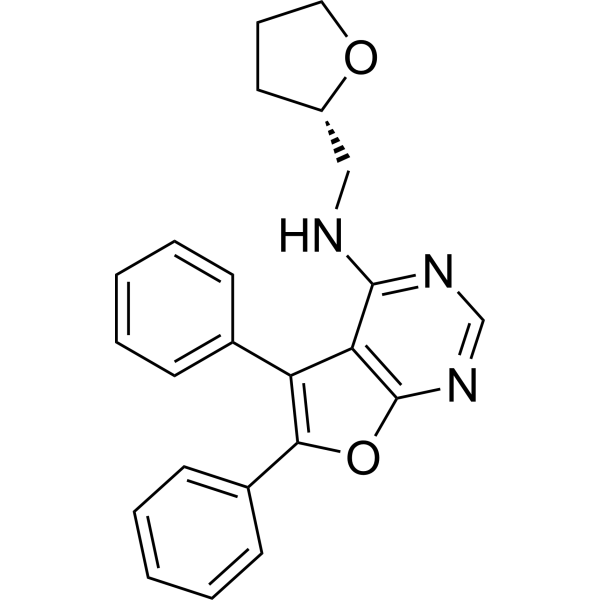
AIM-100 is a potent and selective Ack1 inhibitor with an IC50 of 21.58 nM. AIM-100 also inhibits Tyr267 phosphorylation. AIM-100 does not inhibits other kinases including PI3-kinase and AKT subfamily members. AIM-100 has an anticancer effect.
Nur für Forschungszwecke. Wir verkaufen nicht an Patienten.
- Reinheit : 99.95%
- CAS. Nr.: 873305-35-2
- Formel: C23H21N3O2
- Molecular Weight:371.43
-
Speicherung:Powder -20°C, 3 years , 4°C, 2 years ; In solvent -80°C, 2 years , -20°C, 1 year

To place orders, for customer services and technical support, please contact: MedChemExpress USA
Tel: 609-228-6898 E-mail: [email protected] [email protected]


-
 Biologische Aktivität
-
Chemical Information
-
Lösungsmittel & Löslichkeit
- Protokoll
- Reinheit & Dokumentation
- Verweise
-
 Help & FAQs


-
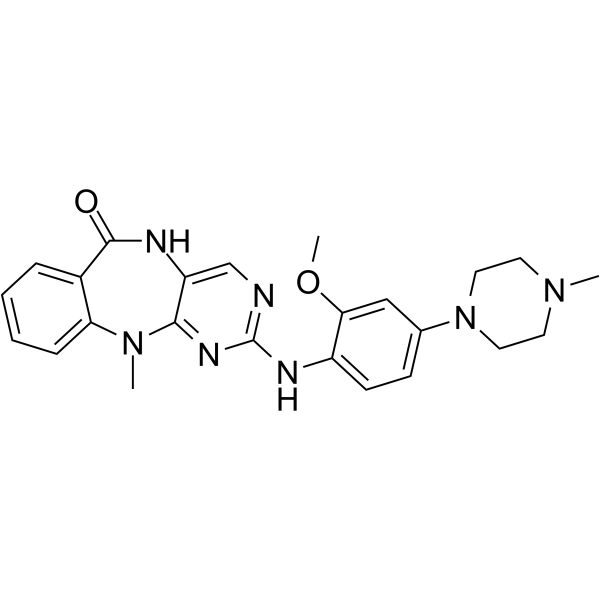
HY-15811
XMD8-87TNK2 Inhibitor -
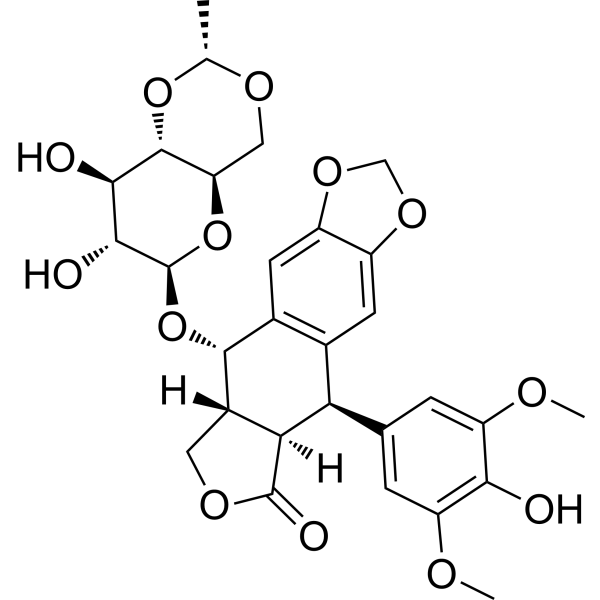
HY-13629
EtoposideTopoisomerase II Inhibitor -
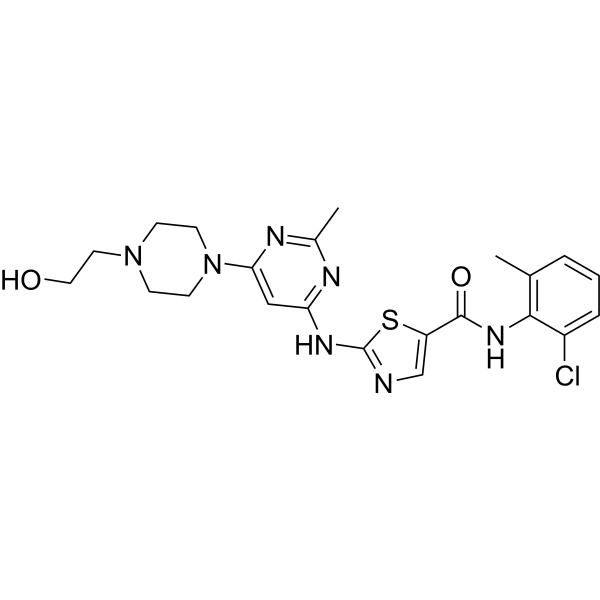
HY-10181
DasatinibSrc/Bcr-Abl Inhibitor -
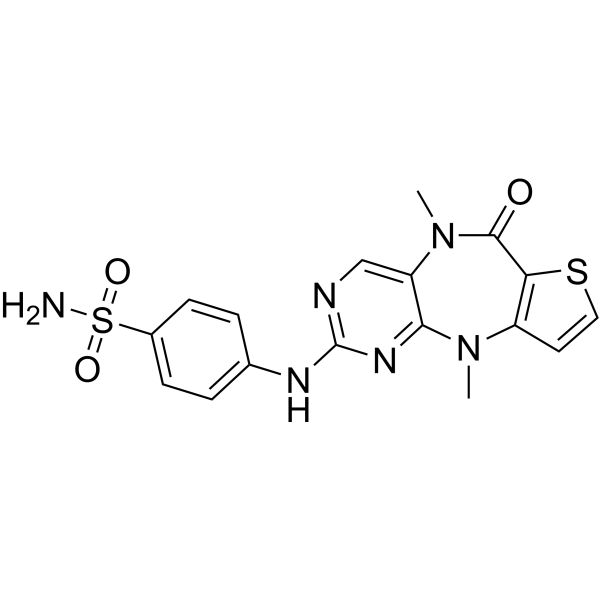
HY-100526
XMU-MP-1MST1/2 Inhibitor -
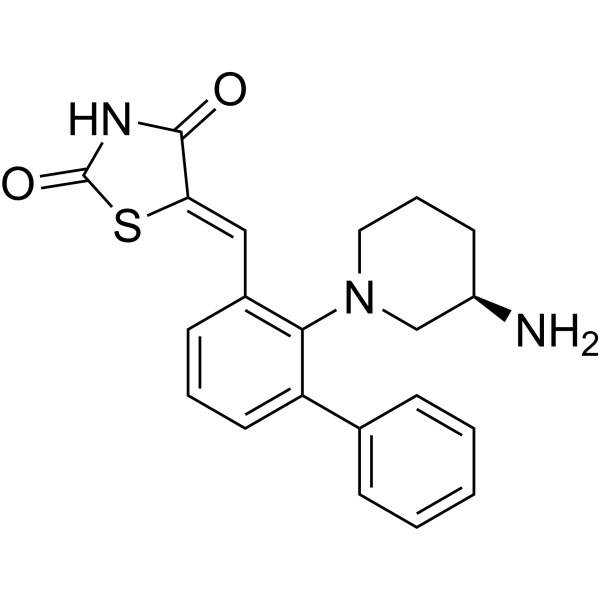
HY-15604
AZD1208PIM Inhibitor -
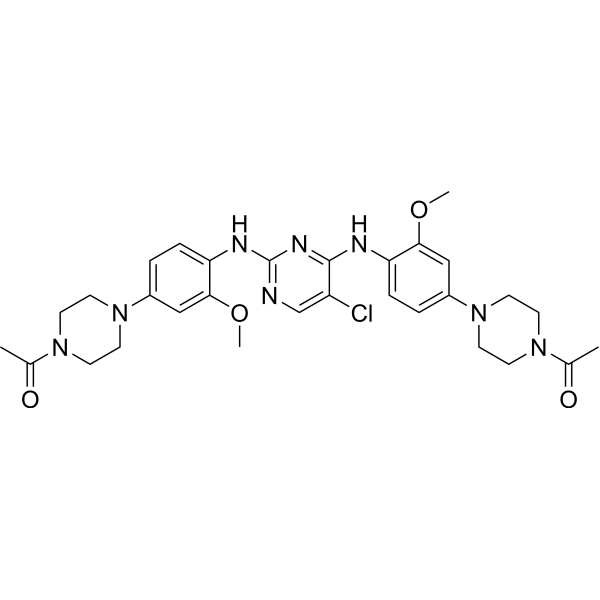
HY-12331
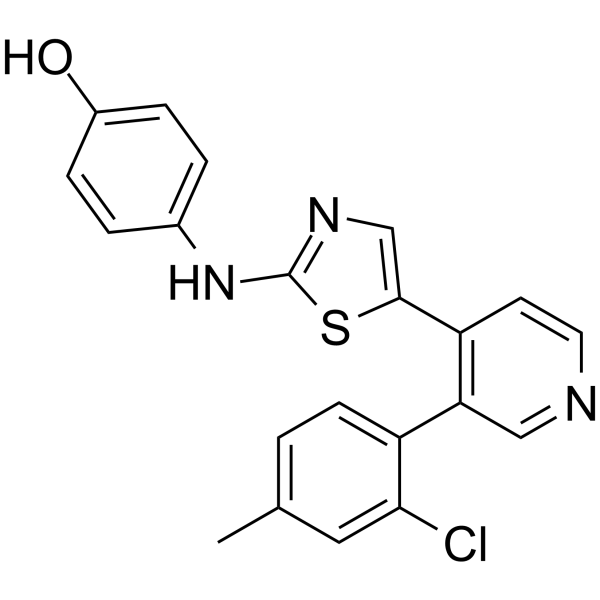
KRCA-0008ALK/Ack1 Inhibitor -
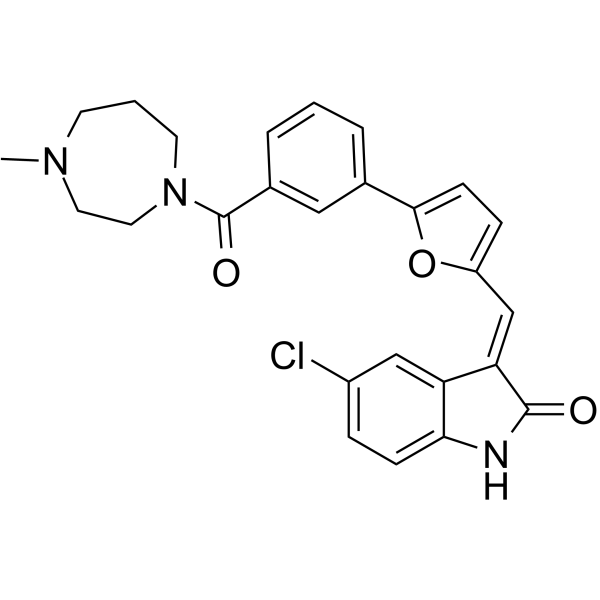
HY-18095
CX-6258Pim Kinases Inhibitor -
HY-120025
CRT0105950LIMK Inhibitor -
HY-101243
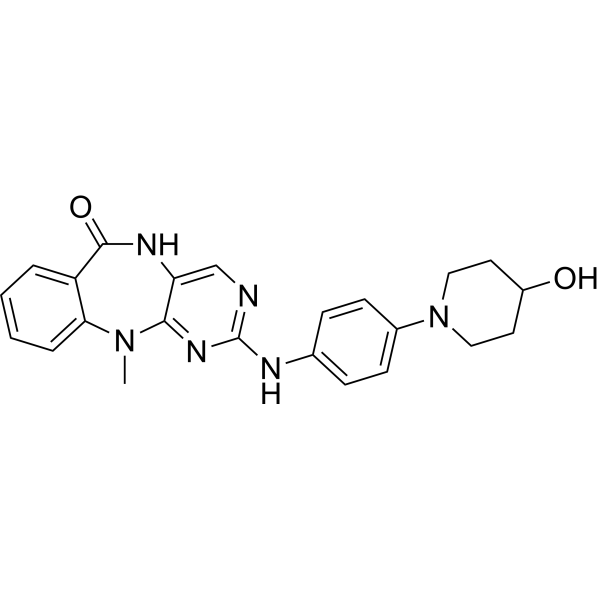
XMD16-5TNK2 Inhibitor
Publications Citing Use of MedChemExpress (MCE) AIM-100
More Customer Validation & Images

-
Cell Proliferation/Viability Assay
-
Cell Proliferation/Viability Assay
-
WB


Biologische Aktivität
Beschreibung
IC50 & Target
IC50: 21.58 nM (Ack1)[2]
Cellular Effect
|
Cell Line

|
Type | Value | Description | References |
|---|---|---|---|---|
| LNCaP | IC50 |
7 μM
Compound: 1b, AIM-100
|
Anticancer activity against human LNCAP cells assessed as inhibition of cell growth after 72 hrs by trypan blue exclusion assay
Anticancer activity against human LNCAP cells assessed as inhibition of cell growth after 72 hrs by trypan blue exclusion assay
|
[PMID: 25699576] |
| LNCaP | IC50 |
7 μM
Compound: 1; AIM-100
|
Antiproliferative activity against human LNCaP cells
Antiproliferative activity against human LNCaP cells
|
[PMID: 34735773] |
| T-cell | IC50 |
2.41 μM
Compound: 2
|
Inhibition of anti-CD3/CD28-induced IL2 secretion in human T cells
Inhibition of anti-CD3/CD28-induced IL2 secretion in human T cells
|
[PMID: 17280833] |
| T-cell | IC50 |
8.95 μM
Compound: 2
|
Inhibition of T cell activation in human mixed lymphocyte reaction
Inhibition of T cell activation in human mixed lymphocyte reaction
|
[PMID: 17280833] |
In Vitro
AIM-100 (2-10 μM; 48 hours) treatment not only inhibits Ack1 activation but also suppresses AKT tyrosine phosphorylation, leading to cell cycle arrest in the G1 phase. AIM-100 not only inhibits Ack1/AKT Tyr-phosphorylation but also suppressed growth of cell lines derived from pancreatic, breast, and lung tumors[1].
The Ack1 inhibitor AIM-100 not only inhibited Ack1 activity but also was able to suppress AR Tyr267 phosphorylation and its recruitment to the ataxia-telangiectasia mutated kinase (ATM) enhancer[2].
AIM-100 is able to suppress pTyr267-AR phosphorylation, binding of androgen receptor (AR) to PSA, NKX3.1, and TMPRSS2 promoters, and inhibit AR transcription activity[3].
MedChemExpress (MCE) has not independently confirmed the accuracy of these methods. They are for reference only. Further protocols information, click here.
In Vivo
MedChemExpress (MCE) has not independently confirmed the accuracy of these methods. They are for reference only.


Chemical Information
-
CAS. Nr. 873305-35-2
-
Appearance Solid
-
Molecular Weight 371.43
-
Formel C23H21N3O2
-
Color White to yellow
-
SMILES
C1(C2=C(C3=CC=CC=C3)OC4=C2C(NC[C@@H]5CCCO5)=NC=N4)=CC=CC=C1
-
Versand
Room temperature in continental US; may vary elsewhere.
-
Speicherung
Powder -20°C 3 years 4°C 2 years In solvent -80°C 2 years -20°C 1 year


Publications (4)
-
Journal Impact Factor
-
Most Recent
-
Mol Med
Improvement of ACK1-targeted therapy efficacy in lung adenocarcinoma using chloroquine or bafilomycin A1. [Abstract]2023 Jan 16;29(1):6. PMID: 36647009
AIM-100 purchased from MedChemExpress. Usage Cited in: Mol Med. 2023 Jan 16;29(1):6. [Abstract]
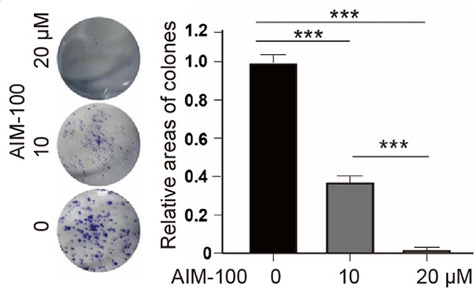
AIM-100 (10, 20 µM; 72 h) significantly reduces the colony formation of A549 cells.
AIM-100 purchased from MedChemExpress. Usage Cited in: Mol Med. 2023 Jan 16;29(1):6. [Abstract]
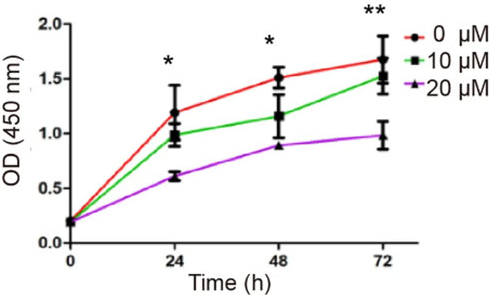
AIM-100 (10, 20 µM; 24, 48, 72 h) significantly decreases A549 cell proliferation.
-
Cancer Cell Int
2025 Jun 28;25(1):237. PMID: 40581662 -
Cell Biochem Funct
Targeted inhibition of ACK1 can inhibit the proliferation of hepatocellular carcinoma cells through the PTEN/AKT/mTOR pathway. [Abstract]2020 Jul;38(5):642-650. PMID: 32162707 -
Oncotarget
Ack1 overexpression promotes metastasis and indicates poor prognosis of hepatocellular carcinoma. [Abstract]2015 Dec 1;6(38):40622-41. PMID: 26536663
AIM-100 purchased from MedChemExpress. Usage Cited in: Oncotarget. 2015 Dec 1;6(38):40622-41. [Abstract]
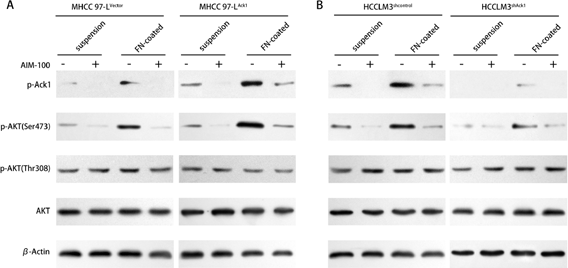
Ack1 Affects Ser473-phosphorylation of AKT, but not Thr308-phosphorylation in HCC Cells. A. & B. HCC cells are either untreated or pretreated with AIM-100, a Ack1-specific inhibitor, in cell adhesion assays. Upon AIM- 100 treatment, significant loss of p-Ack1 level and a concomitant decrease in Ser473-phosphorylation of AKT level is observed, whereas the effect on Thr308-phosphorylation of AKT levels is not altered.


Lösungsmittel & Löslichkeit
In Vitro:
DMSO : 50 mg/mL (134.61 mM; Need ultrasonic; Hygroscopic DMSO has a significant impact on the solubility of product, please use newly opened DMSO)
Please refer to the solubility information to select the appropriate solvent. Once prepared, please aliquot and store the solution to prevent product inactivation from repeated freeze-thaw cycles.
Storage method and period of stock solution: -80°C, 2 years; -20°C, 1 year. When stored at -80°C, please use it within 2 years. When stored at -20°C, please use it within 1 year.
Please refer to the solubility information to select the appropriate solvent. Once prepared, please aliquot and store the solution to prevent product inactivation from repeated freeze-thaw cycles.
Storage method and period of stock solution: -80°C, 2 years; -20°C, 1 year. When stored at -80°C, please use it within 2 years. When stored at -20°C, please use it within 1 year.
Konzentration (Stammlösung) × Volumen (Stammlösung) = Konzentration (Ziellösung) × Volumen (Ziellösung)
In Vivo:
Select the appropriate dissolution method based on your experimental animal and administration route.
- For the following dissolution methods, please ensure to first prepare a clear stock solution using an In Vitro approach and then sequentially add co-solvents:
- To ensure reliable experimental results, the clarified stock solution can be appropriately stored based on storage conditions. As for the working solution for In Vivo experiments, it is recommended to prepare freshly and use it on the same day.
- The percentages shown for the solvents indicate their volumetric ratio in the final prepared solution. If precipitation or phase separation occurs during preparation, heat and/or sonication can be used to aid dissolution.
Add each solvent one by one: 10% DMSO 40% PEG300 5% Tween-80 45% Saline
Solubility: ≥ 2.5 mg/mL (6.73 mM); Clear solution
This protocol yields a clear solution of ≥ 2.5 mg/mL (saturation unknown).
Taking 1 mL working solution as an example, add 100 μL DMSO stock solution (25.0 mg/mL) to 400 μL PEG300, and mix evenly; then add 50 μL Tween-80 and mix evenly; then add 450 μL Saline to adjust the volume to 1 mL.
Preparation of Saline: Dissolve 0.9 g sodium chloride in ddH₂O and dilute to 100 mL to obtain a clear Saline solution.
Add each solvent one by one: 10% DMSO 90% (20% SBE-β-CD in Saline)
Solubility: ≥ 2.5 mg/mL (6.73 mM); Clear solution
This protocol yields a clear solution of ≥ 2.5 mg/mL (saturation unknown).
Taking 1 mL working solution as an example, add 100 μL DMSO stock solution (25.0 mg/mL) to 900 μL 20% SBE-β-CD in Saline, and mix evenly.
Preparation of 20% SBE-β-CD in Saline (4°C, storage for one week): 2 g SBE-β-CD powder is dissolved in 10 mL Saline, completely dissolve until clear.
In Vivo Dissolution Calculator
Please enter the basic information of animal experiments:
-
-
-
-
Recommended: Prepare an additional quantity of animals to account for potential losses during experiments.
Please enter your animal formula composition:
-
%DMSO +
Recommended: Keep the proportion of DMSO in working solution below 2% if your animal is weak.
-
%+
-
+%Tween-80 + +
-
%Saline +
The co-solvents required include: DMSO, . All of co-solvents are available by MedChemExpress (MCE). , Tween 80. All of co-solvents are available by MedChemExpress (MCE).
Working solution concentration: 0.22 mg/mL
Method for preparing stock solution: mg drug dissolved in μL DMSO. Stock solution concentration: mg/mL.
1. Take μL DMSO stock solution;
2. Add μL .
μL , mix evenly;
3. Then add μL Tween 80, mix evenly;
4. Then add μL
Please ensure that the stock solution in the first step is dissolved to a clear state, and add co-solvents in sequence. You can use ultrasonic heating (ultrasonic cleaner, recommended frequency 20-40 kHz), vortexing, etc. to assist dissolution.

Protokoll
-
Kinase activity and phosphorylation assays
Kinase activity assays measure the ability of kinases to transfer phosphate groups from ATP to specific substrates, while phosphorylation assays detect the presence and levels of phosphorylated proteins. Common methods include radiolabeled ATP incorporation (e. g. ,), ADP release detection via bioluminescence (e. g. ,[3]), enzyme-linked immunosorbent assays (ELISA) for phospho-specific epitopes (e. g. ,[6]), and microtiter-based formats for high-throughput screening (e. g. ,[8]). The ADP-Glo assay quantifies kinase activity by measuring ADP produced during phosphorylation using a luciferase-based system. Radiometric assays involve autoradiography or scintillation counting after incorporation of 32P-labeled ATP into substrate proteins. ELISA-based approaches rely on phospho-specific antibodies to detect activated kinases in cell lysates or purified samples.
-
Western Blot
Western blotting (WB) is a commonly used experimental method in molecular biology, biochemistry, and immunogenetics for identifying and quantifying target proteins. It combines gel electrophoresis with immunoassay, enabling researchers to analyze protein expression, post-translational modifications, and molecular weight.
-
Protocol for Kinase activity and phosphorylation assays
Kinase activity assays measure transfer of phosphate from ATP to a protein or peptide substrate, generating phosphorylated substrate, ADP, or incorporated radiolabeled phosphate as the readout; phosphorylation assays measure site-specific phosphorylation in cells or tissues as a proxy for kinase-pathway activation, inhibition, or substrate regulation. Phosphorylation can be detected by phospho-specific Western blot, immunoprecipitation kinase assay, phospho-immunofluorescence, phospho-flow cytometry, luminescent ADP detection, radiolabeled ATP incorporation, or reporter-based pathway assays, and these readouts can be applied to cancer cells, primary neurons, mouse tumors, organoids, inflammatory macrophages, ferroptosis studies, and mitophagy studies when the kinase target is biologically relevant.


Reinheit & Dokumentation
-
Data Sheet (279 KB)
-
SDS (396 KB)
- English - EN (396 KB)
- Français - FR (396 KB)
- Deutsch - DE (396 KB)
- Norwegian - NO (396 KB)
- Español - ES (396 KB)
- Swedish - SV (396 KB)
- Italian - IT (396 KB)
- Korean - KR (396 KB)
- Portuguese - PT (396 KB)
-
Handling Instructions (2659 KB)
Verweise
[1]. Mahajan K, et al. Ack1 tyrosine kinase activation correlates with pancreatic cancer progression. Am J Pathol. 2012 Apr;180(4):1386-93. [Content Brief]
[2]. Mahajan K, et al. Ack1-mediated androgen receptor phosphorylation modulates radiation resistance in castration-resistant prostate cancer. J Biol Chem. 2012 Jun 22;287(26):22112-22. [Content Brief]
[3]. Mahajan K, et al. Effect of Ack1 tyrosine kinase inhibitor on ligand-independent androgen receptor activity. Prostate. 2010 Sep 1;70(12):1274-85. [Content Brief]


Complete Stock Solution Preparation Table
Please refer to the solubility information to select the appropriate solvent. Once prepared, please aliquot and store the solution to prevent product inactivation from repeated freeze-thaw cycles.
Storage method and period of stock solution: -80°C, 2 years; -20°C, 1 year. When stored at -80°C, please use it within 2 years. When stored at -20°C, please use it within 1 year.
| Optional Solvent | Concentration Solvent Mass | 1 mg | 5 mg | 10 mg | 25 mg |
|---|---|---|---|---|---|
| DMSO | 1 mM | 2.6923 mL | 13.4615 mL | 26.9230 mL | 67.3074 mL |
| 5 mM | 0.5385 mL | 2.6923 mL | 5.3846 mL | 13.4615 mL | |
| 10 mM | 0.2692 mL | 1.3461 mL | 2.6923 mL | 6.7307 mL | |
| 15 mM | 0.1795 mL | 0.8974 mL | 1.7949 mL | 4.4872 mL | |
| 20 mM | 0.1346 mL | 0.6731 mL | 1.3461 mL | 3.3654 mL | |
| 25 mM | 0.1077 mL | 0.5385 mL | 1.0769 mL | 2.6923 mL | |
| 30 mM | 0.0897 mL | 0.4487 mL | 0.8974 mL | 2.2436 mL | |
| 40 mM | 0.0673 mL | 0.3365 mL | 0.6731 mL | 1.6827 mL | |
| 50 mM | 0.0538 mL | 0.2692 mL | 0.5385 mL | 1.3461 mL | |
| 60 mM | 0.0449 mL | 0.2244 mL | 0.4487 mL | 1.1218 mL | |
| 80 mM | 0.0337 mL | 0.1683 mL | 0.3365 mL | 0.8413 mL | |
| 100 mM | 0.0269 mL | 0.1346 mL | 0.2692 mL | 0.6731 mL |


AIM-100 Related Classifications
HY-15290 Related Classifications
 Powered by Bioz