



Human IgG1 lambda1, Isotype Control
Based on 2 publication(s) in Google Scholar
Human IgG1 lambda1, Isotype Control, a human-derived antibody, is an isotype control for human IgG1λ1 antibody. Human IgG1 lambda1, Isotype Control can be used in the research of diabetes and pancreatic cancer.
Nur für Forschungszwecke. Wir verkaufen nicht an Patienten.
- Reinheit : 99.64%
- Molecular Weight:141.84 kDa
-
Speicherung:
Please store the product under the recommended conditions in the Certificate of Analysis.

To place orders, for customer services and technical support, please contact: MedChemExpress USA
Tel: 609-228-6898 E-mail: [email protected] [email protected]


-
 Biologische Aktivität
-
Chemical Information
- Protokoll
- Reinheit & Dokumentation
- Verweise
-
 Help & FAQs


-
HY-P99001
Human IgG1 kappa, Isotype ControlIgG1κ Isotype Control -

HY-P99355
BimagrumabAnti-ACVR2B Antibody -

HY-P99646
GolocdacimabLOX-1 Inhibitor -

HY-P9908
AdalimumabTNF-α Inhibitor -
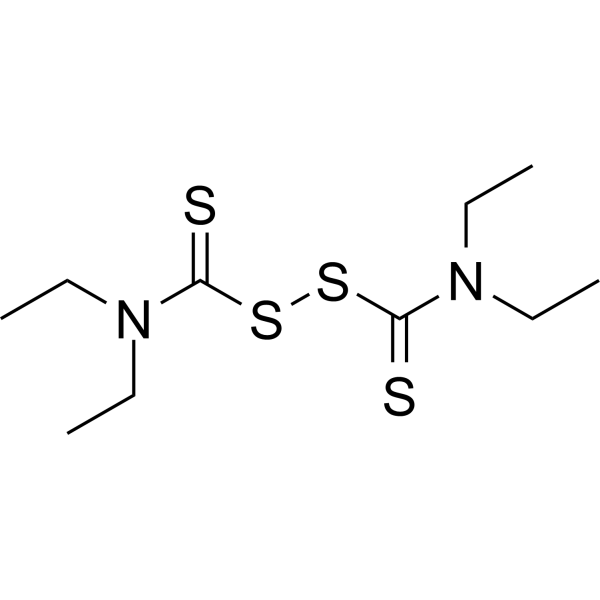
HY-B0240
DisulfiramALDH1 Inhibitor -

HY-P99037
NipocalimabAnti-FcRn Antibody -
HY-P99003
Human IgG4 (S228P) kappa, Isotype ControlIgG4κ Isotype Control -
HY-107202
Polyinosinic-polycytidylic acidTLR-3 Agonist -

HY-P9904
AtezolizumabAnti-PD-L1 Antibody -

HY-132254
Sacituzumab govitecanTrop-2 ADC -
HY-P1388
β-Amyloid (1-42), (rat/mouse)β-Amyloid (1-42) Peptide -

HY-P9909
Ustekinumab
Publications Citing Use of MedChemExpress (MCE) Human IgG1 lambda1, Isotype Control
More Customer Validation & Images

-
In Vivo Efficacy Study
-
Bio/Physico-chemical Assay
-
Histological Imaging/Staining


Biologische Aktivität
Beschreibung
In Vitro
Human IgG1 lambda1, Isotype Control (48 h before supernatant collection) can be used in macrophages as a control for the inhibitory effect of the human OLR1 blocking antibody Golocdacimab (HY-P99646) on OLR1[1].
MedChemExpress (MCE) has not independently confirmed the accuracy of these methods. They are for reference only.
In Vivo
MedChemExpress (MCE) has not independently confirmed the accuracy of these methods. They are for reference only.
Conjugated
Unconjugated
Reconsititution
The product can be reconstituted/diluted with sterile PBS or saline.
Format
-
Product Image
Anwendung
ELISA, FACS, Functional assay


Chemical Information
-
Appearance Liquid
-
Molecular Weight 141.84 kDa
-
Color Colorless to light yellow
-
SMILES
[Human IgG1 lambda1, Isotype Control]
-
Versand
Shipping with dry ice.
-
Formulation
Please refer to the lot-specific COA for specific buffer information.
-
Speicherung
Please store the product under the recommended conditions in the Certificate of Analysis.


Publications (2)
-
Journal Impact Factor
-
Most Recent
-
Nat Commun
Diabetes reshapes pancreatic cancer-associated endothelial niche by accelerating senescence. [Abstract]2025 Sep 30;16(1):8654. PMID: 41027967
Human IgG1 lambda1, Isotype Control purchased from MedChemExpress. Usage Cited in: Nat Commun. 2025 Sep 30;16(1):8654. [Abstract]
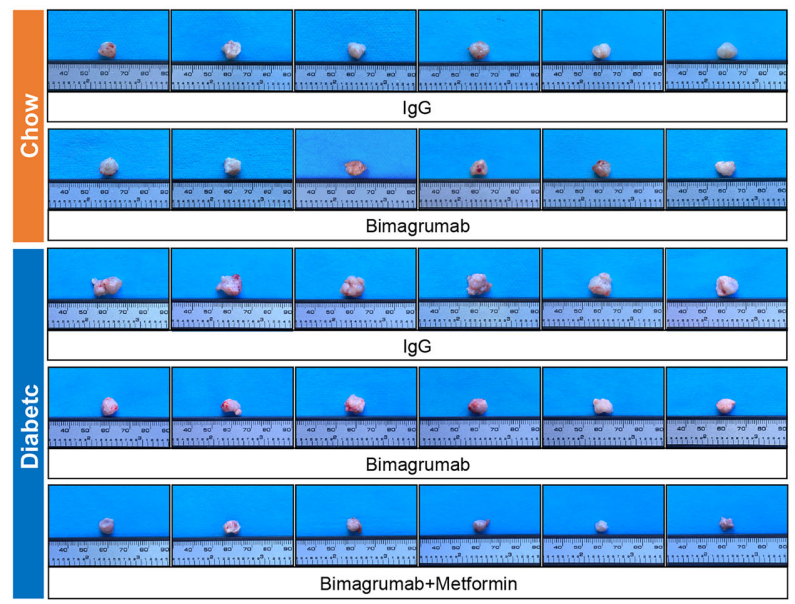
Pancreatic tumor samples from chow (n = 6 mice per group) and diabetic (n = 9 mice per group) KPC tumor-bearing mice treated with IgG (Human IgG1 lambda1, Isotype Control) (20 mg/kg; i.c.; once weekly for 2 weeks), bimagrumab (20 mg/kg; i.c.; once weekly for 2 weeks), or bimagrumab+metformin.
Human IgG1 lambda1, Isotype Control purchased from MedChemExpress. Usage Cited in: Nat Commun. 2025 Sep 30;16(1):8654. [Abstract]
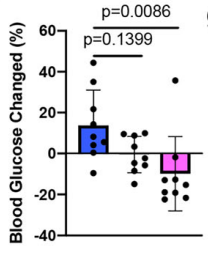
Bar graph showing fasting blood glucose changes in diabetic tumor-bearing mice after treatment with 2 doses of IgG (Human IgG1 lambda1, Isotype Control) (20 mg/kg; i.c.; once weekly for 2 weeks), 2 doses of bimagrumab (20 mg/kg; i.c.; once weekly for 2 weeks) alone, or 2 doses of bimagrumab combined with 7 doses of metformin (n = 9 mice per group).
Human IgG1 lambda1, Isotype Control purchased from MedChemExpress. Usage Cited in: Nat Commun. 2025 Sep 30;16(1):8654. [Abstract]
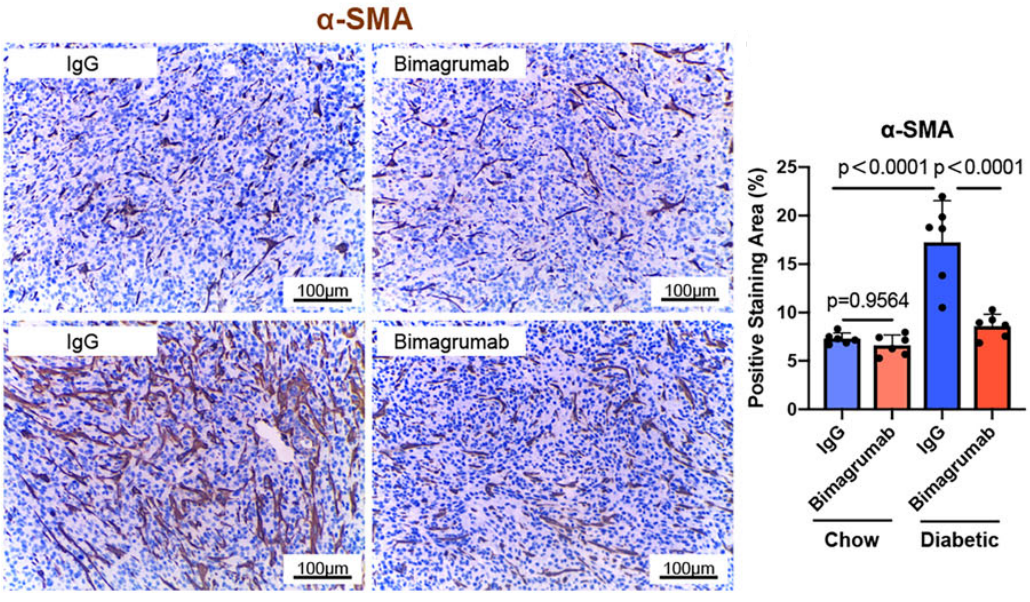
Representative images and quantification of α-SMA staining (brown) in tumors from chow and diabetic KPC tumor-bearing mice treated with IgG (Human IgG1 lambda1, Isotype Control) (20 mg/kg; i.c.; once weekly for 2 weeks) or bimagrumab (20 mg/kg; i.c.; once weekly for 2 weeks) (n = 6 mice per group).
-


Reinheit & Dokumentation
-
Data Sheet (259 KB)
-
SDS (251 KB)
- English - EN (251 KB)
- Français - FR (251 KB)
- Deutsch - DE (251 KB)
- Norwegian - NO (251 KB)
- Español - ES (251 KB)
- Swedish - SV (251 KB)
- Italian - IT (251 KB)
- Korean - KR (251 KB)
- Portuguese - PT (251 KB)
-
Inhibitory Antibodies User Guide (603 KB)
Verweise

Calculators
Konzentration (Stammlösung) × Volumen (Stammlösung) = Konzentration (Ziellösung) × Volumen (Ziellösung)


Human IgG1 lambda1, Isotype Control Related Classifications
HY-P99992 Related Classifications
 Powered by Bioz