



RB 101
RB 101 is a blood-brain barrier-crossing prodrug as well as aminopeptidase N and neutral endopeptidase-24.11 inhibitor. RB 101 blocks enkephalin breakdown, elevates extracellular enkephalin levels and activate δ-opioid receptor and dopamine D1 receptor. RB 101 can be used for the research of pain, depressive syndromes, and diabetic neuropathy.
Nur für Forschungszwecke. Wir verkaufen nicht an Patienten.
- CAS. Nr.: 135949-60-9
- Formel: C31H38N2O3S3
- Molecular Weight:582.84
-
Speicherung:
Please store the product under the recommended conditions in the Certificate of Analysis.


To place orders, for customer services and technical support, please contact: MedChemExpress USA
Tel: 609-228-6898 E-mail: [email protected] [email protected]


-
 Biologische Aktivität
-
Chemical Information
- Reinheit & Dokumentation
- Verweise
-
 Help & FAQs


-
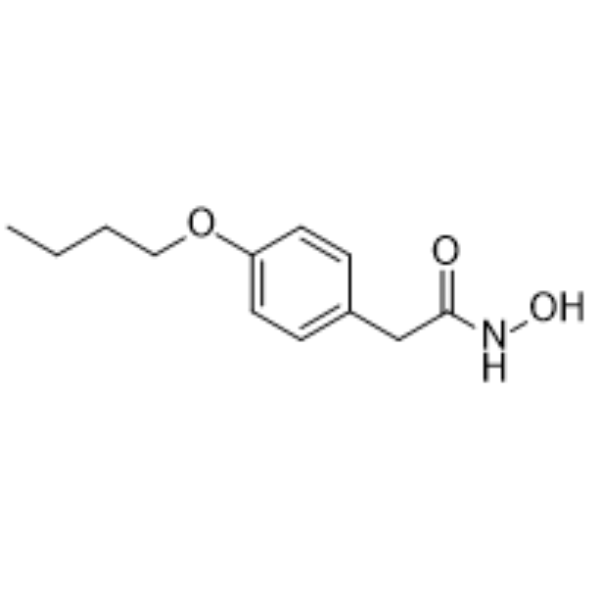
HY-B0494
BufexamacHDAC6/HDAC10/LTA4H Inhibitor -
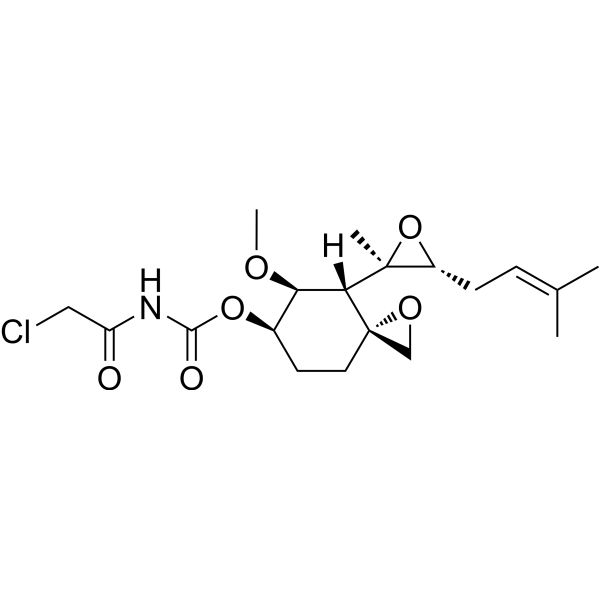
HY-101932
TNP-470Methionine Aminopeptidase-2 Inhibitor -
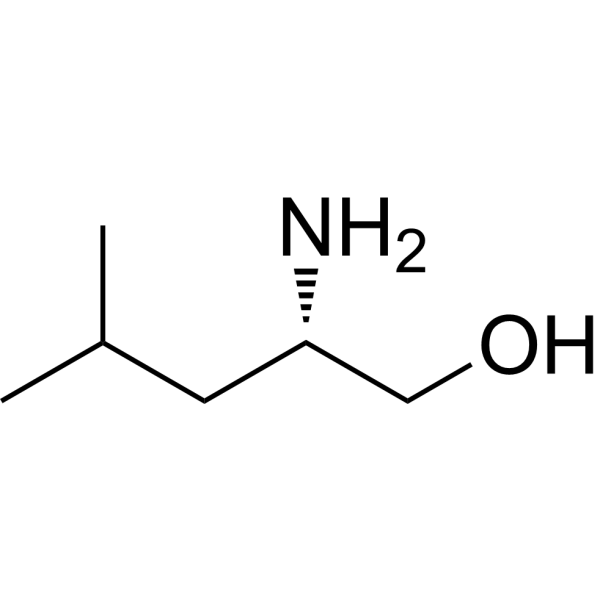
HY-W015876
L-LeucinolAminopeptidase Inhibitor -
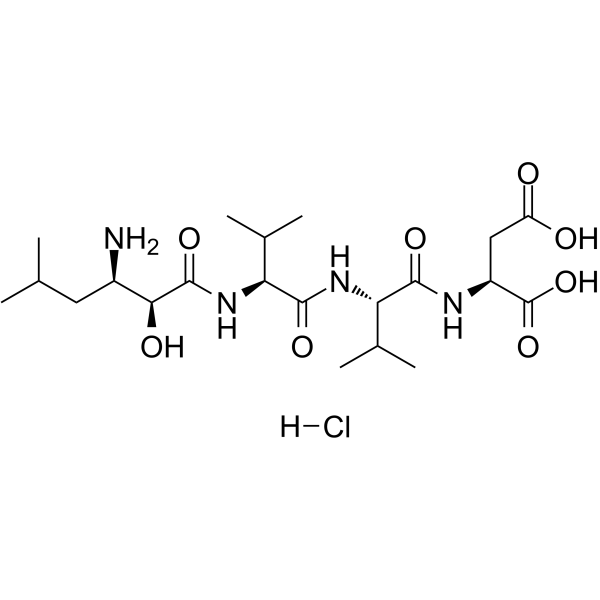
HY-115194
Amastatin hydrochlorideAminopeptidase Inhibitor -
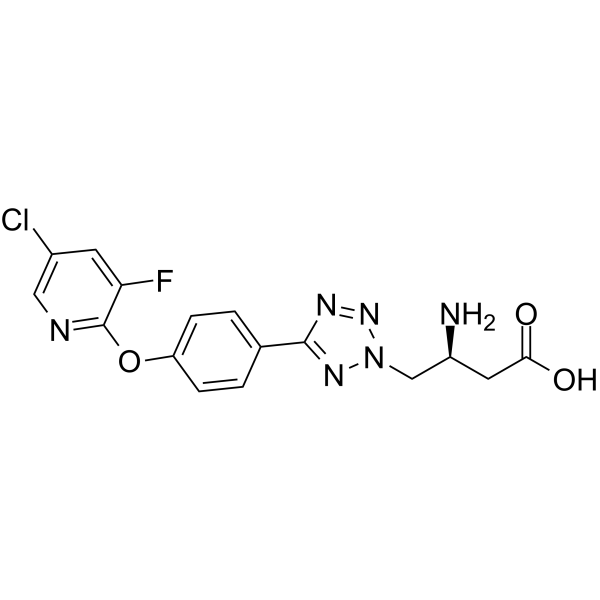
HY-137298
LYS006LTA4H Inhibitor -
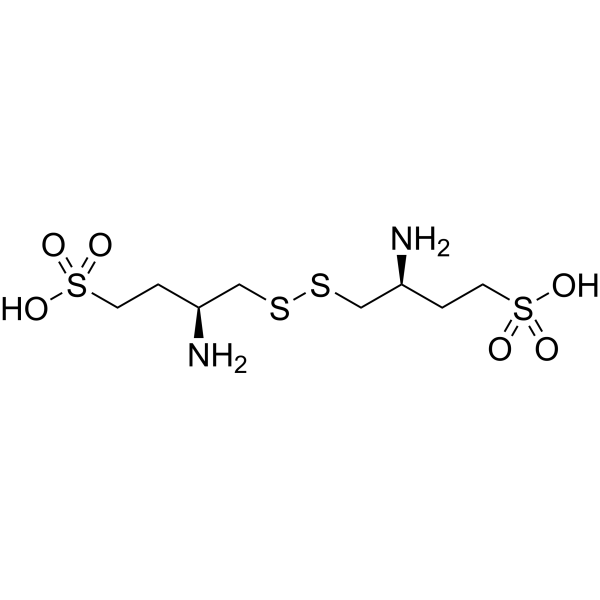
HY-109058
FiribastatAminopeptidase A Inhibitor -
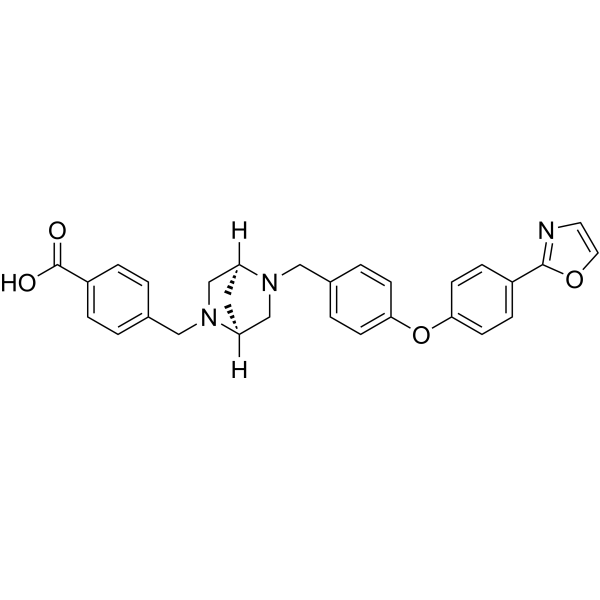
HY-17625
AcebilustatAminopeptidase Inhibitor -
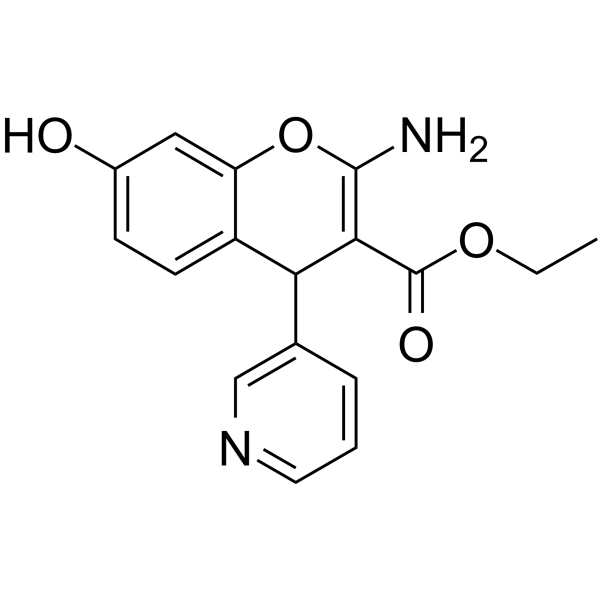
HY-110259
HFI-142IRAP Inhibitor -
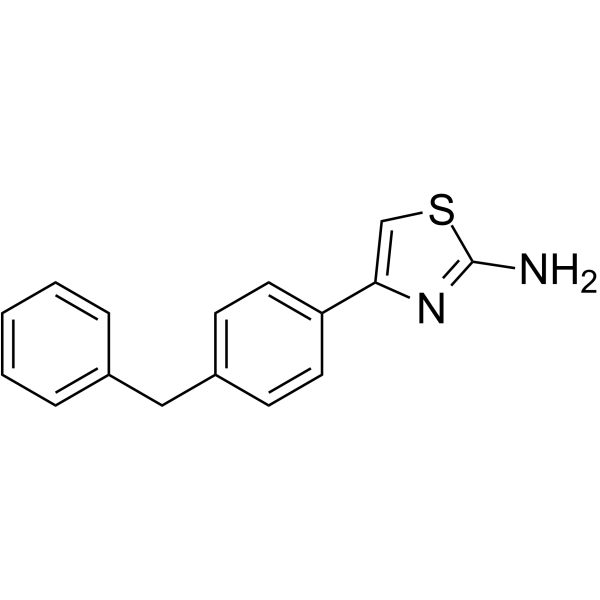
HY-W027340
ARM1Aminopeptidase/Epoxide Hydrolase Inhibitor -
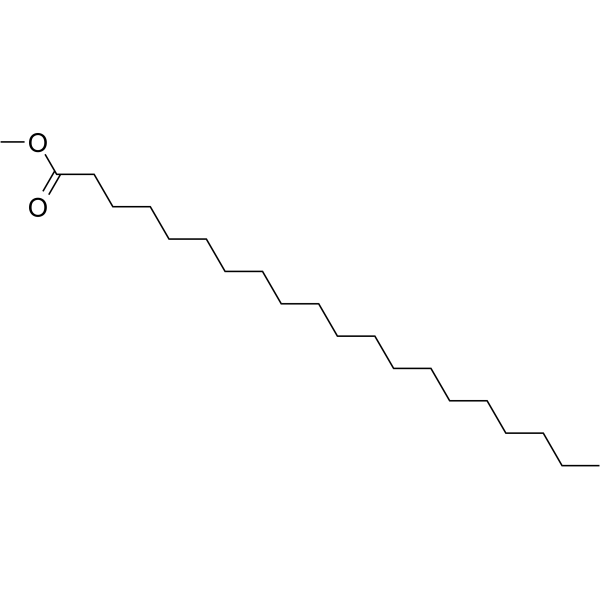
HY-W004291
Methyl arachidateLipid Without Antifeedant Activity -
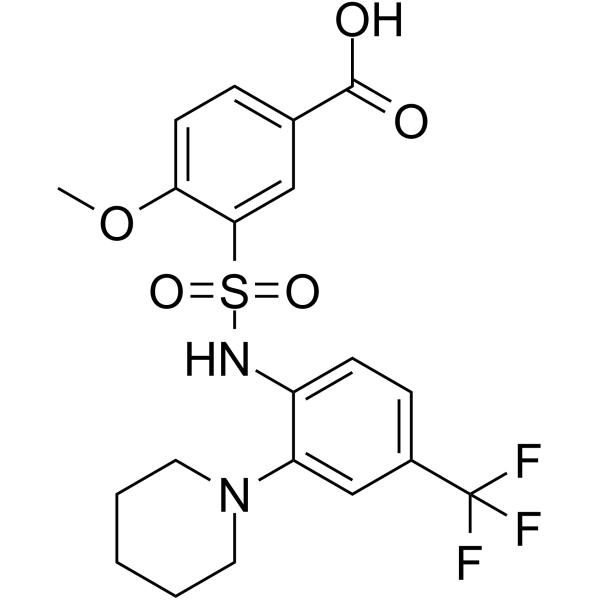
HY-150504
ERAP2-IN-1ERAP2 Inhibitor -
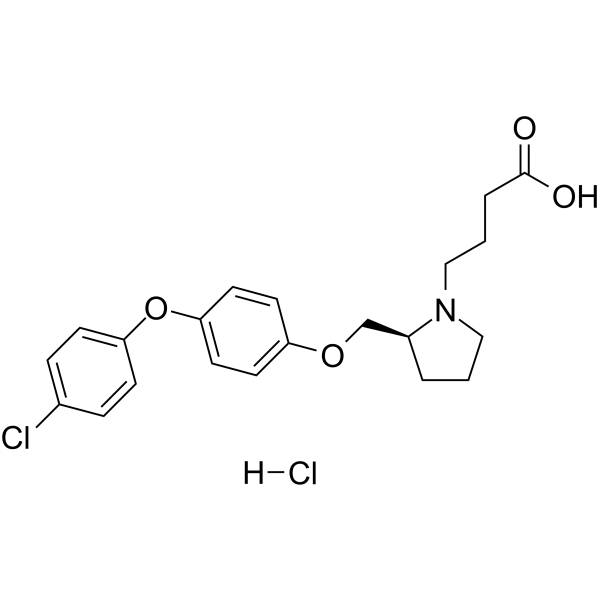
HY-10825
DG051
Alle Opioid Receptor Isoform-spezifische Produkte anzeigen
MoreAlle Dopamine Receptor Isoform-spezifische Produkte anzeigen
More

Biologische Aktivität
Beschreibung
IC50 & Target
[2]|
δ Opioid Receptor/DOR |
D1 Receptor |
In Vitro
In Vivo
RB 101 (5-20 mg/kg; i.v.; single administration) potentiates stress-induced analgesia in mice, reaching 85% analgesia at 5 mg/kg when combined with warm-water swim stress[1].
RB 101 (1.25-10 mg/kg; i.v.; single slow injection) induces a dose-dependent, long-lasting increase in spontaneous motor activity in mice via δ opioid and dopamine D1 receptor stimulation[2].
RB 101 (2.5-10 mg/kg; i.v.; single slow injection) dose-dependently attenuates conditioned suppression of motility in shocked mice and increases striatal dopamine turnover, via δ opioid and dopamine D1 receptor stimulation[2].
RB 101 (2.5-10 mg/kg; i.v.; single slow injection (20 s); 10 min before testing) significantly reduces immobility time in the mouse forced swim test via δ opioid and dopamine D1 receptor stimulation[2].
RB 101 (5-40 mg/kg; i.v.) produces dose-dependent, μ- and δ-opioid receptor-mediated antinociception in Streptozocin (HY-13753)-induced diabetic rats with neuropathic pain, completely suppressing mechanical hyperalgesia at doses of 20 and 40 mg/kg i.v.[3].
MedChemExpress (MCE) has not independently confirmed the accuracy of these methods. They are for reference only.
-
Animal Model:Male albino mice (Depre, France; 20-22 g)[1]
-
Dosage:2.5 mg/kg; 5 mg/kg; 10 mg/kg; 20 mg/kg; 40 mg/kg
-
Administration:i.v.; single administration
-
Result:Induced a dose-dependent reduction in [3H]diprenorphine binding: 5 mg/kg caused 20% displacement, 10 mg/kg caused 30% displacement (plateau effect), with no additional displacement at 20 mg/kg.
Induced a non-significant increase in jump latency at 5 mg/kg.
Produced statistically significant analgesia relative to controls at 10 mg/kg, 20 mg/kg, and 40 mg/kg, with analgesia percentages increasing with dose.
-
Animal Model:Male albino mice (Depre, France; 20-22 g; forced warm-water swim stress model)[1]
-
Dosage:5 mg/kg; 20 mg/kg
-
Administration:i.v.; single administration
-
Result:Combined with stress induced 85% analgesia at 5 mg/kg (vs. 48% analgesia from stress alone), and this combined analgesia was blocked by naloxone but not by naltrindole.
Combined with stress caused 45% displacement of [3H]diprenorphine relative to unstressed controls at 5 mg/kg, while 20 mg/kg combined with stress caused 43% displacement relative to unstressed controls.
-
Animal Model:Swiss albino mice (male, 20-22 g for spontaneous motor activity and forced swim tests; ~30 g, 8 weeks old for conditioned suppression of motility test)[2]
-
Dosage:1.25 mg/kg; 2.5 mg/kg; 5 mg/kg; 10 mg/kg
-
Administration:i.v.; single slow injection
-
Result:Induced a dose-dependent increase in locomotor activity, with effects peaking between 5-10 min post-injection.
Remained significant at 15 and 20 min post-injection at 10 mg/kg.
Produced a significant cumulative increase in motor activity (linear locomotion + rears) over 10 and 20 min at 5 mg/kg, which was antagonized by pre-treatment with naltrindole (0.1 mg/kg s.c.) and SCH 23390 (0.07 mg/kg s.c.), but not sulpiride (25 mg/kg i.p.).
-
Animal Model:Swiss albino mice (male, ~30 g, 8 weeks old)[2]
-
Dosage:2.5 mg/kg; 5 mg/kg; 10 mg/kg
-
Administration:i.v.; single slow injection
-
Result:Did not alter locomotor activity at 2.5 and 5 mg/kg, but increased activity at 10 mg/kg in non-shocked mice.
Dose-dependently reduced conditioned motility suppression at 5 and 10 mg/kg in shocked mice.
Effect of 5 mg/kg was antagonized by pre-treatment with naltrindole (0.1 mg/kg s.c.) and SCH 23390 (0.07 mg/kg s.c.), but not sulpiride (25 mg/kg i.p.).
Significantly increased striatal DOPAC/DA and HVA/DA ratios to 0.108 and 0.100, respectively, in shocked mice treated with 5 mg/kg, an effect blocked by naltrindole.
-
Animal Model:Swiss albino mice (male, 20-22 g)[2]
-
Dosage:2.5 mg/kg; 5 mg/kg; 10 mg/kg
-
Administration:i.v.; single slow injection
-
Result:Significantly shortened the duration of immobility in the forced swim test at 5 and 10 mg/kg.
Effect of 5 mg/kg was antagonized by pre-treatment with naltrindole (0.1 mg/kg s.c.) and SCH 23390 (0.07 mg/kg s.c.), but not sulpiride (25 mg/kg i.p.).
-
Animal Model:Sprague-Dawley (male, 300 g, Streptozocin-induced neuropathic pain)[3]
-
Dosage:5 mg/kg; 10 mg/kg; 20 mg/kg; 40 mg/kg
-
Administration:i.v.
-
Result:Produced a dose-dependent antinociceptive effect on mechanical hyperalgesia, with 20 and 40 mg/kg doses completely suppressing diabetes-induced hyperalgesia (P<0.001).
Achieved a maximal vocalization threshold elevation of +294 g (+178% of predrug score) at 20 minutes with 40 mg/kg dose, which was not significantly different from the maximal effect of 20 mg/kg.
Had a short duration of action (20 minutes) with 5 mg/kg dose, while 10, 20, and 40 mg/kg doses lasted 60 minutes.
Showed a ceiling effect at 40 mg/kg confirmed by AUC values.
Produced a significant increase in withdrawal threshold for mechanical allodynia only with 40 mg/kg dose, with a maximal increase of +8.3 g at 20 minutes (P<0.01), lasting 20 minutes.
Did not significantly affect tail immersion reaction time for thermal allodynia at any dose.
Had its antinociceptive effect at 20 mg/kg completely abolished by pretreatment with 0.5 mg/kg i.v. naloxone or 1 μg/rat i.t. naltrindole.


Chemical Information
-
CAS. Nr. 135949-60-9
-
Molecular Weight 582.84
-
Formel C31H38N2O3S3
-
SMILES
CSCC[C@H](N)CSSCC(CC1=CC=CC=C1)C(N[C@H](C(OCC2=CC=CC=C2)=O)CC3=CC=CC=C3)=O
-
Versand
Room temperature in continental US; may vary elsewhere.
-
Speicherung
Please store the product under the recommended conditions in the Certificate of Analysis.


Reinheit & Dokumentation
Verweise
[1]. Ruiz-Gayo M, et al. In vivo occupation of mouse brain opioid receptors by endogenous enkephalins: blockade of enkephalin degrading enzymes by RB 101 inhibits [3H]diprenorphine binding. Brain Res. 1992;571(2):306-312. [Content Brief]
[2]. Baamonde A, et al. Antidepressant-type effects of endogenous enkephalins protected by systemic RB 101 are mediated by opioid delta and dopamine D1 receptor stimulation. Eur J Pharmacol. 1992;216(2):157-166. [Content Brief]
[3]. Coudoré-Civiale MA, et al. Enhancement of the effects of a complete inhibitor of enkephalin-catabolizing enzymes, RB 101, by a cholecystokinin-B receptor antagonist in diabetic rats. Br J Pharmacol. 2001;133(1):179-185. [Content Brief]

Calculators
Konzentration (Stammlösung) × Volumen (Stammlösung) = Konzentration (Ziellösung) × Volumen (Ziellösung)


RB 101 Related Classifications
HY-117702 Related Classifications
 Powered by Bioz
Keywords
- RB 101
- 135949-60-9
- RB101
- RB-101
- Prolyl Endopeptidase (PREP)
- Aminopeptidase
- Opioid Receptor
- Dopamine Receptor
- Drug Intermediate
- streptozocin-induced diabetic rats
- rat spinal cord tissue
- aminopeptidase N
- neutral endopeptidase-24.11
- μ-opioid receptors
- mouse brain
- diabetic neuropathy
- dopamine D1 receptors
- δ opioid receptors
- enkephalin
- Inhibitor
- inhibitor
- inhibit