



Tinurilimab
Based on 2 publication(s) in Google Scholar
Tinurilimab (Bay 1834942) is an anti-CEACAM6 (carcinoembryonic antigen-related cell adhesion molecule 6) humanized IgG2 monoclonal antibody. CEACAM6 is an immune checkpoint regulator suppressing the activity of effector T-cells against tumors. Tinurilimab shows an increased tumor cell killing effect in the tumor-cell/T-cell co-culture system.
Nur für Forschungszwecke. Wir verkaufen nicht an Patienten.
- Reinheit : 98.01%
- CAS. Nr.: 2226224-30-0
- Molecular Weight:144.76 kDa
-
Speicherung:Shipping with dry ice
Please store the product under the recommended conditions in the Certificate of Analysis.


To place orders, for customer services and technical support, please contact: MedChemExpress USA
Tel: 609-228-6898 E-mail: [email protected] [email protected]


-
 Biologische Aktivität
-
Chemical Information
- Protokoll
- Reinheit & Dokumentation
- Verweise
-
 Help & FAQs









Biologische Aktivität
Beschreibung
IC50 & Target
CEACAM6/CD66c
In Vitro
Tinurilimab (Bay 1834942) binds to human and cynomolgus monkey CEACAM6 with monovalent dissociation constants of KD of 13 nM and 31 nM, respectively. Tinurilimab is highly selective for human CEACAM6, as it is unable to bind to human CEACAM1, CEACAM3, or CEACAM5[1].
The half-maximal binding EC50 values for Tinurilimab are determined by flow cytometry in a panel of CEACAM6-expressing cancer cell lines. For Tinurilimab, the EC50 values are in the range of 0.15 nM (PA-TU-8902) to 5 nM (HCC2935)[1].
Tinurilimab (0-15 μg/mL) blocks the binding of recombinant CEACAM6-Fc to CEACAM1-coated plates in a dose-dependent manner[1].
Tinurilimab (30 µg/mL) increases type 1 cytokine secretion and the cytotoxic capacity of tumor-specific T cells[1].
Blockade of CEACAM6 by Tinurilimab (0.01-1000 µg/mL) restored T cell activity in a dose-dependent manner, as evidenced by increased IFN-γ secretion by survivin T cells co-incubated with recombinant CEACAM6-loaded beads[1].
MedChemExpress (MCE) has not independently confirmed the accuracy of these methods. They are for reference only.
Clinical Trial
| NCT Number | Sponsor | Condition | Start Date |
Phase

|
|---|---|---|---|---|
| NCT01329991 | 2011-05 | PHASE1 |
Anwendung
ELISA, FACS, Functional assay
Verified Bioactivity
-
 Flow cytometric analysis of 1.5×10⁶ U937 cells with Satralizumab (HY-P99112, red). Cells were fixed with 4% paraformaldehyde and permeabilised with 90% methanol. Then stained with the primary antibody at 1/200 dilution for an hour at 4℃. Alexa Goat Anti-Human IgG H&L (AF488) (HY-P83776) was used as the secondary antibody at 1/1,000 dilution for 30 minutes at 4℃. Human IgG2 kappa Isotype Control (HY-P99002, blue) was used as the isotype control, cells without incubation with primary antibody were used as the unlabeled control (black).
-
 Immobilized hu-CEACAM6-ECD-his can bind Tinurilimab. The EC50 for this effect is 6.45 ng/mL.


Product Details
-
CAS. Nr. 2226224-30-0
-
Accession P40199
-
Synonyms BAY 1834942
-
Molecular Weight 144.76 kDa
-
Species Reactivity
Human
-
Conjugated
Unconjugated
-
Isotype
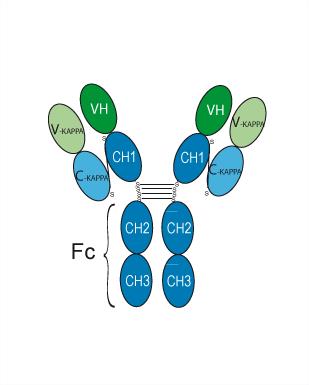
Human IgG2 kappa
-
Recommend Isotype Controls
-
Format
-
Human IgG2 kappa
-
Product Properties
-
Appearance
Liquid
-
Formulation
Please refer to the lot-specific COA for specific buffer information.
-
Reinheit
98.01%
-
Reconstitution
The product can be reconstituted/diluted with sterile PBS or saline.
-
Storage & Stability
Please store the product under the recommended conditions in the Certificate of Analysis.
-
Versand
Shipping with dry ice.


Publications (2)
-
Journal Impact Factor
-
Most Recent
-
Cancer Lett
A heavy-chain antibody-drug conjugate targeting glycosylated CEACAM6 inhibits brain metastatic tumor growth. [Abstract]2026 Jun 28:648:218463. PMID: 41912133 -
Reinheit & Dokumentation


Verweise
Hot Topics
-
All
-
Topics
-
Most Recent
-
Oldest
-
Topics Immune Checkpoint: A Critical Target In Tumor Therapy
Immune checkpoints are inhibitory or costimulatory pathways that regulate T-cell activation, peripheral tolerance, and antitumor immune responses, and tumors can exploit these pathways to restrict effector T-cell function and establish immune escape.
2026-06-18
-
Topics Organoid Co-culture Models in Tumor Immunology
Organoid co-culture models in tumor immunology are three-dimensional experimental systems that combine patient-derived or stem cell-derived tumor organoids with immune cells and other components of the tumor microenvironment to recapitulate tumor-immune interactions in vitro.
2026-06-18

Calculators
Konzentration (Stammlösung) × Volumen (Stammlösung) = Konzentration (Ziellösung) × Volumen (Ziellösung)


Tinurilimab Related Classifications
HY-P99051 Related Classifications
 Powered by Bioz