



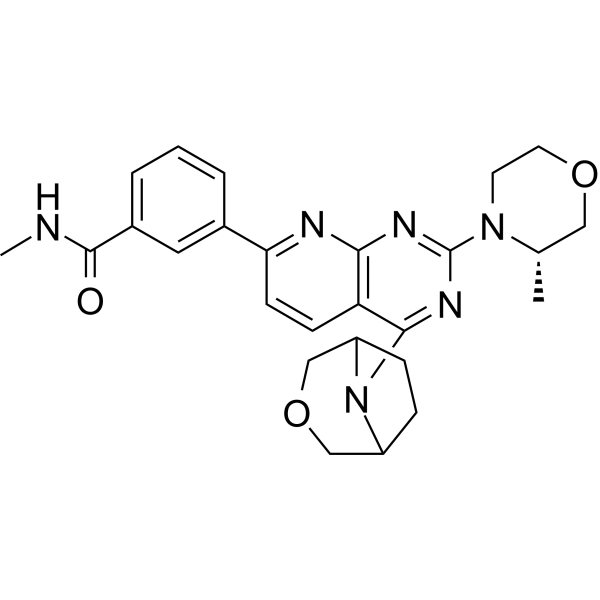
mTOR inhibitor-3
Based on 3 publication(s) in Google Scholar
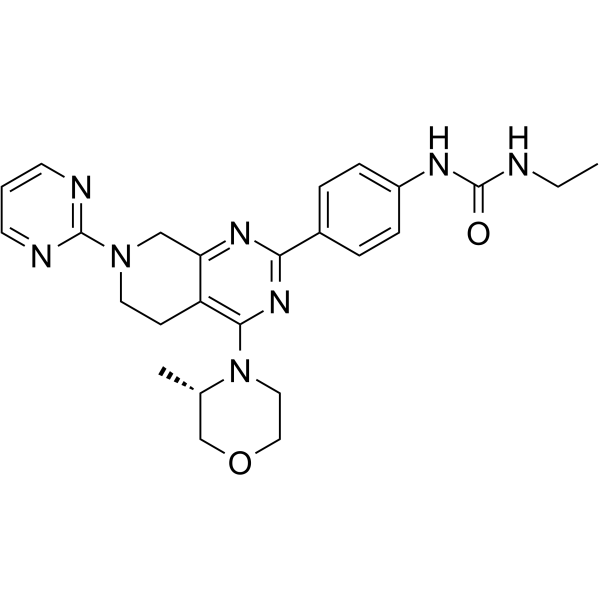
mTOR inhibitor-3 is a remarkably selective mTOR inhibitor with a Ki of 1.5 nM. mTOR inhibitor-3 suppresses mTORC1 and mTORC2 in cellular and in vivo pharmacokinetic (PK)/pharmacodynamic (PD) experiments.
For research use only. We do not sell to patients.
- Purity: 99.79%
- CAS No.: 1207358-59-5
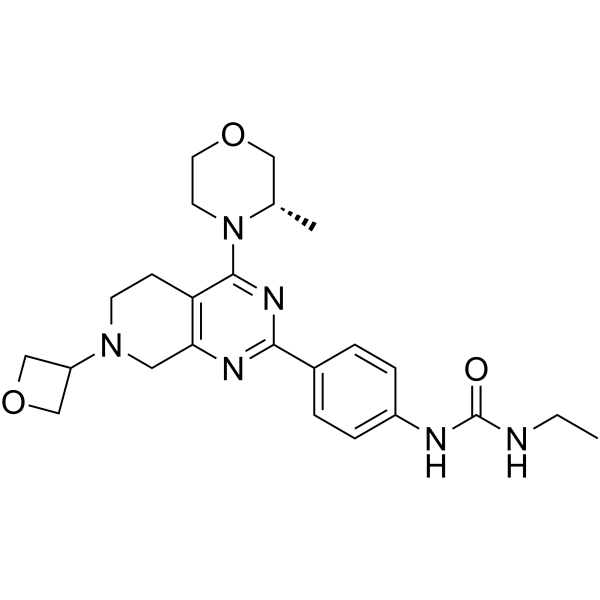
- Formula: C25H30N8O2
- Molecular Weight:474.56
-
Storage:Powder -20°C, 3 years , 4°C, 2 years ; In solvent -80°C, 2 years , -20°C, 1 year

To place orders, for customer services and technical support, please contact: MedChemExpress USA
Tel: 609-228-6898 E-mail: [email protected] [email protected]


-
 Biological Activity
-
Chemical Information
-
Solvent & Solubility
- Protocol
- Purity & Documentation
- References
-
 Help & FAQs


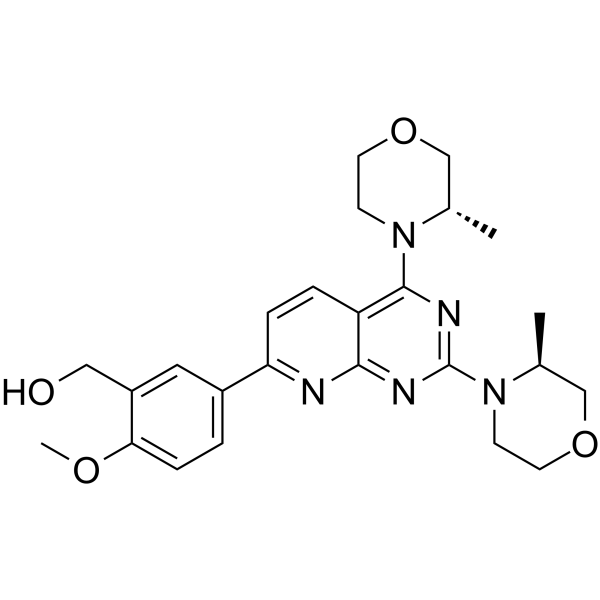
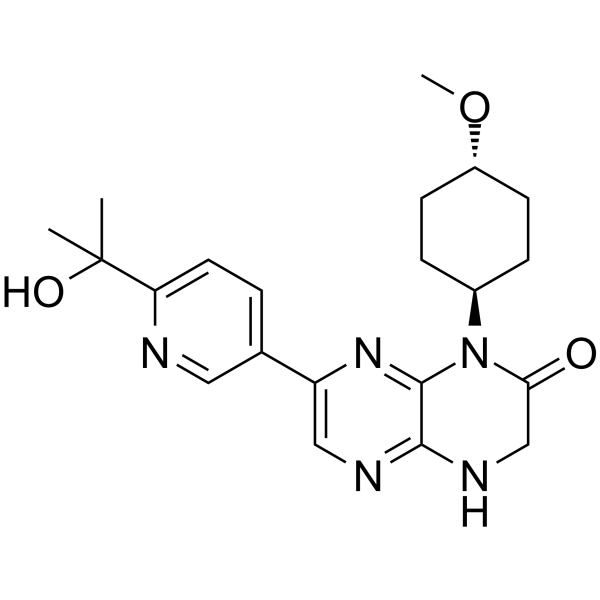
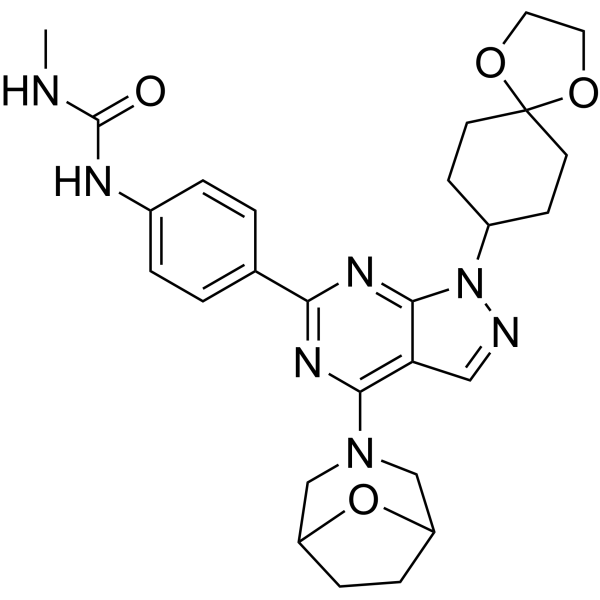
Publications Citing Use of MedChemExpress (MCE) mTOR inhibitor-3
More

Biological Activity
|
mTOR 1.5 nM (Ki) |
mTORC1 |
mTORC2 |
|
Cell Line

|
Type | Value | Description | References |
|---|---|---|---|---|
| PC-3 | EC50 |
147 nM
Compound: 1b
|
Antiproliferative activity against PTEN-null human PC3 cells
Antiproliferative activity against PTEN-null human PC3 cells
|
[PMID: 24900569] |
| PC-3 | IC50 |
150 nM
Compound: 12i
|
Cytotoxicity against human pTEN deficient PC3 after 3 days
Cytotoxicity against human pTEN deficient PC3 after 3 days
|
[PMID: 23199076] |
mTOR inhibitor-3 (Compound 12i) inhibits mTOR with a Ki of 1.5 nM, 500-fold selectivity over closely related PI3 kinases. mTOR inhibitor-3 inhibits NCI-PC3 and MCF7neo/Her2 cells proliferation with IC50s of 150 nM and 57 nM, respectively[2].
MedChemExpress (MCE) has not independently confirmed the accuracy of these methods. They are for reference only.
MedChemExpress (MCE) has not independently confirmed the accuracy of these methods. They are for reference only.


Chemical Information
-
CAS No. 1207358-59-5
-
Appearance Solid
-
Molecular Weight 474.56
-
Formula C25H30N8O2
-
Color White to off-white
-
SMILES
O=C(NC1=CC=C(C2=NC(N3[C@@H](C)COCC3)=C4C(CN(C5=NC=CC=N5)CC4)=N2)C=C1)NCC
-
Shipping
Room temperature in continental US; may vary elsewhere.
-
Storage
Powder -20°C 3 years 4°C 2 years In solvent -80°C 2 years -20°C 1 year


Publications (3)
-
Journal Impact Factor
-
Most Recent
-
Front Pharmacol
CC-223, NSC781406, and BGT226 Exerts a Cytotoxic Effect Against Pancreatic Cancer Cells via mTOR Signaling. [Abstract]2020 Nov 11:11:580407. PMID: 33343350 -
Mol Pain
MicroRNA-137-mediated inhibition of lysine-specific demethylase-1 prevents against rheumatoid arthritis in an association with the REST/mTOR axis. [Abstract]2021 Jan-Dec:17:17448069211041847. PMID: 34433333 -
Biomed Res Int
Protein Arginine Methyltransferase 5 Promotes the Migration of AML Cells by Regulating the Expression of Leukocyte Immunoglobulin-Like Receptor B4. [Abstract]2021 Oct 19;2021:7329072. PMID: 34712735


Solvent & Solubility
DMSO : 50 mg/mL (105.36 mM; Need ultrasonic; Hygroscopic DMSO has a significant impact on the solubility of product, please use newly opened DMSO)
Please refer to the solubility information to select the appropriate solvent. Once prepared, please aliquot and store the solution to prevent product inactivation from repeated freeze-thaw cycles.
Storage method and period of stock solution: -80°C, 2 years; -20°C, 1 year. When stored at -80°C, please use it within 2 years. When stored at -20°C, please use it within 1 year.
Please refer to the solubility information to select the appropriate solvent. Once prepared, please aliquot and store the solution to prevent product inactivation from repeated freeze-thaw cycles.
Storage method and period of stock solution: -80°C, 2 years; -20°C, 1 year. When stored at -80°C, please use it within 2 years. When stored at -20°C, please use it within 1 year.
Concentration (start) × Volume (start) = Concentration (final) × Volume (final)
Select the appropriate dissolution method based on your experimental animal and administration route.
- For the following dissolution methods, please ensure to first prepare a clear stock solution using an In Vitro approach and then sequentially add co-solvents:
- To ensure reliable experimental results, the clarified stock solution can be appropriately stored based on storage conditions. As for the working solution for In Vivo experiments, it is recommended to prepare freshly and use it on the same day.
- The percentages shown for the solvents indicate their volumetric ratio in the final prepared solution. If precipitation or phase separation occurs during preparation, heat and/or sonication can be used to aid dissolution.
Add each solvent one by one: 10% DMSO 90% (20% SBE-β-CD in Saline)
Solubility: ≥ 2.5 mg/mL (5.27 mM); Clear solution
This protocol yields a clear solution of ≥ 2.5 mg/mL (saturation unknown).
Taking 1 mL working solution as an example, add 100 μL DMSO stock solution (25.0 mg/mL) to 900 μL 20% SBE-β-CD in Saline, and mix evenly.
Preparation of 20% SBE-β-CD in Saline (4°C, storage for one week): 2 g SBE-β-CD powder is dissolved in 10 mL Saline, completely dissolve until clear.
Please enter the basic information of animal experiments:
-
-
-
-
Recommended: Prepare an additional quantity of animals to account for potential losses during experiments.
Please enter your animal formula composition:
-
%DMSO +
Recommended: Keep the proportion of DMSO in working solution below 2% if your animal is weak.
-
%+
-
+%Tween-80 + +
-
%Saline +
The co-solvents required include: DMSO, . All of co-solvents are available by MedChemExpress (MCE). , Tween 80. All of co-solvents are available by MedChemExpress (MCE).
Working solution concentration: 0.22 mg/mL
Method for preparing stock solution: mg drug dissolved in μL DMSO. Stock solution concentration: mg/mL.
1. Take μL DMSO stock solution;
2. Add μL .
μL , mix evenly;
3. Then add μL Tween 80, mix evenly;
4. Then add μL
Please ensure that the stock solution in the first step is dissolved to a clear state, and add co-solvents in sequence. You can use ultrasonic heating (ultrasonic cleaner, recommended frequency 20-40 kHz), vortexing, etc. to assist dissolution.

Protocol
Mice[2]
Human prostate cancer NCI-PC3 cells are implanted subcutaneously into the right hind flanks of female NCR nude mice (5×10⁶ cells in 100 μL of Hank’s balanced salt solution). Tumors are monitored until they reach a mean tumor volume of approximately 500 mm3. Then similarly sized tumors are randomly assigned to groups (n=4). Compounds are formulated as suspensions in 0.5% methylcellulose/0.2% Tween 80 (MCT) and dosed orally at 25, 50, and 100 mg/kg (100 μL dose/25 g animal). Tumor and plasma samples are harvested at 1, 6, and 10 h postdose.
MedChemExpress (MCE) has not independently confirmed the accuracy of these methods. They are for reference only.


Purity & Documentation
-
Data Sheet (275 KB)
-
SDS (251 KB)
- English - EN (251 KB)
- Français - FR (251 KB)
- Deutsch - DE (251 KB)
- Norwegian - NO (251 KB)
- Español - ES (251 KB)
- Swedish - SV (251 KB)
- Italian - IT (251 KB)
- Korean - KR (251 KB)
- Portuguese - PT (251 KB)
-
Handling Instructions (2659 KB)
References
[1]. Pei Z, et al. Discovery and Biological Profiling of Potent and Selective mTOR Inhibitor GDC-0349. ACS Med Chem Lett. 2012 Nov 29;4(1):103-7. [Content Brief]
[2]. Koehler MF, et al. Potent, selective, and orally bioavailable inhibitors of the mammalian target of rapamycin kinase domain exhibiting single agent antiproliferative activity. J Med Chem. 2012 Dec 27;55(24):10958-71. [Content Brief]


Complete Stock Solution Preparation Table
Please refer to the solubility information to select the appropriate solvent. Once prepared, please aliquot and store the solution to prevent product inactivation from repeated freeze-thaw cycles.
Storage method and period of stock solution: -80°C, 2 years; -20°C, 1 year. When stored at -80°C, please use it within 2 years. When stored at -20°C, please use it within 1 year.
| Optional Solvent | Concentration Solvent Mass | 1 mg | 5 mg | 10 mg | 25 mg |
|---|---|---|---|---|---|
| DMSO | 1 mM | 2.1072 mL | 10.5361 mL | 21.0722 mL | 52.6804 mL |
| 5 mM | 0.4214 mL | 2.1072 mL | 4.2144 mL | 10.5361 mL | |
| 10 mM | 0.2107 mL | 1.0536 mL | 2.1072 mL | 5.2680 mL | |
| 15 mM | 0.1405 mL | 0.7024 mL | 1.4048 mL | 3.5120 mL | |
| 20 mM | 0.1054 mL | 0.5268 mL | 1.0536 mL | 2.6340 mL | |
| 25 mM | 0.0843 mL | 0.4214 mL | 0.8429 mL | 2.1072 mL | |
| 30 mM | 0.0702 mL | 0.3512 mL | 0.7024 mL | 1.7560 mL | |
| 40 mM | 0.0527 mL | 0.2634 mL | 0.5268 mL | 1.3170 mL | |
| 50 mM | 0.0421 mL | 0.2107 mL | 0.4214 mL | 1.0536 mL | |
| 60 mM | 0.0351 mL | 0.1756 mL | 0.3512 mL | 0.8780 mL | |
| 80 mM | 0.0263 mL | 0.1317 mL | 0.2634 mL | 0.6585 mL | |
| 100 mM | 0.0211 mL | 0.1054 mL | 0.2107 mL | 0.5268 mL |


mTOR inhibitor-3 Related Classifications
HY-18353 Related Classifications
 Powered by Bioz