



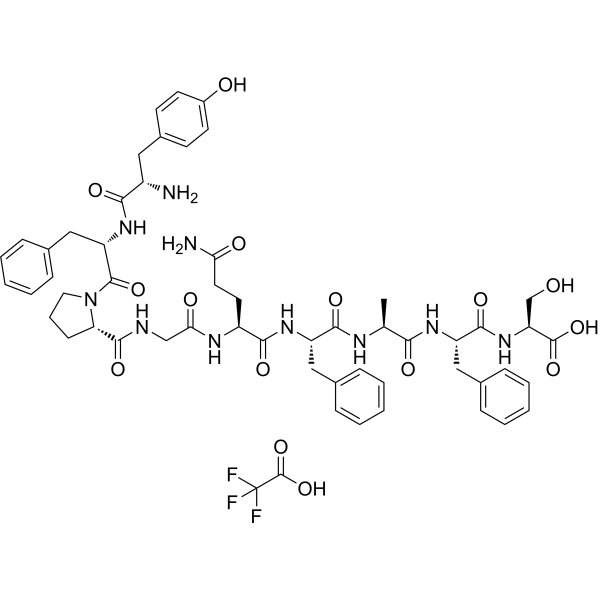
Chemerin-9 (149-157) TFA
Based on 4 publication(s) in Google Scholar
Chemerin-9 (149-157) TFA is a potent agonist of chemokine-like receptor 1 (CMKLR1) . Chemerin-9 (149-157) TFA has anti-inflammatory activity. Chemerin-9 (149-157) TFA stimulates phosphorylation of Akt and ERK as well as ROS production. Chemerin-9 (149-157) TFA ameliorates Aβ1-42-induced memory impairmen. Chemerin-9 (149-157) TFA regulates immune responses, adipocyte differentiation, and glucose metabolism.
For research use only. We do not sell to patients.
- Purity : 98.41%
- Formula: C56H67F3N10O15
- Molecular Weight:1177.18
-
Storage:
Sealed storage, away from moisture.
Powder -80°C, 2 years , -20°C, 1 year* In solvent : -80°C, 6 months; -20°C, 1 month (sealed storage, away from moisture)

To place orders, for customer services and technical support, please contact: MedChemExpress USA
Tel: 609-228-6898 E-mail: [email protected] [email protected]


-
 Biological Activity
-
Chemical Information
-
Solvent & Solubility
- Protocols
- Purity & Documentation
- References
-
 Help & FAQs


Publications Citing Use of MedChemExpress (MCE) Chemerin-9 (149-157) TFA
MoreAll Chemerin Receptor Isoforms
More

Biological Activity
Description
In Vitro
Chemerin-9 (149-157) TFA (0.1 nM; 24 h; cardiac fibroblasts) stimulates migration in cardiac fibroblasts and stimulates phosphorylation of Akt and ERK as well as ROS production[4].
MedChemExpress (MCE) has not independently confirmed the accuracy of these methods. They are for reference only. Further protocols information, click here.
-
Cell Line:Cardiac fibroblasts
-
Concentration:0.1 nM
-
Incubation Time:24 hours
-
Result:Stimulated phosphorylation of Akt and ERK.
In Vivo
Chemerin-9 (149-157) TFA (7.7 μg /kg; i.h.; daily, for 28 days) has anti-inflammatory and anti-angiogenic effects in ApoE-/- mice and protects the abdominal aorta from MMP damage[2].
Chemerin-9 (149-157) TFA (8 μg/kg; ICV; daily; for 14 d; male Kunming mice) ameliorates Aβ1-42-induced memory impairment[3].
MedChemExpress (MCE) has not independently confirmed the accuracy of these methods. They are for reference only.
-
Animal Model:PDM mice[1]
-
Dosage:0.2 mg/kg
-
Administration:Intraperitoneal injection; daily, for 42 days
-
Result:Increased expression of chemerin, GLUT2, and PDX1, which led to the alleviation of glucose intolerance and IR in PDM model mice.
-
Animal Model:ApoE-/- mice[2]
-
Dosage:7.7 μg /kg
-
Administration:Subcutaneous injection; daily, for 28 days
-
Result:Suppressed the enlargement of abdominal aorta and reversed the SMC loss.
-
Animal Model:ApoE-/- mice[2]
-
Dosage:7.7 μg /kg
-
Administration:Subcutaneous injection; daily, for 28 days
-
Result:Down-regulated MMP2 and MMP-9 expression and decreased the levels of chemerin and CMKLR1.
-
Animal Model:Male Kunming mice[3]
-
Dosage:8 μg/kg
-
Administration:Intracerebroventrical injection; daily; for 14 days
-
Result:Increased in the levels of pro-inflammatory cytokines such as interleukin-1β (IL-1β), tumor necrosis factor (TNF-α) and interleukin-6 (IL-6) in the hippocampus.


Chemical Information
-
Appearance Solid
-
Molecular Weight 1177.18
-
Formula C56H67F3N10O15
-
Color White to off-white
-
Sequence Shortening
YFPGQFAFS
-
Shipping
Room temperature in continental US; may vary elsewhere.
-
Storage
Sealed storage, away from moisture
Powder -80°C 2 years -20°C 1 year * In solvent : -80°C, 6 months; -20°C, 1 month (sealed storage, away from moisture)


Publications (4)
-
Journal Impact Factor
-
Most Recent
-
MedComm (2020)
Statins, but not proprotein convertase subtilisin-kexin type 9 inhibitors, lower chemerin in hypercholesterolemia via low-density lipoprotein receptor upregulation. [Abstract]2024 Aug 31;5(9):e681. PMID: 39220103 -
Hypertension
Statins Prevent the Deleterious Consequences of Placental Chemerin Upregulation in Preeclampsia. [Abstract]2024 Apr;81(4):861-875. PMID: 38361240 -
Eur J Pharmacol
Chemerin-9 in paraventricular nucleus increases sympathetic outflow and blood pressure via glutamate receptor-mediated ROS generation. [Abstract]2022 Dec 5:936:175343. PMID: 36306926 -
Eur J Neurosci
Chemerin in caudal division of nucleus tractus solitarius increases sympathetic activity and blood pressure. [Abstract]2024 Sep;60(5):4830-4842. PMID: 39044301


Solvent & Solubility
In Vitro:
DMSO : ≥ 50 mg/mL (42.47 mM; Hygroscopic DMSO has a significant impact on the solubility of product, please use newly opened DMSO)
H2O : 3.33 mg/mL (2.83 mM; Need ultrasonic)
* "≥" means soluble, but saturation unknown.
Please refer to the solubility information to select the appropriate solvent. Once prepared, please aliquot and store the solution to prevent product inactivation from repeated freeze-thaw cycles.
Storage method and period of stock solution: -80°C, 6 months; -20°C, 1 month (sealed storage, away from moisture). When stored at -80°C, please use it within 6 months. When stored at -20°C, please use it within 1 month.
* Note: If you choose water as the stock solution, please dilute it to the working solution, then filter and sterilize it with a 0.22 μm filter before use.
Please refer to the solubility information to select the appropriate solvent. Once prepared, please aliquot and store the solution to prevent product inactivation from repeated freeze-thaw cycles.
Storage method and period of stock solution: -80°C, 6 months; -20°C, 1 month (sealed storage, away from moisture). When stored at -80°C, please use it within 6 months. When stored at -20°C, please use it within 1 month.
* Note: If you choose water as the stock solution, please dilute it to the working solution, then filter and sterilize it with a 0.22 μm filter before use.
Concentration (start) × Volume (start) = Concentration (final) × Volume (final)

Protocols
-
Kinase activity and phosphorylation assays
Kinase activity assays measure the ability of kinases to transfer phosphate groups from ATP to specific substrates, while phosphorylation assays detect the presence and levels of phosphorylated proteins. Common methods include radiolabeled ATP incorporation (e. g. ,), ADP release detection via bioluminescence (e. g. ,[3]), enzyme-linked immunosorbent assays (ELISA) for phospho-specific epitopes (e. g. ,[6]), and microtiter-based formats for high-throughput screening (e. g. ,[8]). The ADP-Glo assay quantifies kinase activity by measuring ADP produced during phosphorylation using a luciferase-based system. Radiometric assays involve autoradiography or scintillation counting after incorporation of 32P-labeled ATP into substrate proteins. ELISA-based approaches rely on phospho-specific antibodies to detect activated kinases in cell lysates or purified samples.
-
Western Blot
Western blotting (WB) is a commonly used experimental method in molecular biology, biochemistry, and immunogenetics for identifying and quantifying target proteins. It combines gel electrophoresis with immunoassay, enabling researchers to analyze protein expression, post-translational modifications, and molecular weight.
-
3T3-L1 preadipocyte-to-adipocyte differentiation
3T3-L1 preadipocytes are induced to differentiate after growth arrest using adipogenic media containing insulin, dexamethasone, and IBMX; differentiation is assessed by lipid-droplet accumulation, triglyceride increase, Oil Red O staining, and adipocyte-marker induction such as PPARγ and C/EBPα.
-
Cotton Pellet Granuloma
Cotton pellet granuloma is a classical in vivo chronic inflammation model used to evaluate the anti-inflammatory potential of test substances by measuring their ability to inhibit granuloma tissue formation around an implanted foreign body (cotton pellet) in rodents. The method is based on the biological response to a sterile implanted material, which induces proliferative phase inflammation characterized by fibroblast proliferation and collagen-rich granuloma formation, and the final readout reflects the extent of chronic inflammatory tissue growth surrounding the pellet. In multiple preclinical pharmacological evaluations, inhibition of cotton pellet-induced granuloma formation has been used as an indicator of anti-inflammatory activity in both synthetic and natural product screening contexts.
-
ROS/oxidative-stress fluorescent staining
ROS/oxidative-stress fluorescent staining uses cell-permeant fluorogenic probes that become fluorescent after oxidation inside cells or tissues; commonly used examples include DCFH-DA/DCFDA for broad cellular oxidant detection, DHE for superoxide-related signal detection, MitoSOX for mitochondrial superoxide-related signal detection, and CellROX probes for oxidative-stress-associated fluorescence readouts. The assay detects probe oxidation rather than a single ROS species unless the probe and analysis method have been chemically validated for that species. DCFH-DA enters cells, is deacetylated by intracellular esterases to DCFH, and produces fluorescent DCF after oxidation, so the readout is used as an operational measure of total cellular oxidative stress rather than a species-specific ROS measurement. DHE and MitoSOX can report superoxide-related oxidation, but red fluorescence alone can include non-specific ethidium-like oxidation products; HPLC or optimized spectral approaches are
-
Carrageenan-Induced Paw Edema
Carrageenan-induced paw edema is an acute inflammation model in which intraplantar injection of carrageenan induces localized inflammatory swelling characterized by vascular permeability, leukocyte infiltration, and production of inflammatory mediators such as prostaglandins and cytokines, making it widely used to evaluate anti-inflammatory agents in vivo. The resulting paw volume or thickness increase is quantified over time as a direct readout of inflammatory intensity and drug efficacy, typically reflecting cyclooxygenase-mediated prostaglandin-driven edema formation and immune cell recruitment in peripheral tissue[20].
-
Large-size fat particle sorting
Large-size fat particle sorting is widely used to isolate cells up to 200 μm in diameter. Single-cell flow sorting will allow greater insight into adipocyte heterogeneity by identifying gene expression, protein composition, and metabolic signatures at the single-cell level.
-
Research Protocol for Inflammation-related Diseases
The NLRP3 inflammasome is a cytosolic innate immune signaling platform that integrates priming signals and danger-signal activation to promote caspase-1 activation, maturation of IL-1β and IL-18, and gasdermin D-mediated pyroptotic cell death. The core experimental logic is to determine whether inflammatory disease phenotypes are driven by increased NLRP3 expression, ASC-containing inflammasome assembly, caspase-1 cleavage, GSDMD cleavage, and extracellular release of IL-1β/IL-18 rather than by nonspecific cell injury alone. The pathway is strongly linked to inflammation-related disease phenotypes because monosodium urate crystals activate NALP3/NLRP3 inflammasome signaling in gout-like crystal inflammation, cholesterol crystals activate NLRP3 inflammasomes in atherogenesis models, and DSS-induced intestinal inflammation has been reported to involve NLRP3 inflammasome activity. However, experimental colitis studies also show context-dependent protective effects of NLRP3 inflammasome co
-
Protocol for Kinase activity and phosphorylation assays
Kinase activity assays measure transfer of phosphate from ATP to a protein or peptide substrate, generating phosphorylated substrate, ADP, or incorporated radiolabeled phosphate as the readout; phosphorylation assays measure site-specific phosphorylation in cells or tissues as a proxy for kinase-pathway activation, inhibition, or substrate regulation. Phosphorylation can be detected by phospho-specific Western blot, immunoprecipitation kinase assay, phospho-immunofluorescence, phospho-flow cytometry, luminescent ADP detection, radiolabeled ATP incorporation, or reporter-based pathway assays, and these readouts can be applied to cancer cells, primary neurons, mouse tumors, organoids, inflammatory macrophages, ferroptosis studies, and mitophagy studies when the kinase target is biologically relevant.


Purity & Documentation
-
Data Sheet (284 KB)
-
SDS (252 KB)
- English - EN (252 KB)
- Français - FR (252 KB)
- Deutsch - DE (252 KB)
- Norwegian - NO (252 KB)
- Español - ES (252 KB)
- Swedish - SV (252 KB)
- Italian - IT (252 KB)
- Korean - KR (252 KB)
- Portuguese - PT (252 KB)
-
Handling Instructions (2659 KB)
References
[1]. Tu J, et, al. Regulatory effect of chemerin and therapeutic efficacy of chemerin 9 in pancreatogenic diabetes mellitus. Mol Med Rep. 2020 Mar;21(3):981-988. [Content Brief]
[2]. Chen S, et, al. Chemerin-9 Attenuates Experimental Abdominal Aortic Aneurysm Formation in ApoE-/- Mice. J Oncol. 2021 Apr 17;2021:6629204. [Content Brief]
[3]. Lei Z, et, al. Chemerin-9 Peptide Enhances Memory and Ameliorates Aβ1-42-Induced Object Memory Impairment in Mice. Biol Pharm Bull. 2020 Feb 1;43(2):272-283. [Content Brief]
[4]. Yamamoto A, et, al. Chemerin-9 stimulates migration in rat cardiac fibroblasts in vitro. Eur J Pharmacol. 2021 Dec 5;912:174566. [Content Brief]


Complete Stock Solution Preparation Table
Please refer to the solubility information to select the appropriate solvent. Once prepared, please aliquot and store the solution to prevent product inactivation from repeated freeze-thaw cycles.
Storage method and period of stock solution: -80°C, 6 months; -20°C, 1 month (sealed storage, away from moisture). When stored at -80°C, please use it within 6 months. When stored at -20°C, please use it within 1 month.
| Optional Solvent | Concentration Solvent Mass | 1 mg | 5 mg | 10 mg | 25 mg |
|---|---|---|---|---|---|
| H2O / DMSO | 1 mM | 0.8495 mL | 4.2474 mL | 8.4949 mL | 21.2372 mL |
| DMSO | 5 mM | 0.1699 mL | 0.8495 mL | 1.6990 mL | 4.2474 mL |
| 10 mM | 0.0849 mL | 0.4247 mL | 0.8495 mL | 2.1237 mL | |
| 15 mM | 0.0566 mL | 0.2832 mL | 0.5663 mL | 1.4158 mL | |
| 20 mM | 0.0425 mL | 0.2124 mL | 0.4247 mL | 1.0619 mL | |
| 25 mM | 0.0340 mL | 0.1699 mL | 0.3398 mL | 0.8495 mL | |
| 30 mM | 0.0283 mL | 0.1416 mL | 0.2832 mL | 0.7079 mL | |
| 40 mM | 0.0212 mL | 0.1062 mL | 0.2124 mL | 0.5309 mL |
* Note: If you choose water as the stock solution, please dilute it to the working solution, then filter and sterilize it with a 0.22 μm filter before use.


Chemerin-9 (149-157) TFA Related Classifications
HY-P1844A Related Classifications
 Powered by Bioz