



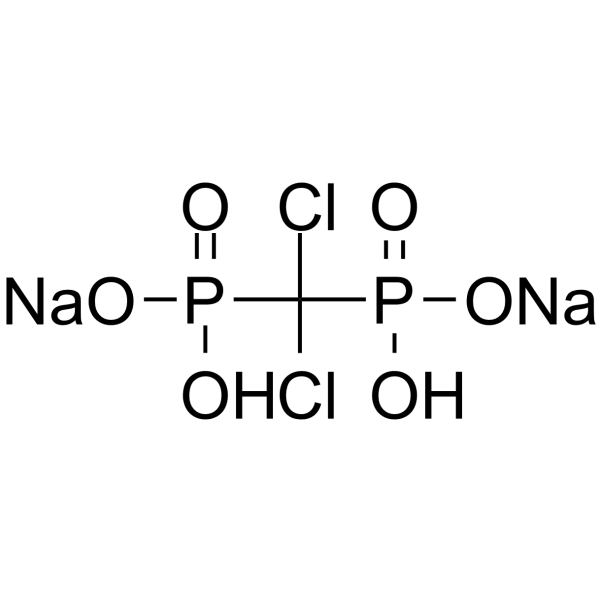
Clodronic acid disodium salt
Based on 5 publication(s) in Google Scholar
Clodronic acid (Clodronate) disodium salt is an orally active bisphosphonate. Clodronic acid disodium salt inhibits osteoclast-mediated bone resorption. Clodronic acid disodium salt reduces skeletal event risk in malignant bone disease, impairs malignant osteolysis, blocks bone matrix growth-factor release, induces apoptosis in osteoclasts and macrophages. Clodronic acid disodium salt is effective in the maintenance or improvement of bone mineral density. Clodronic acid disodium salt can be used for the research of multiple myeloma and postmenopausal osteoporosis.
For research use only. We do not sell to patients.
- Assay : 100.50%
- CAS No.: 22560-50-5
- Formula: CH2Cl2Na2O6P2
- Molecular Weight:288.86
-
Storage:
4°C, sealed storage, away from moisture
* In solvent : -80°C, 6 months; -20°C, 1 month (sealed storage, away from moisture)

To place orders, for customer services and technical support, please contact: MedChemExpress USA
Tel: 609-228-6898 E-mail: [email protected] [email protected]


-
 Biological Activity
-
Chemical Information
-
Solvent & Solubility
- Protocols
- Purity & Documentation
- References
-
 Help & FAQs


-
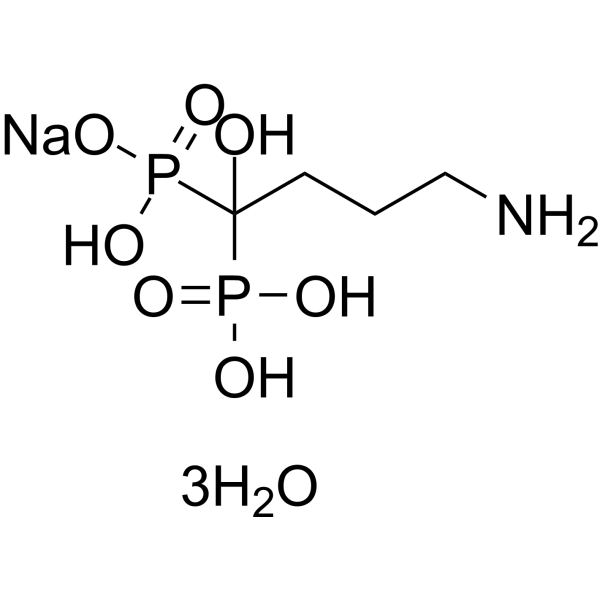
HY-11101
Alendronate sodium hydrateNitrogen-Containing Bisphosphonate -
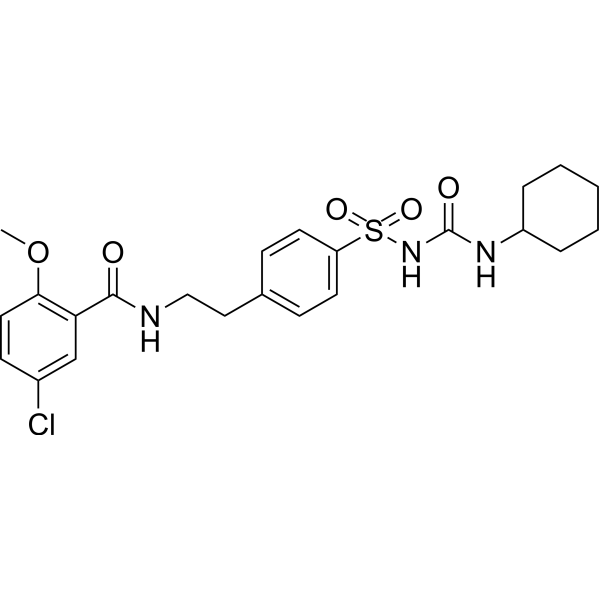
HY-15206
GlibenclamideKATP Inhibitor -
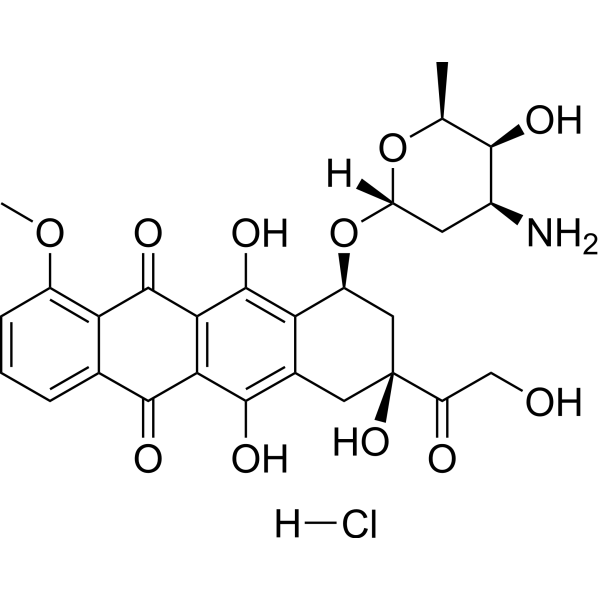
HY-15142
Doxorubicin hydrochlorideTopoisomerase Inhibitor -
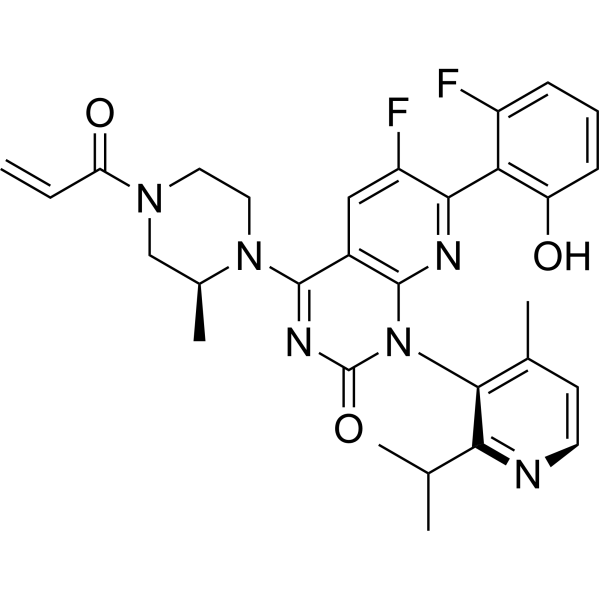
HY-114277
SotorasibKRAS G12C Inhibitor -
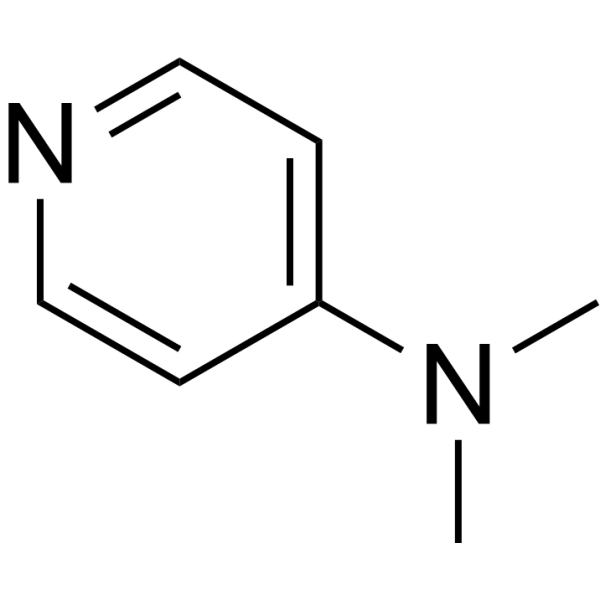
HY-Y1089
4-DimethylaminopyridineAcyl Transfer Catalyst -
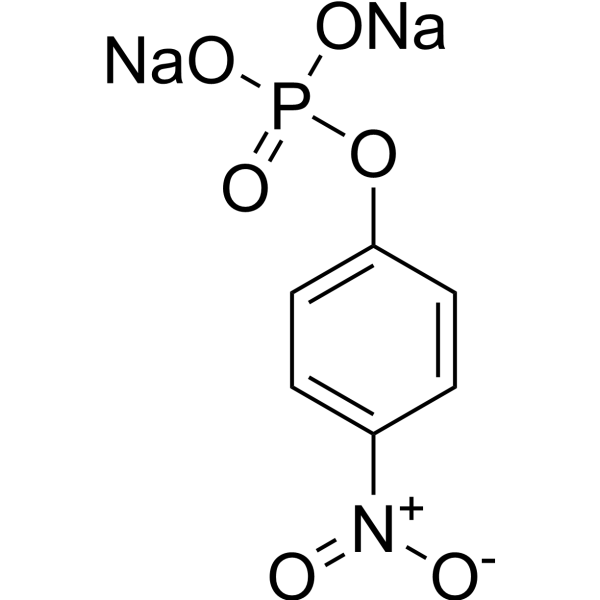
HY-15928
4-Nitrophenyl phosphate disodiumPhosphatases Substrate -
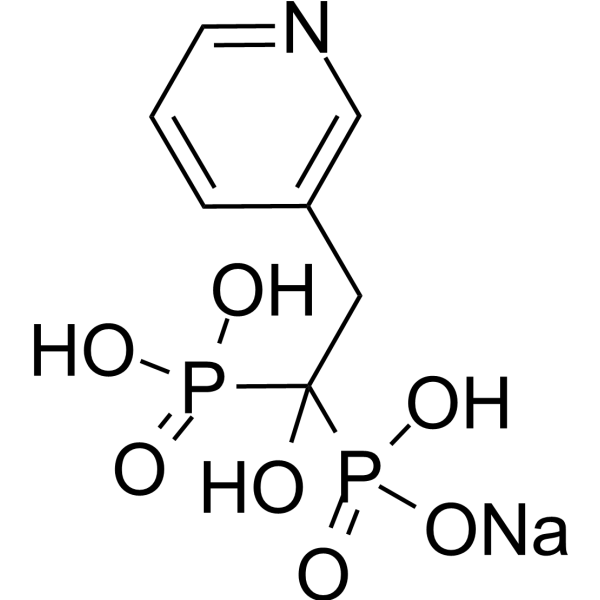
HY-B0119
Risedronic acid sodiumAnti-resorption Agent -
HY-B0302A
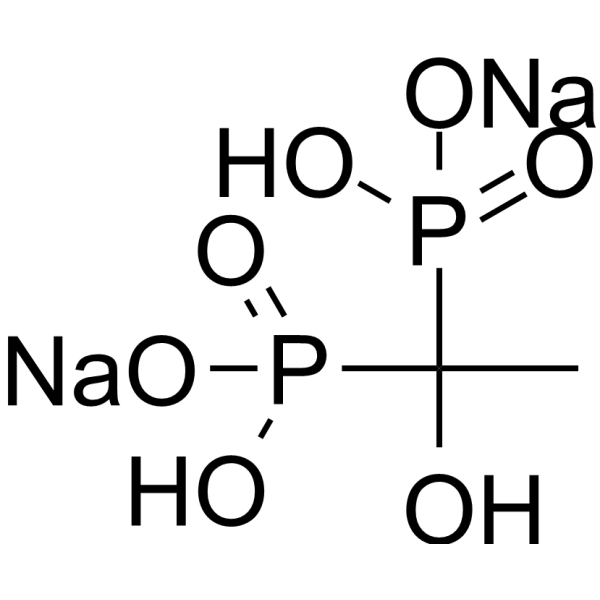
Etidronic acid disodiumApoptosis Inducer
Publications Citing Use of MedChemExpress (MCE) Clodronic acid disodium salt
More

Biological Activity
Description
In Vitro
Clodronic acid disodium salt induces rapid apoptosis in osteoclasts by preventing translocation of ADP into mitochondria after being internalised via resorption. Consequently, ATP production is inhibited, leading to induction of apoptosis by means of release of cytochrome C into the cytoplasm[2].
MedChemExpress (MCE) has not independently confirmed the accuracy of these methods. They are for reference only. Further protocols information, click here.
In Vivo
MedChemExpress (MCE) has not independently confirmed the accuracy of these methods. They are for reference only.
-
Animal Model:Male Lewis rats, aged 7 weeks[3]
-
Dosage:6.25, 12.5, and 25 mg/kg
-
Administration:P.o.; daily for 28 days
-
Result:Hindpaw swelling was significantly smaller than in adjuvant-arthritis (AA)-control at 25 mg/kg on days 21 and 28 (87 and 88% of AA-control, respectively) and at 12.5 mg/kg on day 28.


Chemical Information
-
CAS No. 22560-50-5
-
Appearance Solid
-
Molecular Weight 288.86
-
Formula CH2Cl2Na2O6P2
-
Color White to off-white
-
SMILES
O=P(C(Cl)(Cl)P(O)(O[Na])=O)(O)O[Na]
-
Synonyms
Clodronate disodium salt
-
Shipping
Room temperature in continental US; may vary elsewhere.
-
Storage
4°C, sealed storage, away from moisture
* In solvent : -80°C, 6 months; -20°C, 1 month (sealed storage, away from moisture)


Publications (5)
-
Journal Impact Factor
-
Most Recent
-
Nat Neurosci
Spatiotemporally selective astrocytic ATP dynamics encode injury information sensed by microglia following brain injury in mice. [Abstract]2024 Aug;27(8):1522-1533. PMID: 38862791 -
ACS Nano
Localized Depletion of Macrophages by Abdominal Cavity Retention Nanoparticles as a Potential Therapy for Peritoneal Metastasis. [Abstract]2026 Jun 16;20(23):16987-17000. PMID: 42225301 -
J Adv Res
Dual regulation of phaseol on osteoclast formation and osteoblast differentiation by targeting TAK1 kinase for osteoporosis treatment. [Abstract]2024 Dec 9:S2090-1232(24)00565-4. PMID: 39662728 -
Phytomedicine
Glycyrol alleviates osteoporosis through dual modulation on osteoclastogenesis and osteogenesis by targeting Syk signaling pathway. [Abstract]2025 Mar:138:156429. PMID: 39939034 -
Cell Rep Methods
RECOVER identifies synergistic drug combinations in vitro through sequential model optimization. [Abstract]2023 Oct 23;3(10):100599. PMID: 37797618


Solvent & Solubility
In Vitro:
H2O : 100 mg/mL (346.19 mM; Need ultrasonic)
DMSO : < 1 mg/mL (insoluble or slightly soluble)
Please refer to the solubility information to select the appropriate solvent. Once prepared, please aliquot and store the solution to prevent product inactivation from repeated freeze-thaw cycles.
Storage method and period of stock solution: -80°C, 6 months; -20°C, 1 month (sealed storage, away from moisture). When stored at -80°C, please use it within 6 months. When stored at -20°C, please use it within 1 month.
* Note: If you choose water as the stock solution, please dilute it to the working solution, then filter and sterilize it with a 0.22 μm filter before use.
Please refer to the solubility information to select the appropriate solvent. Once prepared, please aliquot and store the solution to prevent product inactivation from repeated freeze-thaw cycles.
Storage method and period of stock solution: -80°C, 6 months; -20°C, 1 month (sealed storage, away from moisture). When stored at -80°C, please use it within 6 months. When stored at -20°C, please use it within 1 month.
* Note: If you choose water as the stock solution, please dilute it to the working solution, then filter and sterilize it with a 0.22 μm filter before use.
Concentration (start) × Volume (start) = Concentration (final) × Volume (final)
In Vivo:
For the following dissolution methods, please prepare the working solution directly:
It is recommended to prepare fresh solutions and use them promptly within a short period of time.
The percentages shown for the solvents indicate their volumetric ratio in the final prepared solution. If precipitation or phase separation occurs during preparation, heat and/or sonication can be used to aid dissolution.
Add each solvent one by one: PBS
Solubility: 100 mg/mL (346.19 mM); Clear solution; Need ultrasonic

Protocols
-
Apoptosis
Apoptosis, also called programmed cell death, is generally characterized by distinct morphological characteristics.
-
TUNEL staining for apoptotic DNA fragmentation
TUNEL staining detects DNA strand breaks by using terminal deoxynucleotidyl transferase to add labeled nucleotides to exposed 3′-OH DNA termini, generating either microscopic staining in fixed cells or tissue sections, or fluorescence/cytometric signal in cell suspensions. TUNEL positivity reflects DNA fragmentation but should not be interpreted alone as definitive apoptosis, because TUNEL can also label necrotic, autolytic, mechanically damaged, or DNA-repair-associated DNA breaks.
-
Annexin V plus membrane-impermeant dye apoptosis staining
Annexin V-based apoptosis assays rely on the detection of phosphatidylserine (PS) externalization from the inner leaflet of the plasma membrane to the outer leaflet, an early biochemical hallmark of apoptosis. Fluorescently labeled Annexin V binds PS in a calcium-dependent manner, enabling identification of early apoptotic cells by flow cytometry or fluorescence microscopy. When combined with a membrane-impermeant DNA-binding dye (e. g. , propidium iodide), this approach allows discrimination between viable (Annexin V−/dye−), early apoptotic (Annexin V+/dye−), and late apoptotic or necrotic (Annexin V+/dye+) cell populations by assessing membrane integrity and PS exposure.
-
Apoptosis Solutions
Apoptosis is a regulated, generally non-lytic cell-death pathway that removes unwanted, damaged, infected, or abnormal cells through coordinated morphological changes, caspase activation, DNA fragmentation, and membrane remodeling. The intrinsic apoptosis pathway is controlled mainly by mitochondrial outer membrane permeabilization, BCL-2 family proteins, cytochrome c release, apoptosome formation, caspase-9 activation, and downstream executioner caspase-3/7 activation. The extrinsic apoptosis pathway is initiated by death receptors such as Fas, TNFR, and TRAIL receptors, which recruit adaptor proteins and activate caspase-8 before engaging executioner caspases or mitochondrial amplification through BID cleavage. Apoptosis is linked to many phenotypes, including cancer cell killing, tissue homeostasis, immune regulation, neurodegeneration, infection response, and treatment-induced cytotoxicity; unresolved questions include how apoptosis interacts with necroptosis, pyroptosis, ferroptos
-
Osteoclast differentiation from monocyte/macrophage precursors
Osteoclast differentiation is an in vitro induction assay in which monocyte/macrophage-lineage precursors are exposed to macrophage colony-stimulating factor (M-CSF) and receptor activator of NF-κB ligand (RANKL), generating multinucleated osteoclasts that are commonly identified by tartrate-resistant acid phosphatase (TRAP) staining and functionally confirmed by resorption pits on dentin, bone, or mineralized substrates. M-CSF supports survival and expansion of osteoclast precursors, while RANKL binding to RANK drives osteoclast commitment, fusion, maturation, and resorptive function; osteoprotegerin inhibits this pathway by binding RANKL and preventing RANK activation. The main readouts are the number of TRAP-positive multinucleated cells, formation of F-actin rings, and resorbed surface area; TRAP-positive multinucleated cells indicate osteoclast differentiation, whereas pit formation on dentin, bone, or mineralized coating indicates functional bone-resorbing activity.


Purity & Documentation
-
Data Sheet (275 KB)
-
SDS (393 KB)
- English - EN (393 KB)
- Français - FR (393 KB)
- Deutsch - DE (393 KB)
- Norwegian - NO (393 KB)
- Español - ES (393 KB)
- Swedish - SV (393 KB)
- Italian - IT (393 KB)
- Korean - KR (393 KB)
- Portuguese - PT (393 KB)
-
Handling Instructions (2659 KB)
References
[1]. Morgan GJ, et al. First-line treatment with zoledronic acid as compared with clodronic acid in multiple myeloma (MRC Myeloma IX): a randomised controlled trial. Lancet. 2010;376(9757):1989-1999. [Content Brief]
[2]. Tanakol R, et al. Clodronic acid in the treatment of postmenopausal osteoporosis. Clin Drug Investig. 2007;27(6):419‐433. [Content Brief]
[3]. Itoh F, et al. Effects of clodronate and alendronate on local and systemic changes in bone metabolism in rats with adjuvant arthritis. Inflammation. 2004 Feb;28(1):15-21. [Content Brief]


Complete Stock Solution Preparation Table
Please refer to the solubility information to select the appropriate solvent. Once prepared, please aliquot and store the solution to prevent product inactivation from repeated freeze-thaw cycles.
Storage method and period of stock solution: -80°C, 6 months; -20°C, 1 month (sealed storage, away from moisture). When stored at -80°C, please use it within 6 months. When stored at -20°C, please use it within 1 month.
| Optional Solvent | Concentration Solvent Mass | 1 mg | 5 mg | 10 mg | 25 mg |
|---|---|---|---|---|---|
| H2O | 1 mM | 3.4619 mL | 17.3094 mL | 34.6188 mL | 86.5471 mL |
| 5 mM | 0.6924 mL | 3.4619 mL | 6.9238 mL | 17.3094 mL | |
| 10 mM | 0.3462 mL | 1.7309 mL | 3.4619 mL | 8.6547 mL | |
| 15 mM | 0.2308 mL | 1.1540 mL | 2.3079 mL | 5.7698 mL | |
| 20 mM | 0.1731 mL | 0.8655 mL | 1.7309 mL | 4.3274 mL | |
| 25 mM | 0.1385 mL | 0.6924 mL | 1.3848 mL | 3.4619 mL | |
| 30 mM | 0.1154 mL | 0.5770 mL | 1.1540 mL | 2.8849 mL | |
| 40 mM | 0.0865 mL | 0.4327 mL | 0.8655 mL | 2.1637 mL | |
| 50 mM | 0.0692 mL | 0.3462 mL | 0.6924 mL | 1.7309 mL | |
| 60 mM | 0.0577 mL | 0.2885 mL | 0.5770 mL | 1.4425 mL | |
| 80 mM | 0.0433 mL | 0.2164 mL | 0.4327 mL | 1.0818 mL | |
| 100 mM | 0.0346 mL | 0.1731 mL | 0.3462 mL | 0.8655 mL |
* Note: If you choose water as the stock solution, please dilute it to the working solution, then filter and sterilize it with a 0.22 μm filter before use.


Clodronic acid disodium salt Related Classifications
HY-B0657A Related Classifications
 Powered by Bioz