



Debromohymenialdisine
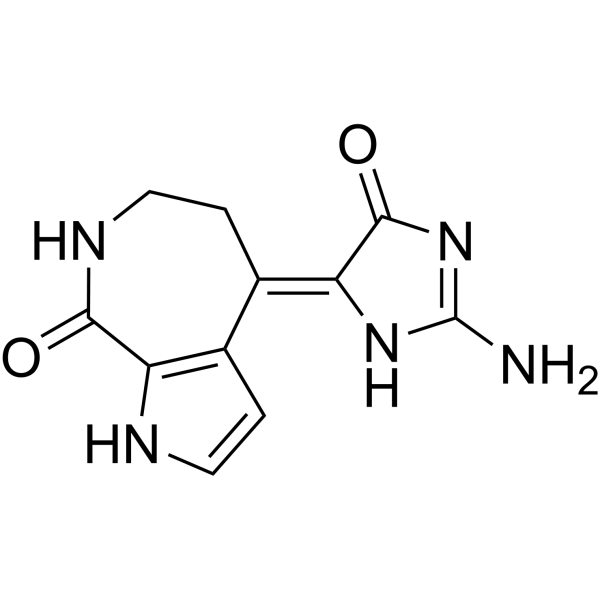
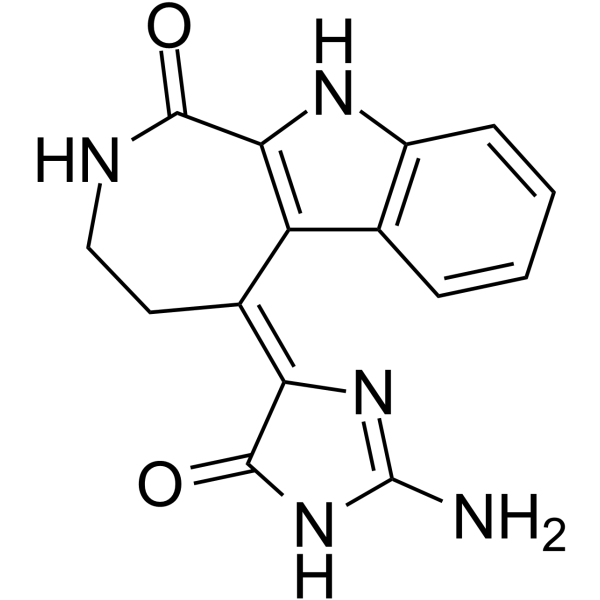
Debromohymenialdisine (10Z-Debromohymenialdisine) is a pyrrole alkaloid. Debromohymenialdisine has moderate inhibitory activity with an IC50 value of 881 nM in the initial Raf/MEK-1/MAPK signaling cascade assay. Debromohymenialdisine can be used for the research of proliferation and differentiation.
For research use only. We do not sell to patients.
- CAS No.: 75593-17-8
- Formula: C11H11N5O2
- Molecular Weight:245.24
-
Storage:
Please store the product under the recommended conditions in the Certificate of Analysis.

To place orders, for customer services and technical support, please contact: MedChemExpress USA
Tel: 609-228-6898 E-mail: [email protected] [email protected]


-
 Biological Activity
-
Chemical Information
- Protocols
- Purity & Documentation
- References
-
 Help & FAQs


-

HY-139414
LysophosphatidylcholinesHemolytic Agent -
HY-13946
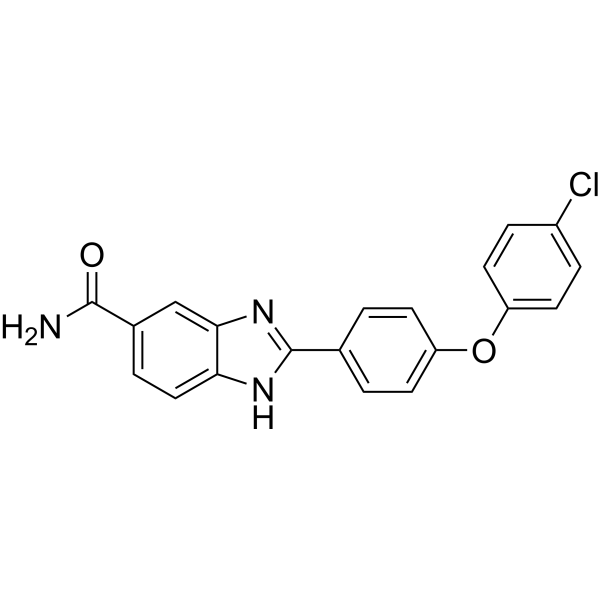
BML-277 -
HY-17394
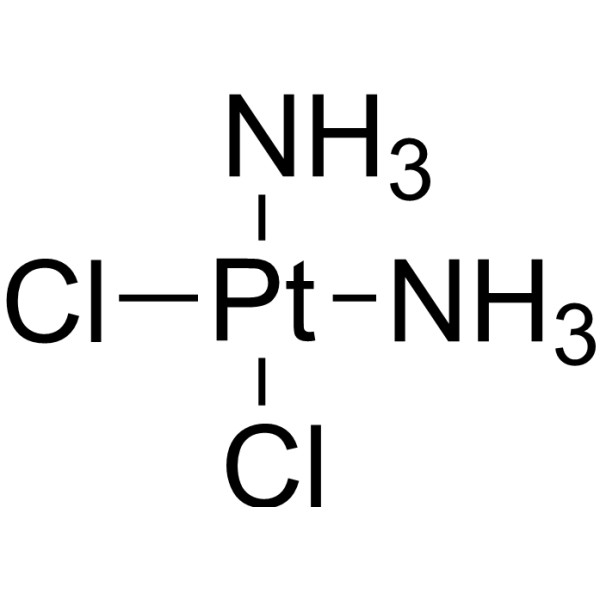
CisplatinDNA Alkylator -
HY-108343
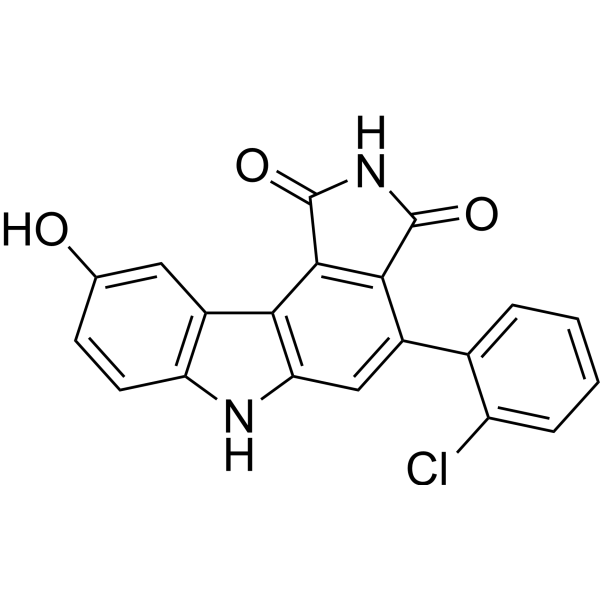
WEE1-IN-4Wee1 Kinase Inhibitor -

HY-135216
Antiproliferative agent-54EGFR Inhibitor -
HY-112477
Chk2-IN-1Chk2 Inhibitor -
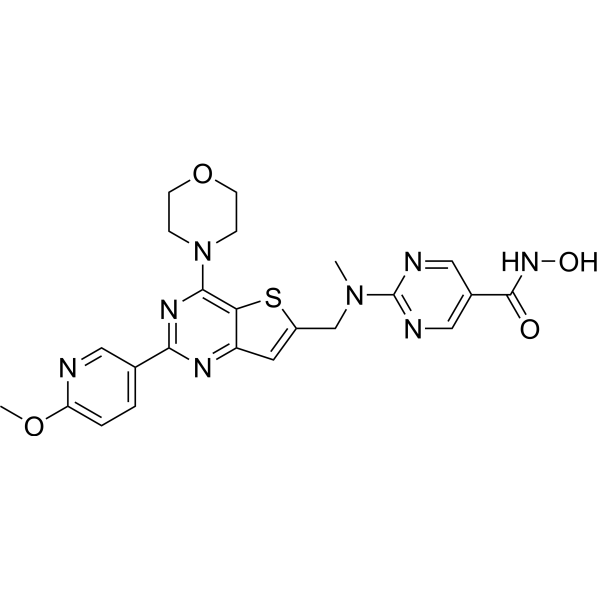
HY-13522
FimepinostatPI3K/HDAC Inhibitor -
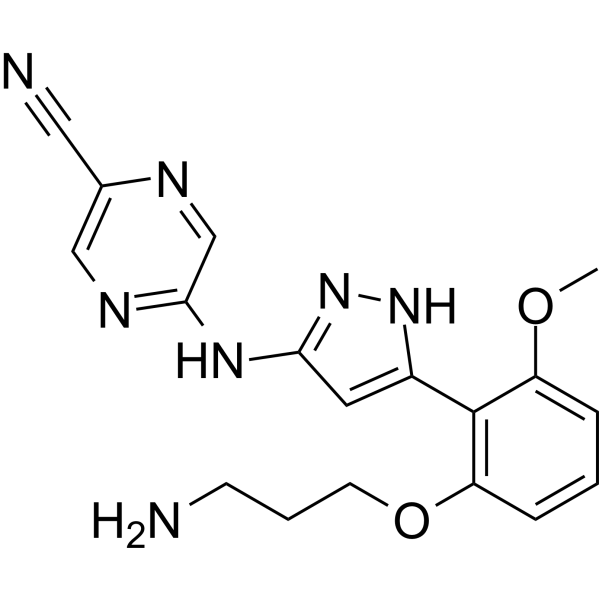
HY-18174
PrexasertibCHK1 Inhibitor -
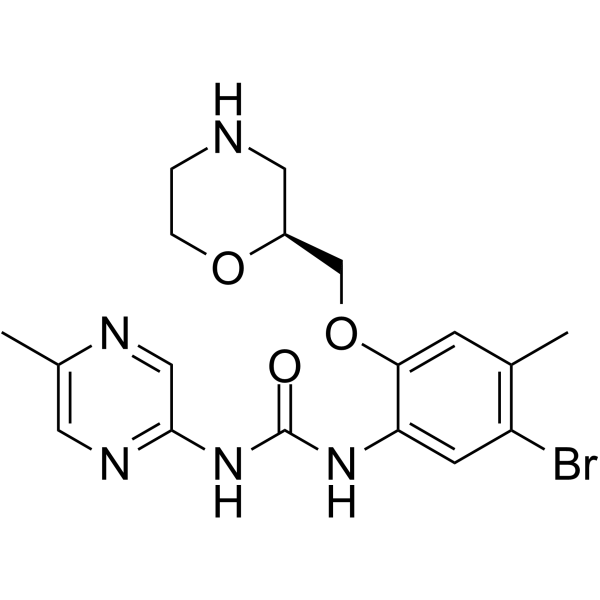
HY-14720
RabusertibCHK1 Inhibitor -
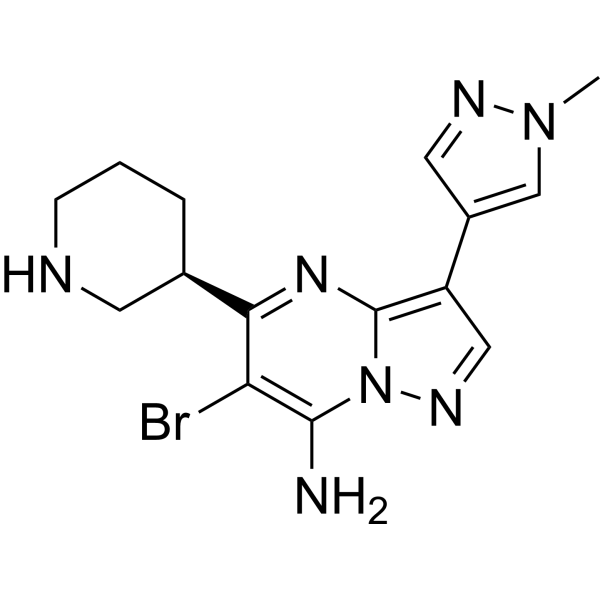
HY-15532
SCH900776CHK1 Inhibitor -
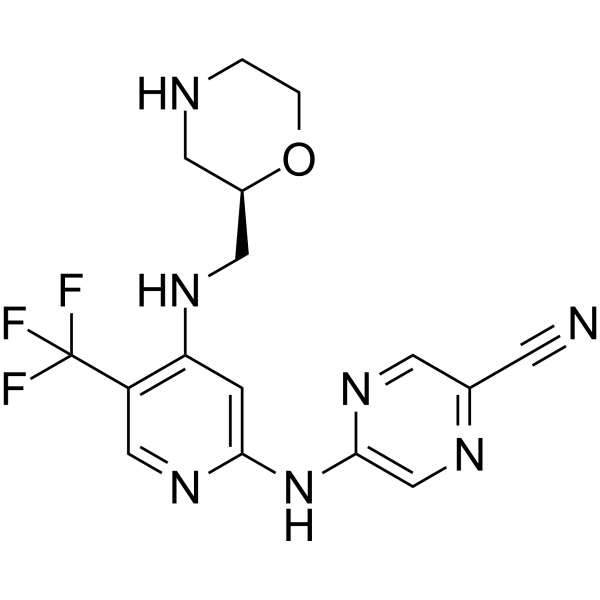
HY-18958
CCT245737CHK1 Inhibitor -
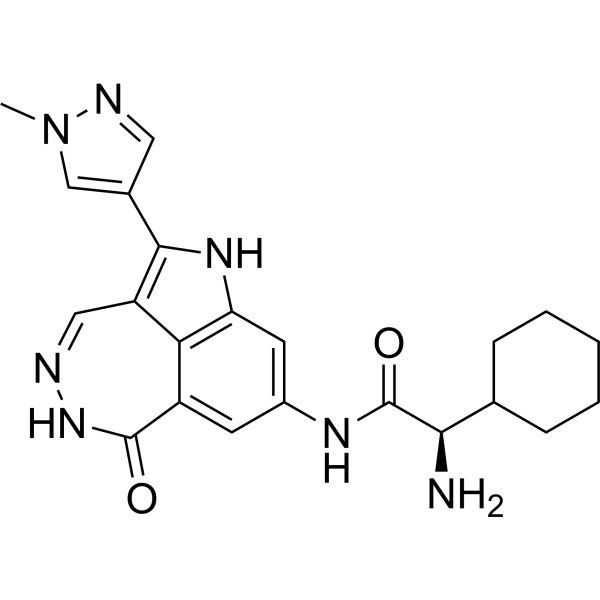
HY-10032
PF 477736Chk1 Inhibitor
All MEK Isoforms
More

Biological Activity
Description
IC50 & Target
IC50: 881 nM (in Raf/MEK-1/MAPK signaling cascade assay)[1].
Cellular Effect
|
Cell Line

|
Type | Value | Description | References |
|---|---|---|---|---|
| A498 | ED50 |
24.7 μg/mL
Compound: 2
|
Cytotoxicity against human A498 cells by SRB assay
Cytotoxicity against human A498 cells by SRB assay
|
[PMID: 9051914] |
| Caco-2 | IC50 |
>10000 nM
Compound: 3
|
Inhibition of human adenocarcinoma cell line Caco-2 proliferation
Inhibition of human adenocarcinoma cell line Caco-2 proliferation
|
[PMID: 11784156] |
| KM-20L2 | ED50 |
8.5 μg/mL
Compound: 2
|
Cytotoxicity against human KM20L2 cells by SRB assay
Cytotoxicity against human KM20L2 cells by SRB assay
|
[PMID: 9051914] |
| L5178Y | EC50 |
1.8 μg/mL
Compound: 1d; DBH
|
Cytotoxicity against mouse L5178Y cells by MTT assay
Cytotoxicity against mouse L5178Y cells by MTT assay
|
[PMID: 33901899] |
| LoVo | IC50 |
>10000 nM
Compound: 3
|
Inhibition of human adenocarcinoma cell line LoVo proliferation
Inhibition of human adenocarcinoma cell line LoVo proliferation
|
[PMID: 11784156] |
| MCF7 | IC50 |
25 μM
Compound: K00230, Debromohymenialdisine
|
Cytotoxicity against human MCF7 cells
Cytotoxicity against human MCF7 cells
|
[PMID: 18077363] |
| MONO-MAC-6 | IC50 |
9.67 μM
Compound: 7
|
Cytotoxicity against human MONO-MAC-6 cells incubated for 48 hrs by [3H]-thymidine incorporation based liquid scintillation counter analysis
Cytotoxicity against human MONO-MAC-6 cells incubated for 48 hrs by [3H]-thymidine incorporation based liquid scintillation counter analysis
|
[PMID: 36496202] |
| MONO-MAC-6 | IC50 |
2.4 μg/mL
Compound: 5
|
Cytotoxicity against human MONO-MAC 6 cells assessed as [3H]thymidine incorporation after 48 hrs
Cytotoxicity against human MONO-MAC 6 cells assessed as [3H]thymidine incorporation after 48 hrs
|
[PMID: 9917317] |
| NCI-H460 | ED50 |
42 μg/mL
Compound: 2
|
Cytotoxicity against human H460 cells by SRB assay
Cytotoxicity against human H460 cells by SRB assay
|
[PMID: 9051914] |
| OVCAR-3 | ED50 |
1.8 μg/mL
Compound: 2
|
Cytotoxicity against human OVCAR-3 cells by SRB assay
Cytotoxicity against human OVCAR-3 cells by SRB assay
|
[PMID: 9051914] |
| SF-295 | ED50 |
38.9 μg/mL
Compound: 2
|
Cytotoxicity against human SF295 cells by SRB assay
Cytotoxicity against human SF295 cells by SRB assay
|
[PMID: 9051914] |
| SK-MEL-5 | ED50 |
5.7 μg/mL
Compound: 2
|
Cytotoxicity against human SK-MEL-5 cells by SRB assay
Cytotoxicity against human SK-MEL-5 cells by SRB assay
|
[PMID: 9051914] |
In Vitro
Debromohymenialdisine has moderate inhibitory activity with an IC50 value of 881 nM in the initial Raf/MEK-1/MAPK signaling cascade assay[1].
MedChemExpress (MCE) has not independently confirmed the accuracy of these methods. They are for reference only. Further protocols information, click here.


Chemical Information
-
CAS No. 75593-17-8
-
Molecular Weight 245.24
-
Formula C11H11N5O2
-
SMILES
NC(N/C1=C2CCNC(C3=C/2C=CN3)=O)=NC1=O
-
Synonyms
10Z-Debromohymenialdisine
-
Structure Classification
-
Initial Source
Stylissa massa
-
Shipping
Room temperature in continental US; may vary elsewhere.
-
Storage
Please store the product under the recommended conditions in the Certificate of Analysis.

Protocols
-
Cell Cytotoxicity Assay
Cytotoxicity assays are usually based on the assessment of cell membrane damage, which can also be indirectly detected by measuring cell viability. Detection methods include MTT assay, CKK-8 assay, LDH assay and ATP assay, etc.
-
Cell Viability Determination by MTT Colorimetric Assay
The following protocol uses the MTT colorimetric assay as a classic literature-established method for assessing cell viability/metabolic activity in cultured mammalian cells. MTT[3-(4,5-dimethylthiazol-2-yl)-2,5-diphenyltetrazolium bromide] is reduced by metabolically active cells to a colored formazan product; the amount of formazan is quantified spectrophotometrically and provides an indirect measure of metabolically active viable cells. Importantly, MTT reduction reflects cellular oxidoreductase/metabolic activity rather than an absolute direct count of living cells, so changes in cellular metabolism can alter the signal independently of cell number.


Purity & Documentation
References

Calculators
Concentration (start) × Volume (start) = Concentration (final) × Volume (final)


Debromohymenialdisine Related Classifications
HY-113632 Related Classifications
 Powered by Bioz