



Eicosapentaenoyl serotonin

Based on 1 Customer Validation
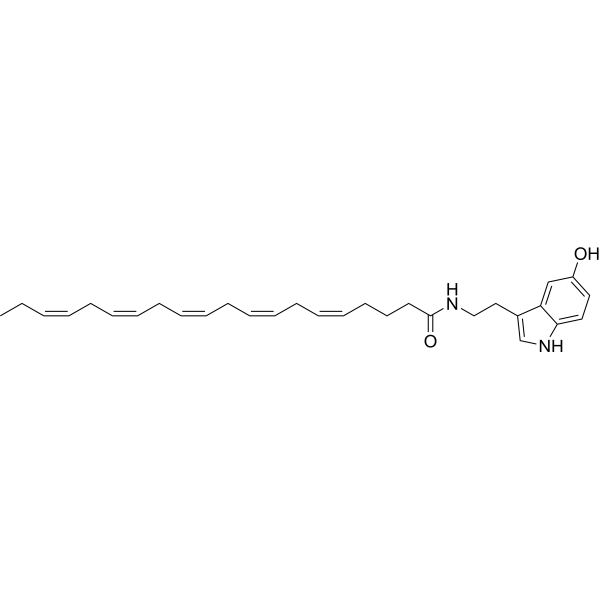
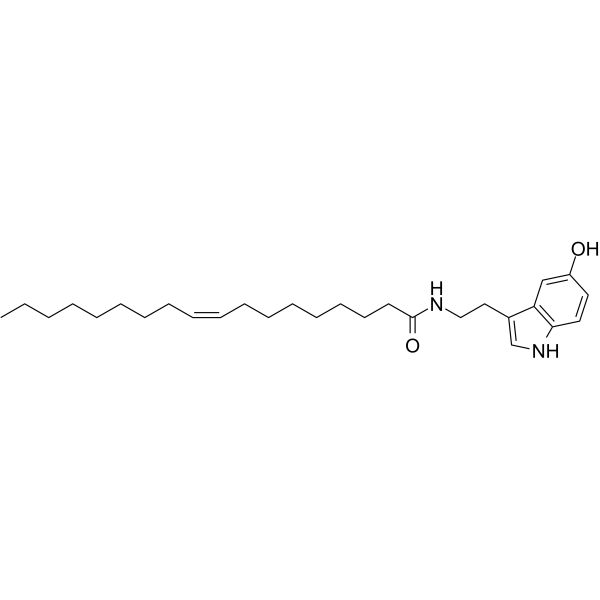
Eicosapentaenoyl serotonin (EPA-5-HT) is an endogenous fatty acid-serotonin conjugate lipid mediator. Eicosapentaenoyl serotonin acts as an inhibitor of fatty acid amide hydrolase (FAAH). Eicosapentaenoyl serotonin suppresses IL-17 release in Concanavalin A (HY-P2149)-stimulated human peripheral blood mononuclear cells. Eicosapentaenoyl serotonin is regulated by polyunsaturated fatty acids and modulates intestinal immunity and Th17 signaling. Eicosapentaenoyl serotonin can be used for the study of inflammatory bowel disease-related mechanisms.
For research use only. We do not sell to patients.
- Purity : 99.0%
- CAS No.: 199875-71-3
- Formula: C30H40N2O2
- Molecular Weight:460.65
-
Storage:
Solution, -20°C, 2 years

To place orders, for customer services and technical support, please contact: MedChemExpress USA
Tel: 609-228-6898 E-mail: [email protected] [email protected]


-
 Biological Activity
-
Chemical Information
- Protocols
- Purity & Documentation
- References
-
 Help & FAQs


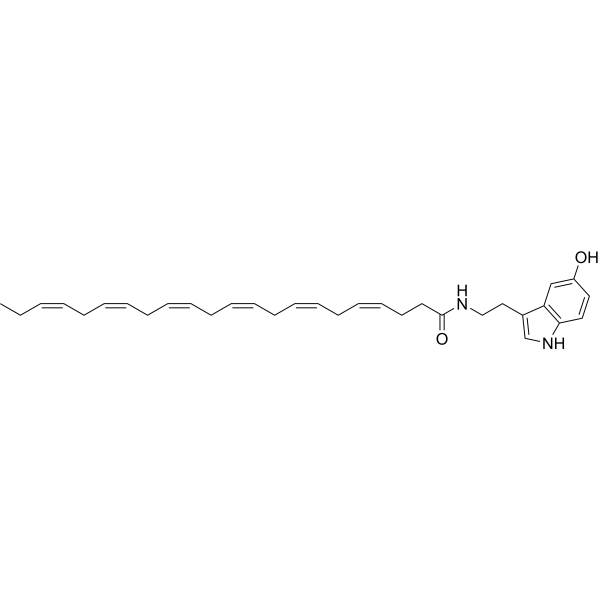
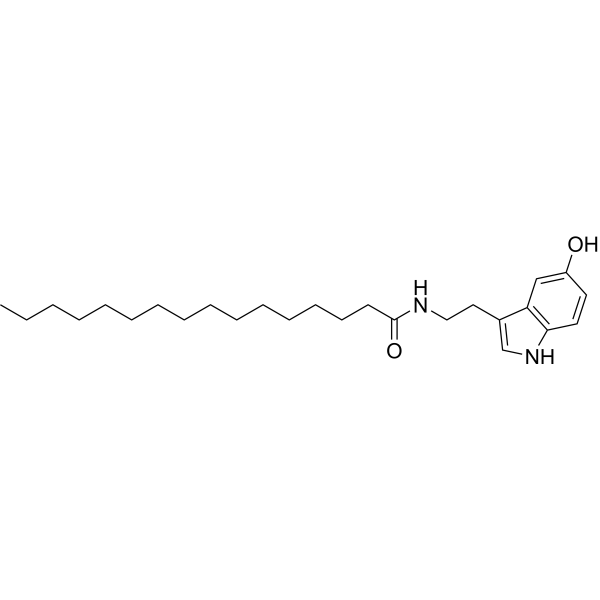

All Endogenous Metabolite Isoforms
More

Biological Activity
Description
IC50 & Target
[2]|
IL-17 |
In Vitro
Eicosapentaenoyl serotonin (EPA-5-HT) (0-555 μM) inhibits FAAH activity in vitro in a concentration-dependent manner, with similar potency to eicosapentaenoic acid[1].
Eicosapentaenoyl serotonin (5 μM; 30 min pre-incubation; 24 h incubation with ConA) significantly inhibits Concanavalin A (HY-P2149)-induced IL-17 production by human peripheral blood mononuclear cells, with no effect on IL-6 production[2].
MedChemExpress (MCE) has not independently confirmed the accuracy of these methods. They are for reference only. Further protocols information, click here.
In Vivo
MedChemExpress (MCE) has not independently confirmed the accuracy of these methods. They are for reference only.
-
Animal Model:C57Bl/6 (male, 6 weeks old at study start)[1]
-
Dosage:1% fish oil; 3% fish oil
-
Administration:dietary; ad libitum; 6 weeks
-
Result:Demonstrated statistically significant increase in jejunal eicosapentaenoyl serotonin levels relative to standard diet.
Showed higher statistically significant increase in jejunal eicosapentaenoyl serotonin levels relative to standard diet, indicating dose-dependent induction of endogenous formation.


Chemical Information
-
CAS No. 199875-71-3
-
Appearance Liquid
-
Molecular Weight 460.65
-
Formula C30H40N2O2
-
Color Colorless to light yellow
-
SMILES
O=C(CCC/C=C\C/C=C\C/C=C\C/C=C\C/C=C\CC)NCCC1=CNC2=CC=C(C=C12)O
-
Synonyms
EPA-5-HT
-
Shipping
Room temperature in continental US; may vary elsewhere.
-
Storage
Solution, -20°C, 2 years

Protocols
-
Naïve CD4+ T-cell subset differentiation/polarization
Naïve CD4+ T-cell subset differentiation/polarization is an in vitro assay in which purified naïve CD4+ T cells are activated through TCR and CD28 costimulation and cultured with defined cytokines and neutralizing antibodies to generate Th0, Th1, Th2, Th17, or induced Treg-like populations. Differentiation is detected by subset-associated cytokines and transcription factors: IFN-γ/T-bet for Th1, IL-4/GATA3 for Th2, IL-17A/RORγt for Th17, and Foxp3 for induced Treg cells. The assay readout is usually generated by intracellular cytokine staining after restimulation, transcription-factor staining by flow cytometry, ELISA of secreted cytokines, or gene-expression analysis. The result reflects cytokine-directed lineage commitment or polarization rather than antigen-specific immune protection by itself.
-
PBMC Thawing for Immune Assays
PBMC thawing for immune assays recovers viable cryopreserved peripheral blood mononuclear cells for downstream functional or phenotypic readouts, including ELISPOT, intracellular cytokine staining, proliferation assays, and flow-cytometric immunophenotyping. Cryopreserved PBMCs can support immune monitoring because antigen-specific T-cell function and major CD4/CD8 phenotypes may be retained after optimized freezing and thawing, although some lymphocyte subsets and activation or memory markers can be altered by cryopreservation. The technical objective is rapid warming of the frozen vial followed by controlled dilution and removal of DMSO-containing cryomedium, because thawing and wash conditions measurably affect viable PBMC recovery and downstream assay performance. Viability alone is insufficient for protocol evaluation because high viability may occur with low live-cell recovery, so both viable percentage and absolute live-cell recovery should be measured after thawing.
-
DSS-Induced Colitis
Dextran sulfate sodium (DSS)-induced colitis is generated by administering DSS in mouse drinking water, producing epithelial injury, barrier disruption, weight loss, diarrhea, fecal blood, colon shortening, histologic mucosal damage, and inflammatory mediator changes; the model is mainly used to study acute or chronic intestinal inflammation resembling selected features of ulcerative colitis. DSS injury is interpreted through clinical and tissue readouts rather than a single molecular endpoint: daily body weight, stool consistency, and bleeding are combined into a disease activity index, while colon length, histology, cytokines, myeloperoxidase activity, intestinal permeability, and tight-junction markers provide complementary measures of inflammation and barrier damage.
-
TNBS-Induced Colitis
TNBS-induced colitis is produced by intrarectal delivery of 2,4,6-trinitrobenzene sulfonic acid in ethanol, where ethanol disrupts the mucosal barrier and TNBS haptenates colonic proteins, generating immune-mediated colonic inflammation with weight loss, diarrhea, ulceration, transmural injury, inflammatory-cell infiltration, and cytokine responses. The model is used as an experimental intestinal inflammation model with Crohn’s disease–like features, especially when Th1-type responses, IL-12–dependent inflammation, chronic relapsing inflammation, or fibrosis-related endpoints are studied.


Purity & Documentation
-
Data Sheet (266 KB)
-
SDS (393 KB)
- English - EN (393 KB)
- Français - FR (393 KB)
- Deutsch - DE (393 KB)
- Norwegian - NO (393 KB)
- Español - ES (393 KB)
- Swedish - SV (393 KB)
- Italian - IT (393 KB)
- Korean - KR (393 KB)
- Portuguese - PT (393 KB)
-
Handling Instructions (2659 KB)
References
[1]. Verhoeckx KC, et al. Presence, formation and putative biological activities of N-acyl serotonins, a novel class of fatty-acid derived mediators, in the intestinal tract. Biochim Biophys Acta. 2011;1811(10):578-586. [Content Brief]
[2]. Wang Y, et al. Docosahexaenoyl serotonin emerges as most potent inhibitor of IL-17 and CCL-20 released by blood mononuclear cells from a series of N-acyl serotonins identified in human intestinal tissue. Biochim Biophys Acta Mol Cell Biol Lipids. 2017;1862(9):823-831. [Content Brief]

Calculators
Concentration (start) × Volume (start) = Concentration (final) × Volume (final)


Eicosapentaenoyl serotonin Related Classifications
HY-127023 Related Classifications
 Powered by Bioz