



Oxiracetam
Based on 1 publication(s) in Google Scholar
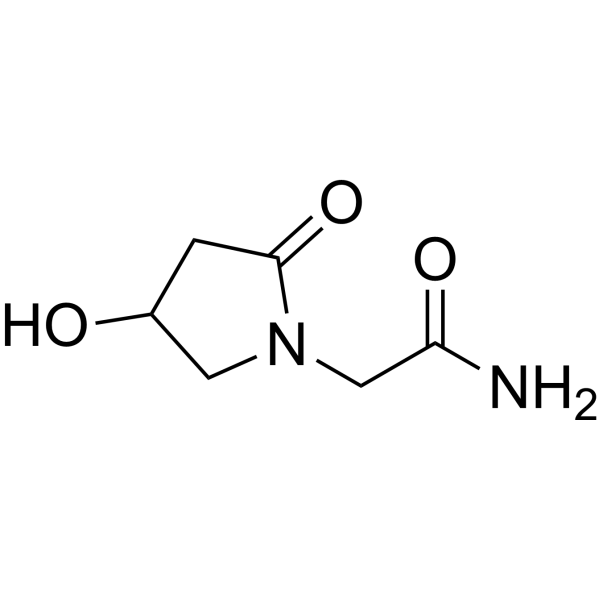
Oxiracetam (ISF2522) is an orally active and a BBB-penetrable cyclic derivative of γ-aminobutyric acid (GABA). Oxiracetam reaches the hippocampus and cerebral cortex in high concentrations. Oxiracetam can promote cognitive function and regulate inflammatory response, with powerful neuroprotective effects. Oxiracetam can be used in the study of central nervous system diseases .
For research use only. We do not sell to patients.
- Purity : 99.86%
- CAS No.: 62613-82-5
- Formula: C6H10N2O3
- Molecular Weight:158.16
-
Storage:Powder -20°C, 3 years , 4°C, 2 years ; In solvent -80°C, 2 years , -20°C, 1 year

To place orders, for customer services and technical support, please contact: MedChemExpress USA
Tel: 609-228-6898 E-mail: [email protected] [email protected]


-
 Biological Activity
-
Chemical Information
-
Solvent & Solubility
- Protocols
- Purity & Documentation
- References
-
 Help & FAQs


-
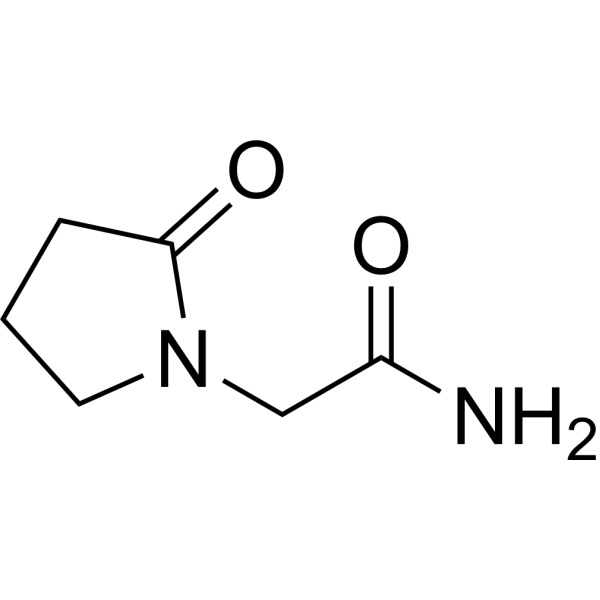
HY-B0585
PiracetamiGluR Modulator -
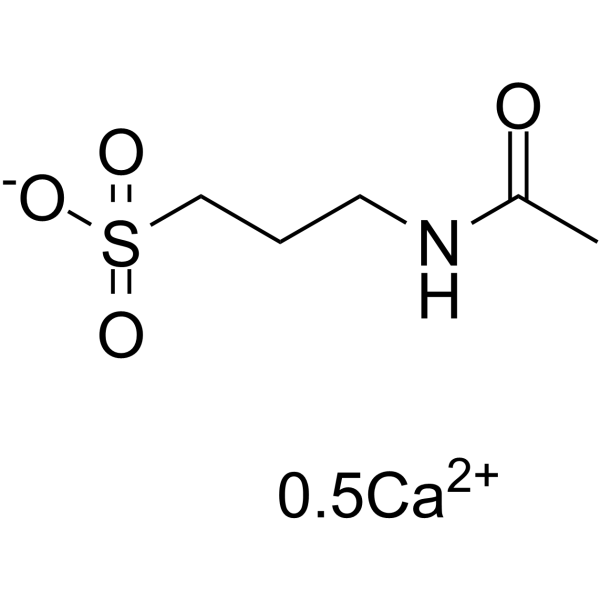
HY-17030
Acamprosate calciumGABA Receptor Agonist -
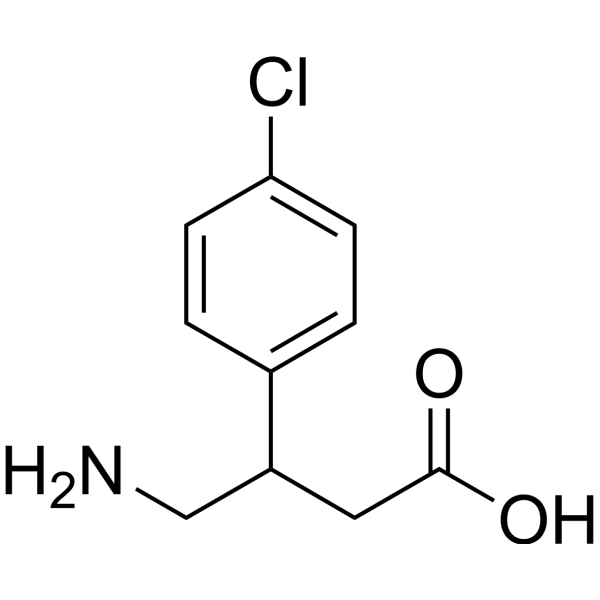
HY-B0007
BaclofenGABABR Agonist -
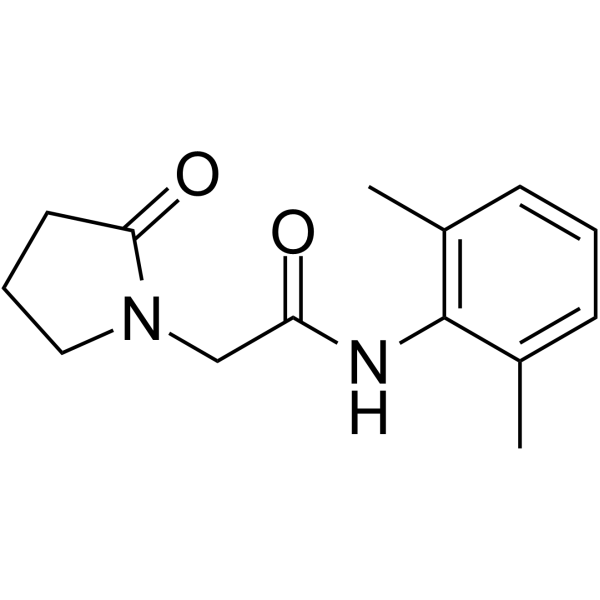
HY-B0340
NefiracetamCognition-enhancing Agent -
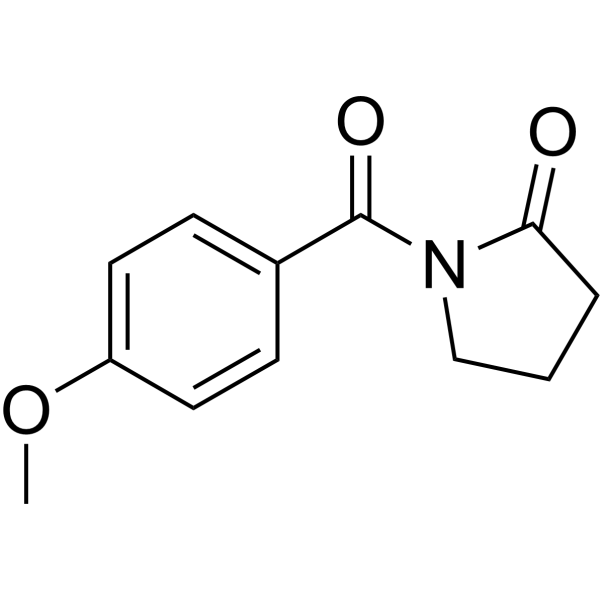
HY-10932
AniracetamNootropics and Neuroprotective Agent -
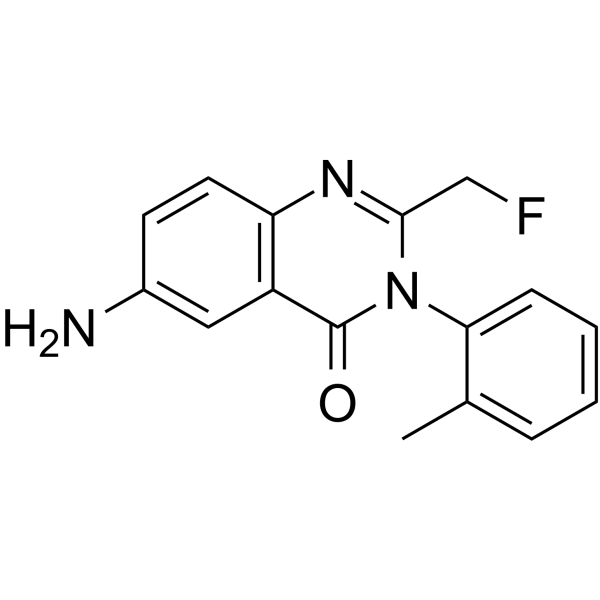
HY-B1833
AfloqualoneMuscle Relaxant Agent -
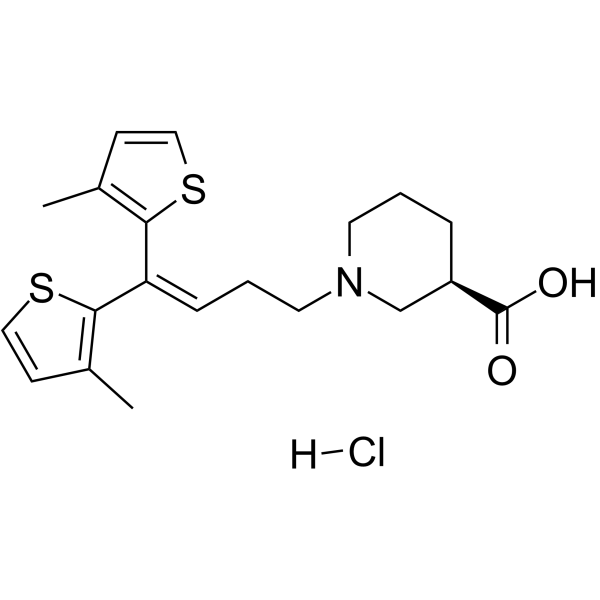
HY-B0696A
Tiagabine hydrochlorideGAT-1 Inhibitor -

HY-14840
Phenylpiracetamnicotinic acetylcholine (nACh) receptor Inhibitor -

HY-B1715R
Oxiracetam (Standard)Nootropic Agent -
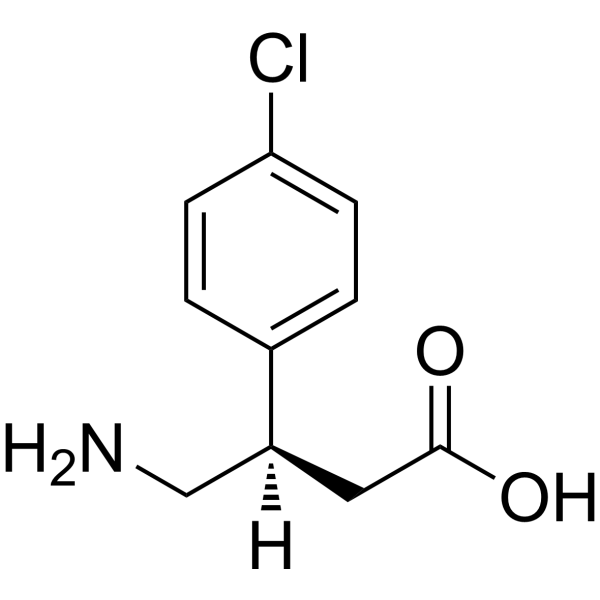
HY-17354
(R)-BaclofenGABA Receptor Agonist -
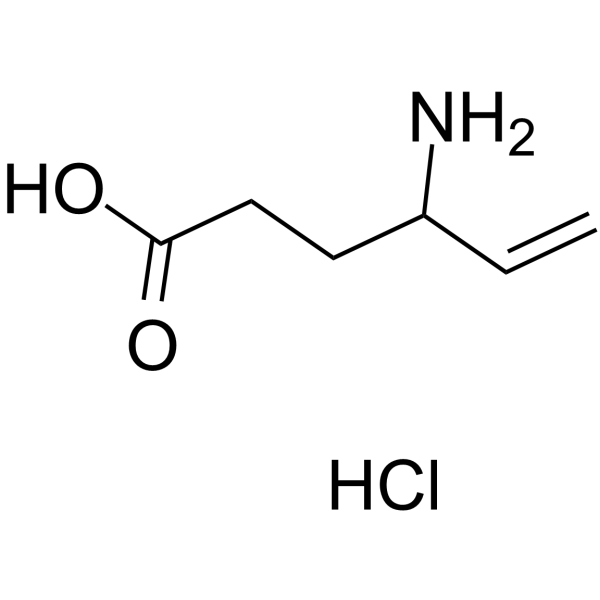
HY-B0033
Vigabatrin hydrochlorideAntiepileptic Agent -
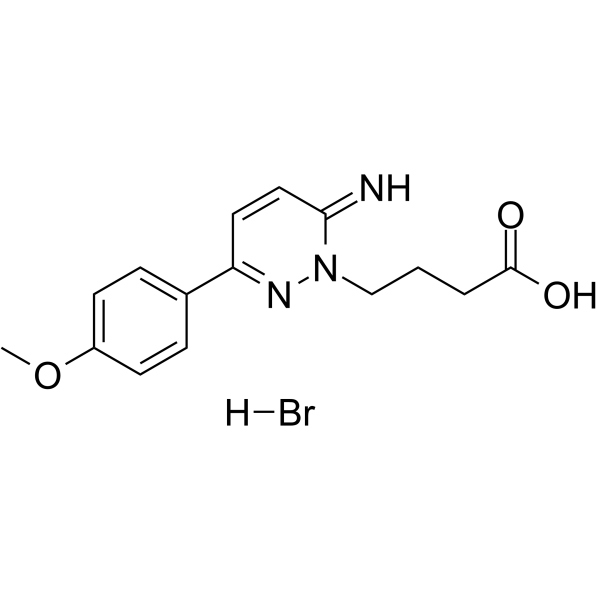
HY-103533
GabazineGABAA Antagonist
Publications Citing Use of MedChemExpress (MCE) Oxiracetam
More

Biological Activity
Description
Cellular Effect
|
Cell Line

|
Type | Value | Description | References |
|---|---|---|---|---|
| Huh-7 | CC50 |
57.48 μM
Compound: GNF-Pf-1005
|
NOVARTIS: Cytotoxicity against human hepatocellular carcinoma cell line (Huh7)
NOVARTIS: Cytotoxicity against human hepatocellular carcinoma cell line (Huh7)
|
[PMID: 18579783] |
In Vitro
Oxiracetam (100 μM; 12-24 h) inhibits Aβ-induced cell activation, inflammatory molecules expression and NO production in BV2 cells[1].
MedChemExpress (MCE) has not independently confirmed the accuracy of these methods. They are for reference only.
-
Cell Line:Aβ treated BV2 microglial cells
-
Concentration:100 μM
-
Incubation Time:12 h
-
Result:Reduced the level of iNOS mRNA.
In Vivo
MedChemExpress (MCE) has not independently confirmed the accuracy of these methods. They are for reference only.
-
Animal Model:Male adult Sprague-Dawley rats (220-240 g) with chronic cerebral hypoperfusion (CCH) model[2]
-
Dosage:30 mg/kg
-
Administration:Intraperitoneal injection (i.p.); 4 weeks
-
Result:Prevented spatial learning and memory impairment induced by CCH.
Rescued the CCH-induced LTP decrease.
Prevented the white matter lesions of CA3 nerve fibres.
Maintained BDNF levels and CREB activity in rat brains.
Prevented CCH-induced deterioration of dendritic spines and synapses.
Clinical Trial
| NCT Number | Sponsor | Condition | Start Date |
Phase
|
|---|---|---|---|---|
| NCT01329991 | Plexxikon| | 2011-05 | PHASE1 |


Chemical Information
-
CAS No. 62613-82-5
-
Appearance Solid
-
Molecular Weight 158.16
-
Formula C6H10N2O3
-
Color White to off-white
-
SMILES
O=C(N)CN1C(CC(O)C1)=O
-
Synonyms
ISF2522
-
Shipping
Room temperature in continental US; may vary elsewhere.
-
Storage
Powder -20°C 3 years 4°C 2 years In solvent -80°C 2 years -20°C 1 year


Publications (1)
-
Journal Impact Factor
-
Most Recent
-
J Nanobiotechnology
Biosynthesized nanoparticles of Tibetan medicine mercuric sulfide preparation to promote endocytosis and realize drug crossing through blood brain barrier. [Abstract]2025 Jun 16;23(1):445. PMID: 40524151


Solvent & Solubility
In Vitro:
H2O : ≥ 100 mg/mL (632.27 mM)
DMSO : 25 mg/mL (158.07 mM; Need ultrasonic; Hygroscopic DMSO has a significant impact on the solubility of product, please use newly opened DMSO)
* "≥" means soluble, but saturation unknown.
Please refer to the solubility information to select the appropriate solvent. Once prepared, please aliquot and store the solution to prevent product inactivation from repeated freeze-thaw cycles.
Storage method and period of stock solution: -80°C, 2 years; -20°C, 1 year. When stored at -80°C, please use it within 2 years. When stored at -20°C, please use it within 1 year.
* Note: If you choose water as the stock solution, please dilute it to the working solution, then filter and sterilize it with a 0.22 μm filter before use.
Please refer to the solubility information to select the appropriate solvent. Once prepared, please aliquot and store the solution to prevent product inactivation from repeated freeze-thaw cycles.
Storage method and period of stock solution: -80°C, 2 years; -20°C, 1 year. When stored at -80°C, please use it within 2 years. When stored at -20°C, please use it within 1 year.
* Note: If you choose water as the stock solution, please dilute it to the working solution, then filter and sterilize it with a 0.22 μm filter before use.
Concentration (start) × Volume (start) = Concentration (final) × Volume (final)


Purity & Documentation
-
Data Sheet (282 KB)
-
SDS (396 KB)
- English - EN (396 KB)
- Français - FR (396 KB)
- Deutsch - DE (396 KB)
- Norwegian - NO (396 KB)
- Español - ES (396 KB)
- Swedish - SV (396 KB)
- Italian - IT (396 KB)
- Korean - KR (396 KB)
- Portuguese - PT (396 KB)
-
Handling Instructions (2659 KB)
References
[1]. Zhang H, et al. Oxiracetam Offers Neuroprotection by Reducing Amyloid β-Induced Microglial Activation and Inflammation in Alzheimer's Disease. Front Neurol. 2020 Jul 17;11:623 [Content Brief]
[2]. Yao XL, et al. Oxiracetam can improve cognitive impairment after chronic cerebral hypoperfusion in rats. Psychiatry Res. 2016 Dec 30;246:284-292. [Content Brief]
[3]. Li W, et al. (S)-Oxiracetam is the Active Ingredient in Oxiracetam that Alleviates the Cognitive Impairment Induced by Chronic Cerebral Hypoperfusion in Rats. Sci Rep. 2017 Aug 30;7(1):10052. [Content Brief]


Complete Stock Solution Preparation Table
Please refer to the solubility information to select the appropriate solvent. Once prepared, please aliquot and store the solution to prevent product inactivation from repeated freeze-thaw cycles.
Storage method and period of stock solution: -80°C, 2 years; -20°C, 1 year. When stored at -80°C, please use it within 2 years. When stored at -20°C, please use it within 1 year.
| Optional Solvent | Concentration Solvent Mass | 1 mg | 5 mg | 10 mg | 25 mg |
|---|---|---|---|---|---|
| DMSO / H2O | 1 mM | 6.3227 mL | 31.6136 mL | 63.2271 mL | 158.0678 mL |
| 5 mM | 1.2645 mL | 6.3227 mL | 12.6454 mL | 31.6136 mL | |
| 10 mM | 0.6323 mL | 3.1614 mL | 6.3227 mL | 15.8068 mL | |
| 15 mM | 0.4215 mL | 2.1076 mL | 4.2151 mL | 10.5379 mL | |
| 20 mM | 0.3161 mL | 1.5807 mL | 3.1614 mL | 7.9034 mL | |
| 25 mM | 0.2529 mL | 1.2645 mL | 2.5291 mL | 6.3227 mL | |
| 30 mM | 0.2108 mL | 1.0538 mL | 2.1076 mL | 5.2689 mL | |
| 40 mM | 0.1581 mL | 0.7903 mL | 1.5807 mL | 3.9517 mL | |
| 50 mM | 0.1265 mL | 0.6323 mL | 1.2645 mL | 3.1614 mL | |
| 60 mM | 0.1054 mL | 0.5269 mL | 1.0538 mL | 2.6345 mL | |
| 80 mM | 0.0790 mL | 0.3952 mL | 0.7903 mL | 1.9758 mL | |
| 100 mM | 0.0632 mL | 0.3161 mL | 0.6323 mL | 1.5807 mL |
* Note: If you choose water as the stock solution, please dilute it to the working solution, then filter and sterilize it with a 0.22 μm filter before use.


Oxiracetam Related Classifications
HY-B1715 Related Classifications
 Powered by Bioz