



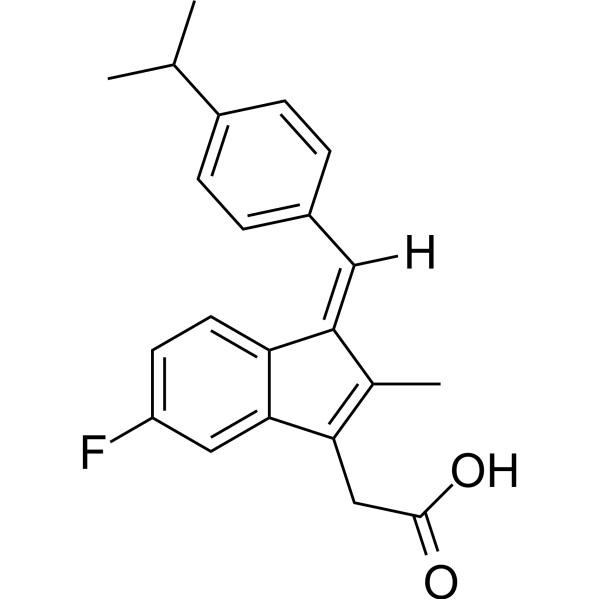
K-80003
Based on 1 publication(s) in Google Scholar
K-80003 is a potent inhibitor of tRXRα-dependent Akt activation and cancer cell growth.
Para uso exclusivo en investigación. No vendemos a pacientes.
- Pureza : 98.83%
- No. CAS: 1292821-90-9
- Fòrmula: C22H21FO2
- Peso molecular:336.40
-
Almacenamiento:Powder -20°C, 3 years , 4°C, 2 years ; In solvent -80°C, 2 years , -20°C, 1 year

To place orders, for customer services and technical support, please contact: MedChemExpress USA
Tel: 609-228-6898 E-mail: [email protected] [email protected]


-
 Actividad biológica
-
Chemical Information
-
Solvente y solubilidad
- Protocolo
- Pureza y Documentación
- Referencias
-
 Help & FAQs


-
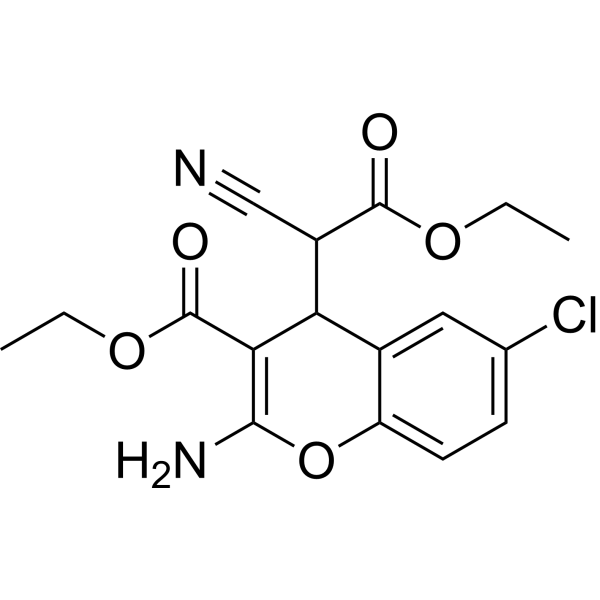
HY-18749
SC79Akt Activator -
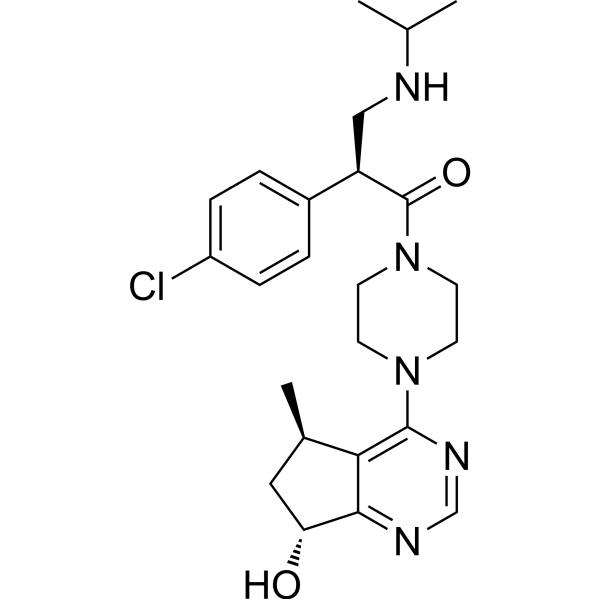
HY-15186
IpatasertibPan-Akt Inhibitor -
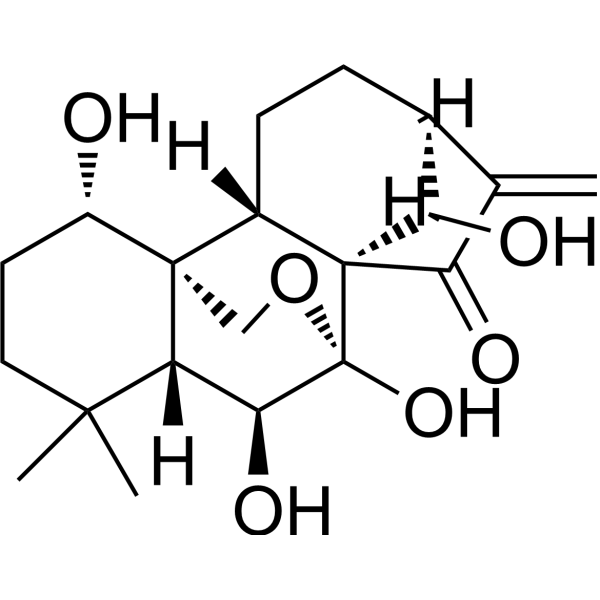
HY-N0004
OridoninBacterial Inhibitor -
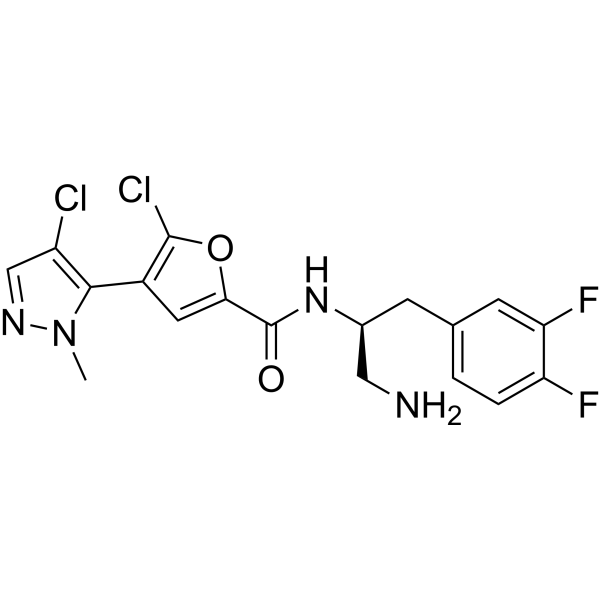
HY-15965
UprosertibAkt Inhibitor -
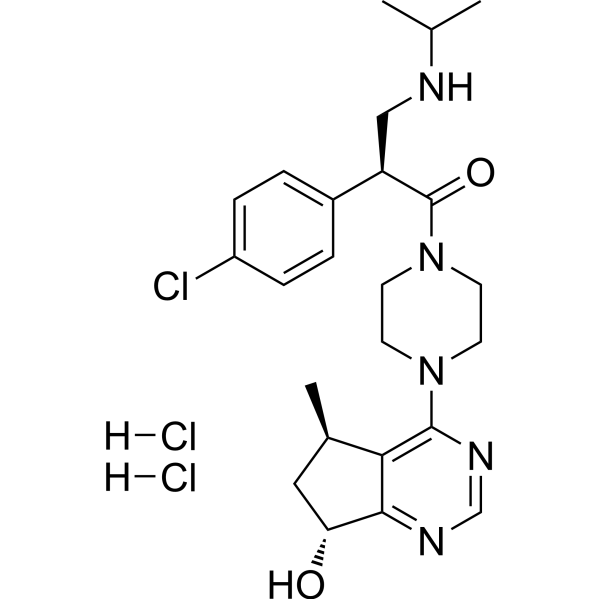
HY-15186A
Ipatasertib dihydrochloridepan-Akt Inhibitor -
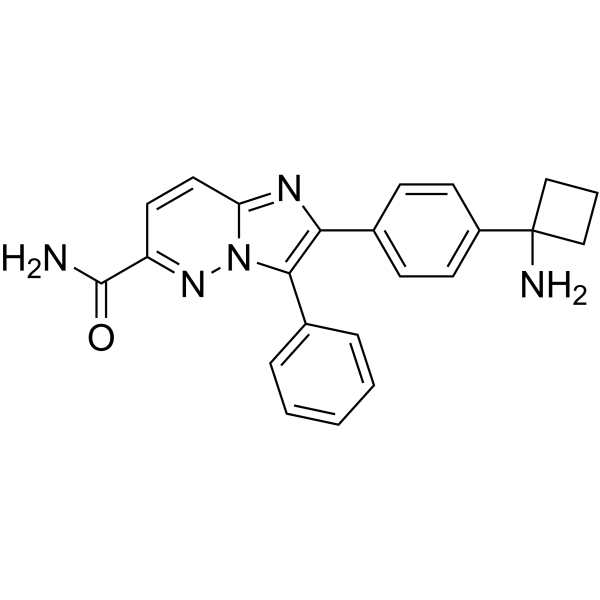
HY-100018
BAY1125976AKT1/2 Inhibitor -
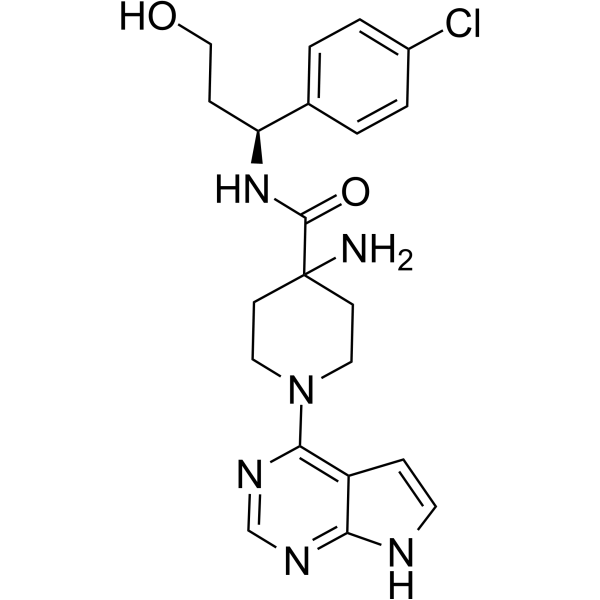
HY-15431
CapivasertibAkt Inhibitor -
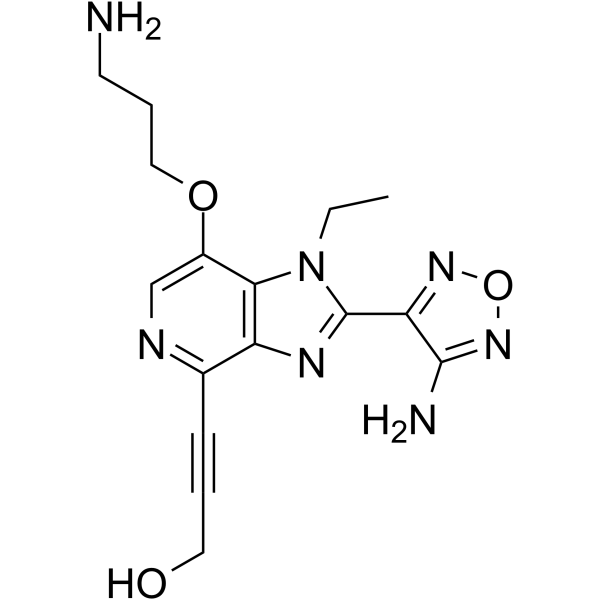
HY-10249A
AKT Kinase InhibitorAkt Inhibitor -
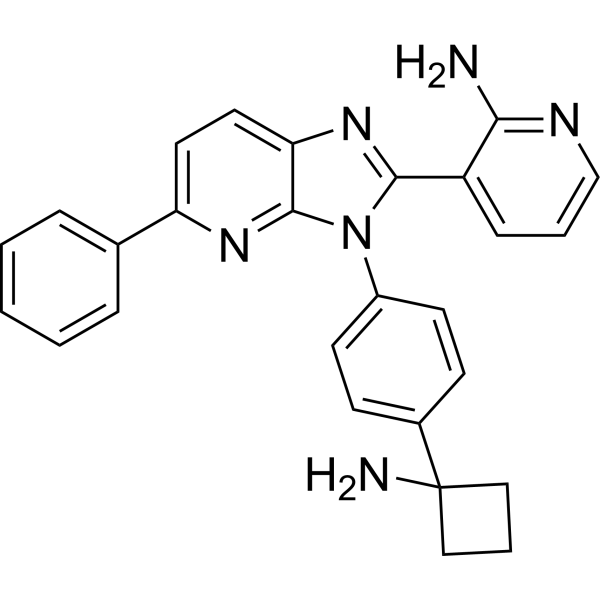
HY-19719
MiransertibAKT Inhibitor -
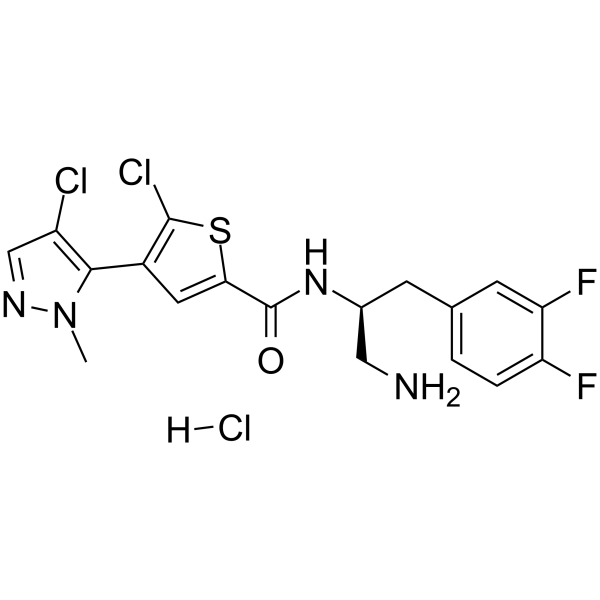
HY-15966A
GSK2110183 analog 1 hydrochloride -
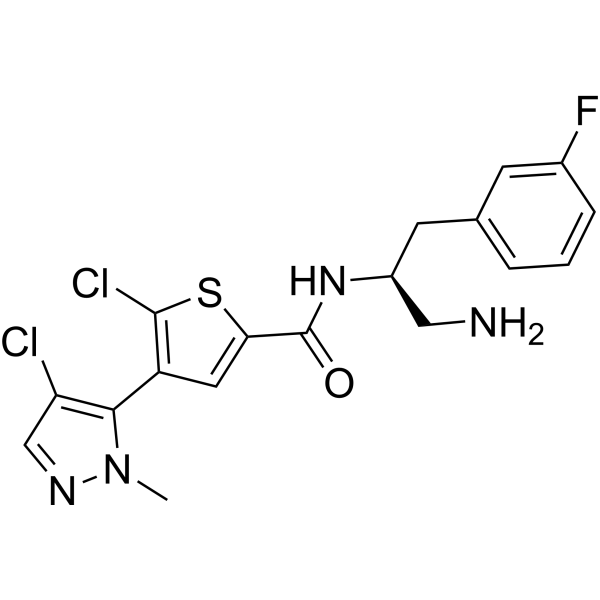
HY-15727
AfuresertibAkt Inhibitor
Publications Citing Use of MedChemExpress (MCE) K-80003
More

Actividad biológica
Descripciòn
IC50 & Target
Akt[1]
In Vitro
When MCF-7 cells are cotreated with K-80003, TNFα-induced colocalization of tRXRα with p85α in the cytoplasm is inhibited, resulting in tRXRα nuclear localization. Western blotting shows that K-80003-stabilized tetrameric form of tRXRα is found exclusively in the nuclear fraction, while tRXRα monomer is distributed both in the nuclear and cytoplasmic fractions[2].
MedChemExpress (MCE) has not independently confirmed the accuracy of these methods. They are for reference only.
In Vivo
MedChemExpress (MCE) has not independently confirmed the accuracy of these methods. They are for reference only.


Chemical Information
-
No. CAS 1292821-90-9
-
Appearance Solid
-
Peso molecular 336.40
-
Fòrmula C22H21FO2
-
Color Light yellow to yellow
-
SMILES
CC1=C(C2=CC(F)=CC=C2/C1=C(C3=CC=C(C=C3)C(C)C)/[H])CC(O)=O
-
Synonyms
TX-803
-
Envío
Room temperature in continental US; may vary elsewhere.
-
Almacenamiento
Powder -20°C 3 years 4°C 2 years In solvent -80°C 2 years -20°C 1 year


Publications (1)
-
Journal Impact Factor
-
Most Recent
-
Mol Cancer
Sulindac (K-80003) with nab-paclitaxel and gemcitabine overcomes drug-resistant pancreatic cancer. [Abstract]2024 Sep 30;23(1):215. PMID: 39350121


Solvente y solubilidad
In Vitro:
DMSO : 30 mg/mL (89.18 mM; Need ultrasonic; Hygroscopic DMSO has a significant impact on the solubility of product, please use newly opened DMSO)
Please refer to the solubility information to select the appropriate solvent. Once prepared, please aliquot and store the solution to prevent product inactivation from repeated freeze-thaw cycles.
Storage method and period of stock solution: -80°C, 2 years; -20°C, 1 year. When stored at -80°C, please use it within 2 years. When stored at -20°C, please use it within 1 year.
Please refer to the solubility information to select the appropriate solvent. Once prepared, please aliquot and store the solution to prevent product inactivation from repeated freeze-thaw cycles.
Storage method and period of stock solution: -80°C, 2 years; -20°C, 1 year. When stored at -80°C, please use it within 2 years. When stored at -20°C, please use it within 1 year.
Concentration (start) × Volume (start) = Concentration (final) × Volume (final)
In Vivo:
Select the appropriate dissolution method based on your experimental animal and administration route.
- For the following dissolution methods, please ensure to first prepare a clear stock solution using an In Vitro approach and then sequentially add co-solvents:
- To ensure reliable experimental results, the clarified stock solution can be appropriately stored based on storage conditions. As for the working solution for In Vivo experiments, it is recommended to prepare freshly and use it on the same day.
- The percentages shown for the solvents indicate their volumetric ratio in the final prepared solution. If precipitation or phase separation occurs during preparation, heat and/or sonication can be used to aid dissolution.
Add each solvent one by one: 10% DMSO 40% PEG300 5% Tween-80 45% Saline
Solubility: ≥ 3 mg/mL (8.92 mM); Clear solution
This protocol yields a clear solution of ≥ 3 mg/mL (saturation unknown).
Taking 1 mL working solution as an example, add 100 μL DMSO stock solution (30.0 mg/mL) to 400 μL PEG300, and mix evenly; then add 50 μL Tween-80 and mix evenly; then add 450 μL Saline to adjust the volume to 1 mL.
Preparation of Saline: Dissolve 0.9 g sodium chloride in ddH₂O and dilute to 100 mL to obtain a clear Saline solution.
In Vivo Dissolution Calculator
Please enter the basic information of animal experiments:
-
-
-
-
Recommended: Prepare an additional quantity of animals to account for potential losses during experiments.
Please enter your animal formula composition:
-
%DMSO +
Recommended: Keep the proportion of DMSO in working solution below 2% if your animal is weak.
-
%+
-
+%Tween-80 + +
-
%Saline +
The co-solvents required include: DMSO, . All of co-solvents are available by MedChemExpress (MCE). , Tween 80. All of co-solvents are available by MedChemExpress (MCE).
Working solution concentration: 0.22 mg/mL
Method for preparing stock solution: mg drug dissolved in μL DMSO. Stock solution concentration: mg/mL.
1. Take μL DMSO stock solution;
2. Add μL .
μL , mix evenly;
3. Then add μL Tween 80, mix evenly;
4. Then add μL
Please ensure that the stock solution in the first step is dissolved to a clear state, and add co-solvents in sequence. You can use ultrasonic heating (ultrasonic cleaner, recommended frequency 20-40 kHz), vortexing, etc. to assist dissolution.


Pureza y Documentación
-
Ficha de datos (278 KB)
-
SDS (252 KB)
- English - EN (252 KB)
- Français - FR (252 KB)
- Deutsch - DE (252 KB)
- Norwegian - NO (252 KB)
- Español - ES (252 KB)
- Swedish - SV (252 KB)
- Italian - IT (252 KB)
- Korean - KR (252 KB)
- Portuguese - PT (252 KB)
-
Instrucciones de manejo (2659 KB)
Referencias
[1]. Zhou H, et al. NSAID sulindac and its analog bind RXRalpha and inhibit RXRalpha-dependent AKT signaling. Cancer Cell. 2010 Jun 15;17(6):560-73. [Content Brief]
[2]. Chen L, et al. Modulation of nongenomic activation of PI3K signalling by tetramerization of N-terminally-cleaved RXRα. Nat Commun. 2017 Jul 17;8:16066. [Content Brief]


Complete Stock Solution Preparation Table
Please refer to the solubility information to select the appropriate solvent. Once prepared, please aliquot and store the solution to prevent product inactivation from repeated freeze-thaw cycles.
Storage method and period of stock solution: -80°C, 2 years; -20°C, 1 year. When stored at -80°C, please use it within 2 years. When stored at -20°C, please use it within 1 year.
| Optional Solvent | Concentration Solvent Mass | 1 mg | 5 mg | 10 mg | 25 mg |
|---|---|---|---|---|---|
| DMSO | 1 mM | 2.9727 mL | 14.8633 mL | 29.7265 mL | 74.3163 mL |
| 5 mM | 0.5945 mL | 2.9727 mL | 5.9453 mL | 14.8633 mL | |
| 10 mM | 0.2973 mL | 1.4863 mL | 2.9727 mL | 7.4316 mL | |
| 15 mM | 0.1982 mL | 0.9909 mL | 1.9818 mL | 4.9544 mL | |
| 20 mM | 0.1486 mL | 0.7432 mL | 1.4863 mL | 3.7158 mL | |
| 25 mM | 0.1189 mL | 0.5945 mL | 1.1891 mL | 2.9727 mL | |
| 30 mM | 0.0991 mL | 0.4954 mL | 0.9909 mL | 2.4772 mL | |
| 40 mM | 0.0743 mL | 0.3716 mL | 0.7432 mL | 1.8579 mL | |
| 50 mM | 0.0595 mL | 0.2973 mL | 0.5945 mL | 1.4863 mL | |
| 60 mM | 0.0495 mL | 0.2477 mL | 0.4954 mL | 1.2386 mL | |
| 80 mM | 0.0372 mL | 0.1858 mL | 0.3716 mL | 0.9290 mL |


K-80003 Related Classifications
HY-U00458 Related Classifications
 Powered by Bioz