



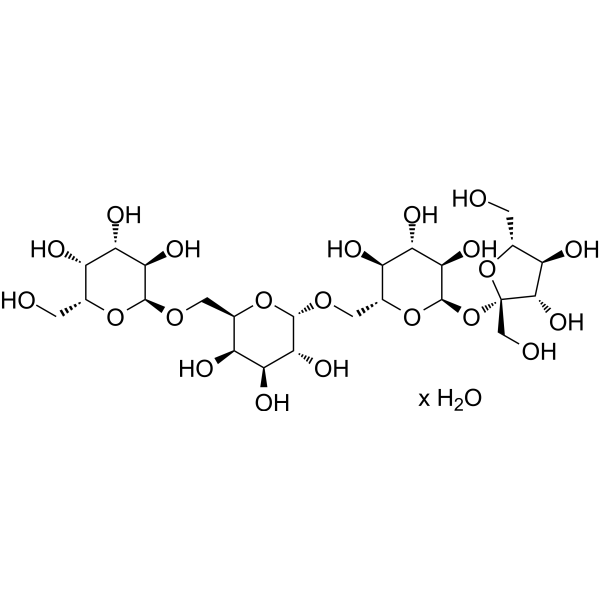
Stachyose hydrate
Based on 1 publication(s) in Google Scholar
Stachyose hydrate is an orally active prebiotic that enhances the growth and activity of beneficial bacteria. Stachyose hydrate has hypoglycemic effects and can improve inflammation by regulating gut microbiota. In addition, Stachyose hydrate can induce plant cell apoptosis (Apoptosis). Stachyose hydrate can be used in research on inflammation, gastrointestinal diseases, and agriculture .
Para uso exclusivo en investigación. No vendemos a pacientes.
- Pureza : 98.0%
- No. CAS: 54261-98-2
- Fòrmula: C24H42O21.xH2O
-
Almacenamiento:Powder -20°C, 3 years ; In solvent -80°C, 6 months , -20°C, 1 month

To place orders, for customer services and technical support, please contact: MedChemExpress USA
Tel: 609-228-6898 E-mail: [email protected] [email protected]


-
 Actividad biológica
-
Chemical Information
-
Solvente y solubilidad
- Protocolo
- Pureza y Documentación
- Referencias
-
 Help & FAQs


-
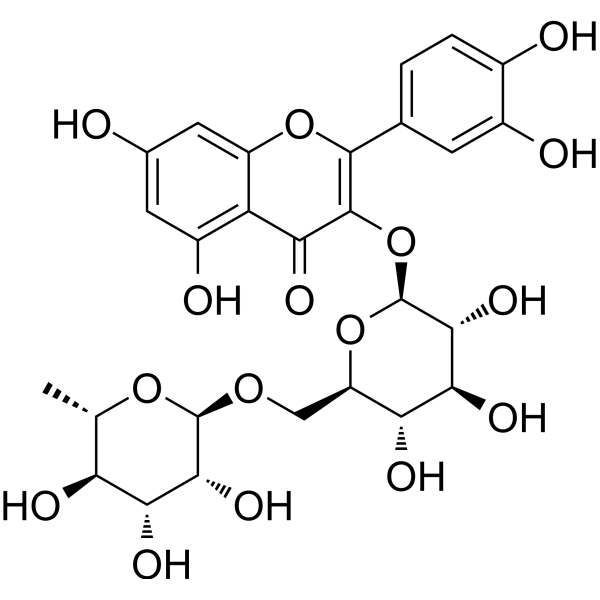
HY-N0148
RutinCBR1 Inhibitor -
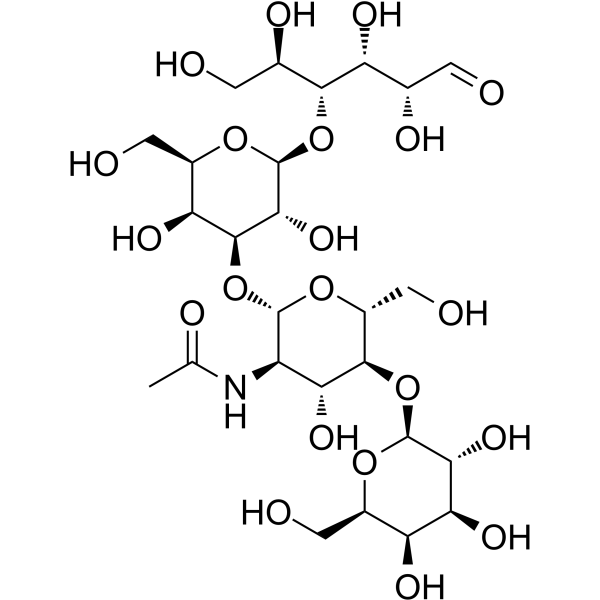
HY-N9445
Lacto-N-neotetraoseEndogenous Metabolite -
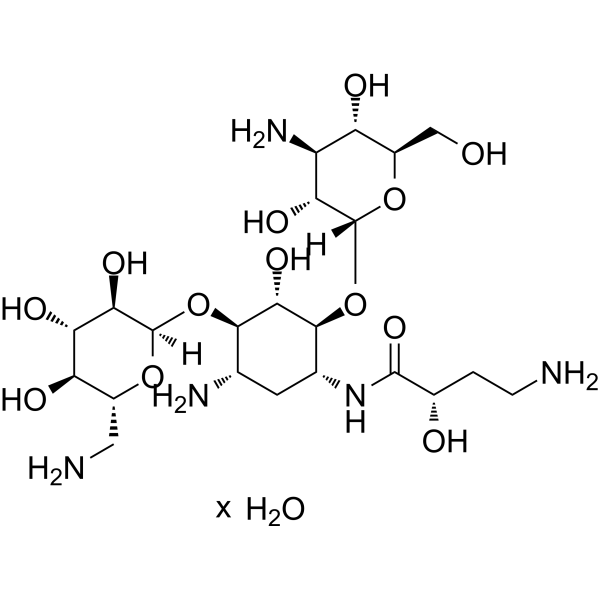
HY-B0509
Amikacin hydrateAminoglycoside Antibiotic -
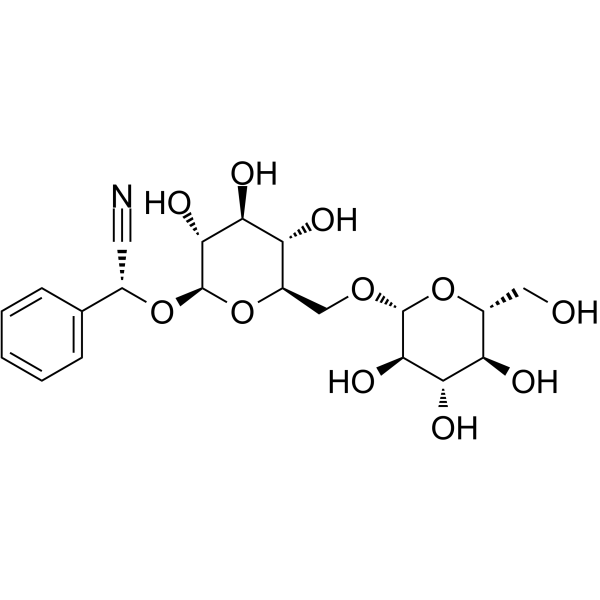
HY-N0190
AmygdalinGlucoside -
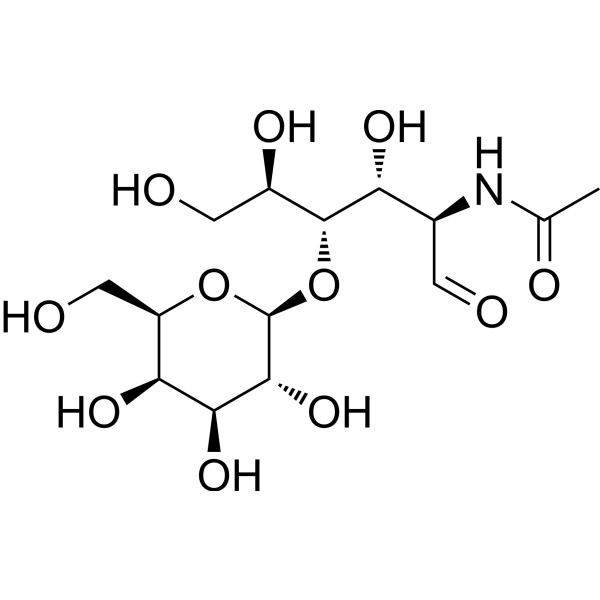
HY-126854
N-AcetyllactosamineNitrogen Disaccharide -
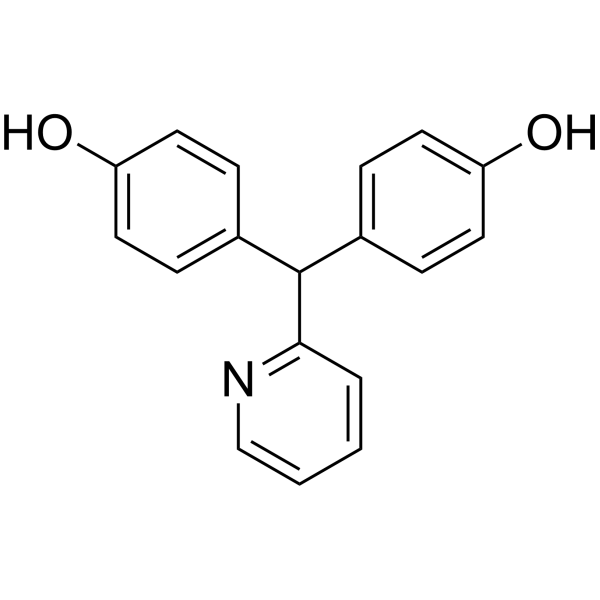
HY-131637
Desacetyl bisacodylActive Metabolite -
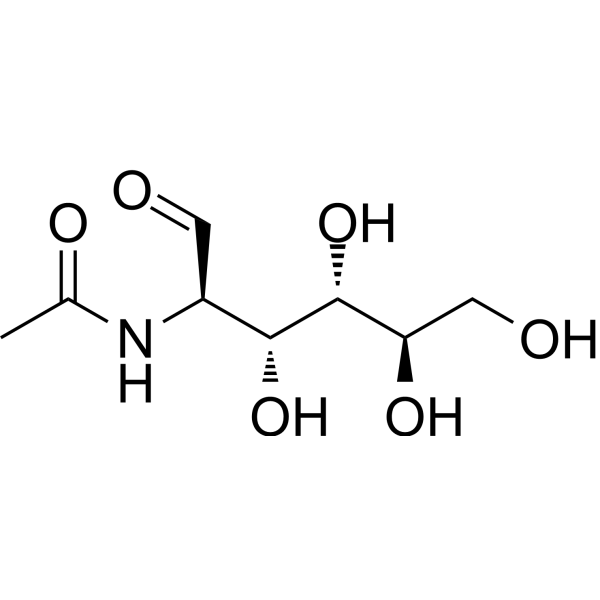
HY-A0132
N-Acetyl-D-glucosamineEndogenous Metabolite -
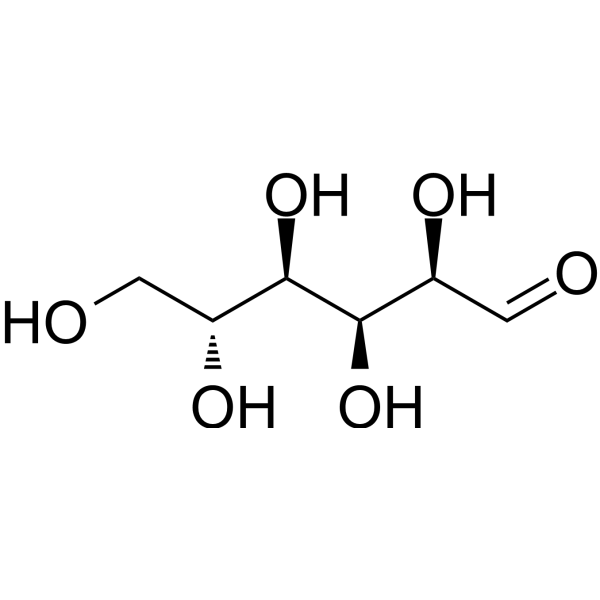
HY-B0389
D-GlucoseMonosaccharide -
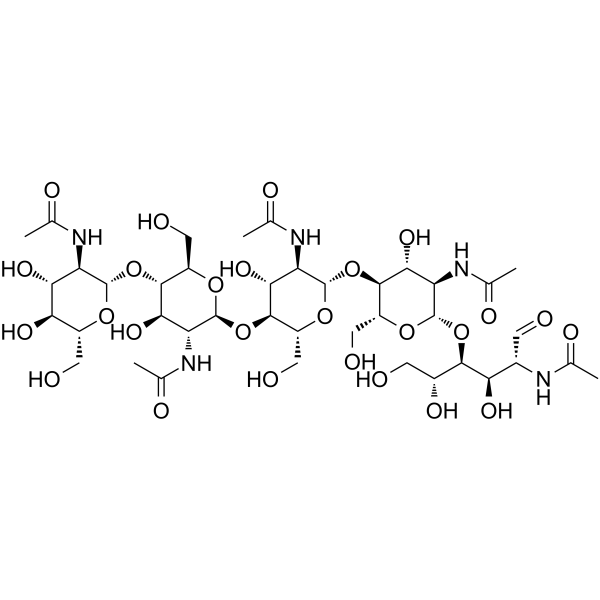
HY-N7698A
Penta-N-acetylchitopentaoseNatural Product -
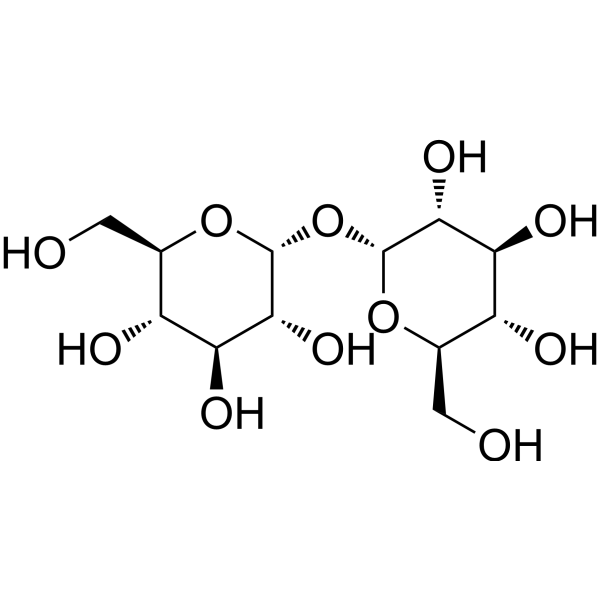
HY-N1132
D-(+)-TrehaloseDisaccharide -
HY-CP001
D-Trehalose, Carrier ProteinCarrier Protein -
HY-108065A
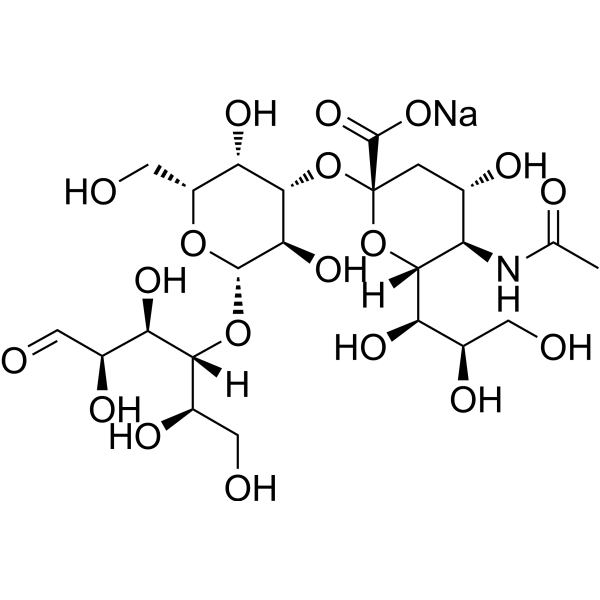
3'-Sialyllactose sodiumPrebiotic
Publications Citing Use of MedChemExpress (MCE) Stachyose hydrate
More Customer Validation & Images

-
Cell Proliferation/Viability Assay

-
IF

-
RT-PCR

-
WB

-
Histological Imaging/Staining

Ver todos los productos específicos de isoformas Endogenous Metabolite
More

Actividad biológica
Descripciòn
IC50 & Target
|
Human Endogenous Metabolite |
In Vitro
Stachyose hydrate (3.2 mg/mL, 36 h, 48 h) induces apoptotic-like programmed cell death in Nicotiana benthamiana leaf cells, characterized by nuclear DNA fragmentation[2].
MedChemExpress (MCE) has not independently confirmed the accuracy of these methods. They are for reference only.
-
Cell Line:Nicotiana benthamiana leaf cells (tobacco, plant)
-
Concentration:3.2 mg/mL
-
Incubation Time:36 h, 48 h
-
Result:Resulted in nuclear DNA fragmentation. Induced apoptotic-like programmed cell death.
In Vivo
MedChemExpress (MCE) has not independently confirmed the accuracy of these methods. They are for reference only.
-
Animal Model:DSS (HY-116282C)-induced ulcerative colitis C57BL/6J mouse model[2]
-
Dosage:200, 400, 600 mg/kg
-
Administration:Oral gavage (p.o.), once daily for 3 weeks
-
Result:Significantly alleviated colitis symptoms in DSS-induced colitis mice, including reducing weight loss, lowering disease activity index (DAI), and increasing colon length, while restoring colonic epithelial barrier integrity. Dose-dependently upregulated mRNA expression of ZO-1, Claudin-1, and Occludin, reduced IL-17, TNF-α, IL-1β, and IL-6 expression, and increased IL-10 levels.


Chemical Information
-
No. CAS 54261-98-2
-
Appearance Solid
-
Fòrmula C24H42O21.xH2O
-
Color White to off-white
-
SMILES
OC[C@@](O[C@@H]1CO)([C@H]([C@@H]1O)O)O[C@H]([C@@H]([C@H]2O)O)O[C@@H]([C@H]2O)CO[C@H]([C@@H]([C@H]3O)O)O[C@@H]([C@@H]3O)CO[C@H]([C@@H]([C@H]4O)O)O[C@@H]([C@@H]4O)CO.[x H2O]
-
Structure Classification
-
Envío
Room temperature in continental US; may vary elsewhere.
-
Almacenamiento
Powder -20°C 3 years In solvent -80°C 6 months -20°C 1 month


Publications (1)
-
Journal Impact Factor
-
Most Recent
-
Food Sci Nutr
Screening Based on Structural and Biological Verification of Stachyose as a PPARγ-Modulating Ligand for the Treatment of Non-Alcoholic Fatty Liver Disease. [Abstract]2025 Sep 22;13(9):e71009. PMID: 40994455
Stachyose hydrate purchased from MedChemExpress. Usage Cited in: Food Sci Nutr. 2025 Sep 22;13(9):e71009. [Abstract]
Cytotoxicity of Stachyose (STA) (0, 0.4, 0.8, 1.6, 3.2, 6.4 mg/mL) on HepG2 cells.
Stachyose hydrate purchased from MedChemExpress. Usage Cited in: Food Sci Nutr. 2025 Sep 22;13(9):e71009. [Abstract]
ORO staining images of HepG2 cells treated with Stachyose (STA) (0.8, 1.6 mg/mL).
Stachyose hydrate purchased from MedChemExpress. Usage Cited in: Food Sci Nutr. 2025 Sep 22;13(9):e71009. [Abstract]
qRT‐PCR results of lipid metabolism‐related molecules (FASN, ACC, CPT2, ACO2), inflammation‐related molecules (TNF‐α, IL‐1β, IL6) and insulin resistance‐related molecules (GLUT4, IRS2, PTP1B, SOCS3) in HepG2 cells treated with Stachyose (STA) (0.8, 1.6 mg/mL).
Stachyose hydrate purchased from MedChemExpress. Usage Cited in: Food Sci Nutr. 2025 Sep 22;13(9):e71009. [Abstract]
Protein expression of TNFα, IRS2, and ACC in HepG2 cells treated with Stachyose (STA) (0.8, 1.6 mg/mL).
Stachyose hydrate purchased from MedChemExpress. Usage Cited in: Food Sci Nutr. 2025 Sep 22;13(9):e71009. [Abstract]
H&E staining images treated with Stachyose (STA) (0.3, 0.6 g/kg/day, i.g.).

Stachyose hydrate purchased from MedChemExpress. Usage Cited in: Food Sci Nutr. 2025 Sep 22;13(9):e71009. [Abstract]
Co-IP analysis of PPARγ deacetylation in HepG2 cells treated with Stachyose (STA) (0.8, 1.6 mg/mL).


Solvente y solubilidad
In Vitro:
H2O : 125 mg/mL (Need ultrasonic)


Pureza y Documentación
-
Ficha de datos (286 KB)
-
SDS (394 KB)
- English - EN (394 KB)
- Français - FR (394 KB)
- Deutsch - DE (394 KB)
- Norwegian - NO (394 KB)
- Español - ES (394 KB)
- Swedish - SV (394 KB)
- Italian - IT (394 KB)
- Korean - KR (394 KB)
- Portuguese - PT (394 KB)
-
Instrucciones de manejo (2659 KB)
Referencias
[1]. Cai-Na Li, et al. Berberine combined with stachyose induces better glycometabolism than berberine alone through modulating gut microbiota and fecal metabolomics in diabetic mice. Phytother Res. 2020 May;34(5):1166-1174. [Content Brief]
[2]. He N, et al. Stachyose Exerts Anticolitis Efficacy by Re-balancing Treg/Th17 and Activating the Butyrate-Derived PPARγ Signaling Pathway. J Agric Food Chem. 2024 May 29;72(21):12171-12183. [Content Brief]
[3]. Okemo P, et al. Stachyose triggers apoptotic like cell death in drought sensitive but not resilient plants. Sci Rep. 2021 Mar 29;11(1):7099. [Content Brief]

Calculators
Concentration (start) × Volume (start) = Concentration (final) × Volume (final)


Stachyose hydrate Related Classifications
HY-N0299 Related Classifications
 Powered by Bioz