



Ethynyl Estradiol-d4

Based on 1 Customer Validation
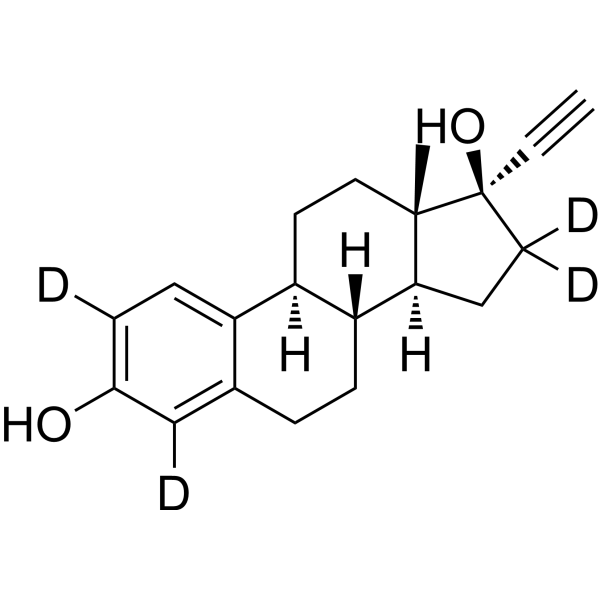
Ethynyl Estradiol-d4 is the deuterium labeled Ethynyl Estradiol. Ethynyl Estradiol (17α-Ethynylestradiol;Ethynylestradiol) is an orally bio-active estrogen used in almost all modern formulations of combined oral contraceptive pills. Ethynyl Estradiol-d4 is a click chemistry reagent, it contains an Alkyne group and can undergo copper-catalyzed azide-alkyne cycloaddition (CuAAc) with molecules containing Azide groups.
For research use only. We do not sell to patients.
- Purity : 99.25%
- CAS No.: 350820-06-3
- Formula: C20H20D4O2
- Molecular Weight:300.43
-
Storage:Powder -20°C, 3 years , 4°C, 2 years ; In solvent -80°C, 6 months , -20°C, 1 month

To place orders, for customer services and technical support, please contact: MedChemExpress USA
Tel: 609-228-6898 E-mail: [email protected] [email protected]


-
 Biological Activity
-
Chemical Information
-
Solvent & Solubility
- Protocols
- Purity & Documentation
- References
-
 Help & FAQs


-
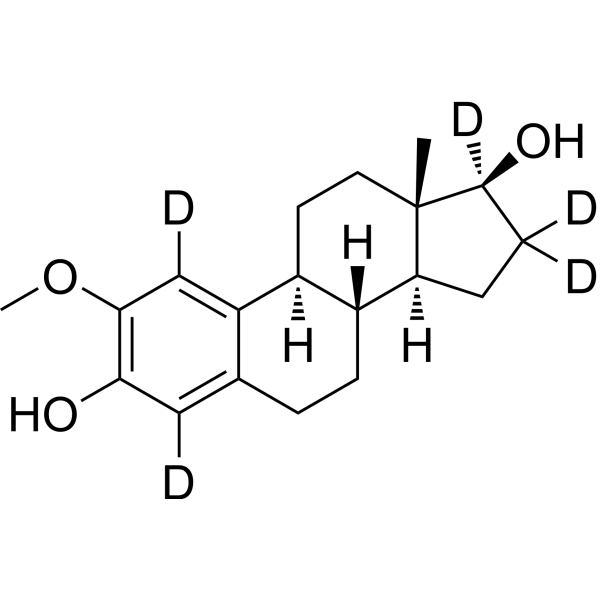
HY-12033S2
2-Methoxyestradiol-d5Stable Isotope -
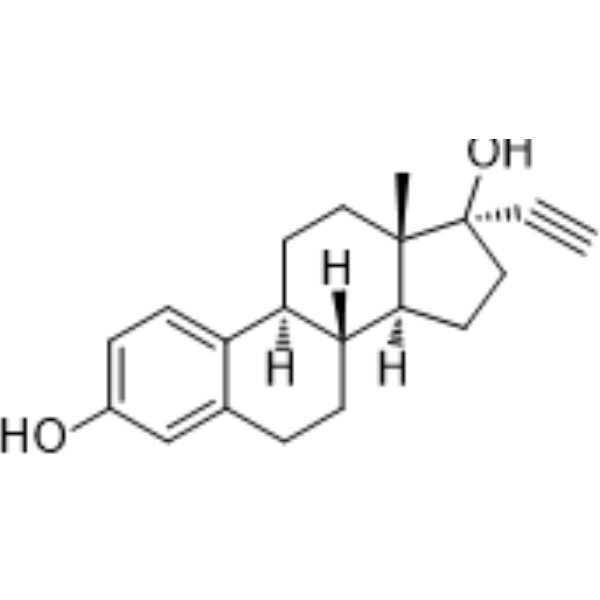
HY-B0216
EthinylestradiolEndogenous Metabolite -
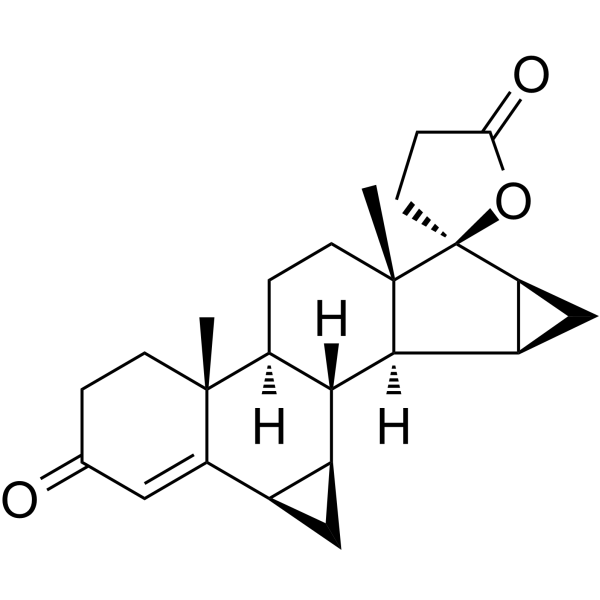
HY-B0111
DrospirenoneProgesterone Receptor Agonist -
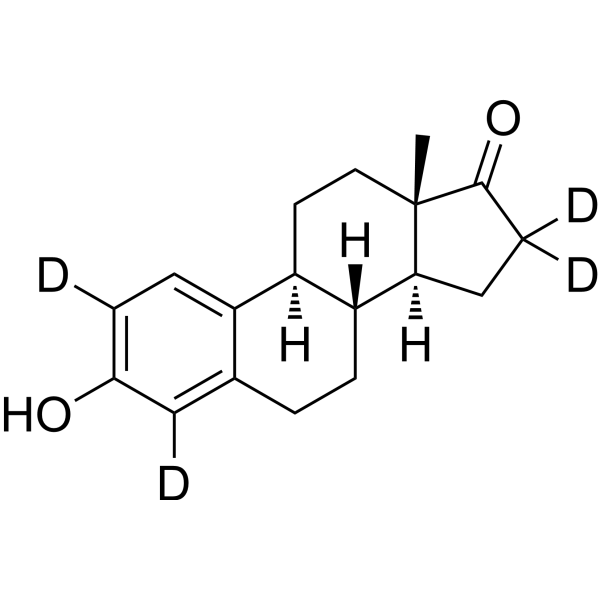
HY-B0234S2
Estrone-d4Stable Isotope -
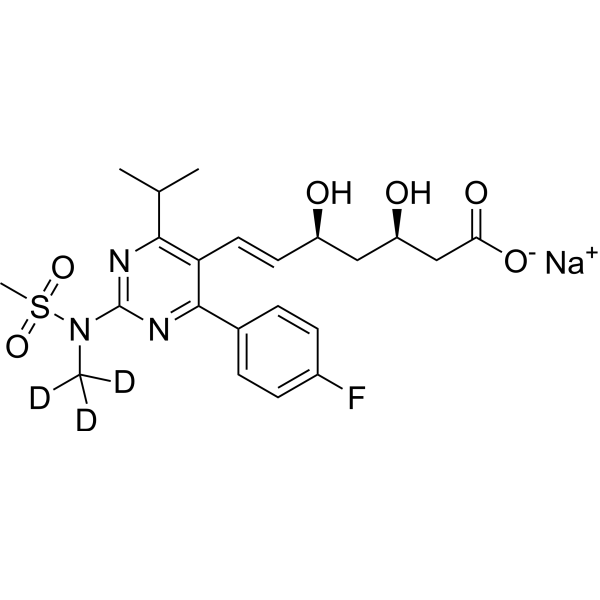
HY-17504BS
Rosuvastatin-d3 sodiumStable Isotope -
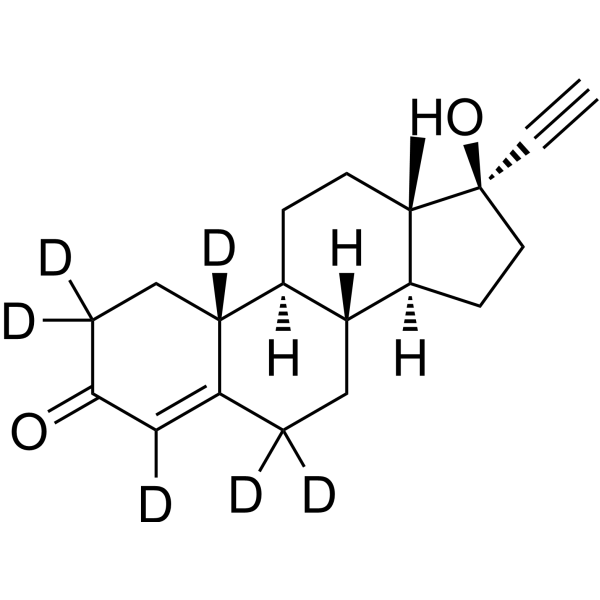
HY-B0554S
Norethindrone-d6Stable Isotope -
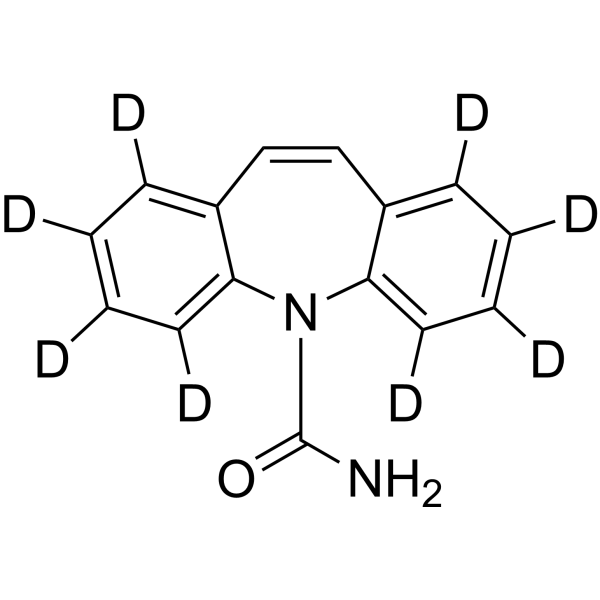
HY-B0246S3
Carbamazepine-(Ph)d8Autophagy Inducer -
HY-B0141S
Estradiol-d3Stable Isotope -
HY-146631S
4-Hydroxy-17β-estradiol-1,2,16,16,17-d5Stable Isotope
All Endogenous Metabolite Isoforms
More

Biological Activity
Description
In Vitro
Stable heavy isotopes of hydrogen, carbon, and other elements have been incorporated into drug molecules, largely as tracers for quantitation during the drug development process. Deuteration has gained attention because of its potential to affect the pharmacokinetic and metabolic profiles of drugs[1].
MedChemExpress (MCE) has not independently confirmed the accuracy of these methods. They are for reference only. Further protocols information, click here.
Application
1. This compound can be used as a tracer
2. This compound can be used as an internal standard for quantitative analysis by NMR, GC-MS, or LC-MS.


Chemical Information
-
CAS No. 350820-06-3
-
Unlabeled CAS 57-63-6
-
Appearance Solid
-
Molecular Weight 300.43
-
Formula C20H20D4O2
-
Color White to off-white
-
SMILES
C[C@@]12[C@](CC([2H])([2H])[C@@]2(O)C#C)([H])[C@@]3([H])[C@](C4=CC([2H])=C(O)C([2H])=C4CC3)([H])CC1
-
Synonyms
17α-Ethynylestradiol-d4; Ethynylestradiol-d4
-
Shipping
Room temperature in continental US; may vary elsewhere.
-
Storage
Powder -20°C 3 years 4°C 2 years In solvent -80°C 6 months -20°C 1 month


Solvent & Solubility
In Vitro:
DMSO : 250 mg/mL (832.14 mM; Need ultrasonic; Hygroscopic DMSO has a significant impact on the solubility of product, please use newly opened DMSO)
H2O : < 0.1 mg/mL (insoluble)
Please refer to the solubility information to select the appropriate solvent. Once prepared, please aliquot and store the solution to prevent product inactivation from repeated freeze-thaw cycles.
Storage method and period of stock solution: -80°C, 6 months; -20°C, 1 month. When stored at -80°C, please use it within 6 months. When stored at -20°C, please use it within 1 month.
Please refer to the solubility information to select the appropriate solvent. Once prepared, please aliquot and store the solution to prevent product inactivation from repeated freeze-thaw cycles.
Storage method and period of stock solution: -80°C, 6 months; -20°C, 1 month. When stored at -80°C, please use it within 6 months. When stored at -20°C, please use it within 1 month.
Concentration (start) × Volume (start) = Concentration (final) × Volume (final)

Protocols
-
EdU Incorporation Assay (Click Chemistry-Based DNA Synthesis Measurement)
The EdU incorporation assay measures DNA synthesis by adding the thymidine analog 5-ethynyl-2′-deoxyuridine to cells or tissues, where it is incorporated into newly synthesized DNA during S phase. Incorporated EdU is detected by copper-catalyzed azide-alkyne cycloaddition, in which a fluorescent azide covalently reacts with the ethynyl group on EdU, allowing S-phase cells to be detected by fluorescence microscopy, flow cytometry, or high-content imaging. EdU detection does not require DNA denaturation or anti-BrdU antibody access, which preserves sample structure and improves compatibility with immunostaining and multiparameter cytometry compared with BrdU-based detection. EdU can be cytotoxic in a cell-type- and exposure-dependent manner, so pulse duration, concentration, and continuous-labeling designs should be validated for each cell type.
-
Research Protocol for Endocrine Diseases
Endocrine diseases often arise from disrupted hormone production, hormone signaling, or target-tissue responsiveness; for diabetes-focused endocrine disease models, insulin signaling regulates glucose uptake, hepatic glucose output, lipid metabolism, and β-cell compensation. Type 2 diabetes develops through interacting defects in insulin resistance, β-cell dysfunction, adipose inflammation, hepatic glucose overproduction, altered incretin signaling, and ectopic lipid metabolism. A major unresolved question is whether endocrine dysfunction is driven primarily by target-tissue insulin resistance, intrinsic β-cell failure, immune/inflammatory stress, or combined multi-organ failure that differs by disease stage.


Purity & Documentation
-
Data Sheet (276 KB)
-
SDS (419 KB)
- English - EN (419 KB)
- Français - FR (419 KB)
- Deutsch - DE (419 KB)
- Norwegian - NO (419 KB)
- Español - ES (419 KB)
- Swedish - SV (419 KB)
- Italian - IT (419 KB)
- Korean - KR (419 KB)
- Portuguese - PT (419 KB)
-
Handling Instructions (2659 KB)
References


Complete Stock Solution Preparation Table
Please refer to the solubility information to select the appropriate solvent. Once prepared, please aliquot and store the solution to prevent product inactivation from repeated freeze-thaw cycles.
Storage method and period of stock solution: -80°C, 6 months; -20°C, 1 month. When stored at -80°C, please use it within 6 months. When stored at -20°C, please use it within 1 month.
| Optional Solvent | Concentration Solvent Mass | 1 mg | 5 mg | 10 mg | 25 mg |
|---|---|---|---|---|---|
| DMSO | 1 mM | 3.3286 mL | 16.6428 mL | 33.2856 mL | 83.2141 mL |
| 5 mM | 0.6657 mL | 3.3286 mL | 6.6571 mL | 16.6428 mL | |
| 10 mM | 0.3329 mL | 1.6643 mL | 3.3286 mL | 8.3214 mL | |
| 15 mM | 0.2219 mL | 1.1095 mL | 2.2190 mL | 5.5476 mL | |
| 20 mM | 0.1664 mL | 0.8321 mL | 1.6643 mL | 4.1607 mL | |
| 25 mM | 0.1331 mL | 0.6657 mL | 1.3314 mL | 3.3286 mL | |
| 30 mM | 0.1110 mL | 0.5548 mL | 1.1095 mL | 2.7738 mL | |
| 40 mM | 0.0832 mL | 0.4161 mL | 0.8321 mL | 2.0804 mL | |
| 50 mM | 0.0666 mL | 0.3329 mL | 0.6657 mL | 1.6643 mL | |
| 60 mM | 0.0555 mL | 0.2774 mL | 0.5548 mL | 1.3869 mL | |
| 80 mM | 0.0416 mL | 0.2080 mL | 0.4161 mL | 1.0402 mL | |
| 100 mM | 0.0333 mL | 0.1664 mL | 0.3329 mL | 0.8321 mL |


Ethynyl Estradiol-d4 Related Classifications
HY-B0216S Related Classifications
 Powered by Bioz