



Ridaforolimus
Based on 12 publication(s) in Google Scholar
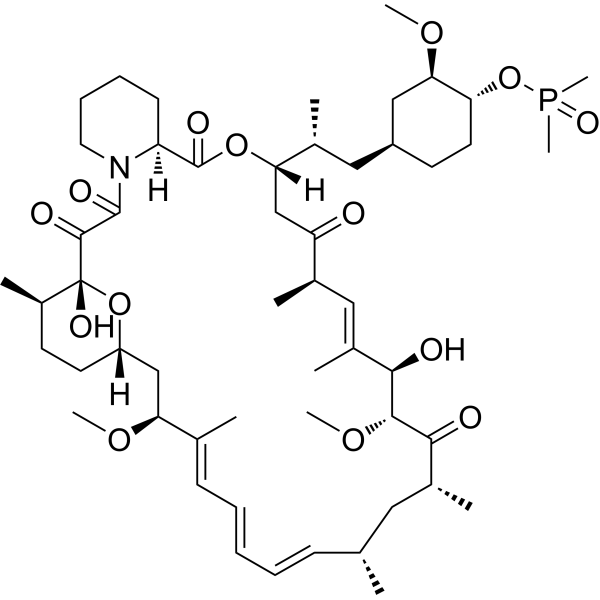
Ridaforolimus (MK-8669) is a potent and selective mTOR inhibitor; inhibits ribosomal protein S6 phosphorylation with an IC50 of 0.2 nM in HT-1080 cells.
Para uso exclusivo en investigación. No vendemos a pacientes.
- Pureza : 99.75%
- No. CAS: 572924-54-0
- Fòrmula: C53H84NO14P
- Peso molecular:990.21
-
Almacenamiento:Powder -20°C, 3 years
* The compound is unstable in solutions, freshly prepared is recommended.

To place orders, for customer services and technical support, please contact: MedChemExpress USA
Tel: 609-228-6898 E-mail: [email protected] [email protected]


-
 Actividad biológica
-
Chemical Information
-
Solvente y solubilidad
- Protocolo
- Pureza y Documentación
- Referencias
-
 Help & FAQs


-
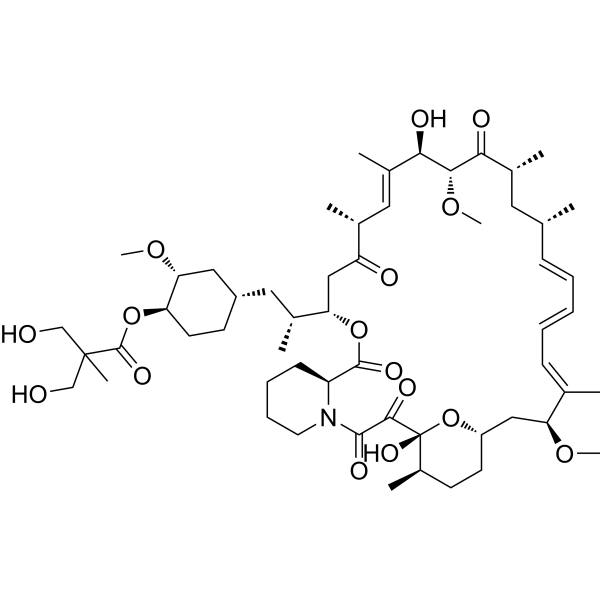
HY-50910
TemsirolimusmTOR Inhibitor -
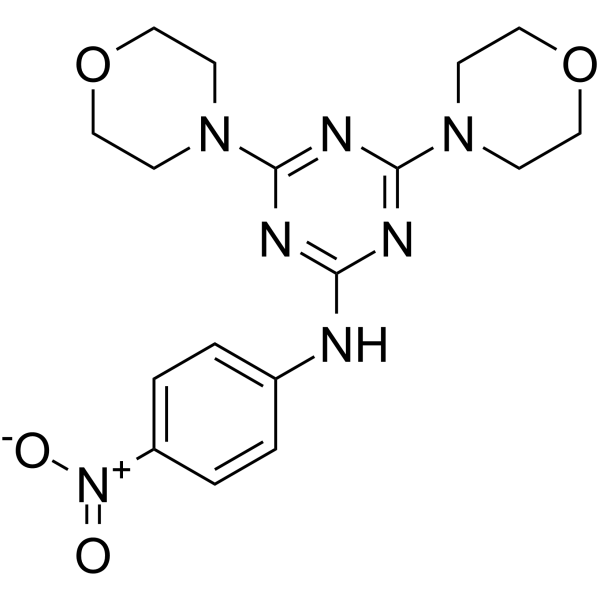
HY-B0795
MHY1485mTOR Activator -
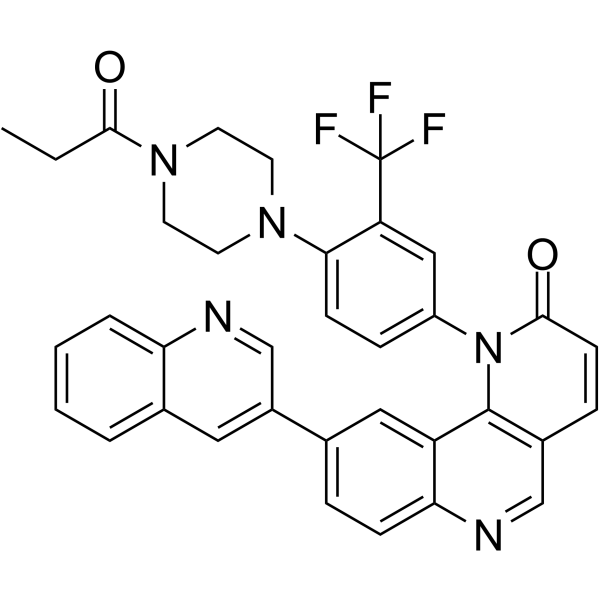
HY-13003
Torin 1mTOR Inhibitor -
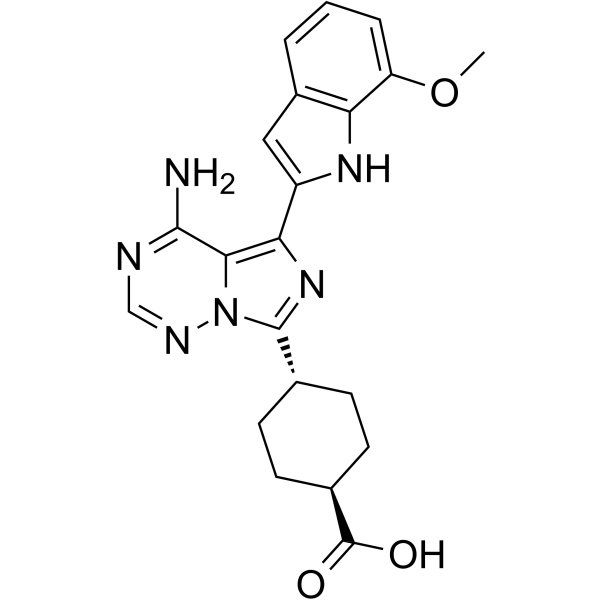
HY-10423
OSI-027mTOR Inhibitor -
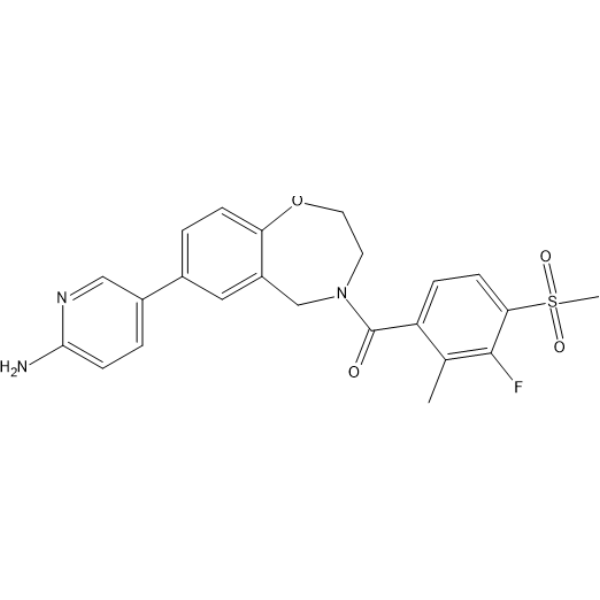
HY-13806
XL388mTOR Inhibitor -
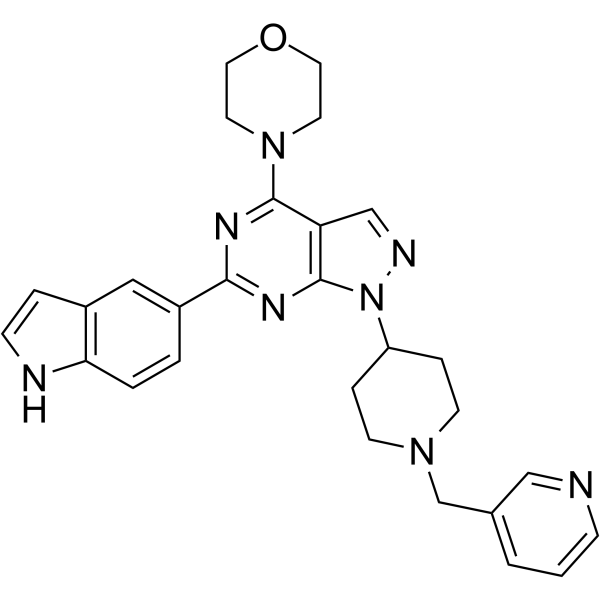
HY-15272
WAY-600mTOR inhibitor -
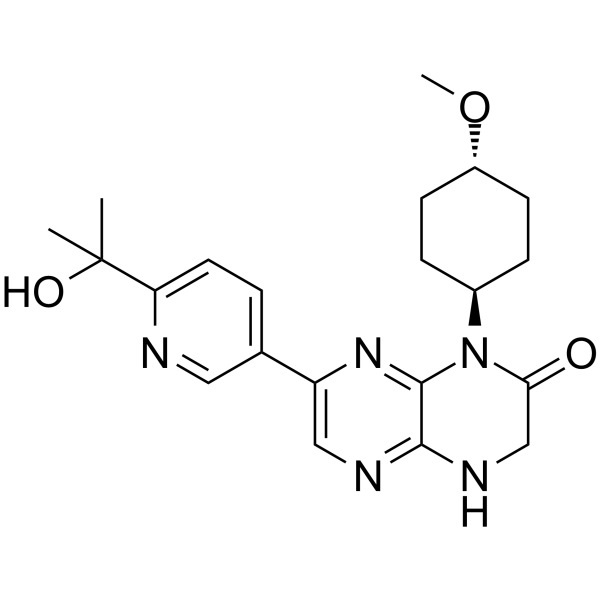
HY-16956
OnatasertibmTOR Inhibitor -
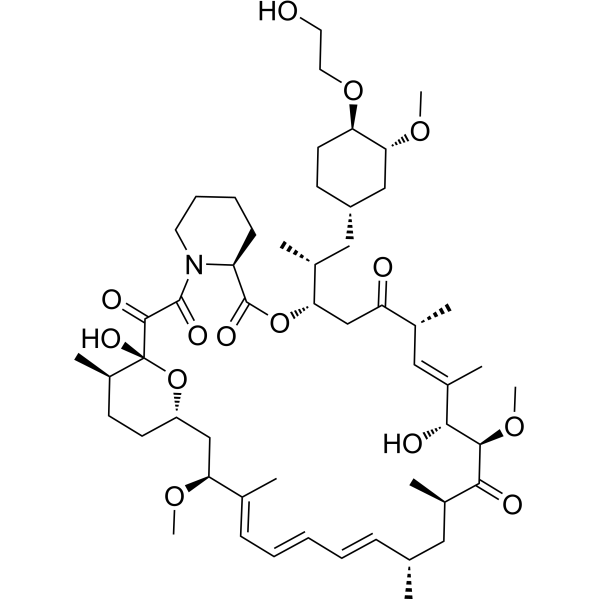
HY-10218
EverolimusmTORC Inhibitor -
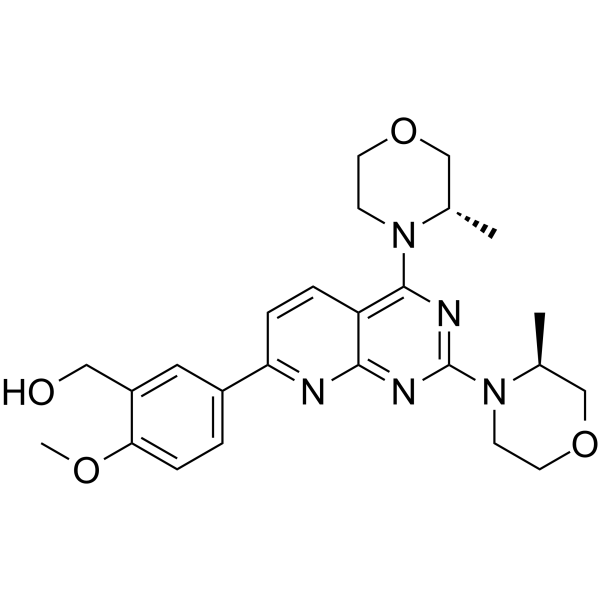
HY-10422
AZD-8055mTOR Inhibitor -
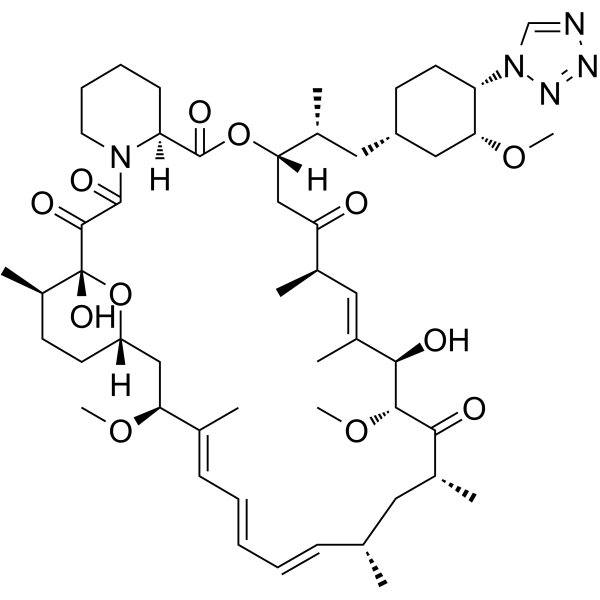
HY-12424
ZotarolimusImmunosuppressant -
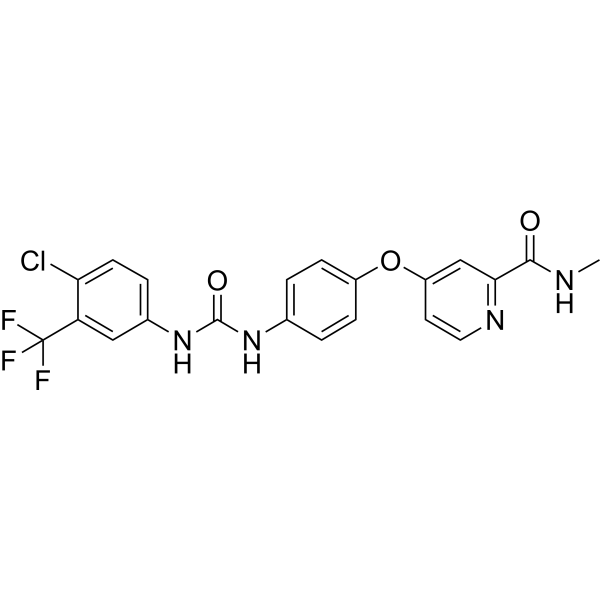
HY-10201
SorafenibMultikinase Inhibitor -
HY-10219
RapamycinmTOR Inhibitor
Publications Citing Use of MedChemExpress (MCE) Ridaforolimus
More- Nat Nanotechnol. 2019 Oct;14(10):988-993. [Abstract]
- Cell Metab. 2018 Jan 9;27(1):118-135.e8. [Abstract]
- NPJ Biofilms Microbiomes. 2024 Dec 19;10(1):154. [Abstract]
- Mol Syst Biol. 2024 Jan;20(1):28-55. [Abstract]
- Biochem Pharmacol. 2026 Mar 10:249:117889. [Abstract]
- Int J Mol Sci. 2026 Jun 26;27(13):5775.
- Molecules. 2020 Apr 23;25(8):1980. [Abstract]
- J Cell Sci. 2019 May 20;132(10):jcs227777. [Abstract]
- Acta Trop. 2020 Dec:212:105708. [Abstract]
- Oncol Lett. 2024 Oct 3;28(6):588. [Abstract]
- Research Square Print. 2022 Jun.
- Patent. US20160128986A1.
 Customer Validation & Images

-
WB


Actividad biológica
Descripciòn
IC50 & Target
[1]|
mTOR |
In Vitro
Treatment of HT-1080 fibrosarcoma cells with Ridaforolimus results in a dose-dependent inhibition of phosphorylation of both S6 and 4E-BP1, with IC50s of 0.2 and 5.6 nM, respectively, and EC50s of 0.2 and 1.0 nM, respectively. In HT-1080 cells, the EC50 for inhibition of cell proliferation (0.5 nM) is similar to the EC50s for inhibition of S6 and 4E-BP1 phosphorylation. Exposure to Ridaforolimus reduces the proliferation of cell lines representing a variety of tumor types. Administration of Ridaforolimus to tumor cells in vitro elicit dose-dependent inhibition of mTOR activity with concomitant effects on cell growth and division. Ridaforolimus exhibits a predominantly cytostatic mode of action, consistent with the findings for other mTOR inhibitors. Potent inhibitory effects on vascular endothelial growth factor secretion, endothelial cell growth, and glucose metabolism[1].
MedChemExpress (MCE) has not independently confirmed the accuracy of these methods. They are for reference only. Further protocols information, click here.
In Vivo
MedChemExpress (MCE) has not independently confirmed the accuracy of these methods. They are for reference only.
Ensayo clínico
| NCT Number | Sponsor | Condition | Start Date |
Phase

|
|---|---|---|---|---|
| NCT01329991 | Plexxikon| | 2011-05 | PHASE1 |


Chemical Information
-
No. CAS 572924-54-0
-
Appearance Solid
-
Peso molecular 990.21
-
Fòrmula C53H84NO14P
-
Color White to light yellow
-
SMILES
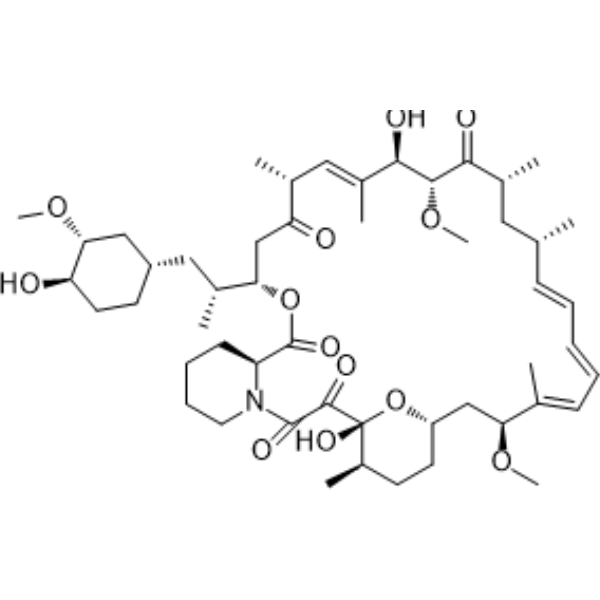
O=C(C([C@](O[C@]1([H])C[C@@H](/C(C)=C/C=C/C=C/[C@H]2C)OC)([C@@H](CC1)C)O)=O)N(CCCC3)[C@]3([H])C(O[C@](CC([C@@H](/C=C([C@H]([C@H](C([C@H](C)C2)=O)OC)O)\C)C)=O)([H])[C@H](C)C[C@H](CC[C@H]4OP(C)(C)=O)C[C@H]4OC)=O
-
Synonyms
MK-8669; Deforolimus; AP23573
-
Envío
Room temperature in continental US; may vary elsewhere.
-
Almacenamiento
Powder -20°C 3 years * The compound is unstable in solutions, freshly prepared is recommended.


Publications (12)
-
Journal Impact Factor
-
Most Recent
-
Nat Nanotechnol
A modular DNA scaffold to study protein-protein interactions at single-molecule resolution. [Abstract]2019 Oct;14(10):988-993. PMID: 31548690 -
Cell Metab
mTORC1 Inactivation Promotes Colitis-Induced Colorectal Cancer but Protects from APC Loss-Dependent Tumorigenesis. [Abstract]2018 Jan 9;27(1):118-135.e8. PMID: 29275959
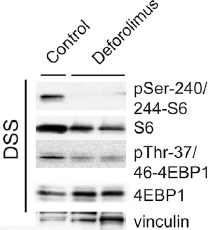
Ridaforolimus purchased from MedChemExpress. Usage Cited in: Cell Metab. 2018 Jan 9;27(1):118-135.e8. [Abstract]
Inhibiting mTORC1 activity by intraperitoneally injecting DSS-treated C57BL/6 mice with Deforolimus or Torin 1 every other day also results in significant body weight loss compared with controls.
-
NPJ Biofilms Microbiomes
Roles of gut microbiome-associated metabolites in pulmonary fibrosis by integrated analysis. [Abstract]2024 Dec 19;10(1):154. PMID: 39702426 -
Mol Syst Biol
Illuminating phenotypic drug responses of sarcoma cells to kinase inhibitors by phosphoproteomics. [Abstract]2024 Jan;20(1):28-55. PMID: 38177929 -
Biochem Pharmacol
PMEPA1 promotes mTOR inhibitor resistance in triple-negative breast cancer: Targeting the TGF-β/PMEPA1 axis as a therapeutic strategy to overcome resistance. [Abstract]2026 Mar 10:249:117889. PMID: 41819443 -
-
Molecules
In Vitro and in Vivo Activity of mTOR Kinase and PI3K Inhibitors Against Leishmania donovani and Trypanosoma brucei. [Abstract]2020 Apr 23;25(8):1980. PMID: 32340370 -
J Cell Sci
FKBP12 mediates necroptosis by initiating RIPK1-RIPK3-MLKL signal transduction in response to TNF receptor 1 ligation. [Abstract]2019 May 20;132(10):jcs227777. PMID: 31028177 -
Acta Trop
Tacrolimus, a rapamycin target protein inhibitor, exerts anti-cystic echinococcosis effects both in vitro and in vivo. [Abstract]2020 Dec:212:105708. PMID: 32956634 -
Oncol Lett
Transcriptomic analysis reveals Streptococcus agalactiae activation of oncogenic pathways in cervical adenocarcinoma. [Abstract]2024 Oct 3;28(6):588. PMID: 39411203 -
-


Solvente y solubilidad
In Vitro:
DMSO : ≥ 100 mg/mL (100.99 mM; Hygroscopic DMSO has a significant impact on the solubility of product, please use newly opened DMSO)
* "≥" means soluble, but saturation unknown.
Please refer to the solubility information to select the appropriate solvent. The compound is unstable in solutions, freshly prepared is recommended.
Please refer to the solubility information to select the appropriate solvent. The compound is unstable in solutions, freshly prepared is recommended.
Concentration (start) × Volume (start) = Concentration (final) × Volume (final)
In Vivo:
Select the appropriate dissolution method based on your experimental animal and administration route.
- For the following dissolution methods, please ensure to first prepare a clear stock solution using an In Vitro approach and then sequentially add co-solvents:
- To ensure reliable experimental results, the clarified stock solution can be appropriately stored based on storage conditions. As for the working solution for In Vivo experiments, it is recommended to prepare freshly and use it on the same day.
- The percentages shown for the solvents indicate their volumetric ratio in the final prepared solution. If precipitation or phase separation occurs during preparation, heat and/or sonication can be used to aid dissolution.
Add each solvent one by one: 10% DMSO 40% PEG300 5% Tween-80 45% Saline
Solubility: ≥ 2.5 mg/mL (2.52 mM); Clear solution
This protocol yields a clear solution of ≥ 2.5 mg/mL (saturation unknown).
Taking 1 mL working solution as an example, add 100 μL DMSO stock solution (25.0 mg/mL) to 400 μL PEG300, and mix evenly; then add 50 μL Tween-80 and mix evenly; then add 450 μL Saline to adjust the volume to 1 mL.
Preparation of Saline: Dissolve 0.9 g sodium chloride in ddH₂O and dilute to 100 mL to obtain a clear Saline solution.
In Vivo Dissolution Calculator
Please enter the basic information of animal experiments:
-
-
-
-
Recommended: Prepare an additional quantity of animals to account for potential losses during experiments.
Please enter your animal formula composition:
-
%DMSO +
Recommended: Keep the proportion of DMSO in working solution below 2% if your animal is weak.
-
%+
-
+%Tween-80 + +
-
%Saline +
The co-solvents required include: DMSO, . All of co-solvents are available by MedChemExpress (MCE). , Tween 80. All of co-solvents are available by MedChemExpress (MCE).
Working solution concentration: 0.22 mg/mL
Method for preparing stock solution: mg drug dissolved in μL DMSO. Stock solution concentration: mg/mL. * The compound is unstable in solutions, freshly prepared is recommended.
1. Take μL DMSO stock solution;
2. Add μL .
μL , mix evenly;
3. Then add μL Tween 80, mix evenly;
4. Then add μL
Please ensure that the stock solution in the first step is dissolved to a clear state, and add co-solvents in sequence. You can use ultrasonic heating (ultrasonic cleaner, recommended frequency 20-40 kHz), vortexing, etc. to assist dissolution.

Protocolo
-
Kinase activity and phosphorylation assays
Kinase activity assays measure the ability of kinases to transfer phosphate groups from ATP to specific substrates, while phosphorylation assays detect the presence and levels of phosphorylated proteins. Common methods include radiolabeled ATP incorporation (e. g. ,), ADP release detection via bioluminescence (e. g. ,[3]), enzyme-linked immunosorbent assays (ELISA) for phospho-specific epitopes (e. g. ,[6]), and microtiter-based formats for high-throughput screening (e. g. ,[8]). The ADP-Glo assay quantifies kinase activity by measuring ADP produced during phosphorylation using a luciferase-based system. Radiometric assays involve autoradiography or scintillation counting after incorporation of 32P-labeled ATP into substrate proteins. ELISA-based approaches rely on phospho-specific antibodies to detect activated kinases in cell lysates or purified samples.
-
Western Blot
Western blotting (WB) is a commonly used experimental method in molecular biology, biochemistry, and immunogenetics for identifying and quantifying target proteins. It combines gel electrophoresis with immunoassay, enabling researchers to analyze protein expression, post-translational modifications, and molecular weight.
-
Cell Cytotoxicity Assay
Cytotoxicity assays are usually based on the assessment of cell membrane damage, which can also be indirectly detected by measuring cell viability. Detection methods include MTT assay, CKK-8 assay, LDH assay and ATP assay, etc.
-
Protocol for Kinase activity and phosphorylation assays
Kinase activity assays measure transfer of phosphate from ATP to a protein or peptide substrate, generating phosphorylated substrate, ADP, or incorporated radiolabeled phosphate as the readout; phosphorylation assays measure site-specific phosphorylation in cells or tissues as a proxy for kinase-pathway activation, inhibition, or substrate regulation. Phosphorylation can be detected by phospho-specific Western blot, immunoprecipitation kinase assay, phospho-immunofluorescence, phospho-flow cytometry, luminescent ADP detection, radiolabeled ATP incorporation, or reporter-based pathway assays, and these readouts can be applied to cancer cells, primary neurons, mouse tumors, organoids, inflammatory macrophages, ferroptosis studies, and mitophagy studies when the kinase target is biologically relevant.


Pureza y Documentación
-
Ficha de datos (283 KB)
-
SDS (396 KB)
- English - EN (396 KB)
- Français - FR (396 KB)
- Deutsch - DE (396 KB)
- Norwegian - NO (396 KB)
- Español - ES (396 KB)
- Swedish - SV (396 KB)
- Italian - IT (396 KB)
- Korean - KR (396 KB)
- Portuguese - PT (396 KB)
-
Instrucciones de manejo (2659 KB)
Referencias
[1]. Rivera VM, et al. Deforolimus (AP23573; MK-8669), a potent mTOR inhibitor, has broad antitumor activity and can be optimally administered using intermittent dosing regimens. Mol Cancer Ther. 2011 Jun;10(6):1059-71. [Content Brief]
[2]. Brandt M, et al. mTORC1 Inactivation Promotes Colitis-Induced Colorectal Cancer but Protects from APC Loss-Dependent Tumorigenesis. Cell Metab. 2018 Jan 9;27(1):118-135.e8. [Content Brief]


Complete Stock Solution Preparation Table
Please refer to the solubility information to select the appropriate solvent. The compound is unstable in solutions, freshly prepared is recommended.
| Optional Solvent | Concentration Solvent Mass | 1 mg | 5 mg | 10 mg | 25 mg |
|---|---|---|---|---|---|
| DMSO | 1 mM | 1.0099 mL | 5.0494 mL | 10.0989 mL | 25.2472 mL |
| 5 mM | 0.2020 mL | 1.0099 mL | 2.0198 mL | 5.0494 mL | |
| 10 mM | 0.1010 mL | 0.5049 mL | 1.0099 mL | 2.5247 mL | |
| 15 mM | 0.0673 mL | 0.3366 mL | 0.6733 mL | 1.6831 mL | |
| 20 mM | 0.0505 mL | 0.2525 mL | 0.5049 mL | 1.2624 mL | |
| 25 mM | 0.0404 mL | 0.2020 mL | 0.4040 mL | 1.0099 mL | |
| 30 mM | 0.0337 mL | 0.1683 mL | 0.3366 mL | 0.8416 mL | |
| 40 mM | 0.0252 mL | 0.1262 mL | 0.2525 mL | 0.6312 mL | |
| 50 mM | 0.0202 mL | 0.1010 mL | 0.2020 mL | 0.5049 mL | |
| 60 mM | 0.0168 mL | 0.0842 mL | 0.1683 mL | 0.4208 mL | |
| 80 mM | 0.0126 mL | 0.0631 mL | 0.1262 mL | 0.3156 mL | |
| 100 mM | 0.0101 mL | 0.0505 mL | 0.1010 mL | 0.2525 mL |


Ridaforolimus Related Classifications
HY-50908 Related Classifications
 Powered by Bioz