



SPL-707
Based on 1 publication(s) in Google Scholar
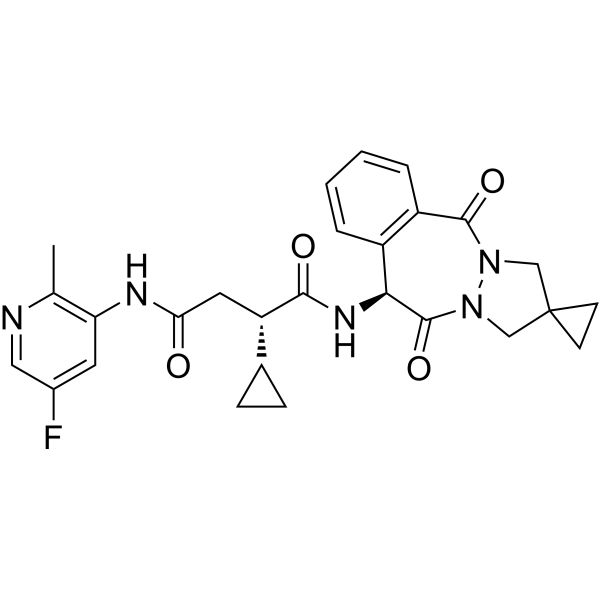
SPL-707 is an orally active, selective signal peptide peptidase-like 2a (SPPL2a) inhibitor with an IC50 of 77 nM for hSPPL2a. SPL-707 inhibits γ-secretase (IC50=6.1 μM) and SPP (IC50=3.7 μM). SPL-707 has the potential for autoimmune diseases research by targeting B cells and dendritic cells.
Para uso exclusivo en investigación. No vendemos a pacientes.
- Pureza : 99.64%
- No. CAS: 2195361-33-0
- Fòrmula: C27H28FN5O4
- Peso molecular:505.54
-
Almacenamiento:Powder -20°C, 3 years , 4°C, 2 years ; In solvent -80°C, 2 years , -20°C, 1 year

To place orders, for customer services and technical support, please contact: MedChemExpress USA
Tel: 609-228-6898 E-mail: [email protected] [email protected]


-
 Actividad biológica
-
Chemical Information
-
Solvente y solubilidad
- Protocolo
- Pureza y Documentación
- Referencias
-
 Help & FAQs


-
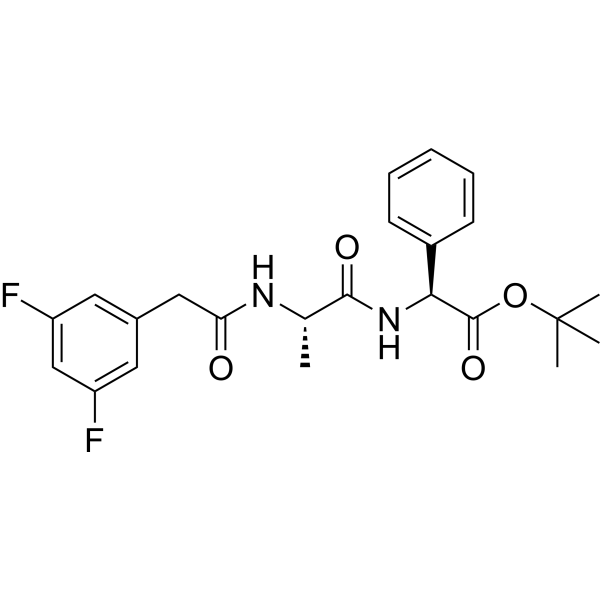
HY-13027
DAPTγ-secretase Inhibitor -
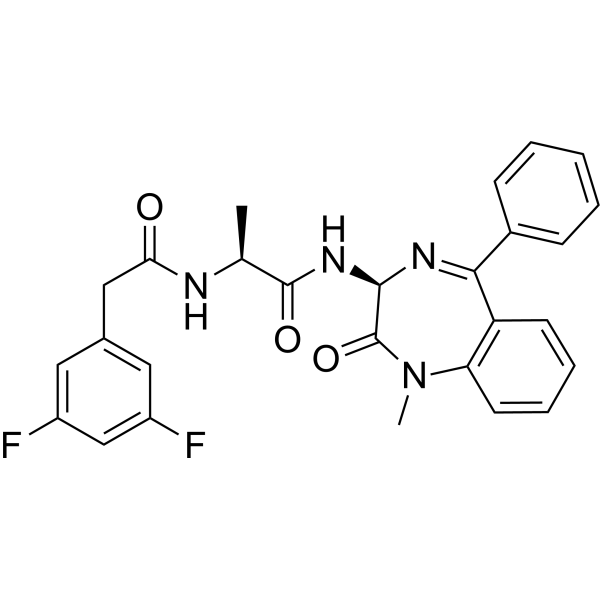
HY-14176
Compound Eγ-secretase Inhibitor -
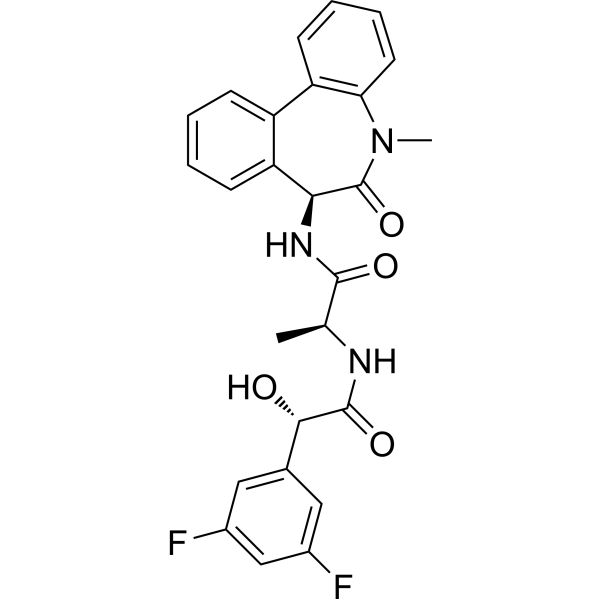
HY-50752
LY-411575γ-secretase Inhibitor -
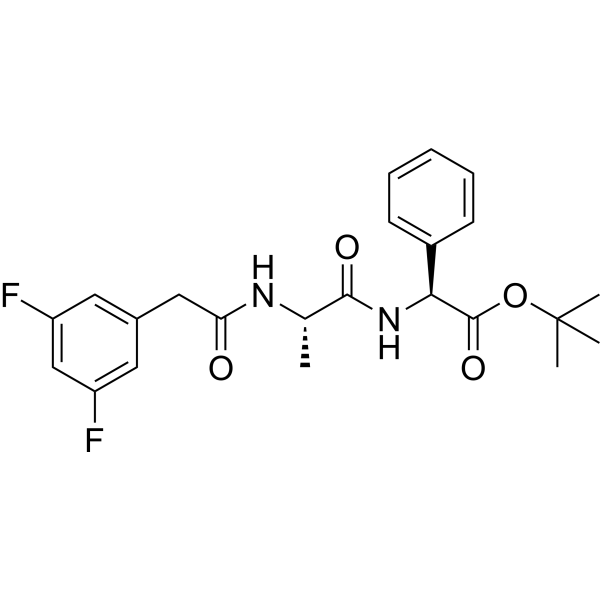
HY-13027G
DAPT (GMP)γ-Secretase Inhibitor -
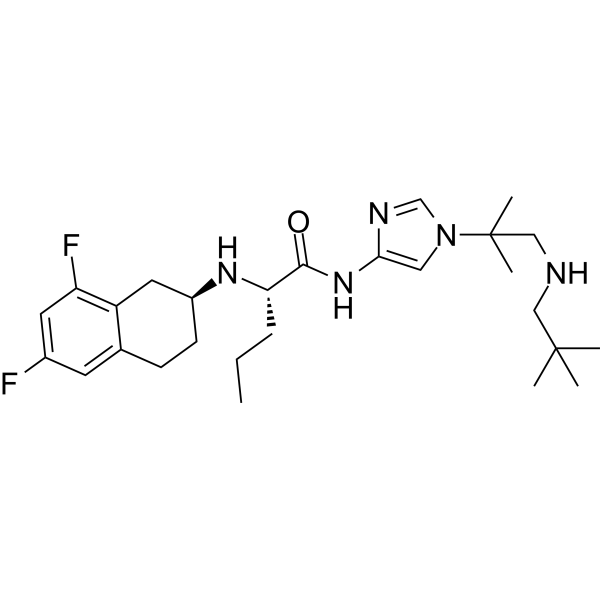
HY-15185
Nirogacestatγ-Secretase Inhibitor -
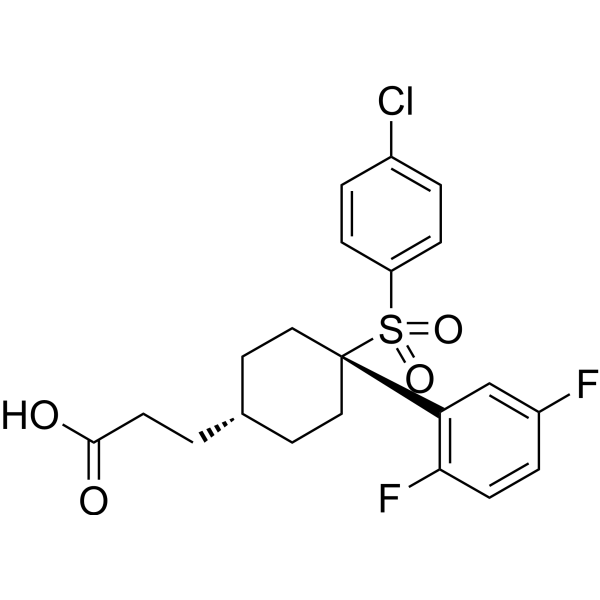
HY-10974
MK-0752 -
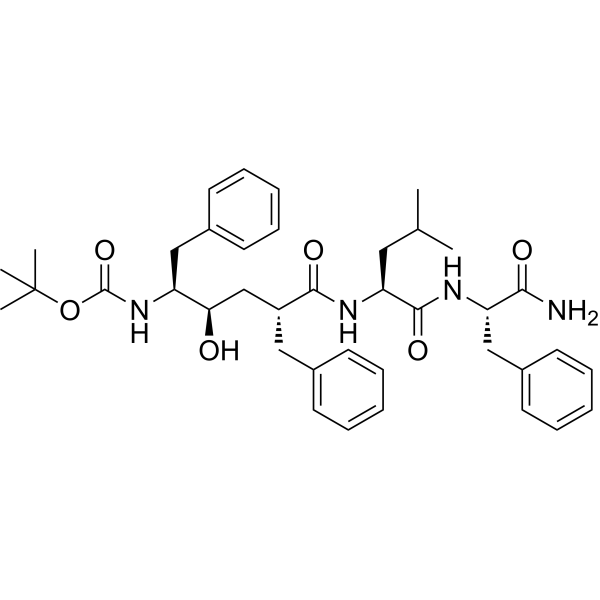
HY-19369
L-685458γ-Secretase Inhibitor -
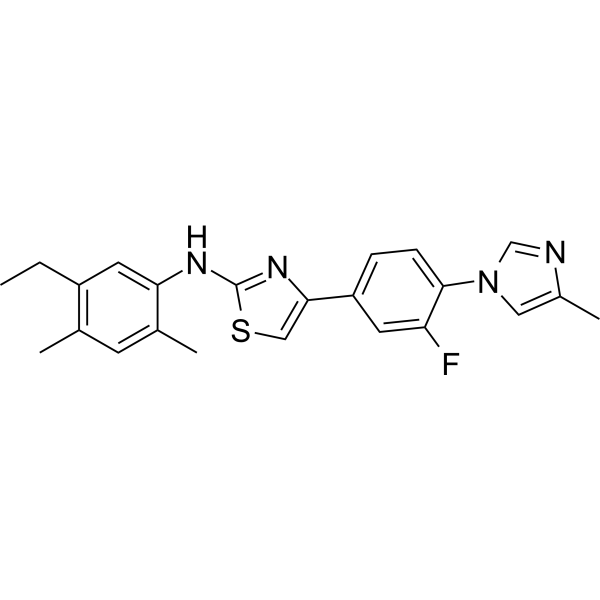
HY-108714
NGP555γ-secretase Modulator -
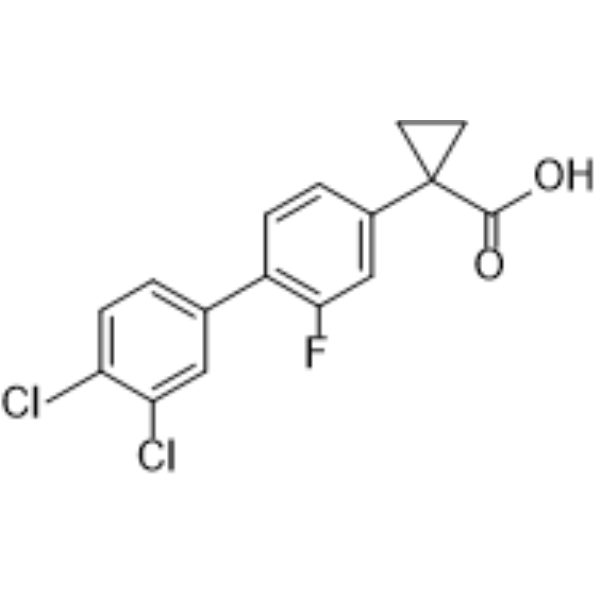
HY-14399
Itanapracedγ-Secretase Inhibitor -

HY-15185R
Nirogacestat (Standard)γ-Secretase Inhibitor -
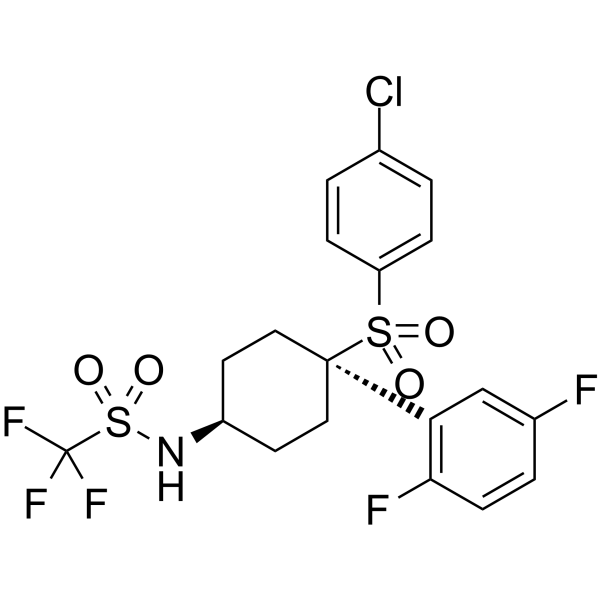
HY-14174
MRK-560γ-Secretase Inhibitor -
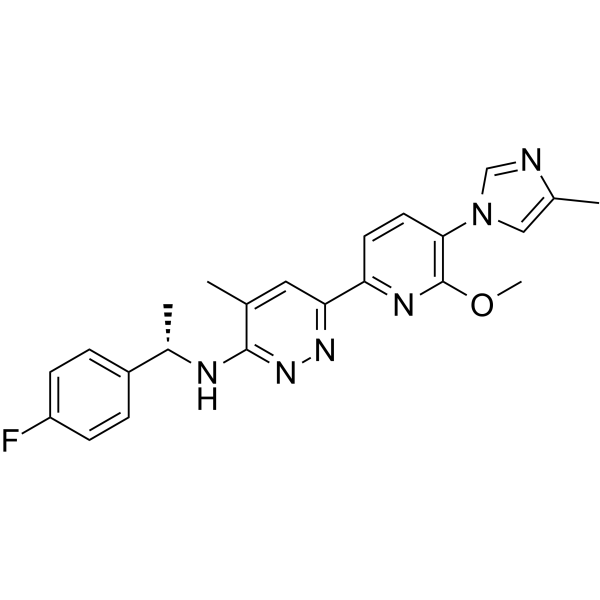
HY-117482
BPN-15606γ-Secretase Modulator
Publications Citing Use of MedChemExpress (MCE) SPL-707
More

Actividad biológica
Descripciòn
IC50 & Target
IC50: 77 nM (SPPL2a), 6.1 μM (γ-secretase) and 3.7 μM (SPP)[1]
Cellular Effect
|
Cell Line

|
Type | Value | Description | References |
|---|---|---|---|---|
| HEK293 | IC50 |
0.077 μM
Compound: 40; SPL-707
|
Inhibition of human SPPL2a expressed in HEK293 cells using GAL4-VP16 fusedTNFalpha (1 to 76)-NTF as substrate after 24 hrs by Bright-Glo luciferase reporter gene assay
Inhibition of human SPPL2a expressed in HEK293 cells using GAL4-VP16 fusedTNFalpha (1 to 76)-NTF as substrate after 24 hrs by Bright-Glo luciferase reporter gene assay
|
[PMID: 29359565] |
| HEK293 | IC50 |
6.1 μM
Compound: 40; SPL-707
|
Inhibition of human gamma-secretase expressed in HEK293 cells using Notch1-VP16-Gal4 as substrate after 24 hrs by Bright-Glo luciferase reporter gene assay
Inhibition of human gamma-secretase expressed in HEK293 cells using Notch1-VP16-Gal4 as substrate after 24 hrs by Bright-Glo luciferase reporter gene assay
|
[PMID: 29359565] |
In Vitro
SPL-707 (Compound 40) inhibits mouse SPPL2a (IC50=0.18 μM), rat SPPL2a (IC50=0.056 μM) and human SPPL2a (IC50=0.16 μM), human SPPL2b (IC50=0.43 μM) by a high content imaging assay (HCA)[1].
MedChemExpress (MCE) has not independently confirmed the accuracy of these methods. They are for reference only.
In Vivo
SPL-707 (3 mg/kg of po and 1 mg/kg of iv) has a CL of 6 mL/min kg, and an AUC of 8787 h nM[1].
SPL-707 (1, 3 mg/kg; b.i.d.; first dose at 0 h, second dose at 8 h) achieves full inhibition of CD74/p8 processing in spleen in female Lewis rats[1].
MedChemExpress (MCE) has not independently confirmed the accuracy of these methods. They are for reference only.
-
Animal Model:Mice with 5-12 weeks of age[1]
-
Dosage:3, 10, and 30 mg/kg
-
Administration:Orally; b.i.d. (with 8 and 16 h dosing intervals); for 11 days
-
Result:Led to a reduction in B cells and myeloid dendritic cells without affecting γ-secretase activity.
-
Animal Model:Female Sprague−Dawley rat[1]
-
Dosage:3 mg/kg of po and 1 mg/kg of iv (Pharmacokinetic Analysis)
-
Administration:PO or IV
-
Result:Had a CL of 6 mL/min•kg, and an AUC of 8787 h•nM.


Chemical Information
-
No. CAS 2195361-33-0
-
Appearance Solid
-
Peso molecular 505.54
-
Fòrmula C27H28FN5O4
-
Color White to off-white
-
SMILES
CC1=C(NC(C[C@@H](C2CC2)C(N[C@@H]3C(N(CC4(CC4)C5)N5C(C6=C3C=CC=C6)=O)=O)=O)=O)C=C(F)C=N1
-
Envío
Room temperature in continental US; may vary elsewhere.
-
Almacenamiento
Powder -20°C 3 years 4°C 2 years In solvent -80°C 2 years -20°C 1 year


Publications (1)
-
Journal Impact Factor
-
Most Recent
-
Chem Biol Interact
In vitro cleavage of tumor necrosis factor α (TNFα) by Signal-Peptide-Peptidase-like 2b (SPPL2b) resembles mechanistic principles observed in the cellular context. [Abstract]2024 May 25:395:111006. PMID: 38636792


Solvente y solubilidad
In Vitro:
DMSO : 100 mg/mL (197.81 mM; Need ultrasonic; Hygroscopic DMSO has a significant impact on the solubility of product, please use newly opened DMSO)
Please refer to the solubility information to select the appropriate solvent. Once prepared, please aliquot and store the solution to prevent product inactivation from repeated freeze-thaw cycles.
Storage method and period of stock solution: -80°C, 2 years; -20°C, 1 year. When stored at -80°C, please use it within 2 years. When stored at -20°C, please use it within 1 year.
Please refer to the solubility information to select the appropriate solvent. Once prepared, please aliquot and store the solution to prevent product inactivation from repeated freeze-thaw cycles.
Storage method and period of stock solution: -80°C, 2 years; -20°C, 1 year. When stored at -80°C, please use it within 2 years. When stored at -20°C, please use it within 1 year.
Concentration (start) × Volume (start) = Concentration (final) × Volume (final)
In Vivo:
Select the appropriate dissolution method based on your experimental animal and administration route.
- For the following dissolution methods, please ensure to first prepare a clear stock solution using an In Vitro approach and then sequentially add co-solvents:
- To ensure reliable experimental results, the clarified stock solution can be appropriately stored based on storage conditions. As for the working solution for In Vivo experiments, it is recommended to prepare freshly and use it on the same day.
- The percentages shown for the solvents indicate their volumetric ratio in the final prepared solution. If precipitation or phase separation occurs during preparation, heat and/or sonication can be used to aid dissolution.
Add each solvent one by one: 10% DMSO 40% PEG300 5% Tween-80 45% Saline
Solubility: ≥ 5 mg/mL (9.89 mM); Clear solution
This protocol yields a clear solution of ≥ 5 mg/mL (saturation unknown).
Taking 1 mL working solution as an example, add 100 μL DMSO stock solution (50.0 mg/mL) to 400 μL PEG300, and mix evenly; then add 50 μL Tween-80 and mix evenly; then add 450 μL Saline to adjust the volume to 1 mL.
Preparation of Saline: Dissolve 0.9 g sodium chloride in ddH₂O and dilute to 100 mL to obtain a clear Saline solution.
In Vivo Dissolution Calculator
Please enter the basic information of animal experiments:
-
-
-
-
Recommended: Prepare an additional quantity of animals to account for potential losses during experiments.
Please enter your animal formula composition:
-
%DMSO +
Recommended: Keep the proportion of DMSO in working solution below 2% if your animal is weak.
-
%+
-
+%Tween-80 + +
-
%Saline +
The co-solvents required include: DMSO, . All of co-solvents are available by MedChemExpress (MCE). , Tween 80. All of co-solvents are available by MedChemExpress (MCE).
Working solution concentration: 0.22 mg/mL
Method for preparing stock solution: mg drug dissolved in μL DMSO. Stock solution concentration: mg/mL.
1. Take μL DMSO stock solution;
2. Add μL .
μL , mix evenly;
3. Then add μL Tween 80, mix evenly;
4. Then add μL
Please ensure that the stock solution in the first step is dissolved to a clear state, and add co-solvents in sequence. You can use ultrasonic heating (ultrasonic cleaner, recommended frequency 20-40 kHz), vortexing, etc. to assist dissolution.


Pureza y Documentación
-
Ficha de datos (277 KB)
-
SDS (251 KB)
- English - EN (251 KB)
- Français - FR (251 KB)
- Deutsch - DE (251 KB)
- Norwegian - NO (251 KB)
- Español - ES (251 KB)
- Swedish - SV (251 KB)
- Italian - IT (251 KB)
- Korean - KR (251 KB)
- Portuguese - PT (251 KB)
-
Instrucciones de manejo (2659 KB)
Referencias


Complete Stock Solution Preparation Table
Please refer to the solubility information to select the appropriate solvent. Once prepared, please aliquot and store the solution to prevent product inactivation from repeated freeze-thaw cycles.
Storage method and period of stock solution: -80°C, 2 years; -20°C, 1 year. When stored at -80°C, please use it within 2 years. When stored at -20°C, please use it within 1 year.
| Optional Solvent | Concentration Solvent Mass | 1 mg | 5 mg | 10 mg | 25 mg |
|---|---|---|---|---|---|
| DMSO | 1 mM | 1.9781 mL | 9.8904 mL | 19.7808 mL | 49.4521 mL |
| 5 mM | 0.3956 mL | 1.9781 mL | 3.9562 mL | 9.8904 mL | |
| 10 mM | 0.1978 mL | 0.9890 mL | 1.9781 mL | 4.9452 mL | |
| 15 mM | 0.1319 mL | 0.6594 mL | 1.3187 mL | 3.2968 mL | |
| 20 mM | 0.0989 mL | 0.4945 mL | 0.9890 mL | 2.4726 mL | |
| 25 mM | 0.0791 mL | 0.3956 mL | 0.7912 mL | 1.9781 mL | |
| 30 mM | 0.0659 mL | 0.3297 mL | 0.6594 mL | 1.6484 mL | |
| 40 mM | 0.0495 mL | 0.2473 mL | 0.4945 mL | 1.2363 mL | |
| 50 mM | 0.0396 mL | 0.1978 mL | 0.3956 mL | 0.9890 mL | |
| 60 mM | 0.0330 mL | 0.1648 mL | 0.3297 mL | 0.8242 mL | |
| 80 mM | 0.0247 mL | 0.1236 mL | 0.2473 mL | 0.6182 mL | |
| 100 mM | 0.0198 mL | 0.0989 mL | 0.1978 mL | 0.4945 mL |


SPL-707 Related Classifications
HY-111360 Related Classifications
 Powered by Bioz