



Arazine

Based on 1 Customer Validation
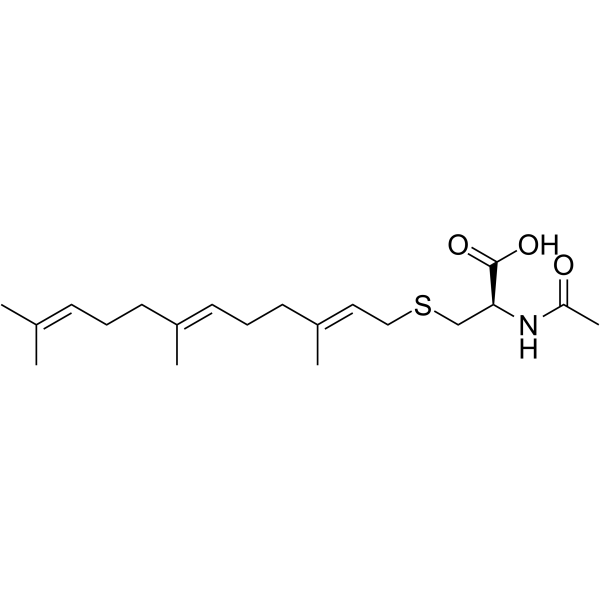
Arazine (N-Acetyl-S-farnesyl-L-cysteine) is a cell-permeable modulator of G protein and G-protein coupled receptor signaling. Arazine can be a a substrate for isoprenylcysteine methyltransferase by competing with prenylated G protein or its receptors site.
Para uso exclusivo en investigación. No vendemos a pacientes.
- Pureza : 98.4%
- No. CAS: 135304-07-3
- Fòrmula: C20H33NO3S
- Peso molecular:367.55
-
Almacenamiento:
Solution, -20°C, 2 years

To place orders, for customer services and technical support, please contact: MedChemExpress USA
Tel: 609-228-6898 E-mail: [email protected] [email protected]


-
 Actividad biológica
-
Chemical Information
- Pureza y Documentación
- Referencias
-
 Help & FAQs


-
HY-B2230
HinokitiolVirus Protease Inhibitor -
HY-13642
RG108DNMT Inhibitor -
HY-139664
GSK-3685032DNMT1 Inhibitor -
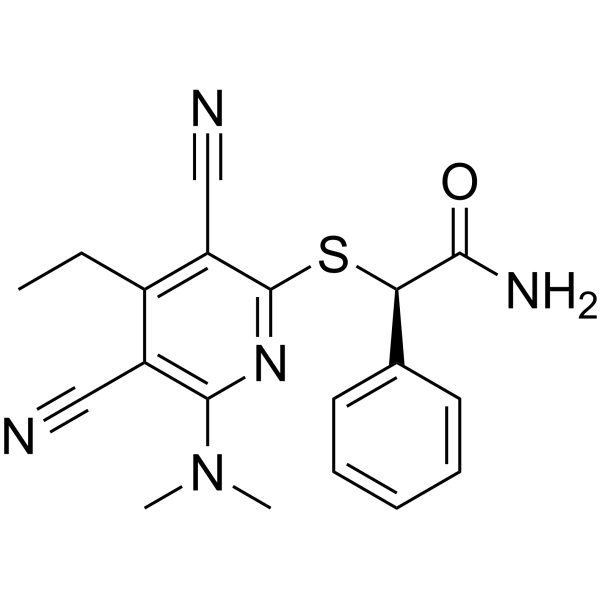
HY-135146
GSK-3484862DNMT1 Inhibitor -
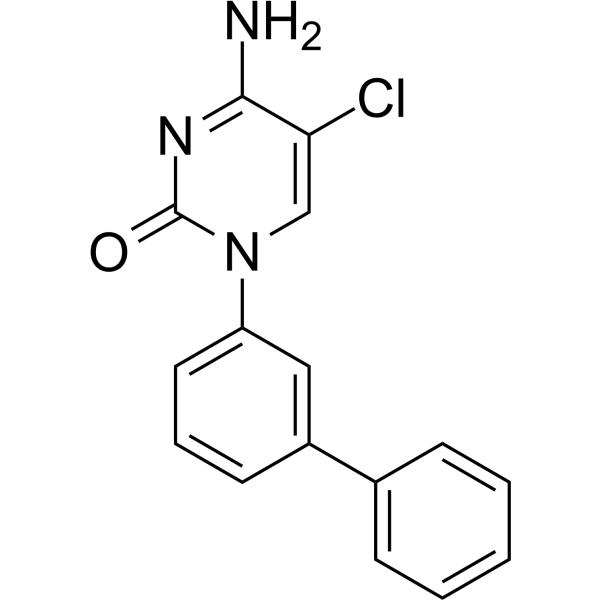
HY-111558
Bobcat339TET Inhibitor -
HY-B2194
γ-OryzanolDNA Methyltransferase Inhibitor -
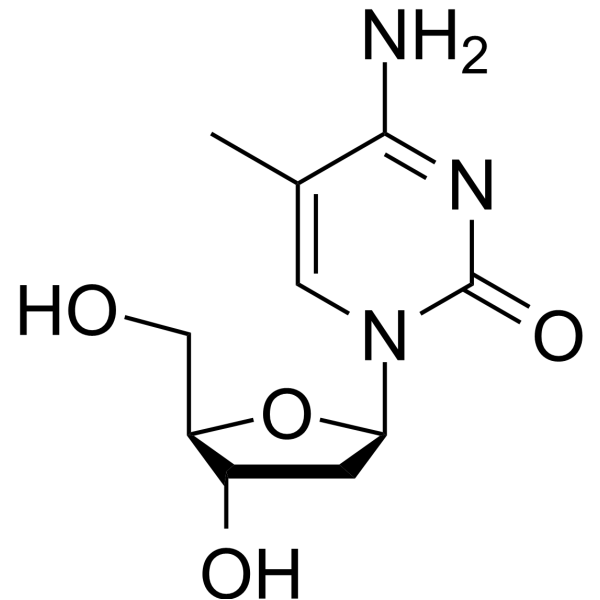
HY-W012078
5-Methyl-2'-deoxycytidine -
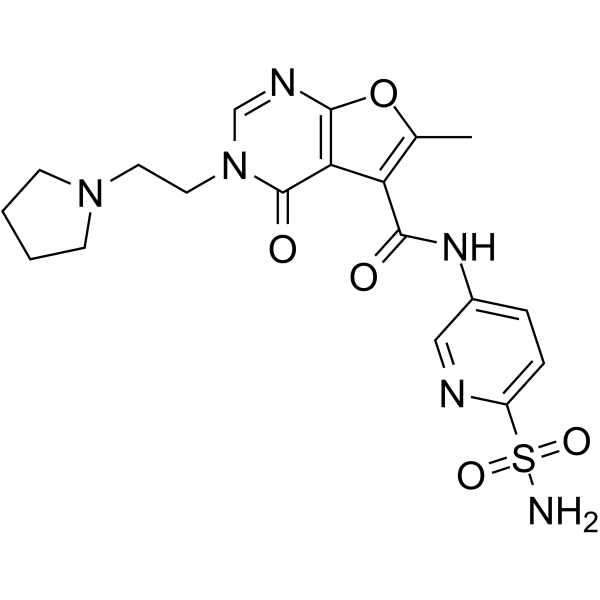
HY-151136
DY-46-2DNMT3A Inhibitor -
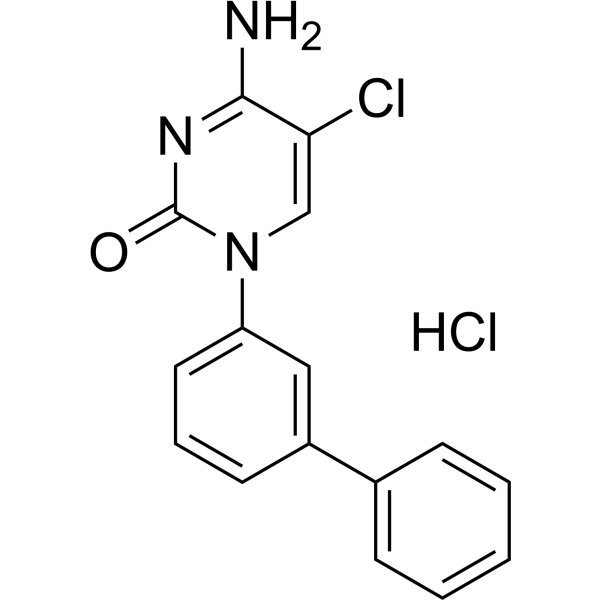
HY-111558A
Bobcat339 hydrochlorideTET Inhibitor -
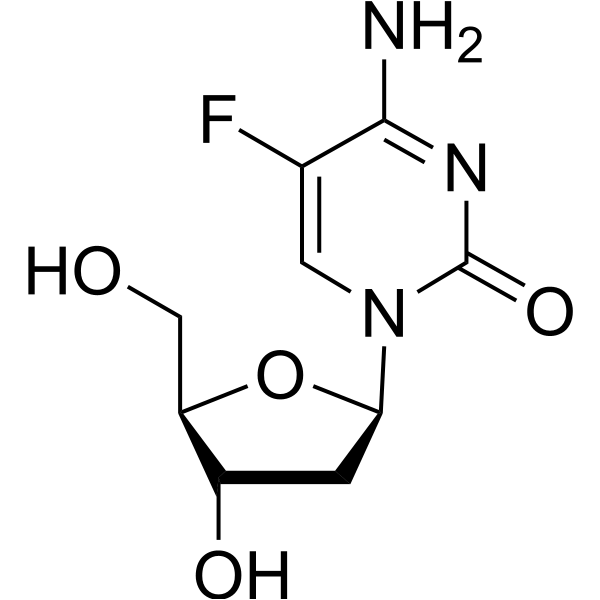
HY-116217
5-Fluoro-2'-deoxycytidineDNMT Inhibitor -
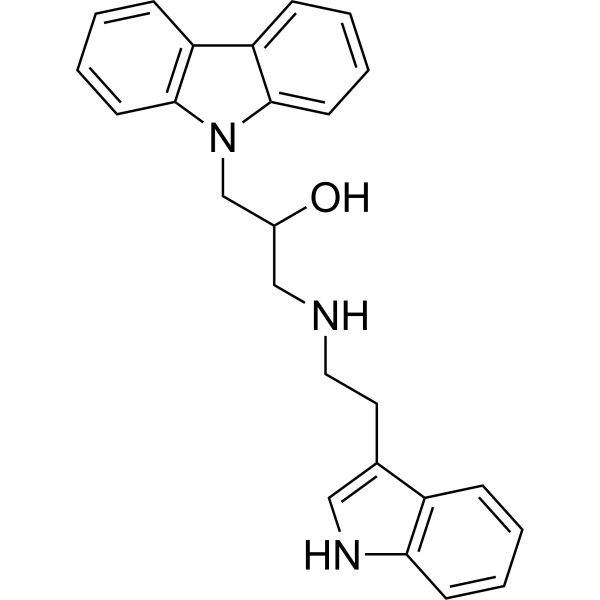
HY-12746
DC-05DNA Methyltransferase Inhibitor -
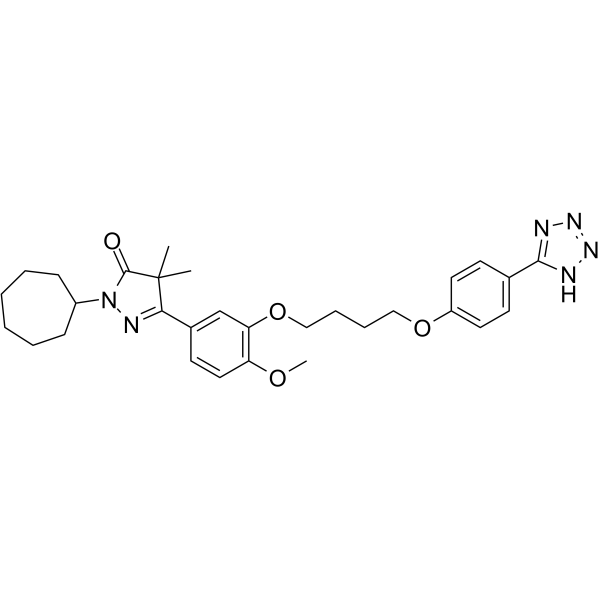
HY-144433
DNMT3A-IN-1DNMT3A Inhibitor
Ver todos los productos específicos de isoformas DNA Methyltransferase
More

Actividad biológica
Descripciòn
In Vitro
Arazine (2 hours) inhibits ATPγS induced CXCL1, CXCL8 and CCL2 production as a dose-dependent manner in HMEC-1 cell[1]. Arazine (10–100 μM;8 hours) significantly affects the HMEC-1 cell viability as measured by trypan blue exclusion in HMEC-1 cell[1].
MedChemExpress (MCE) has not independently confirmed the accuracy of these methods. They are for reference only.
In Vivo
MedChemExpress (MCE) has not independently confirmed the accuracy of these methods. They are for reference only.
-
Animal Model:TPA-induced ear acute inflammation in mouse[1]
-
Dosage:2000 μg/20 μl
-
Administration:2000 μg/20 μl; Applied on ear
-
Result:Inhibited ear edema, as measured by ear weight.


Chemical Information
-
No. CAS 135304-07-3
-
Appearance Liquid
-
Peso molecular 367.55
-
Fòrmula C20H33NO3S
-
Color Colorless to light yellow
-
SMILES
O=C(O)[C@H](CSC/C=C(C)/CC/C=C(C)/CC/C=C(C)\C)NC(C)=O
-
Synonyms
N-Acetyl-S-farnesyl-L-cysteine
-
Envío
Room temperature in continental US; may vary elsewhere.
-
Almacenamiento
Solution, -20°C, 2 years


Pureza y Documentación
-
Ficha de datos (266 KB)
-
SDS (393 KB)
- English - EN (393 KB)
- Français - FR (393 KB)
- Deutsch - DE (393 KB)
- Norwegian - NO (393 KB)
- Español - ES (393 KB)
- Swedish - SV (393 KB)
- Italian - IT (393 KB)
- Korean - KR (393 KB)
- Portuguese - PT (393 KB)
-
Instrucciones de manejo (2659 KB)
Referencias
[1]. Gordon JS, et al. Topical N-acetyl-S-farnesyl-L-cysteine inhibits mouse skin inflammation, and unlike dexamethasone, its effects are restricted to the application site.J Invest Dermatol. 2008 Mar;128(3):643-54. Epub 2007 Sep 20. [Content Brief]
[2]. Adhami K, et al. N-acetyl-S-farnesyl-l-cysteine suppresses chemokine production by human dermal microvascular endothelial cells.Exp Dermatol. 2012 Sep;21(9):700-5. [Content Brief]

Calculators
Concentration (start) × Volume (start) = Concentration (final) × Volume (final)


Arazine Related Classifications
HY-133021 Related Classifications
 Powered by Bioz