



Atopaxar

Based on 1 Customer Validation
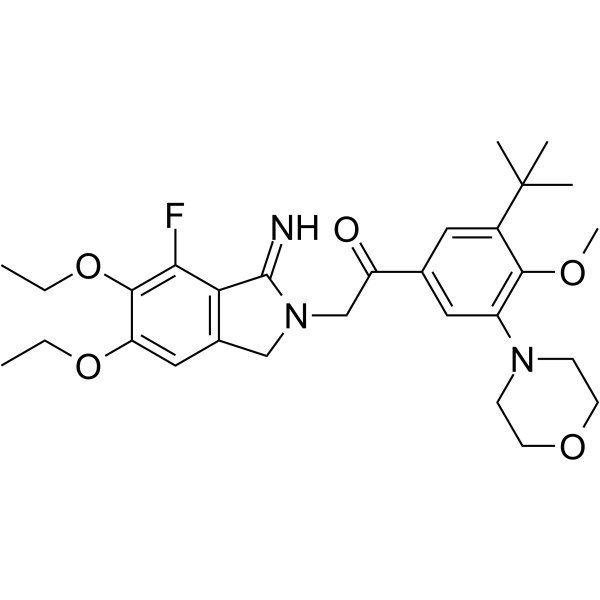
Atopaxar (E5555) is a potent, orally active, selective and reversible thrombin receptor protease-activated receptor-1 (PAR-1) antagonist. Atopaxar, an antiplatelet agent, interferes with platelet signaling. Atopaxar can be used for the research of atherothrombotic disease.
Para uso exclusivo en investigación. No vendemos a pacientes.
- Pureza : 99.87%
- No. CAS: 751475-53-3
- Fòrmula: C29H38FN3O5
- Peso molecular:527.63
-
Almacenamiento:Powder -20°C, 3 years , 4°C, 2 years ; In solvent -80°C, 6 months , -20°C, 1 month

To place orders, for customer services and technical support, please contact: MedChemExpress USA
Tel: 609-228-6898 E-mail: [email protected] [email protected]


-
 Actividad biológica
-
Chemical Information
-
Solvente y solubilidad
- Pureza y Documentación
- Referencias
-
 Help & FAQs


-
HY-10119
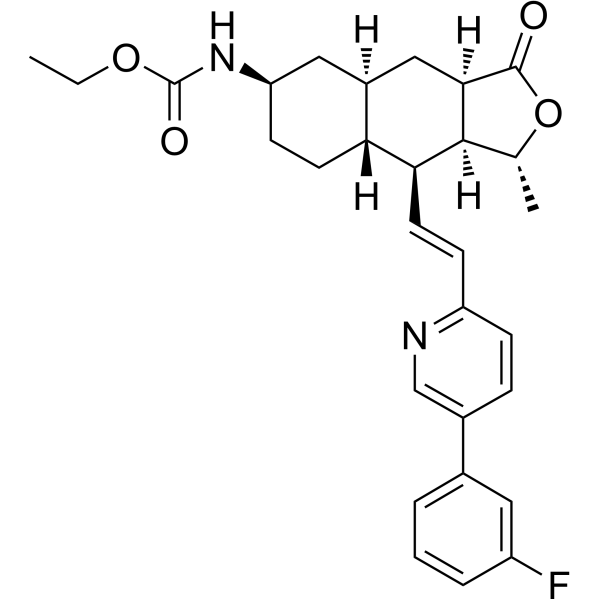
VorapaxarPAR-1 Antagonist -
HY-112558
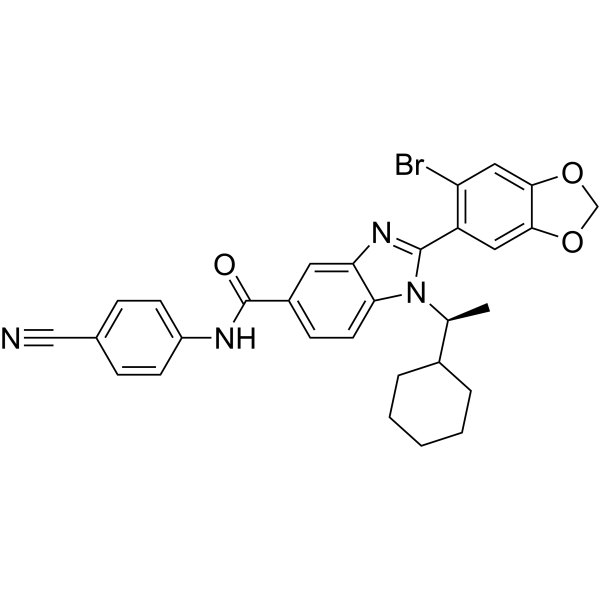
AZ3451PAR2 Antagonist -
HY-14993
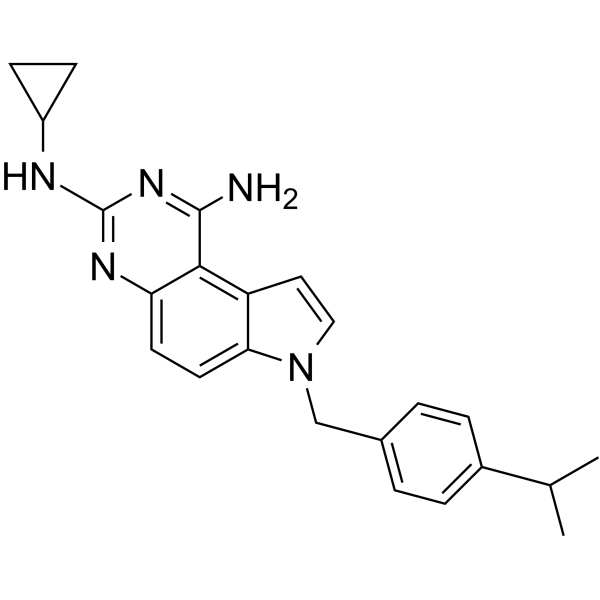
SCH79797PAR1 Antagonist -
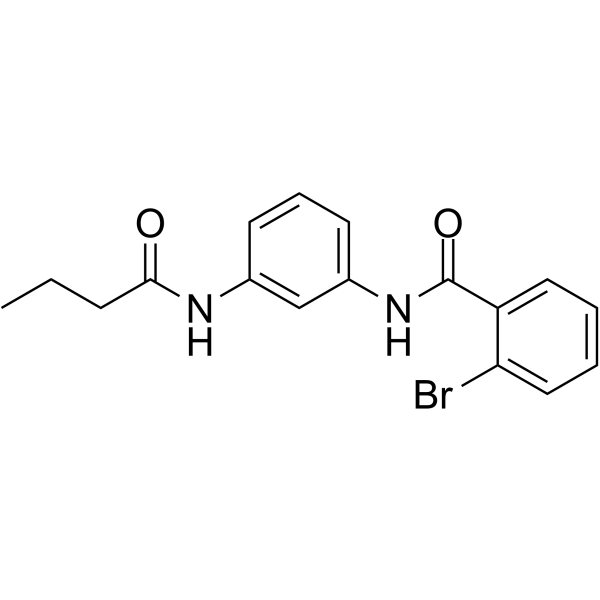
HY-13965
Parmodulin 2PAR1 Inhibitor -
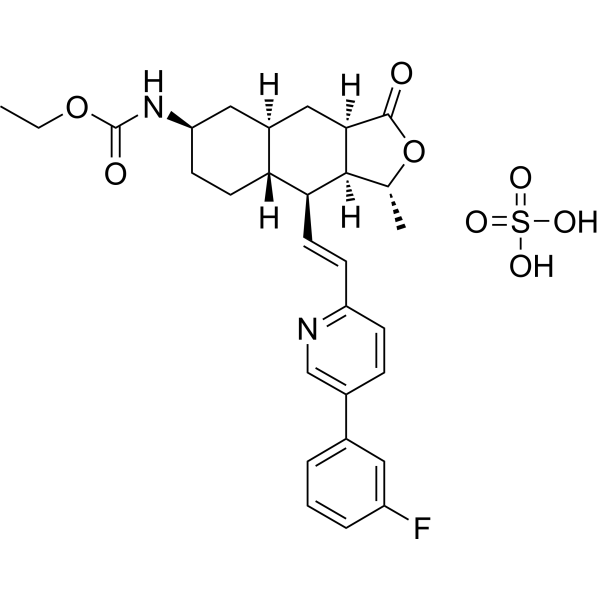
HY-10119A
Vorapaxar sulfatePAR-1 Antagonist -
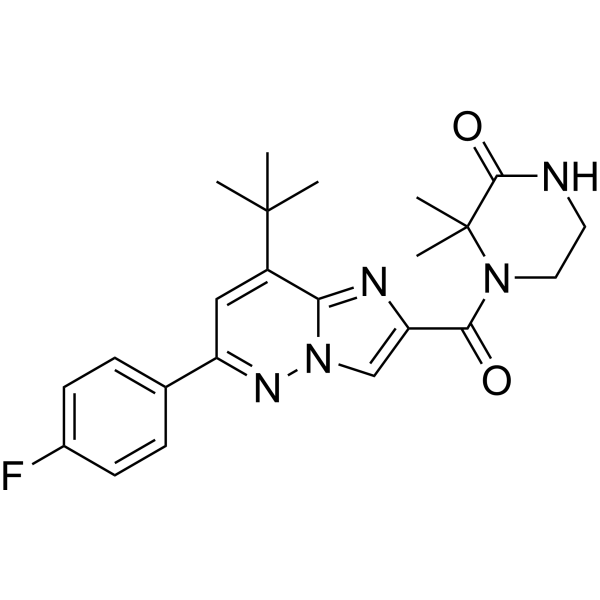
HY-117793
I-191PAR2 Antagonist -
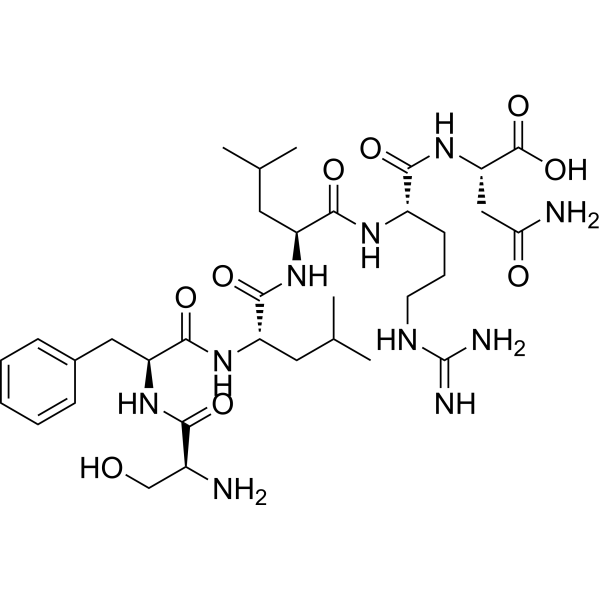
HY-P0078
TRAP-6PAR1 Agonist -
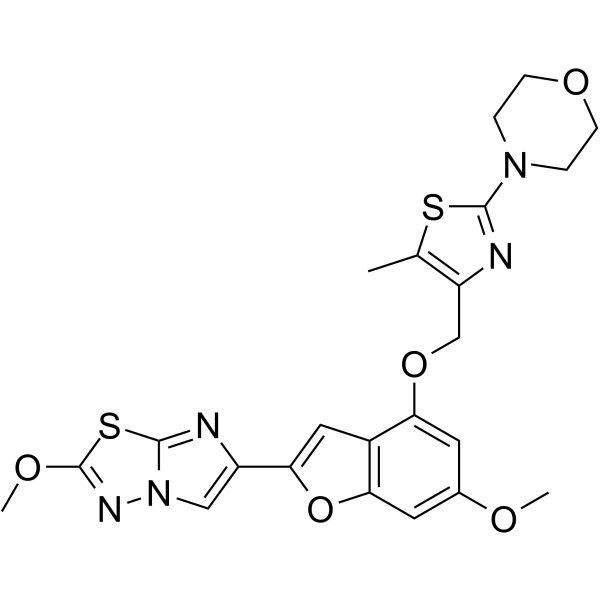
HY-19837
BMS-986120PAR4 Antagonist -
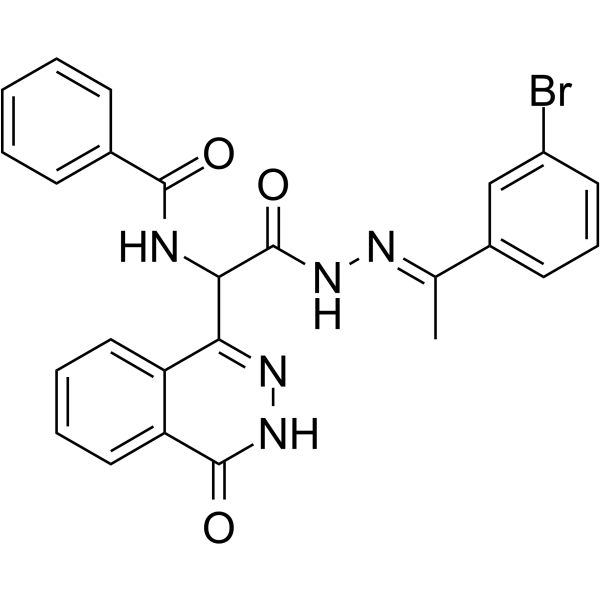
HY-14350
AC-55541PAR Agonist -
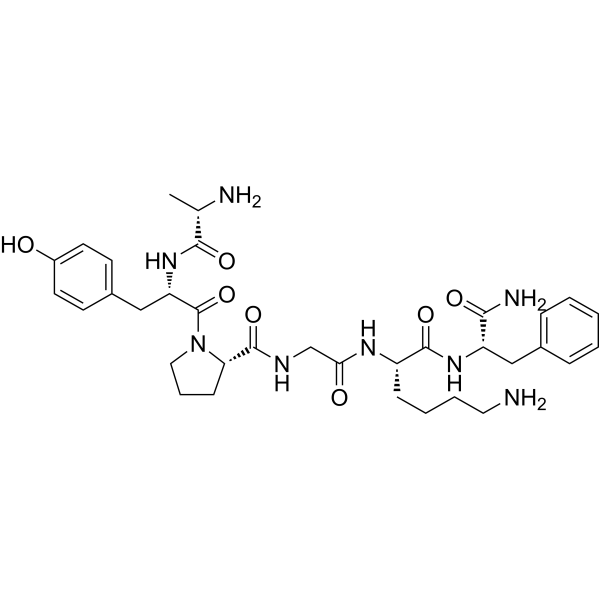
HY-P1309
PAR-4 Agonist Peptide, amidePAR Agonist -
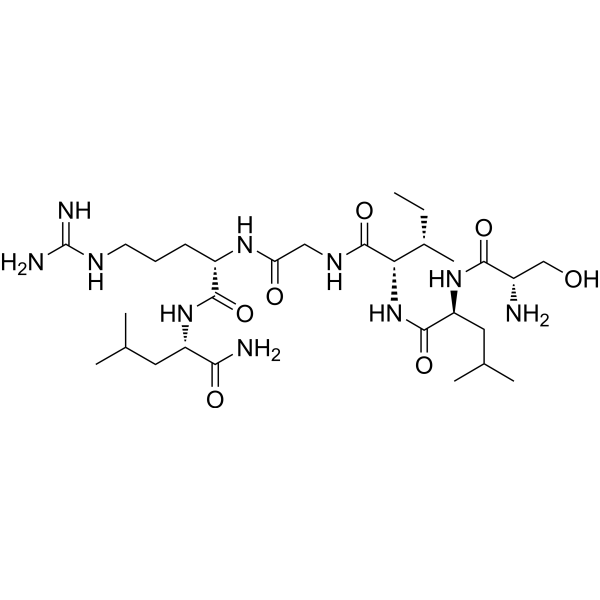
HY-P1308
SLIGRL-NH2PAR-2 Agonist -
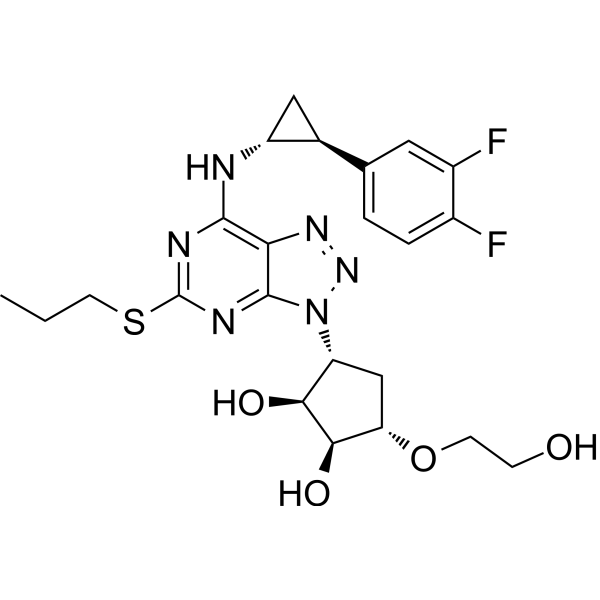
HY-10064
TicagrelorP2Y12 Antagonist


Actividad biológica
Descripciòn
IC50 & Target
|
PAR1 |
In Vitro
Atopaxar (0.0001-10 μM; 1h) inhibits haTRAP (high-affinity thrombin receptor activating peptide) binding to PAR-1 on human platelet membranes in a concentration-dependent manner, with an IC50 of 0.019 μM[2].
Atopaxar inhibits human platelet aggregation induced by thrombin or TRAP in a concentration-dependent manner[2].
Atopaxar does not inhibit PRP (platelet-rich plasma) aggregation induced by ADP, U46619, collagen, and PAR-4ap, up to a concentration of 20 μM[2].
MedChemExpress (MCE) has not independently confirmed the accuracy of these methods. They are for reference only. .
In Vivo
Atopaxar does not prolong bleeding time in guinea pigs at the highest tested dosage of 1000 mg/kg[2].
MedChemExpress (MCE) has not independently confirmed the accuracy of these methods. They are for reference only.
-
Animal Model:Guinea pigs, PIT model[2]
-
Dosage:Oral administration
-
Administration:10 mg/kg, 30 mg/kg, 100 mg/kg
-
Result:Prolonged the time to occlusion by 1.8-fold and 2.4-fold at 30 mg/kg and 100 mg/kg, respectively, compared with controls.


Chemical Information
-
No. CAS 751475-53-3
-
Appearance Solid
-
Peso molecular 527.63
-
Fòrmula C29H38FN3O5
-
Color White to off-white
-
SMILES
COC1=C(N2CCOCC2)C=C(C(CN(CC3=C4C(F)=C(OCC)C(OCC)=C3)C4=N)=O)C=C1C(C)(C)C
-
Synonyms
E5555; ER-172594-00
-
Envío
Room temperature in continental US; may vary elsewhere.
-
Almacenamiento
Powder -20°C 3 years 4°C 2 years In solvent -80°C 6 months -20°C 1 month


Solvente y solubilidad
In Vitro:
DMSO : ≥ 100 mg/mL (189.53 mM; Hygroscopic DMSO has a significant impact on the solubility of product, please use newly opened DMSO)
* "≥" means soluble, but saturation unknown.
Please refer to the solubility information to select the appropriate solvent. Once prepared, please aliquot and store the solution to prevent product inactivation from repeated freeze-thaw cycles.
Storage method and period of stock solution: -80°C, 6 months; -20°C, 1 month. When stored at -80°C, please use it within 6 months. When stored at -20°C, please use it within 1 month.
Please refer to the solubility information to select the appropriate solvent. Once prepared, please aliquot and store the solution to prevent product inactivation from repeated freeze-thaw cycles.
Storage method and period of stock solution: -80°C, 6 months; -20°C, 1 month. When stored at -80°C, please use it within 6 months. When stored at -20°C, please use it within 1 month.
Concentration (start) × Volume (start) = Concentration (final) × Volume (final)
In Vivo:
Select the appropriate dissolution method based on your experimental animal and administration route.
- For the following dissolution methods, please ensure to first prepare a clear stock solution using an In Vitro approach and then sequentially add co-solvents:
- To ensure reliable experimental results, the clarified stock solution can be appropriately stored based on storage conditions. As for the working solution for In Vivo experiments, it is recommended to prepare freshly and use it on the same day.
- The percentages shown for the solvents indicate their volumetric ratio in the final prepared solution. If precipitation or phase separation occurs during preparation, heat and/or sonication can be used to aid dissolution.
Add each solvent one by one: 10% DMSO 40% PEG300 5% Tween-80 45% Saline
Solubility: ≥ 2.5 mg/mL (4.74 mM); Clear solution
This protocol yields a clear solution of ≥ 2.5 mg/mL (saturation unknown).
Taking 1 mL working solution as an example, add 100 μL DMSO stock solution (25.0 mg/mL) to 400 μL PEG300, and mix evenly; then add 50 μL Tween-80 and mix evenly; then add 450 μL Saline to adjust the volume to 1 mL.
Preparation of Saline: Dissolve 0.9 g sodium chloride in ddH₂O and dilute to 100 mL to obtain a clear Saline solution.
Add each solvent one by one: 10% DMSO 90% (20% SBE-β-CD in Saline)
Solubility: ≥ 2.5 mg/mL (4.74 mM); Clear solution
This protocol yields a clear solution of ≥ 2.5 mg/mL (saturation unknown).
Taking 1 mL working solution as an example, add 100 μL DMSO stock solution (25.0 mg/mL) to 900 μL 20% SBE-β-CD in Saline, and mix evenly.
Preparation of 20% SBE-β-CD in Saline (4°C, storage for one week): 2 g SBE-β-CD powder is dissolved in 10 mL Saline, completely dissolve until clear.
In Vivo Dissolution Calculator
Please enter the basic information of animal experiments:
-
-
-
-
Recommended: Prepare an additional quantity of animals to account for potential losses during experiments.
Please enter your animal formula composition:
-
%DMSO +
Recommended: Keep the proportion of DMSO in working solution below 2% if your animal is weak.
-
%+
-
+%Tween-80 + +
-
%Saline +
The co-solvents required include: DMSO, . All of co-solvents are available by MedChemExpress (MCE). , Tween 80. All of co-solvents are available by MedChemExpress (MCE).
Working solution concentration: 0.22 mg/mL
Method for preparing stock solution: mg drug dissolved in μL DMSO. Stock solution concentration: mg/mL.
1. Take μL DMSO stock solution;
2. Add μL .
μL , mix evenly;
3. Then add μL Tween 80, mix evenly;
4. Then add μL
Please ensure that the stock solution in the first step is dissolved to a clear state, and add co-solvents in sequence. You can use ultrasonic heating (ultrasonic cleaner, recommended frequency 20-40 kHz), vortexing, etc. to assist dissolution.


Pureza y Documentación
-
Ficha de datos (276 KB)
-
SDS (252 KB)
- English - EN (252 KB)
- Français - FR (252 KB)
- Deutsch - DE (252 KB)
- Norwegian - NO (252 KB)
- Español - ES (252 KB)
- Swedish - SV (252 KB)
- Italian - IT (252 KB)
- Korean - KR (252 KB)
- Portuguese - PT (252 KB)
-
Instrucciones de manejo (2659 KB)
Referencias
[1]. Chris Dockendorff, et al. Discovery of 1,3-Diaminobenzenes as Selective Inhibitors of Platelet Activation at the PAR1 Receptor. ACS Med Chem Lett. 2012 Mar 8; 3(3): 232–237. [Content Brief]
[2]. Motoji Kogushi, et al. The novel and orally active thrombin receptor antagonist E5555 (Atopaxar) inhibits arterial thrombosis without affecting bleeding time in guinea pigs. Eur J Pharmacol. 2011 Apr 25;657(1-3):131-7. [Content Brief]
[3]. Sun J, et al., Discovery and evaluation of Atopaxar hydrobromide, a novel JAK1 and JAK2 inhibitor, selectively induces apoptosis of cancer cells with constitutively activated STAT3. Invest New Drugs. 2020 Aug;38(4):1003-1011. [Content Brief]


Complete Stock Solution Preparation Table
Please refer to the solubility information to select the appropriate solvent. Once prepared, please aliquot and store the solution to prevent product inactivation from repeated freeze-thaw cycles.
Storage method and period of stock solution: -80°C, 6 months; -20°C, 1 month. When stored at -80°C, please use it within 6 months. When stored at -20°C, please use it within 1 month.
| Optional Solvent | Concentration Solvent Mass | 1 mg | 5 mg | 10 mg | 25 mg |
|---|---|---|---|---|---|
| DMSO | 1 mM | 1.8953 mL | 9.4763 mL | 18.9527 mL | 47.3817 mL |
| 5 mM | 0.3791 mL | 1.8953 mL | 3.7905 mL | 9.4763 mL | |
| 10 mM | 0.1895 mL | 0.9476 mL | 1.8953 mL | 4.7382 mL | |
| 15 mM | 0.1264 mL | 0.6318 mL | 1.2635 mL | 3.1588 mL | |
| 20 mM | 0.0948 mL | 0.4738 mL | 0.9476 mL | 2.3691 mL | |
| 25 mM | 0.0758 mL | 0.3791 mL | 0.7581 mL | 1.8953 mL | |
| 30 mM | 0.0632 mL | 0.3159 mL | 0.6318 mL | 1.5794 mL | |
| 40 mM | 0.0474 mL | 0.2369 mL | 0.4738 mL | 1.1845 mL | |
| 50 mM | 0.0379 mL | 0.1895 mL | 0.3791 mL | 0.9476 mL | |
| 60 mM | 0.0316 mL | 0.1579 mL | 0.3159 mL | 0.7897 mL | |
| 80 mM | 0.0237 mL | 0.1185 mL | 0.2369 mL | 0.5923 mL | |
| 100 mM | 0.0190 mL | 0.0948 mL | 0.1895 mL | 0.4738 mL |


Atopaxar Related Classifications
HY-18200 Related Classifications
 Powered by Bioz