



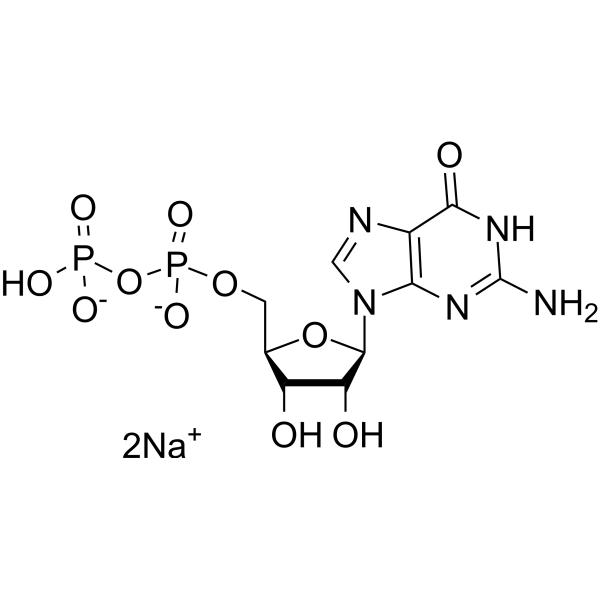
Guanosine 5'-diphosphate disodium salt
Based on 2 publication(s) in Google Scholar
Guanosine 5'-diphosphate (GDP) disodium salt, a purine nucleoside diphosphate, is interconverted to guanosine by the action of exonucleotidase and phosphorylation of nucleoside to guanine. Guanosine 5'-diphosphate disodium salt activates adenosine 5'-triphosphate-sensitive K+ channel and is used to study the kinetics and characteristics of GTPases such as those associated with G-protein coupled receptors (GPCR). Guanosine 5'-diphosphate disodium salt is a potential iron mobilizer, which prevents the Hepcidin (HY-P70400)-ferroportin interaction and modulates the interleukin-6 (IL-6)/stat-3 pathway. Elevated levels of guanosine 5’-diphosphate are associated with the pathogenesis of neurological diseases. Guanosine 5'-diphosphate disodium salt is promising for the research of inflammation, such as anemia of inflammation (AI).
For research use only. We do not sell to patients.
- Purity : 96.42%
- CAS No.: 7415-69-2
- Formula: C10H13N5Na2O11P2
- Molecular Weight:487.16
-
Storage:
-20°C, sealed storage, away from moisture
* In solvent : -80°C, 6 months; -20°C, 1 month (sealed storage, away from moisture)

To place orders, for customer services and technical support, please contact: MedChemExpress USA
Tel: 609-228-6898 E-mail: [email protected] [email protected]


-
 Biological Activity
-
Chemical Information
-
Solvent & Solubility
- Protocols
- Purity & Documentation
- References
-
 Help & FAQs


-
HY-W010737
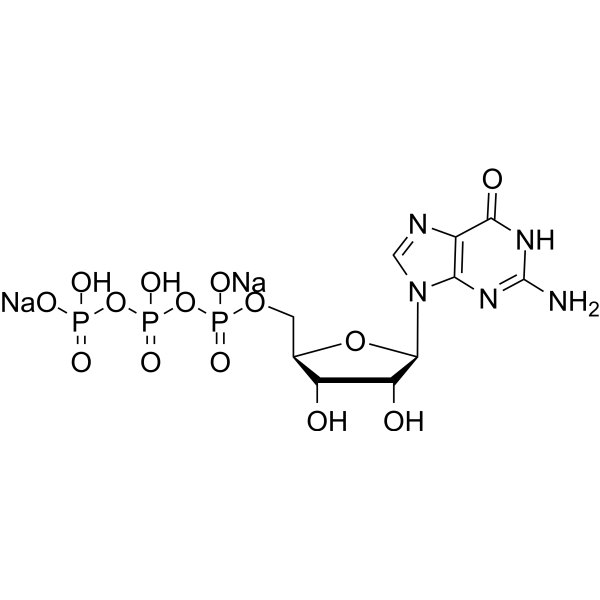
Guanosine triphosphate disodiumCellular Metabolism Regulator -
HY-W010918
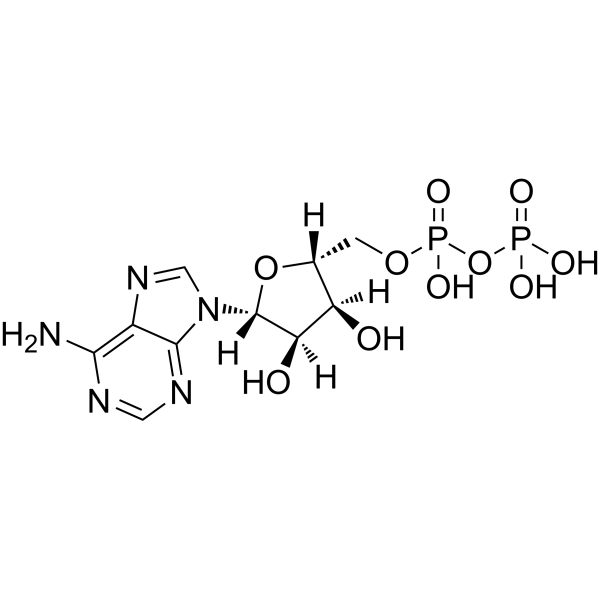
Adenosine 5'-diphosphate -
HY-A0181
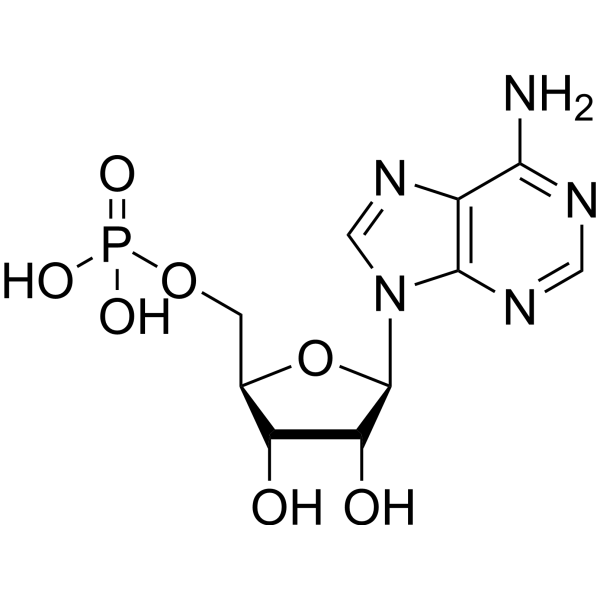
Adenosine monophosphateAdenosine A1 Receptor Agonist -
HY-N5134
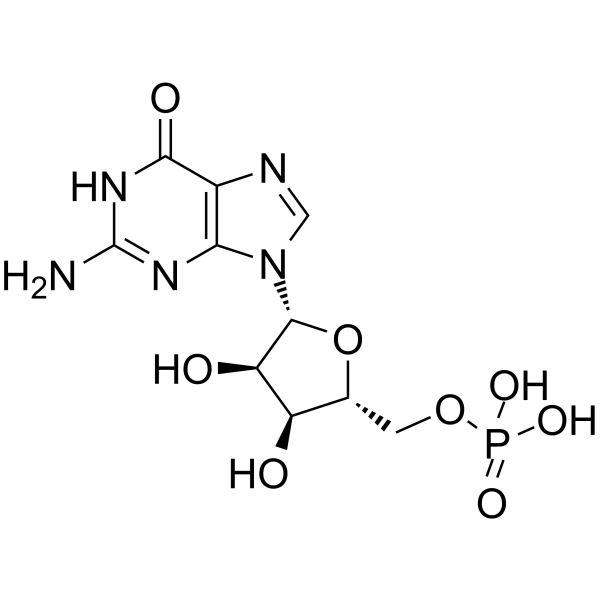
5'-Guanylic acidNucleotide -
HY-B0345A
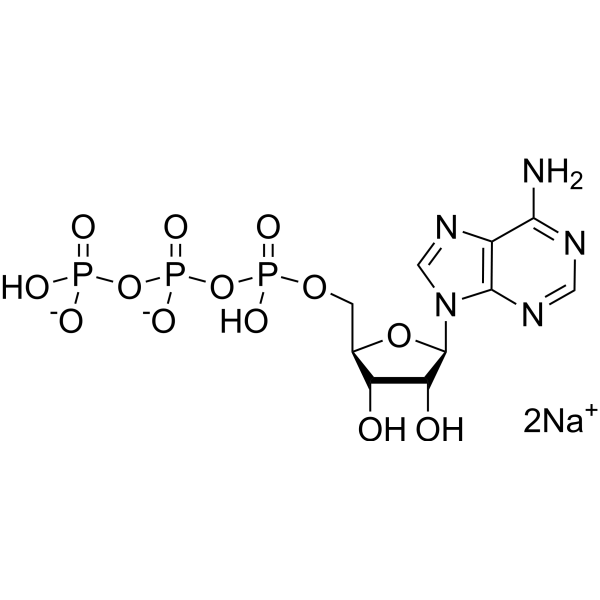
ATP disodium saltEndogenous Metabolite -
HY-12695
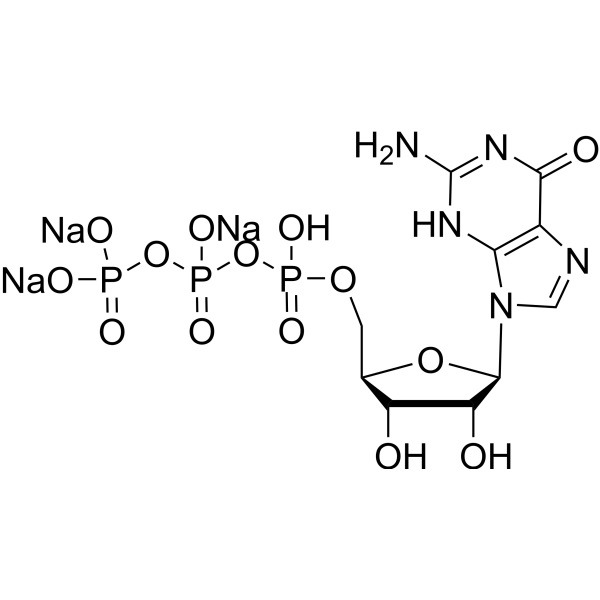
Guanosine triphosphate trisodiumCellular Metabolism Regulator -
HY-101981
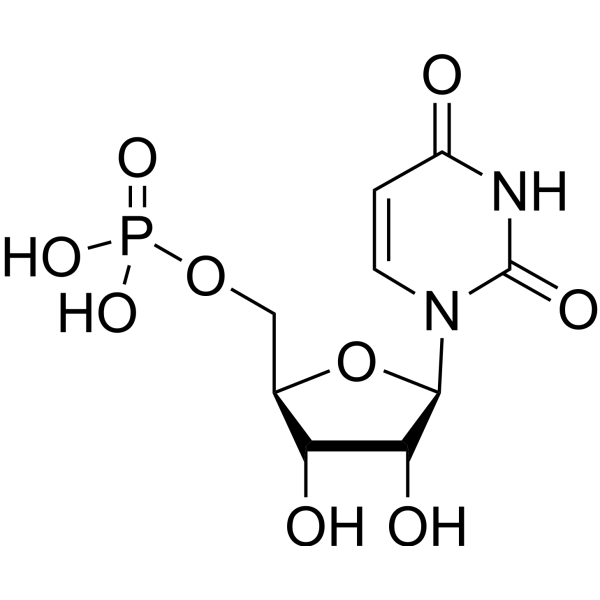
Uridine 5'-monophosphateNucleotide Analogue -
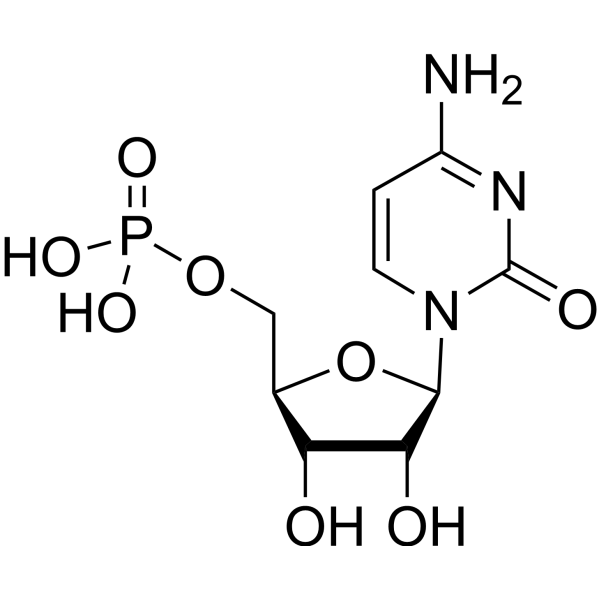
HY-W009162
Cytidine 5'-monophosphateEndogenous Metabolite -

HY-A0181R
Adenosine monophosphate (Standard)Adenosine A1 Receptor Agonist -
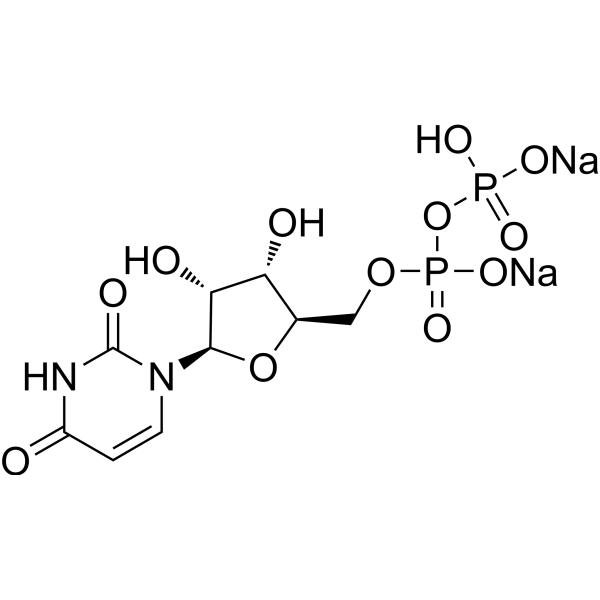
HY-W010832
Uridine-5'-diphosphate disodium saltNucleotide -
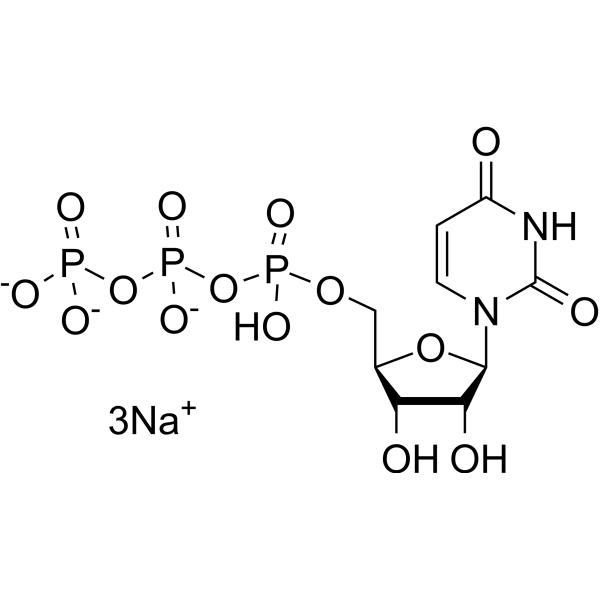
HY-W013093
Uridine triphosphate trisodium saltUTP -
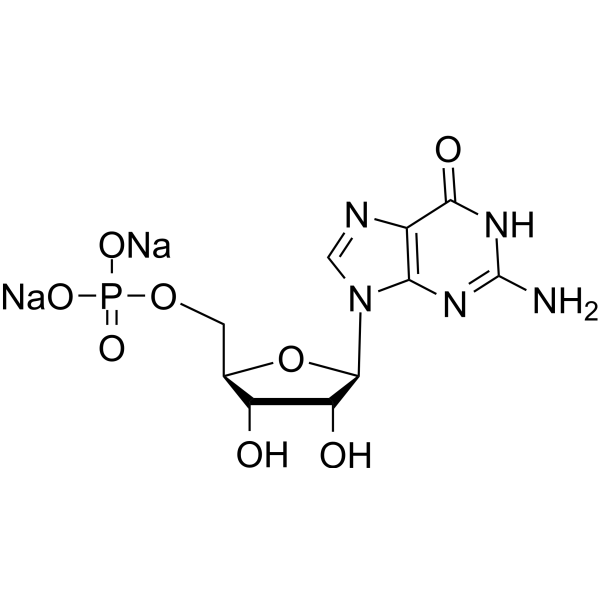
HY-W010970
5'-Guanylic acid disodium saltNucleotide
Publications Citing Use of MedChemExpress (MCE) Guanosine 5'-diphosphate disodium salt
More Customer Validation & Images

-
Bio/Physico-chemical Assay
-
Bio/Physico-chemical Assay
All Endogenous Metabolite Isoforms
More

Biological Activity
Description
IC50 & Target
[2]|
Human Endogenous Metabolite |
In Vitro
Guanosine 5'-diphosphate disodium salt (10 μM, 24 h) prevents Hepcidin (HY-P70400)-induced ferroportin (FPN) internalization with effective cellular iron efflux in HepG2 and Caco-2 cells[2].
MedChemExpress (MCE) has not independently confirmed the accuracy of these methods. They are for reference only. Further protocols information, click here.
-
Cell Line:HepG2, Caco-2 cell
-
Concentration:10 μM
-
Incubation Time:24 h
-
Result:Increased FPN protein level whereas, ferritin protein levels were significantly decreased compared to control.
In Vivo
Guanosine 5'-diphosphate disodium salt (30 mL/kg, i.p., three times a week for two weeks) can improve turpentine-induced inflammatory anemia in mice[1].
MedChemExpress (MCE) has not independently confirmed the accuracy of these methods. They are for reference only.
-
Animal Model:Male BALB/c mice[2].
-
Dosage:30 mL/kg
-
Administration:Intraperitoneal injection (i.p.)
-
Result:Increased hemoglobin levels and serum iron levels in the long-term dosing model.
Decreased Hamp mRNA expression, and spleen iron content was reduced by 46% in the short-term dosing model.


Chemical Information
-
CAS No. 7415-69-2
-
Appearance Solid
-
Molecular Weight 487.16
-
Formula C10H13N5Na2O11P2
-
Color White to off-white
-
SMILES
O[C@H]1[C@@H](O)[C@H](N2C(N=C(N)NC3=O)=C3N=C2)O[C@@H]1COP(OP(O)([O-])=O)([O-])=O.[2Na+]
-
Synonyms
GDP disodium salt
-
Structure Classification
-
Initial Source
-
Shipping
Room temperature in continental US; may vary elsewhere.
-
Storage
-20°C, sealed storage, away from moisture
* In solvent : -80°C, 6 months; -20°C, 1 month (sealed storage, away from moisture)


Publications (2)
-
Journal Impact Factor
-
Most Recent
-
Int J Mol Sci
miR-143-null Is against Diet-Induced Obesity by Promoting BAT Thermogenesis and Inhibiting WAT Adipogenesis. [Abstract]2022 Oct 27;23(21):13058. PMID: 36361843
Guanosine 5'-diphosphate disodium salt purchased from MedChemExpress. Usage Cited in: Int J Mol Sci. 2022 Oct 27;23(21):13058. [Abstract]
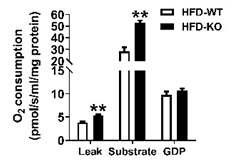
Guanosine diphosphate (2 mM) inhibited the oxygen consumption of mitochondria isolated from BAT of WT and miR-143 KO mice fed HFD for 1 week.
-
Endocrinology
MiR-143 targets SYK to regulate NEFA uptake and contribute to thermogenesis in male mice. [Abstract]2023 Aug 1;164(9):bqad114. PMID: 37486737
Guanosine 5'-diphosphate disodium salt purchased from MedChemExpress. Usage Cited in: Endocrinology. 2023 Aug 1;164(9):bqad114. [Abstract]
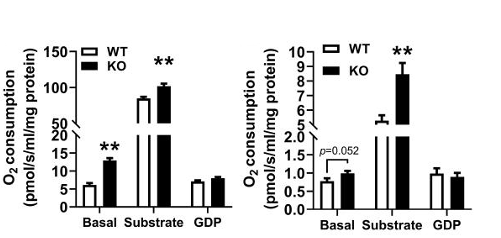
The mitochondrial respiration of BAT (left) and scWAT (right) was significantly increased at both basal and substrate-induced states in MiR-143 KO mice, and this increase was diminished by guanosine diphosphate (2 mM).


Solvent & Solubility
In Vitro:
H2O : 100 mg/mL (205.27 mM; Need ultrasonic)
Please refer to the solubility information to select the appropriate solvent. Once prepared, please aliquot and store the solution to prevent product inactivation from repeated freeze-thaw cycles.
Storage method and period of stock solution: -80°C, 6 months; -20°C, 1 month (sealed storage, away from moisture). When stored at -80°C, please use it within 6 months. When stored at -20°C, please use it within 1 month.
* Note: If you choose water as the stock solution, please dilute it to the working solution, then filter and sterilize it with a 0.22 μm filter before use.
Please refer to the solubility information to select the appropriate solvent. Once prepared, please aliquot and store the solution to prevent product inactivation from repeated freeze-thaw cycles.
Storage method and period of stock solution: -80°C, 6 months; -20°C, 1 month (sealed storage, away from moisture). When stored at -80°C, please use it within 6 months. When stored at -20°C, please use it within 1 month.
* Note: If you choose water as the stock solution, please dilute it to the working solution, then filter and sterilize it with a 0.22 μm filter before use.
Concentration (start) × Volume (start) = Concentration (final) × Volume (final)
In Vivo:
For the following dissolution methods, please prepare the working solution directly:
It is recommended to prepare fresh solutions and use them promptly within a short period of time.
The percentages shown for the solvents indicate their volumetric ratio in the final prepared solution. If precipitation or phase separation occurs during preparation, heat and/or sonication can be used to aid dissolution.
Add each solvent one by one: PBS
Solubility: 100 mg/mL (205.27 mM); Clear solution; Need ultrasonic

Protocols
-
Kinase activity and phosphorylation assays
Kinase activity assays measure the ability of kinases to transfer phosphate groups from ATP to specific substrates, while phosphorylation assays detect the presence and levels of phosphorylated proteins. Common methods include radiolabeled ATP incorporation (e. g. ,), ADP release detection via bioluminescence (e. g. ,[3]), enzyme-linked immunosorbent assays (ELISA) for phospho-specific epitopes (e. g. ,[6]), and microtiter-based formats for high-throughput screening (e. g. ,[8]). The ADP-Glo assay quantifies kinase activity by measuring ADP produced during phosphorylation using a luciferase-based system. Radiometric assays involve autoradiography or scintillation counting after incorporation of 32P-labeled ATP into substrate proteins. ELISA-based approaches rely on phospho-specific antibodies to detect activated kinases in cell lysates or purified samples.
-
Western Blot
Western blotting (WB) is a commonly used experimental method in molecular biology, biochemistry, and immunogenetics for identifying and quantifying target proteins. It combines gel electrophoresis with immunoassay, enabling researchers to analyze protein expression, post-translational modifications, and molecular weight.
-
Protocol for Kinase activity and phosphorylation assays
Kinase activity assays measure transfer of phosphate from ATP to a protein or peptide substrate, generating phosphorylated substrate, ADP, or incorporated radiolabeled phosphate as the readout; phosphorylation assays measure site-specific phosphorylation in cells or tissues as a proxy for kinase-pathway activation, inhibition, or substrate regulation. Phosphorylation can be detected by phospho-specific Western blot, immunoprecipitation kinase assay, phospho-immunofluorescence, phospho-flow cytometry, luminescent ADP detection, radiolabeled ATP incorporation, or reporter-based pathway assays, and these readouts can be applied to cancer cells, primary neurons, mouse tumors, organoids, inflammatory macrophages, ferroptosis studies, and mitophagy studies when the kinase target is biologically relevant.
-
Research Protocol for Inflammation-related Diseases
The NLRP3 inflammasome is a cytosolic innate immune signaling platform that integrates priming signals and danger-signal activation to promote caspase-1 activation, maturation of IL-1β and IL-18, and gasdermin D-mediated pyroptotic cell death. The core experimental logic is to determine whether inflammatory disease phenotypes are driven by increased NLRP3 expression, ASC-containing inflammasome assembly, caspase-1 cleavage, GSDMD cleavage, and extracellular release of IL-1β/IL-18 rather than by nonspecific cell injury alone. The pathway is strongly linked to inflammation-related disease phenotypes because monosodium urate crystals activate NALP3/NLRP3 inflammasome signaling in gout-like crystal inflammation, cholesterol crystals activate NLRP3 inflammasomes in atherogenesis models, and DSS-induced intestinal inflammation has been reported to involve NLRP3 inflammasome activity. However, experimental colitis studies also show context-dependent protective effects of NLRP3 inflammasome co


Purity & Documentation
-
Data Sheet (279 KB)
-
SDS (393 KB)
- English - EN (393 KB)
- Français - FR (393 KB)
- Deutsch - DE (393 KB)
- Norwegian - NO (393 KB)
- Español - ES (393 KB)
- Swedish - SV (393 KB)
- Italian - IT (393 KB)
- Korean - KR (393 KB)
- Portuguese - PT (393 KB)
-
Handling Instructions (2659 KB)
References
[1]. S Kajioka, et al. Guanosine diphosphate activates an adenosine 5'-triphosphate-sensitive K+ channel in the rabbit portal vein. J Physiol. 1991 Dec;444:397-418. [Content Brief]
[2]. Angmo S, et al. Identification of Guanosine 5'-diphosphate as Potential Iron Mobilizer: Preventing the Hepcidin-Ferroportin Interaction and Modulating the Interleukin-6/Stat-3 Pathway. Sci Rep. 2017 Jan 5;7:40097. [Content Brief]
[3]. Ciruela F. Guanosine behind the scene. J Neurochem. 2013 Aug;126(4):425-7. [Content Brief]
[4]. Raj GV, et al. Guanosine phosphate binding protein coupled receptors in prostate cancer: a review. J Urol. 2002 Mar;167(3):1458-63. [Content Brief]


Complete Stock Solution Preparation Table
Please refer to the solubility information to select the appropriate solvent. Once prepared, please aliquot and store the solution to prevent product inactivation from repeated freeze-thaw cycles.
Storage method and period of stock solution: -80°C, 6 months; -20°C, 1 month (sealed storage, away from moisture). When stored at -80°C, please use it within 6 months. When stored at -20°C, please use it within 1 month.
| Optional Solvent | Concentration Solvent Mass | 1 mg | 5 mg | 10 mg | 25 mg |
|---|---|---|---|---|---|
| H2O | 1 mM | 2.0527 mL | 10.2636 mL | 20.5271 mL | 51.3178 mL |
| 5 mM | 0.4105 mL | 2.0527 mL | 4.1054 mL | 10.2636 mL | |
| 10 mM | 0.2053 mL | 1.0264 mL | 2.0527 mL | 5.1318 mL | |
| 15 mM | 0.1368 mL | 0.6842 mL | 1.3685 mL | 3.4212 mL | |
| 20 mM | 0.1026 mL | 0.5132 mL | 1.0264 mL | 2.5659 mL | |
| 25 mM | 0.0821 mL | 0.4105 mL | 0.8211 mL | 2.0527 mL | |
| 30 mM | 0.0684 mL | 0.3421 mL | 0.6842 mL | 1.7106 mL | |
| 40 mM | 0.0513 mL | 0.2566 mL | 0.5132 mL | 1.2829 mL | |
| 50 mM | 0.0411 mL | 0.2053 mL | 0.4105 mL | 1.0264 mL | |
| 60 mM | 0.0342 mL | 0.1711 mL | 0.3421 mL | 0.8553 mL | |
| 80 mM | 0.0257 mL | 0.1283 mL | 0.2566 mL | 0.6415 mL | |
| 100 mM | 0.0205 mL | 0.1026 mL | 0.2053 mL | 0.5132 mL |
* Note: If you choose water as the stock solution, please dilute it to the working solution, then filter and sterilize it with a 0.22 μm filter before use.


Guanosine 5'-diphosphate disodium salt Related Classifications
HY-113066A Related Classifications
 Powered by Bioz