



HSA Protein
Based on 5 publication(s) in Google Scholar
HSA Protein (Human serum albumin) is the most abundant protein in plasma and is a major determinant of plasma oncotic pressure. HSA Protein exhibits antioxidant, anticoagulant, anti-inflammatory, anti-platelet aggregation activities as well as colloid osmotic action. HSA Protein can block the inhibitory effect of GML on human T cells, providing protective function for T cells. HSA Protein is also associated with cardiovascular diseases and can partially prevent the LPS (HY-D1056) induced oxidative stress, as well as the upregulation of NF-κB, NF-κB, and peroxynitrite (ONOO-) in the vascular wall, contributing to the reduction of blood pressure.
This product is recombinant HSA Protein expressed in a microbial expression system.
For research use only. We do not sell to patients.
- Purity : 99.9%
- CAS No.: 70024-90-7
-
Storage:
Please store the product under the recommended conditions in the Certificate of Analysis.


To place orders, for customer services and technical support, please contact: MedChemExpress USA
Tel: 609-228-6898 E-mail: [email protected] [email protected]


-
 Biological Activity
-
Chemical Information
-
Solvent & Solubility
- Protocols
- Purity & Documentation
- References
-
 Help & FAQs


-

HY-D0842
BSA ProteinGlobular Protein -

HY-P1956A
HSA Protein (Cell culture grade, Endotoxin<0.125 EU/mg)Plasma Protein -

HY-W250978
OvalbuminsAllergen -

HY-D0842A
BSA Protein (Low Endotoxin,Fatty acid free)Oligonucleotide-binding Protein -

HY-NP002B
RSA Protein (Rabbit)Serum Albumin -
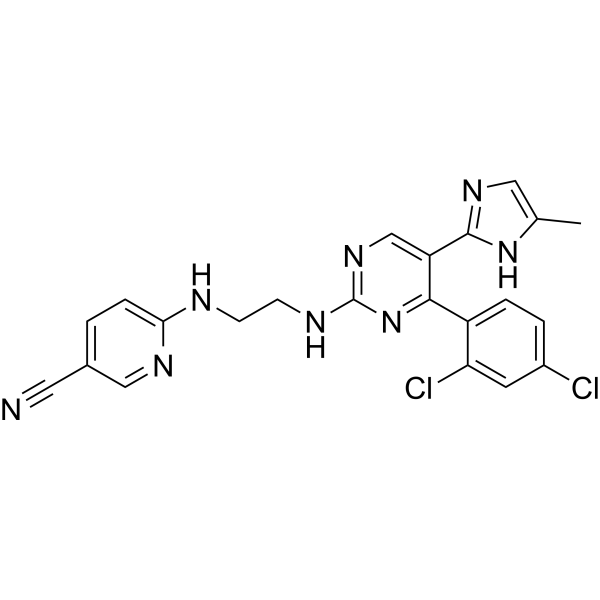
HY-10182
LaduviglusibGSK-3 Inhibitor -
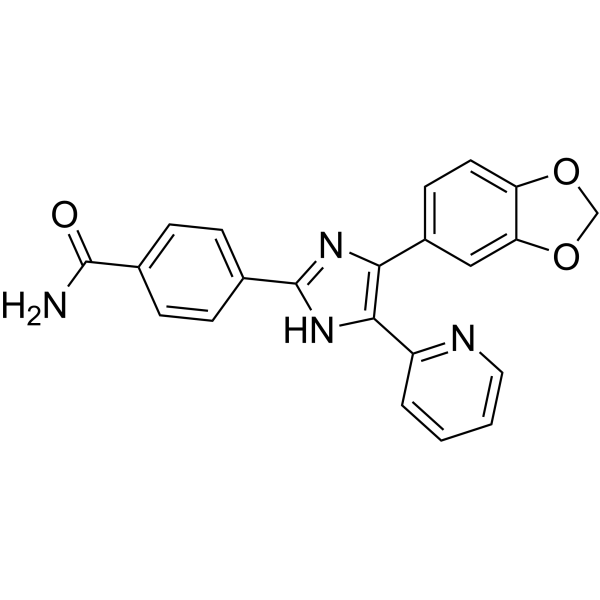
HY-10431
SB-431542TGF-β Receptor Kinase Inhibitor -
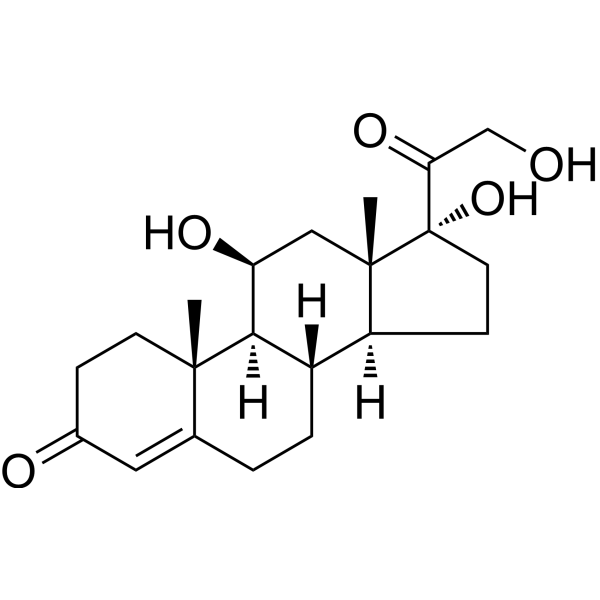
HY-N0583
HydrocortisoneGlucocorticoid Receptor Agonist -
HY-K0010
Protease Inhibitor Cocktail (EDTA-Free, 100× in DMSO) -
HY-B0633A
Hyaluronic acidGlycosaminoglycan -
HY-15141
StaurosporinePKC/PKA Inhibitor -
HY-N1132
D-(+)-TrehaloseDisaccharide
Publications Citing Use of MedChemExpress (MCE) HSA Protein
More Customer Validation & Images

-
Bio/Physico-chemical Assay


Biological Activity
Description
This product is recombinant HSA Protein expressed in a microbial expression system.
IC50 & Target
|
iNOS |
In Vitro
HSA Protein (5 μM, 0-90 minutes) can bind with Glycerol Monolaurate (GML), with a Kd value of 1.4 μM. HSA can prevent the ability of GML to inhibit human T cells and protect the function of T cells[3].
HSA Protein (0.01, 0.05, 0.1 μM, 0-24 h) alleviates the GML-induced phosphorylation of AKT at threonine 308 and serine 473 residues as well as the formation of LAT, PLC-γ1, and AKT microclusters, and restores the production of IFN-γ, IL-2, IL-10, and TNF-α in GML-treated cells[3].
MedChemExpress (MCE) has not independently confirmed the accuracy of these methods. They are for reference only. Further protocols information, click here.
-
Cell Line:Activate peripheral blood T cells
-
Concentration:0.05 μM
-
Incubation Time:0, 2, 5, 15 min
-
Result:Affected the ability of GML to inhibit AKT phosphorylation.
-
Cell Line:Activate peripheral blood T cells
-
Concentration:0.1, 0.05, 0.005 μM
-
Incubation Time:24h
-
Result:Restored the production of IFN-γ, IL-2, IL-10, and TNF-α in GML treated cells.
In Vivo
HSA Protein (10 ml/kg; Intravenous injection; Once at 1 hour and once at 5 hours; twice) in a Male Swiss mouse model completely prevented endotoxin-induced reduced vascular response to phenol catecholamines, electromyotonia, and endothelial dysfunction, and reduced inflammatory processes leading to oxidative and nitrite stress and reduced vascular reactivity[4].
MedChemExpress (MCE) has not independently confirmed the accuracy of these methods. They are for reference only.
-
Animal Model:Male Swiss mouse models[4]
-
Dosage:10 ml/kg; Once at 1 hour and once at 5 hours; twice
-
Administration:HSA: Intravenous injection; LPS: Intraperitoneal injection (i.p.), 50 mg/kg
-
Result:Prevented LPS-induced tissue NO overproduction and increased iNOS expression.
Was effective in reducing LPS-induced oxidative stress.
Alleviated this LPS-induced oxidative stress and inhibited the formation of peroxynitrite (ONOO−).
Reduced LPS-induced upregulation of NF-κB.
Clinical Trial
| NCT Number | Sponsor | Condition | Start Date |
Phase

|
|---|---|---|---|---|
| NCT01329991 | Plexxikon| | 2011-05 | PHASE1 |


Chemical Information
-
CAS No. 70024-90-7
-
Appearance Solid
-
Color White to light yellow
-
SMILES
[Human serum albumin]
-
Synonyms
Human serum albumin
-
Shipping
Room temperature in continental US; may vary elsewhere.
-
Storage
Please store the product under the recommended conditions in the Certificate of Analysis.


Publications (5)
-
Journal Impact Factor
-
Most Recent
-
J Nanobiotechnology
RGD-HSA-TAC nanoparticles targeted delivery of tacrolimus and attenuation of podocyte injury in diabetic kidney disease. [Abstract]2025 Feb 4;23(1):81. PMID: 39905421 -
Cell Rep
Mitochondrial nucleoid condensates drive peripheral fission through high membrane curvature. [Abstract]2023 Nov 23;42(12):113472. PMID: 37999975
HSA Protein purchased from MedChemExpress. Usage Cited in: Cell Rep. 2023 Nov 23;42(12):113472. [Abstract]
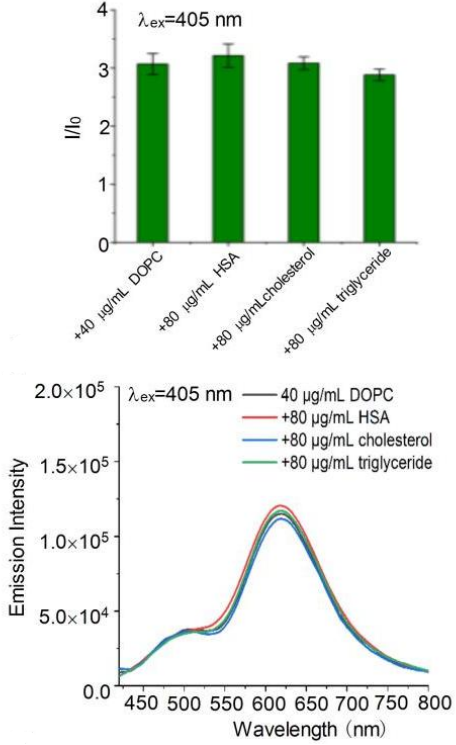
The fluorescent response of mtGLP to cholesterol, triglyceride and Human serum albumin (HSA). Emission spectra of mtGLP to DOPC (40 μg/mL) in the presence of HSA (80 μg/mL), cholesterol(80μg/mL) and triglyceride (80 μg/mL) in 10.0 mM Tris-HCl buffer (pH 7.4,100.0 mMK+) with excitationatλex=405 nm.
-
Anal Chem
Rational Design of Nonmetal Material Self-Mediated Electron Transfer-Based Electrochemiluminescence Sensing Platform and Its Application. [Abstract]2025 Nov 25;97(46):25803-25809. PMID: 41233168 -
Biomed Mater
Multi-channel microfluidic chip with bilateral stripe for reconstruction of tissue barrier models in vitro. [Abstract]2026 Jun 4;21(3). PMID: 42173142 -


Solvent & Solubility
In Vitro:
H2O : ≥ 100 mg/mL
* "≥" means soluble, but saturation unknown.

Protocols
-
RNA extraction experimental
By lysing cells, releasing RNA, and removing impurities such as proteins and DNA, high-purity RNA products are finally obtained. The commonly used traditional method is the guanidine isothiocyanate/phenol/chloroform method (Trizol), which is suitable for a variety of animal materials including animal tissues, microorganisms, cultured cells, etc., and most plant materials.
-
ROS/oxidative-stress fluorescent staining
ROS/oxidative-stress fluorescent staining uses cell-permeant fluorogenic probes that become fluorescent after oxidation inside cells or tissues; commonly used examples include DCFH-DA/DCFDA for broad cellular oxidant detection, DHE for superoxide-related signal detection, MitoSOX for mitochondrial superoxide-related signal detection, and CellROX probes for oxidative-stress-associated fluorescence readouts. The assay detects probe oxidation rather than a single ROS species unless the probe and analysis method have been chemically validated for that species. DCFH-DA enters cells, is deacetylated by intracellular esterases to DCFH, and produces fluorescent DCF after oxidation, so the readout is used as an operational measure of total cellular oxidative stress rather than a species-specific ROS measurement. DHE and MitoSOX can report superoxide-related oxidation, but red fluorescence alone can include non-specific ethidium-like oxidation products; HPLC or optimized spectral approaches are
-
Research Protocol for Inflammation-related Diseases
The NLRP3 inflammasome is a cytosolic innate immune signaling platform that integrates priming signals and danger-signal activation to promote caspase-1 activation, maturation of IL-1β and IL-18, and gasdermin D-mediated pyroptotic cell death. The core experimental logic is to determine whether inflammatory disease phenotypes are driven by increased NLRP3 expression, ASC-containing inflammasome assembly, caspase-1 cleavage, GSDMD cleavage, and extracellular release of IL-1β/IL-18 rather than by nonspecific cell injury alone. The pathway is strongly linked to inflammation-related disease phenotypes because monosodium urate crystals activate NALP3/NLRP3 inflammasome signaling in gout-like crystal inflammation, cholesterol crystals activate NLRP3 inflammasomes in atherogenesis models, and DSS-induced intestinal inflammation has been reported to involve NLRP3 inflammasome activity. However, experimental colitis studies also show context-dependent protective effects of NLRP3 inflammasome co


Purity & Documentation
-
Data Sheet (275 KB)
-
SDS (393 KB)
- English - EN (393 KB)
- Français - FR (393 KB)
- Deutsch - DE (393 KB)
- Norwegian - NO (393 KB)
- Español - ES (393 KB)
- Swedish - SV (393 KB)
- Italian - IT (393 KB)
- Korean - KR (393 KB)
- Portuguese - PT (393 KB)
-
Handling Instructions (2659 KB)
References
[1]. Arques S. Human serum albumin in cardiovascular diseases. Eur J Intern Med. 2018 Jun;52:8-12. [Content Brief]
[2]. Fanali G, et al. Human serum albumin: from bench to bedside. Mol Aspects Med. 2012 Jun;33(3):209-90. [Content Brief]
[3]. Zhang MS, et al. Human Serum Albumin (HSA) Suppresses the Effects of Glycerol Monolaurate (GML) on Human T Cell Activation and Function. PLoS One. 2016;11(10):e0165083. Published 2016 Oct 20. [Content Brief]
[4]. Meziani F, et al. Human serum albumin improves arterial dysfunction during early resuscitation in mouse endotoxic model via reduced oxidative and nitrosative stresses. Am J Pathol. 2007;171(6):1753-1761. [Content Brief]

Calculators
Concentration (start) × Volume (start) = Concentration (final) × Volume (final)


HSA Protein Related Classifications
HY-P1956 Related Classifications
 Powered by Bioz