



Insulin glargine
Based on 1 publication(s) in Google Scholar
Insulin glargine is a long-acting insulin analog. Insulin glargine has the effect of lowering blood sugar and can be used in the research of diabetes. In addition, high doses of Insulin glargine can promote the proliferation of bladder cancer cells.
For research use only. We do not sell to patients.
- Purity : 95%
- CAS No.: 160337-95-1
- Formula: C267H404N72O78S6
- Molecular Weight:6062.89
-
Storage:
Please store the product under the recommended conditions in the Certificate of Analysis.

To place orders, for customer services and technical support, please contact: MedChemExpress USA
Tel: 609-228-6898 E-mail: [email protected] [email protected]


-
 Biological Activity
-
Chemical Information
- Protocols
- Purity & Documentation
- References
-
 Help & FAQs


-

HY-108743
Insulin degludecInsulin Analogue -

HY-109555
Insulin glulisineInsulin Analog -
HY-108767
Insulin asparth-Insulin Analog -

HY-P0035
Insulin (human)Recombinant Human Insulin -
HY-10200
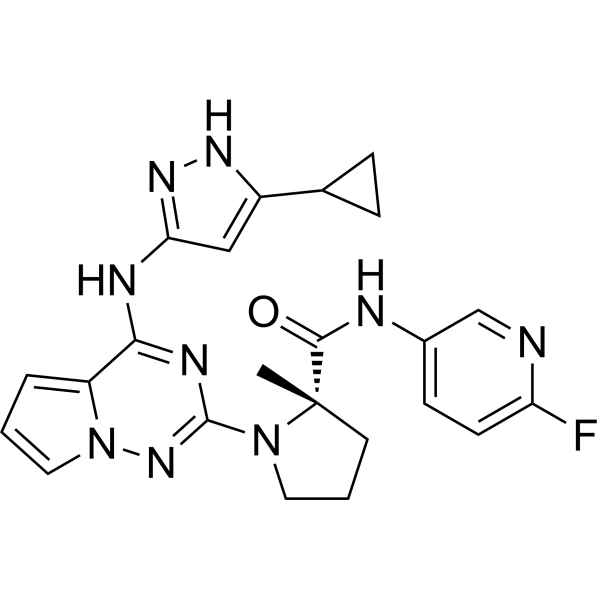
BMS-754807IGF-1R/IR Inhibitor -
HY-109556
Insulin DetemirArtificial Insulin -
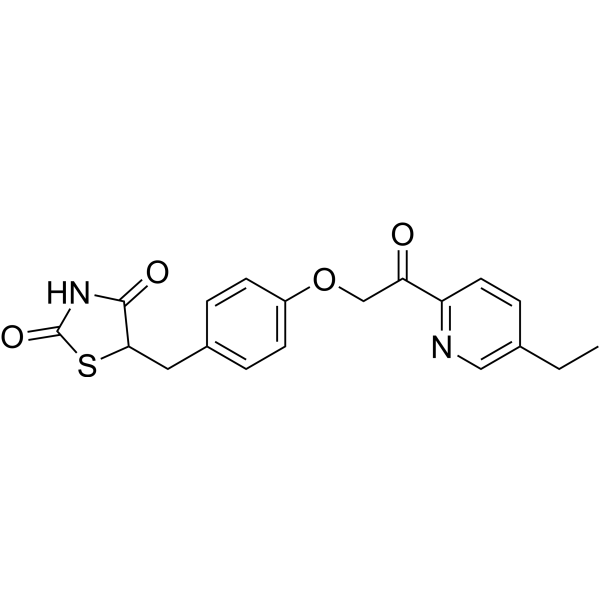
HY-100550
MSDC 0160Insulin Sensitizer -
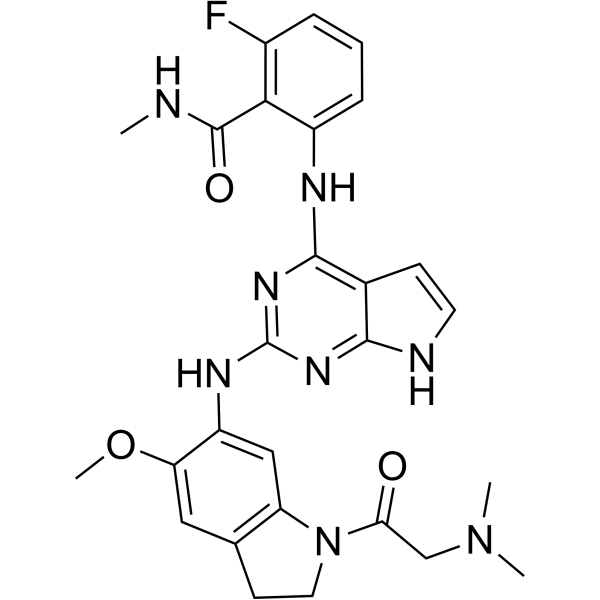
HY-13020
GSK1838705AIGF-1R/Insulin Receptor Inhibitor -
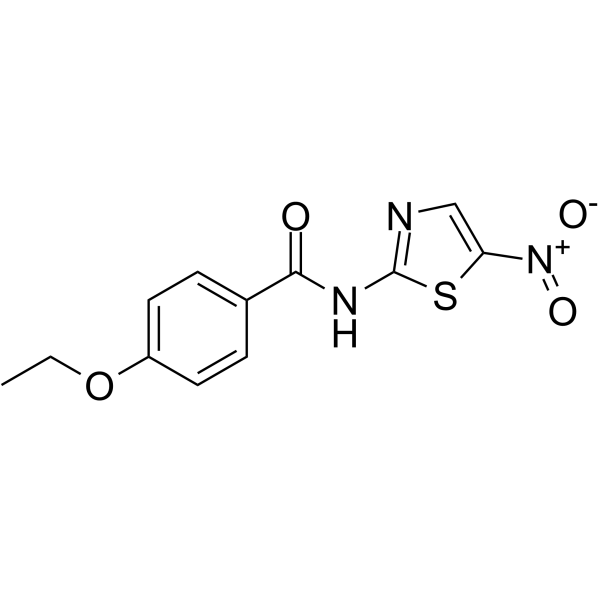
HY-115461
MID-1MG53-IRS-1 Interaction Disruptor -
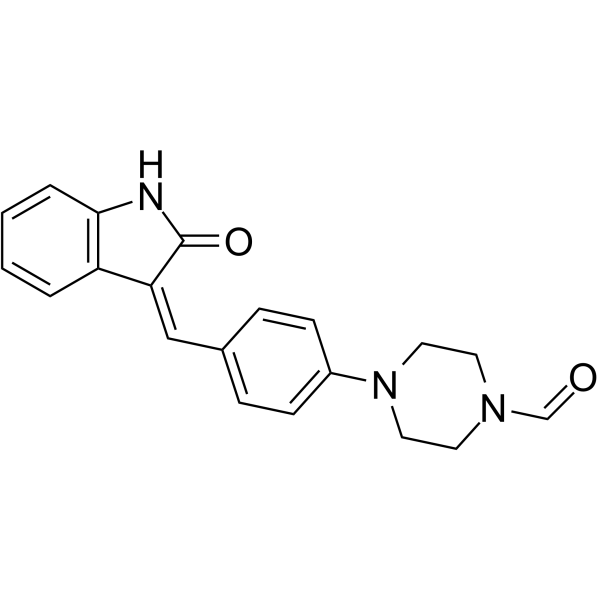
HY-118203
SU4984FGFR1 Inhibitor -
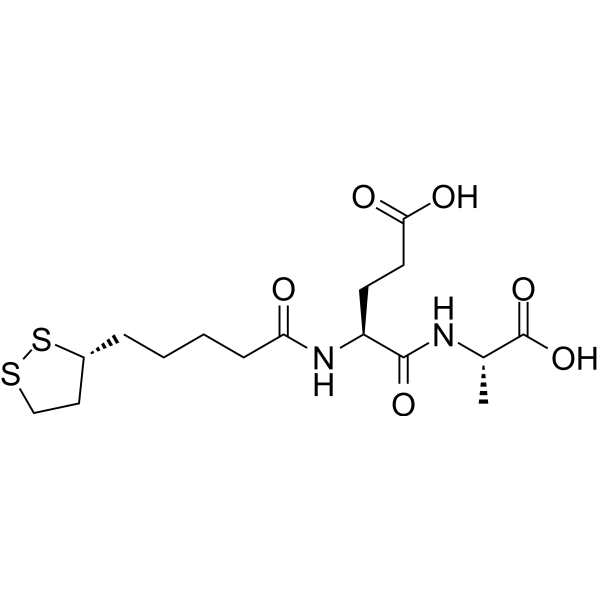
HY-119152
CMX-2043α-Lipoic Acid Analogue -
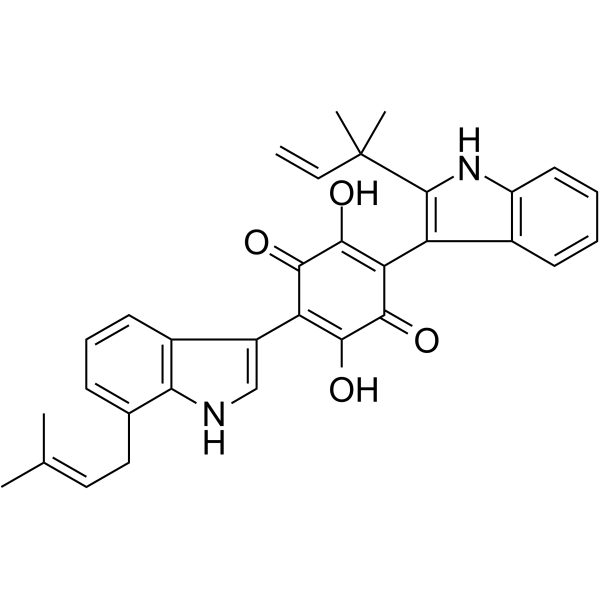
HY-107586
Demethylasterriquinone B1Insulin Receptor Agonist/Akt Activator
Publications Citing Use of MedChemExpress (MCE) Insulin glargine
More

Biological Activity
Description
In Vitro
Insulin glargine (10-100 IU/L; 0-72 h) activates Akt in a PI3K-independent manner, thereby promoting the proliferation of bladder cancer cells[1].
MedChemExpress (MCE) has not independently confirmed the accuracy of these methods. They are for reference only. Further protocols information, click here.
-
Cell Line:T24 bladder cancer cell
-
Concentration:0.1, 1, 10 and 100 IU/L
-
Incubation Time:72 h
-
Result:Promoted T24 cell proliferation at concentrations of 10 IU/L and 100 IU/L.
Did not affect cell proliferation at 0.1 IU/L and 1 IU/L.
In Vivo
Insulin glargine (450 mg/kg; subcutaneous injection; 6 months) has an improving effect in a mouse model of diabetes[3].
MedChemExpress (MCE) has not independently confirmed the accuracy of these methods. They are for reference only.
-
Animal Model:Seven-week-old male db/db mice[3]
-
Dosage:450 mg/kg
-
Administration:Subcutaneous injection (s.c.); 6 months
-
Result:Significantly improved glucose tolerance.
Upregulated pancreatic β-cell functional genes, such as INS1, Pdx1, Pax4 and Pax6.
Clinical Trial
| NCT Number | Sponsor | Condition | Start Date |
Phase

|
|---|---|---|---|---|
| NCT01329991 | Plexxikon| | 2011-05 | PHASE1 |


Chemical Information
-
CAS No. 160337-95-1
-
Appearance Liquid
-
Molecular Weight 6062.89
-
Formula C267H404N72O78S6
-
Color Colorless to light yellow
-
Sequence
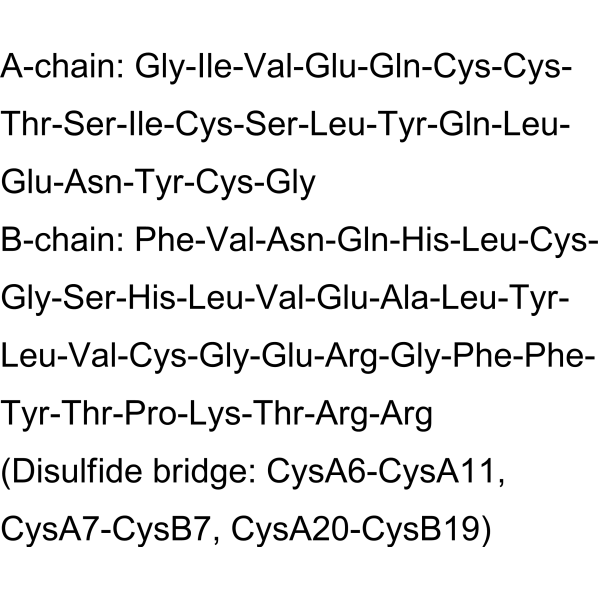
A-chain: Gly-Ile-Val-Glu-Gln-Cys-Cys-Thr-Ser-Ile-Cys-Ser-Leu-Tyr-Gln-Leu-Glu-Asn-Tyr-Cys-Gly; B-chain: Phe-Val-Asn-Gln-His-Leu-Cys-Gly-Ser-His-Leu-Val-Glu-Ala-Leu-Tyr-Leu-Val-Cys-Gly-Glu-Arg-Gly-Phe-Phe-Tyr-Thr-Pro-Lys-Thr-Arg-Arg (Disulfide bridge: CysA6-CysA11, CysA7-CysB7, CysA20-CysB19)
-
Sequence Shortening
A-chain: GIVEQCCTSICSLYQLENYCG; B-chain: FVNQHLCGSHLVEALYLVCGERGFFYTPKTRR (Disulfide bridge: CysA6-CysA11, CysA7-CysB7, CysA20-CysB19)
-
Shipping
Room temperature in continental US; may vary elsewhere.
-
Storage
Please store the product under the recommended conditions in the Certificate of Analysis.


Publications (1)
-
Journal Impact Factor
-
Most Recent
-
Anal Chem
Ultrahigh Flow Regulated Discharge Coupling with Targeted Mass Spectrometry Analysis: Real Time Capturing Biomolecules in Exhaled Breath. [Abstract]2025 May 13;97(18):9827-9835. PMID: 40302637

Protocols
-
Research Protocol for Endocrine Diseases
Endocrine diseases often arise from disrupted hormone production, hormone signaling, or target-tissue responsiveness; for diabetes-focused endocrine disease models, insulin signaling regulates glucose uptake, hepatic glucose output, lipid metabolism, and β-cell compensation. Type 2 diabetes develops through interacting defects in insulin resistance, β-cell dysfunction, adipose inflammation, hepatic glucose overproduction, altered incretin signaling, and ectopic lipid metabolism. A major unresolved question is whether endocrine dysfunction is driven primarily by target-tissue insulin resistance, intrinsic β-cell failure, immune/inflammatory stress, or combined multi-organ failure that differs by disease stage.
-
Research Protocol for Metabolic Diseases
AMP-activated protein kinase, AMPK, is a conserved cellular energy sensor that responds to reduced cellular energy status and coordinates metabolism by increasing ATP-generating catabolic pathways while suppressing ATP-consuming anabolic processes. In metabolic disease research, the AMPK pathway is experimentally relevant because it regulates hepatic lipid synthesis, fatty acid oxidation, glucose production, skeletal-muscle glucose disposal, mTORC1-linked biosynthesis, autophagy, mitochondrial homeostasis, and whole-body energy balance. The central pathway logic is that energy stress, metformin, exercise-like stimulation, or direct AMPK activators increase AMPKα Thr172 phosphorylation and downstream substrate phosphorylation, including ACC and RAPTOR. Phosphorylation of ACC suppresses lipogenesis and supports fatty acid oxidation, whereas phosphorylation of RAPTOR suppresses mTORC1 signaling and links cellular energy status to growth and protein synthesis control. The pathway is linked
-
Cell Viability Determination by MTT Colorimetric Assay
The following protocol uses the MTT colorimetric assay as a classic literature-established method for assessing cell viability/metabolic activity in cultured mammalian cells. MTT[3-(4,5-dimethylthiazol-2-yl)-2,5-diphenyltetrazolium bromide] is reduced by metabolically active cells to a colored formazan product; the amount of formazan is quantified spectrophotometrically and provides an indirect measure of metabolically active viable cells. Importantly, MTT reduction reflects cellular oxidoreductase/metabolic activity rather than an absolute direct count of living cells, so changes in cellular metabolism can alter the signal independently of cell number.


Purity & Documentation
-
Data Sheet (335 KB)
-
SDS (419 KB)
- English - EN (419 KB)
- Français - FR (419 KB)
- Deutsch - DE (419 KB)
- Norwegian - NO (419 KB)
- Español - ES (419 KB)
- Swedish - SV (419 KB)
- Italian - IT (419 KB)
- Korean - KR (419 KB)
- Portuguese - PT (419 KB)
-
Handling Instructions (2659 KB)
References
[1]. Liu S, et al. High dose human insulin and insulin glargine promote T24 bladder cancer cell proliferation via PI3K-independent activation of Akt. Diabetes Res Clin Pract. 2011 Feb;91(2):177-82. [Content Brief]
[2]. Stammberger I, et al. Evaluation of the carcinogenic potential of insulin glargine (LANTUS) in rats and mice. Int J Toxicol. 2002 May-Jun;21(3):171-9. [Content Brief]
[3]. Li Y, et al. Comparative Study of Liraglutide and Insulin Glargine on Glycemic Control and Pancreatic β-Cell Function in db/db Mice. Med Sci Monit. 2018 May 19;24:3293-3300. [Content Brief]
[4]. Hwang HG, et al. Recombinant Glargine Insulin Production Process Using Escherichia coli. J Microbiol Biotechnol. 2016;26(10):1781-1789. [Content Brief]

Calculators
Concentration (start) × Volume (start) = Concentration (final) × Volume (final)


Insulin glargine Related Classifications
HY-108719 Related Classifications
 Powered by Bioz