



IT-901
Based on 2 publication(s) in Google Scholar
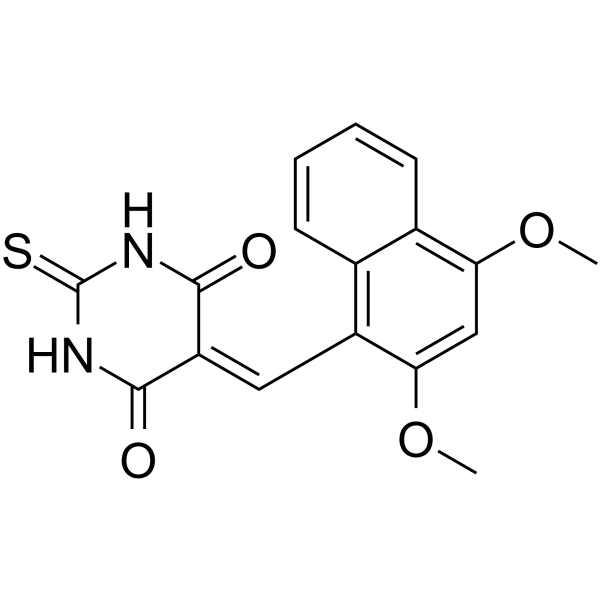
IT-901 is an orally active and potent NF-κB subunit c-Rel inhibitor with an IC50 of 0.1 μM, 3 μM for NF-κB DNA binding and c-Rel DNA binding, respectively. IT-901, a bioactive naphthalenethiobarbiturate derivative, has the potential for human lymphoid tumors and ameliorate graft-versus-host disease (GVHD).
For research use only. We do not sell to patients.
- Purity : 99.32%
- CAS No.: 1584121-99-2
- Formula: C17H14N2O4S
- Molecular Weight:342.37
-
Storage:Powder -20°C, 3 years ; In solvent -80°C, 6 months , -20°C, 1 month

To place orders, for customer services and technical support, please contact: MedChemExpress USA
Tel: 609-228-6898 E-mail: [email protected] [email protected]


-
 Biological Activity
-
Chemical Information
-
Solvent & Solubility
- Protocols
- Purity & Documentation
- References
-
 Help & FAQs


-
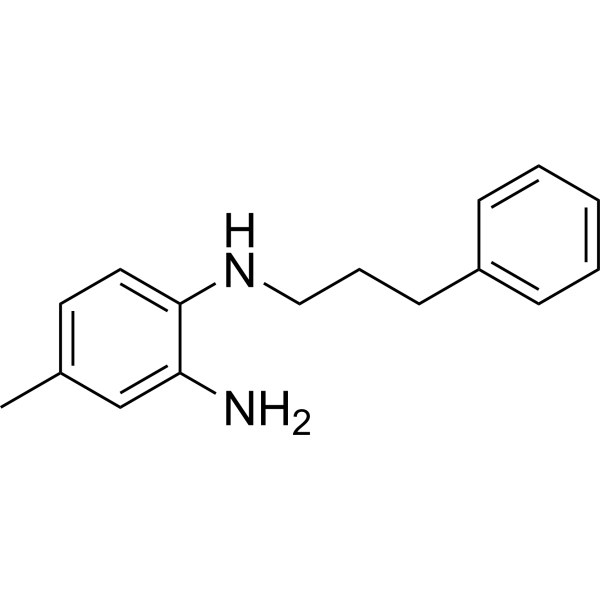
HY-13982
JSH-23NF-κB Inhibitor -
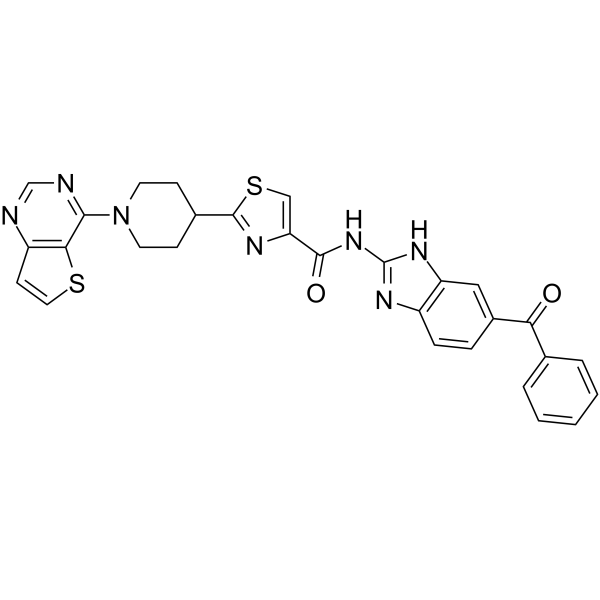
HY-10496
SC75741NF-κB Inhibitor -

HY-P3229
SN52NF-κB2 Inhibitor -
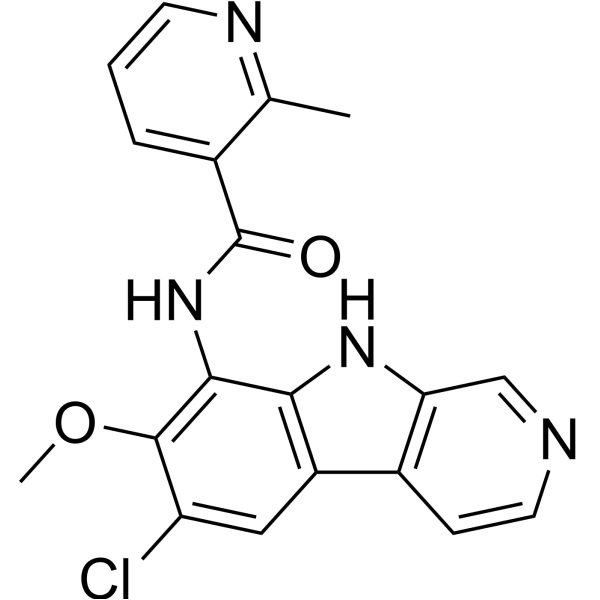
HY-15473
MLN120BIKKβ Inhibitor -
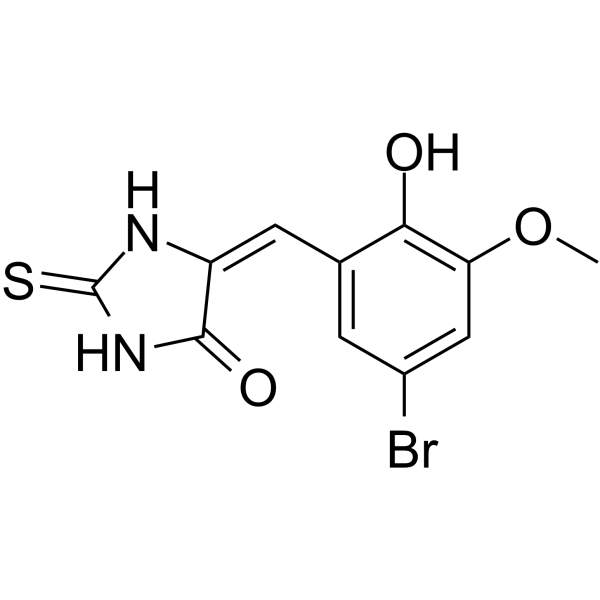
HY-121508
(E/Z)-IT-603IĸBα/c-Rel Inhibitor -
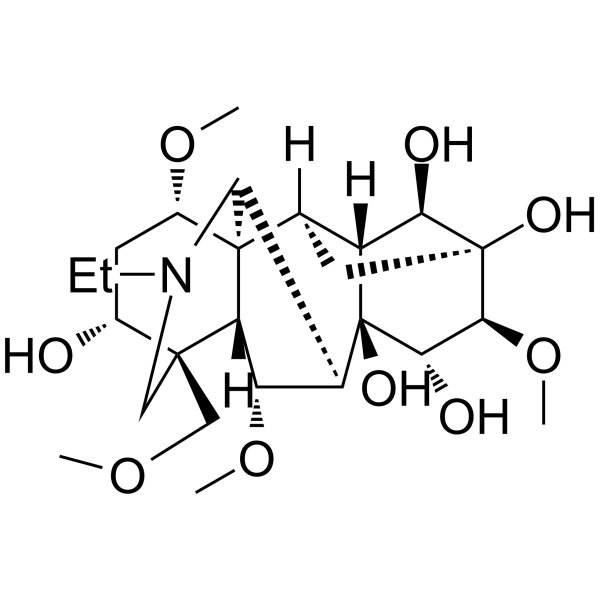
HY-N0277
AconineNF-κB Inhibitor -
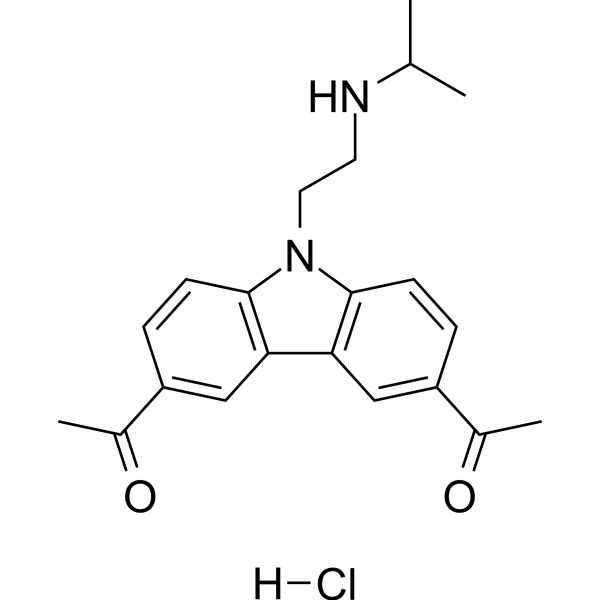
HY-18935A
CBL0137 hydrochlorideNF-κB Inhibitor -

HY-13982R
JSH-23 (Standard)NF-κB Inhibitor -
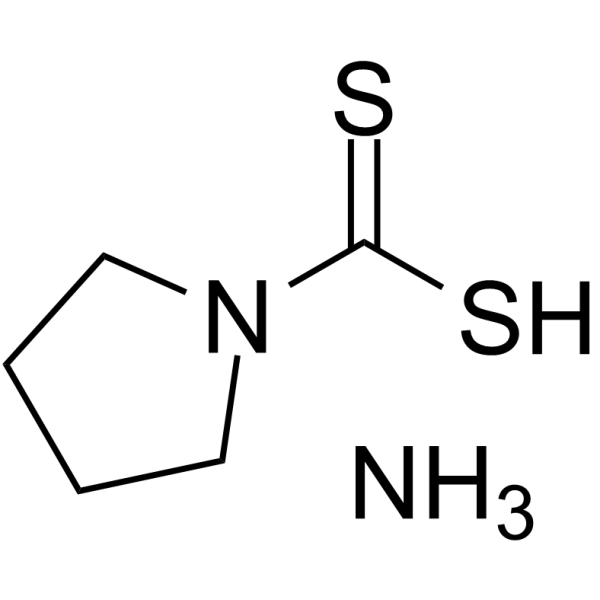
HY-18738
Pyrrolidinedithiocarbamate ammoniumSelective NF-κB Inhibitor -
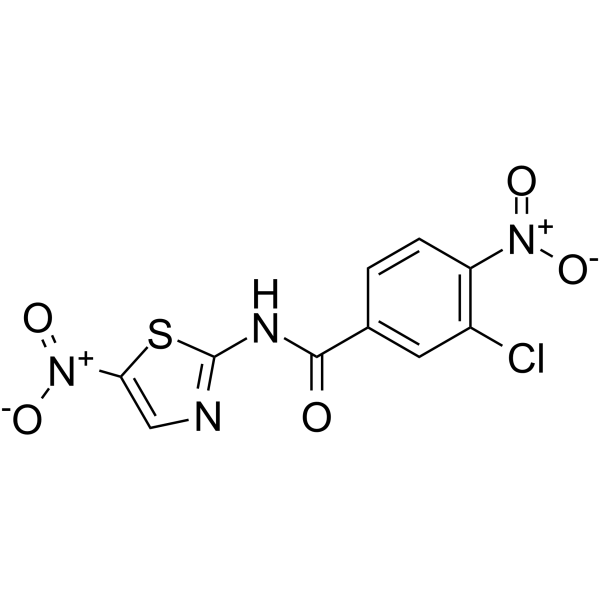
HY-116626
SM-7368NF-κB Inhibitor -

HY-P9958
DenosumabRANKL Inhibitor -
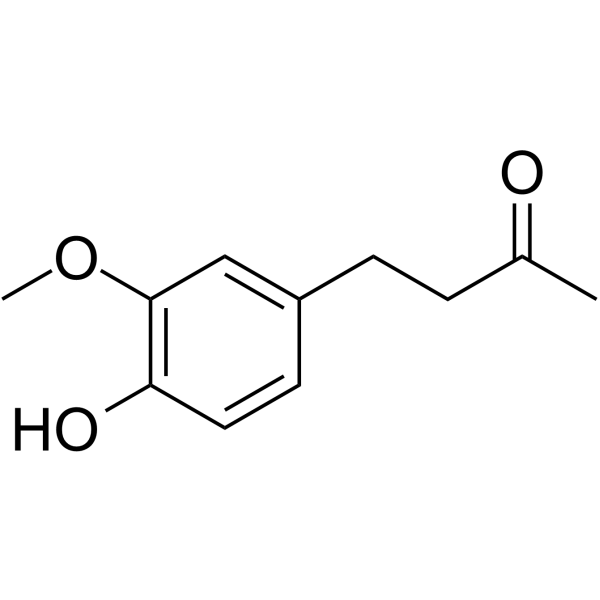
HY-14621
ZingeronePhenolic Ketone
Publications Citing Use of MedChemExpress (MCE) IT-901
More

Biological Activity
Description
IC50 & Target
[1]|
NF-κB 0.1 μM (IC50) |
c-Rel 3 μM (IC50) |
In Vitro
IT-901 (1, 3, 5 μM; for 24 hours) results in decreased proliferation of viable ABC and GCB DLBCL cells[1].
IT-901 (3 μM; for 24 hours) decreases cell viability in a dose-dependent fashion, at least 60 percent of cells were still viable after 48 hours of IT-901 treatment (4μM) in all tested cell lines except HBL1[1].
IT-901 (1, 5, 10 μM; for 6 hours) documents Diminished expression of p65 and p50 in nuclear and cytosolic fractions and also decreases the expression of the inhibitory subunit IκBα both in the phosphorylated and non-phosphorylated forms in primary CLL cells and cell lines[2].
The IC50 of IT-901/GDM-12 is 2.9 μM for c-Rel whereas IL-2 secretion is successfully blocked at 5 μM[1].
The concentrations of IT-901 above 10 μM become increasingly toxic and may lead to apoptosis of healthy cells[1].
IT-901 inhibits cell growth of both activated B-like (ABC) and germinal center B-like (GCB) cell lines with the IC50 values between 3μM to 4μM[1].
MedChemExpress (MCE) has not independently confirmed the accuracy of these methods. They are for reference only. Further protocols information, click here.
-
Cell Line:TMD8 and SU-DHL8 cells
-
Concentration:1, 3, 5 μM
-
Incubation Time:For 24 hours
-
Result:Resulted in decreased proliferation of viable ABC and GCB DLBCL cells.
-
Cell Line:SU-DHL8 and TMD8 cells
-
Concentration:3 μM
-
Incubation Time:For 24 hours
-
Result:Decreased cell viability in a dose-dependent fashion.
-
Cell Line:Primary chronic lymphocytic leukemia (CLL) cells and cell lines
-
Concentration:1, 5, 10 μM
-
Incubation Time:For 6 hours
-
Result:Documented Diminished expression of p65 and p50 in nuclear and cytosolic fractions and also decreased the expression of the inhibitory subunit IκBα both in the phosphorylated and non-phosphorylated forms.
In Vivo
IT-901 (12-20 mg/kg; IP) improves the PK profile by increasing T1/2 and Cmax[1].
MedChemExpress (MCE) has not independently confirmed the accuracy of these methods. They are for reference only.
-
Animal Model:BALB/C-Tg (NFkB-RE-luc)-Xen mice with 6-9 weeks old[1]
-
Dosage:24 mg/kg
-
Administration:IP; every other day for 2 weeks
-
Result:Had an effective treatment of acute GVHD without impairing anti-tumor activity.


Chemical Information
-
CAS No. 1584121-99-2
-
Appearance Solid
-
Molecular Weight 342.37
-
Formula C17H14N2O4S
-
Color Orange to red
-
SMILES
O=C(/C(C(N1)=O)=C\C2=C3C=CC=CC3=C(OC)C=C2OC)NC1=S
-
Shipping
Room temperature in continental US; may vary elsewhere.
-
Storage
Powder -20°C 3 years In solvent -80°C 6 months -20°C 1 month


Publications (2)
-
Journal Impact Factor
-
Most Recent
-
Cell Death Discov
The glycolytic enzyme PFKFB3 alleviates DNA damage and chondrocyte senescence in osteoarthritis. [Abstract]2025 Dec 8. PMID: 41360766 -
Int J Mol Sci
Activated Macrophages Promote TNF-α-Associated Tumor Cell Necroptosis in Pituitary Apoplexy Through the PIEZO1-NFATC2/REL Axis. [Abstract]2026 Jun 22;27(12):5635. PMID: 42353349


Solvent & Solubility
In Vitro:
DMSO : 12.5 mg/mL (36.51 mM; ultrasonic and warming and heat to 60°C; Hygroscopic DMSO has a significant impact on the solubility of product, please use newly opened DMSO)
Please refer to the solubility information to select the appropriate solvent. Once prepared, please aliquot and store the solution to prevent product inactivation from repeated freeze-thaw cycles.
Storage method and period of stock solution: -80°C, 6 months; -20°C, 1 month. When stored at -80°C, please use it within 6 months. When stored at -20°C, please use it within 1 month.
Please refer to the solubility information to select the appropriate solvent. Once prepared, please aliquot and store the solution to prevent product inactivation from repeated freeze-thaw cycles.
Storage method and period of stock solution: -80°C, 6 months; -20°C, 1 month. When stored at -80°C, please use it within 6 months. When stored at -20°C, please use it within 1 month.
Concentration (start) × Volume (start) = Concentration (final) × Volume (final)

Protocols
-
Protocol for Electrophoretic Mobility Shift Assay (EMSA)
Electrophoretic mobility shift assay detects protein-nucleic acid binding by incubating a labeled DNA or RNA probe with purified protein or cell extract, then separating free probe from slower-migrating protein-probe complexes on a native gel. For cancer cells, primary neurons, mouse tumor samples, intestinal organoids, inflammatory macrophages, or drug-treated samples, EMSA can measure transcription-factor DNA binding or RNA-binding protein activity in extracts, but it does not directly measure transcription, protein expression, or chromatin occupancy in intact cells. Specificity is judged by competition with unlabeled wild-type probe, failure of mutated or unrelated competitors to compete, and antibody supershift or disruption when the binding protein identity must be confirmed.
-
Cell Cytotoxicity Assay
Cytotoxicity assays are usually based on the assessment of cell membrane damage, which can also be indirectly detected by measuring cell viability. Detection methods include MTT assay, CKK-8 assay, LDH assay and ATP assay, etc.
-
Research Protocol for Inflammation-related Diseases
The NLRP3 inflammasome is a cytosolic innate immune signaling platform that integrates priming signals and danger-signal activation to promote caspase-1 activation, maturation of IL-1β and IL-18, and gasdermin D-mediated pyroptotic cell death. The core experimental logic is to determine whether inflammatory disease phenotypes are driven by increased NLRP3 expression, ASC-containing inflammasome assembly, caspase-1 cleavage, GSDMD cleavage, and extracellular release of IL-1β/IL-18 rather than by nonspecific cell injury alone. The pathway is strongly linked to inflammation-related disease phenotypes because monosodium urate crystals activate NALP3/NLRP3 inflammasome signaling in gout-like crystal inflammation, cholesterol crystals activate NLRP3 inflammasomes in atherogenesis models, and DSS-induced intestinal inflammation has been reported to involve NLRP3 inflammasome activity. However, experimental colitis studies also show context-dependent protective effects of NLRP3 inflammasome co


Purity & Documentation
-
Data Sheet (281 KB)
-
SDS (251 KB)
- English - EN (251 KB)
- Français - FR (251 KB)
- Deutsch - DE (251 KB)
- Norwegian - NO (251 KB)
- Español - ES (251 KB)
- Swedish - SV (251 KB)
- Italian - IT (251 KB)
- Korean - KR (251 KB)
- Portuguese - PT (251 KB)
-
Handling Instructions (2659 KB)
References
[1]. Shono Y, et al. Characterization of a c-Rel Inhibitor That Mediates Anticancer Properties in HematologicMalignancies by Blocking NF-κB-Controlled Oxidative Stress Responses. Cancer Res. 2016 Jan 15;76(2):377-89. [Content Brief]
[2]. Vaisitti T, et al. Targeting metabolism and survival in chronic lymphocytic leukemia and Richter syndrome cellsby a novel NF-κB inhibitor. Haematologica. 2017 Nov;102(11):1878-1889. [Content Brief]


Complete Stock Solution Preparation Table
Please refer to the solubility information to select the appropriate solvent. Once prepared, please aliquot and store the solution to prevent product inactivation from repeated freeze-thaw cycles.
Storage method and period of stock solution: -80°C, 6 months; -20°C, 1 month. When stored at -80°C, please use it within 6 months. When stored at -20°C, please use it within 1 month.
| Optional Solvent | Concentration Solvent Mass | 1 mg | 5 mg | 10 mg | 25 mg |
|---|---|---|---|---|---|
| DMSO | 1 mM | 2.9208 mL | 14.6041 mL | 29.2082 mL | 73.0204 mL |
| 5 mM | 0.5842 mL | 2.9208 mL | 5.8416 mL | 14.6041 mL | |
| 10 mM | 0.2921 mL | 1.4604 mL | 2.9208 mL | 7.3020 mL | |
| 15 mM | 0.1947 mL | 0.9736 mL | 1.9472 mL | 4.8680 mL | |
| 20 mM | 0.1460 mL | 0.7302 mL | 1.4604 mL | 3.6510 mL | |
| 25 mM | 0.1168 mL | 0.5842 mL | 1.1683 mL | 2.9208 mL | |
| 30 mM | 0.0974 mL | 0.4868 mL | 0.9736 mL | 2.4340 mL |


IT-901 Related Classifications
HY-124179 Related Classifications
 Powered by Bioz
Keywords