



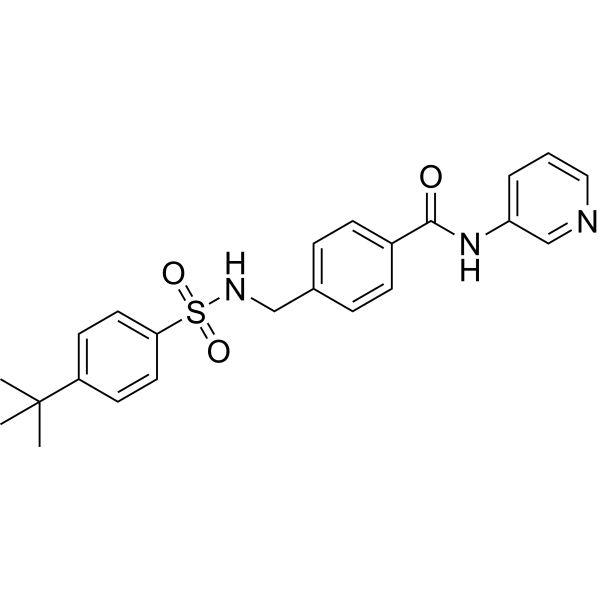
STF-31
Based on 19 publication(s) in Google Scholar
STF-31 is a selective inhibitor of glucose transporter 1 (GLUT1), with an IC50 of 1 μM. STF-31 is also a NAMPT inhibitor. STF-31 inhibits glucose uptake in renal cell carcinoma (RCC) 4 cells.
For research use only. We do not sell to patients.
- Purity : 99.79%
- CAS No.: 724741-75-7
- Formula: C23H25N3O3S
- Molecular Weight:423.53
-
Storage:Powder -20°C, 3 years , 4°C, 2 years ; In solvent -80°C, 2 years , -20°C, 1 year

To place orders, for customer services and technical support, please contact: MedChemExpress USA
Tel: 609-228-6898 E-mail: [email protected] [email protected]


-
 Biological Activity
-
Chemical Information
-
Solvent & Solubility
- Purity & Documentation
- References
-
 Help & FAQs


-
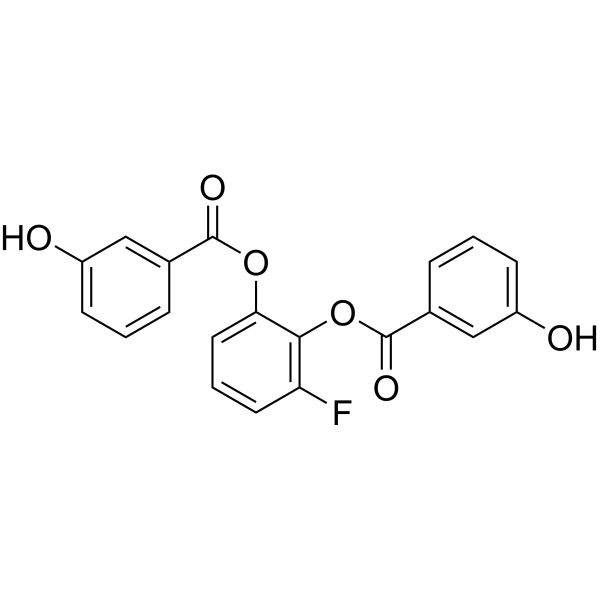
HY-19331
WZB117Glut1 Inhibitor -
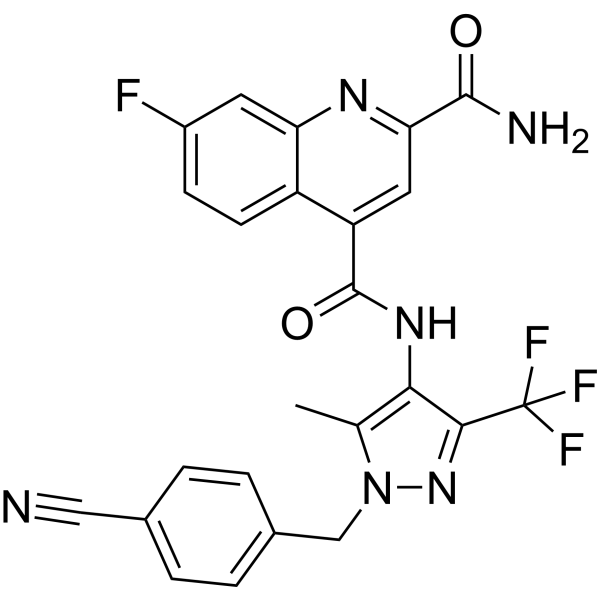
HY-100017
BAY-876GLUT1 Inhibitor -
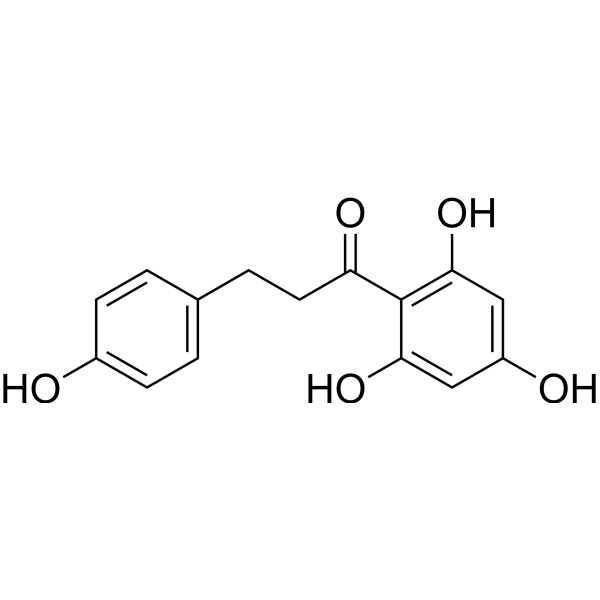
HY-N0142
PhloretinAnti-inflammatory Agent -
HY-18085
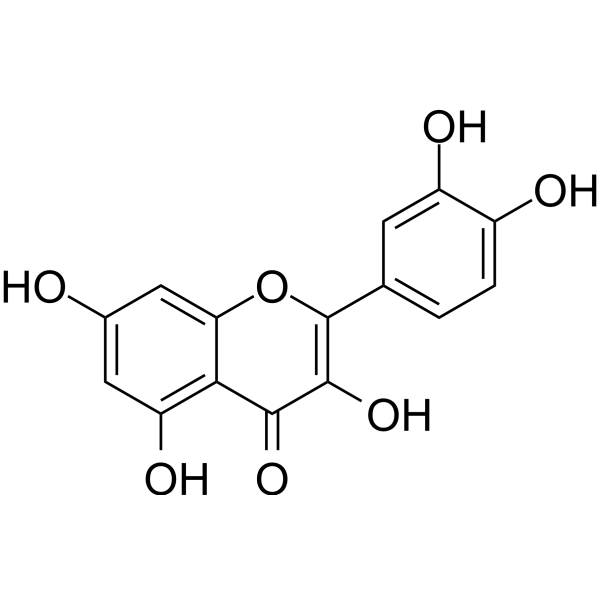
QuercetinFlavonoid Antioxidant -
HY-10227
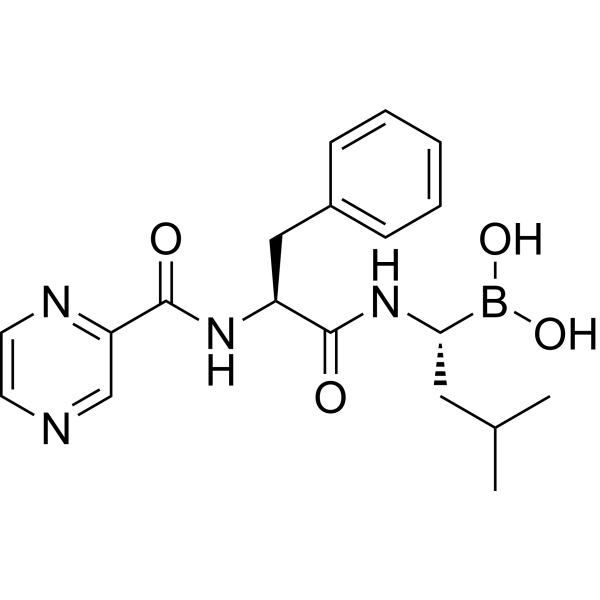
BortezomibProteasome Inhibitor -
HY-13966
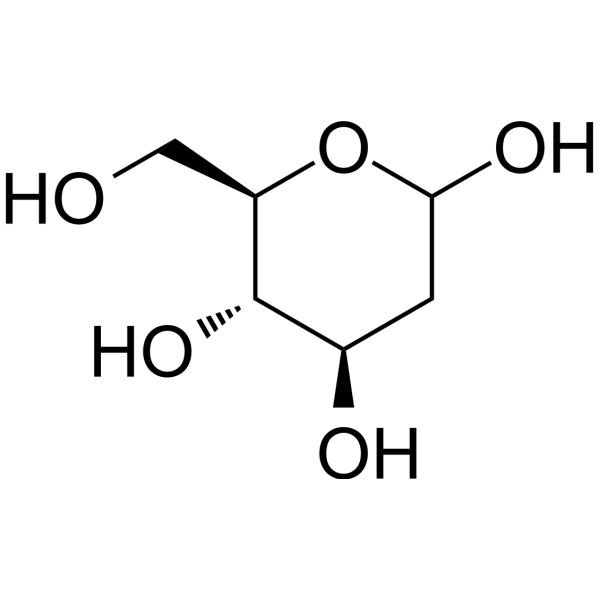
2-Deoxy-D-glucoseGlycolysis Inhibitor -
HY-101849
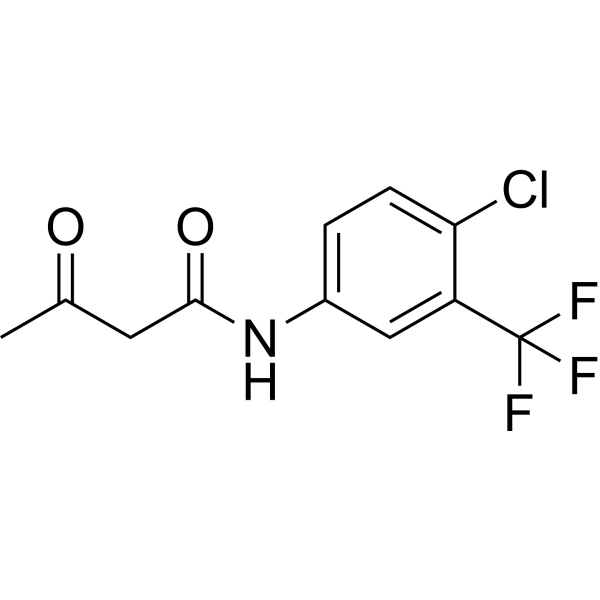
FasentinGLUT-1/GLUT-4 Inhibitor -
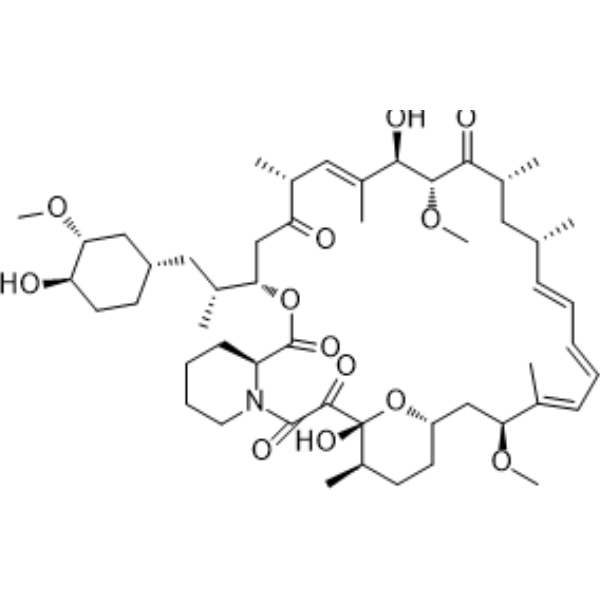
HY-10219
RapamycinmTOR Inhibitor -
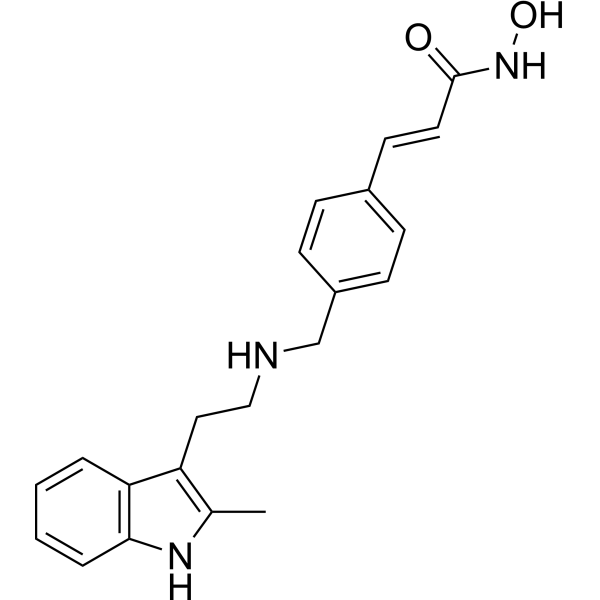
HY-10224
PanobinostatHDAC Inhibitor -
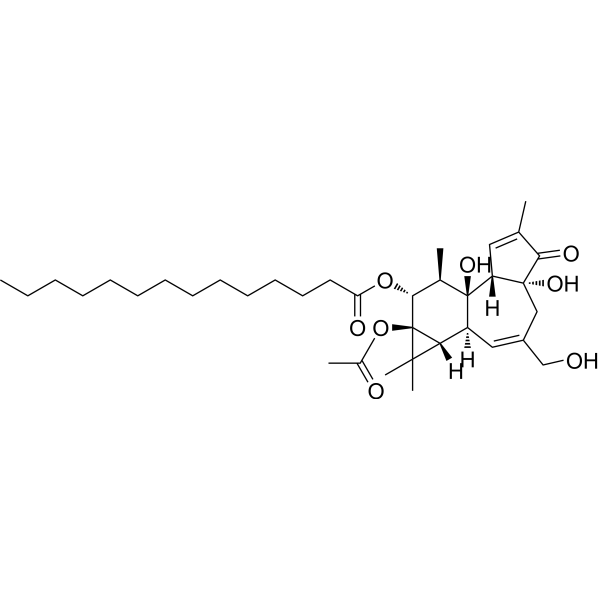
HY-18739
Phorbol 12-myristate 13-acetatePKC Activator -
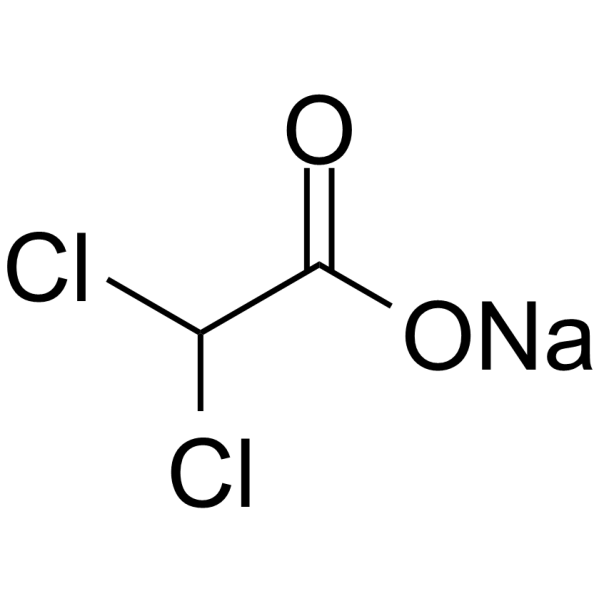
HY-Y0445A
Sodium dichloroacetatePDK Inhibitor -
HY-19363
GW4869N-SMase Inhibitor
Publications Citing Use of MedChemExpress (MCE) STF-31
More- Cancer Cell. 2025 May 12;43(5):937-954.e9. [Abstract]
- Nat Commun. 2026 Oct 1.
- Chem Eng J. 2024 Nov 15.
- Arch Toxicol. 2022 Nov;96(11):2913-2926. [Abstract]
- Arch Toxicol. 2022 Jul;96(7):2113-2122. [Abstract]
- Cell Rep. 2026 Feb 25;45(3):117035. [Abstract]
- J Agric Food Chem. 2021 Nov 3;69(43):12862-12869. [Abstract]
- Cell Biosci. 2024 Apr 16;14(1):48. [Abstract]
- Molecules. 2023 Jun 6;28(12):4569. [Abstract]
- Sci Rep. 2026 Jul 28;16(1):24140.
- Poult Sci. 2024 Jun;103(6):103717. [Abstract]
- Fish Shellfish Immunol. 2022 Oct:129:22-29. [Abstract]
- Exp Cell Res. 2025 Dec 19;455(2):114870. [Abstract]
- Food Chem Toxicol. 2021 Feb:148:111926. [Abstract]
- J Inorg Biochem. 2022 Apr 20;233:111838. [Abstract]
- J Inorg Biochem. 2022 Apr:229:111725. [Abstract]
- Vet Parasitol. 2025 Jul:337:110471. [Abstract]
- SSRN. 2024 Apr 8.
- Research Square Preprint. 2023 Jul 6.
 Customer Validation & Images

-
RT-PCR
-
Flow Cytometry
-
WB
-
IF


Biological Activity
Description
IC50 & Target
[2]|
GLUT1 1 μM (IC50) |
Cellular Effect
|
Cell Line

|
Type | Value | Description | References |
|---|---|---|---|---|
| A2780 | IC50 |
0.12 μM
Compound: 51
|
Antiproliferative activity against human A2780 cells after 72 hrs by SRB assay
Antiproliferative activity against human A2780 cells after 72 hrs by SRB assay
|
[PMID: 24433859] |
| A2780 | IC50 |
120 nM
Compound: 76; STF-31
|
Antiproliferative activity against human A2780 cells
Antiproliferative activity against human A2780 cells
|
[PMID: 38244254] |
| A2780 | IC50 |
24 nM
Compound: 51
|
Inhibition of NAMPT in human A2780 cells assessed as reduction in NAD level after 48 hrs by LC-MS/MS analysis
Inhibition of NAMPT in human A2780 cells assessed as reduction in NAD level after 48 hrs by LC-MS/MS analysis
|
[PMID: 24433859] |
| HCT-116 | IC50 |
271 nM
Compound: 51
|
Antiproliferative activity against human HCT116 cells after 96 hrs by CyQuant-based assay
Antiproliferative activity against human HCT116 cells after 96 hrs by CyQuant-based assay
|
[PMID: 24433859] |
| HT-1080 | IC50 |
213 nM
Compound: 51
|
Antiproliferative activity against human HT1080 cells after 96 hrs by CyQuant-based assay
Antiproliferative activity against human HT1080 cells after 96 hrs by CyQuant-based assay
|
[PMID: 24433859] |
| MIA PaCa-2 | IC50 |
855 nM
Compound: 51
|
Antiproliferative activity against human MIAPaCa2 cells after 96 hrs by CyQuant-based assay
Antiproliferative activity against human MIAPaCa2 cells after 96 hrs by CyQuant-based assay
|
[PMID: 24433859] |
| PC-3 | IC50 |
217 nM
Compound: 51
|
Antiproliferative activity against human PC3 cells after 96 hrs by CyQuant-based assay
Antiproliferative activity against human PC3 cells after 96 hrs by CyQuant-based assay
|
[PMID: 24433859] |
| RCC4 | IC50 |
0.16 μM
Compound: 2
|
Cytotoxicity against human RCC4 cells after 4 days by XTT assay
Cytotoxicity against human RCC4 cells after 4 days by XTT assay
|
[PMID: 24387866] |
| RCC4 | IC50 |
7.9 μM
Compound: 33; STF-31
|
Growth inhibition of VHL-deficient human RCC4 cells by XTT assay
Growth inhibition of VHL-deficient human RCC4 cells by XTT assay
|
[PMID: 28042452] |
| RCC4/VHL | IC50 |
>40 μM
Compound: 2
|
Cytotoxicity against human RCC4/VHL cells after 4 days by XTT assay
Cytotoxicity against human RCC4/VHL cells after 4 days by XTT assay
|
[PMID: 24387866] |
In Vitro
STF-31 (0.01-10 μM; 10 days) is specifically toxic to RCC4 cells, whereas RCC4/VHL cells are relatively unaffected. RCC4/VHL cells treated with STF-31 (5 μM; 10 days) largely recovery, whereas RCC4 cells under the same conditions does not[1].
STF-31 (1.25-5 μM; 3 days) does not induce autophagy, apoptosis, or DNA damage. STF-31 causes a necrotic cell death[1].
STF-31 reduces the efferocytosis of wild type and SLC2A1-overexpressing LR73 cells[4].
MedChemExpress (MCE) has not independently confirmed the accuracy of these methods. They are for reference only.
-
Cell Line:Wild-type RCC4 cells (RCC4/VHL) and RCC4 cells without VHL
-
Concentration:0.01, 0.1, 1, 10 μM
-
Incubation Time:10 days
-
Result:Reduced viability of RCC4 cells without VHL in a concentration-dependent manner when compared to their wild-type counterparts.
In Vivo
STF-31 (10 mg/kg; i.p.) promotes accumulation of necrotic thymocytes after Dexamethasone-induced apoptosis in vivo[4].
MedChemExpress (MCE) has not independently confirmed the accuracy of these methods. They are for reference only.
-
Animal Model:Twelve-week old C57BL/6J and CX3CR1gfp/+ mice[3]
-
Dosage:10 mg/kg
-
Administration:I.p. injections; twice daily for 2 days, followed by once daily for another 3 days
-
Result:Improved photoreceptor survival and reduced microglial activation of CX3CR1gfp/+ mice, and not induced any C57BL/6J mice retinal cell death.


Chemical Information
-
CAS No. 724741-75-7
-
Appearance Solid
-
Molecular Weight 423.53
-
Formula C23H25N3O3S
-
Color Light yellow to yellow
-
SMILES
O=C(NC1=CC=CN=C1)C2=CC=C(CNS(=O)(C3=CC=C(C(C)(C)C)C=C3)=O)C=C2
-
Shipping
Room temperature in continental US; may vary elsewhere.
-
Storage
Powder -20°C 3 years 4°C 2 years In solvent -80°C 2 years -20°C 1 year


Publications (19)
-
Journal Impact Factor
-
Most Recent
-
Cancer Cell
2025 May 12;43(5):937-954.e9. PMID: 40054467 -
-
-
Arch Toxicol
CuO-NPs-triggered heterophil extracellular traps exacerbate liver injury in chicks by promoting oxidative stress and inflammatory responses. [Abstract]2022 Nov;96(11):2913-2926. PMID: 35962800 -
Arch Toxicol
Chicken heterophils extracellular traps act as early effectors against cyclopiazonic acid dependent upon NADPH oxidase, ROS and glycolysis. [Abstract]2022 Jul;96(7):2113-2122. PMID: 35508807 -
Cell Rep
Metabolic reinvigoration of NK cells by IL-21 enhances immunotherapy against MHC class I-deficient solid tumors. [Abstract]2026 Feb 25;45(3):117035. PMID: 41758652 -
J Agric Food Chem
Glycolysis and Reactive Oxygen Species Production Participate in T-2 Toxin-Stimulated Chicken Heterophil Extracellular Traps. [Abstract]2021 Nov 3;69(43):12862-12869. PMID: 34694797 -
Cell Biosci
GLUT1-mediated microglial proinflammatory activation contributes to the development of stress-induced spatial learning and memory dysfunction in mice. [Abstract]2024 Apr 16;14(1):48. PMID: 38627830
STF-31 purchased from MedChemExpress. Usage Cited in: Cell Biosci. 2024 Apr 16;14(1):48. [Abstract]
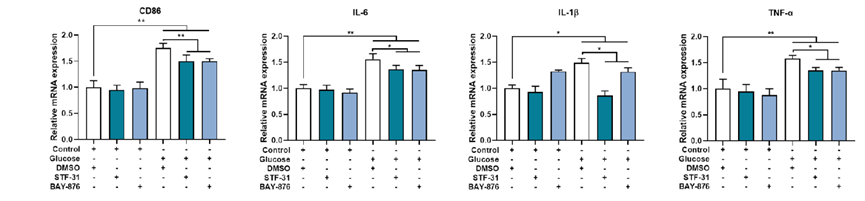
qRT-PCR assays evaluating the expression of proinflammatory phenotype markers, CD86, IL-6, IL-1β and TNF-α in BV2 cells exposed to GLUT1 inhibitors (STF-31, 5 µmol/L and BAY-876, 50 nmol/L) for 48 h with or without glucose treatment.
STF-31 purchased from MedChemExpress. Usage Cited in: Cell Biosci. 2024 Apr 16;14(1):48. [Abstract]
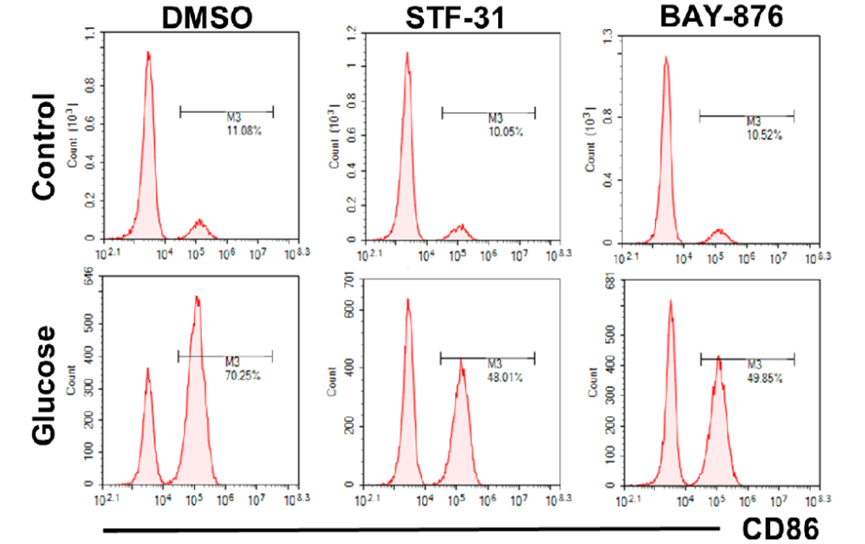
Flow cytometry analysis of CD86+ populations in BV2 cells exposed to STF-31 (5 μM) or BAY-876 under control or glucose conditions. Representative images.
STF-31 purchased from MedChemExpress. Usage Cited in: Cell Biosci. 2024 Apr 16;14(1):48. [Abstract]
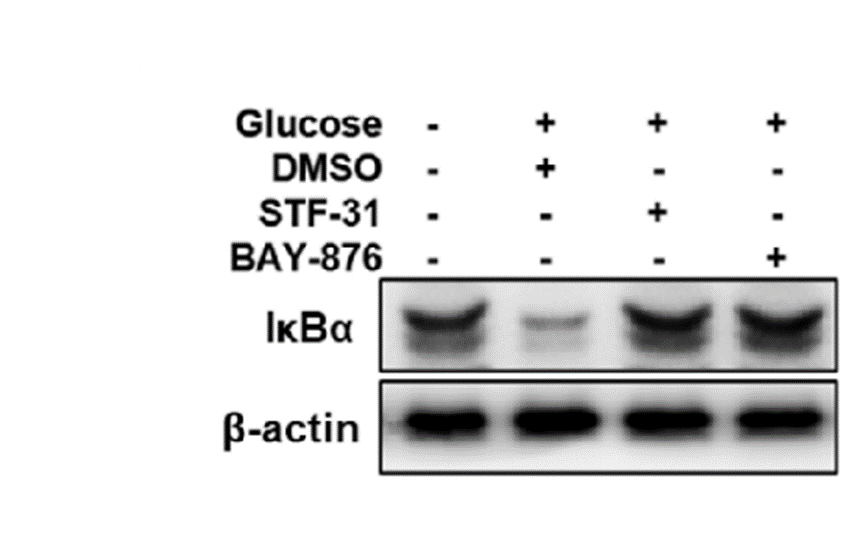
Levels of IκBα in BV2 cells exposed to STF-31 (5 μM) or BAY-876 upon glucose treatment were determined by western blotting.
STF-31 purchased from MedChemExpress. Usage Cited in: Cell Biosci. 2024 Apr 16;14(1):48. [Abstract]
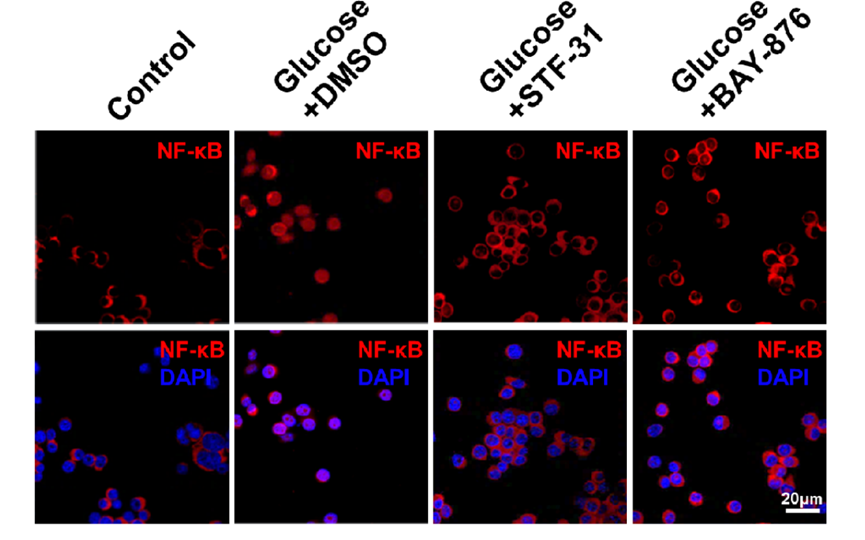
NF-κB nuclear translocation in BV2 cells exposed to STF-31 (5 μM) or BAY-876 under glucose incubation was analyzed by IF staining.
-
Molecules
The Transport and Uptake of Resveratrol Mediated via Glucose Transporter 1 and Its Antioxidant Effect in Caco-2 Cells. [Abstract]2023 Jun 6;28(12):4569. PMID: 37375124 -
-
Poult Sci
2024 Jun;103(6):103717. PMID: 38643746 -
Fish Shellfish Immunol
Zinc oxide nanoparticles (ZnO-NPs) exhibit immune toxicity to crucian carp (Carassius carassius) by neutrophil extracellular traps (NETs) release and oxidative stress. [Abstract]2022 Oct:129:22-29. PMID: 35932984 -
Exp Cell Res
p38 MAPK-mediated suppression of Nrf2-MPC2 axis drives metabolic reprogramming which confers imatinib resistance in blast crisis phase of chronic myeloid leukemia. [Abstract]2025 Dec 19;455(2):114870. PMID: 41423144 -
Food Chem Toxicol
Diacetoxyscirpenol-induced heterophil extracellular traps contribute to the immune toxicity of liver injury in chickens. [Abstract]2021 Feb:148:111926. PMID: 33352262 -
J Inorg Biochem
Nanosilver-stimulated heterophil extracellular traps promoted liver and kidney injury in chicken. [Abstract]2022 Apr 20;233:111838. PMID: 35504082 -
J Inorg Biochem
Alumina nanoparticles-induced heterophil extracellular traps exacerbate liver injury by regulating oxidative stress and inflammation in chickens. [Abstract]2022 Apr:229:111725. PMID: 35063926 -
Vet Parasitol
2025 Jul:337:110471. PMID: 40245810 -
-


Solvent & Solubility
In Vitro:
DMSO : ≥ 34 mg/mL (80.28 mM; Hygroscopic DMSO has a significant impact on the solubility of product, please use newly opened DMSO)
* "≥" means soluble, but saturation unknown.
Please refer to the solubility information to select the appropriate solvent. Once prepared, please aliquot and store the solution to prevent product inactivation from repeated freeze-thaw cycles.
Storage method and period of stock solution: -80°C, 2 years; -20°C, 1 year. When stored at -80°C, please use it within 2 years. When stored at -20°C, please use it within 1 year.
Please refer to the solubility information to select the appropriate solvent. Once prepared, please aliquot and store the solution to prevent product inactivation from repeated freeze-thaw cycles.
Storage method and period of stock solution: -80°C, 2 years; -20°C, 1 year. When stored at -80°C, please use it within 2 years. When stored at -20°C, please use it within 1 year.
Concentration (start) × Volume (start) = Concentration (final) × Volume (final)
In Vivo:
Select the appropriate dissolution method based on your experimental animal and administration route.
- For the following dissolution methods, please ensure to first prepare a clear stock solution using an In Vitro approach and then sequentially add co-solvents:
- To ensure reliable experimental results, the clarified stock solution can be appropriately stored based on storage conditions. As for the working solution for In Vivo experiments, it is recommended to prepare freshly and use it on the same day.
- The percentages shown for the solvents indicate their volumetric ratio in the final prepared solution. If precipitation or phase separation occurs during preparation, heat and/or sonication can be used to aid dissolution.
Add each solvent one by one: 10% DMSO 40% PEG300 5% Tween-80 45% Saline
Solubility: 2.5 mg/mL (5.90 mM); Clear solution; Need ultrasonic
This protocol yields a clear solution of 2.5 mg/mL.
Taking 1 mL working solution as an example, add 100 μL DMSO stock solution (25.0 mg/mL) to 400 μL PEG300, and mix evenly; then add 50 μL Tween-80 and mix evenly; then add 450 μL Saline to adjust the volume to 1 mL.
Preparation of Saline: Dissolve 0.9 g sodium chloride in ddH₂O and dilute to 100 mL to obtain a clear Saline solution.
Add each solvent one by one: 10% DMSO 90% (20% SBE-β-CD in Saline)
Solubility: ≥ 2.5 mg/mL (5.90 mM); Clear solution
This protocol yields a clear solution of ≥ 2.5 mg/mL (saturation unknown).
Taking 1 mL working solution as an example, add 100 μL DMSO stock solution (25.0 mg/mL) to 900 μL 20% SBE-β-CD in Saline, and mix evenly.
Preparation of 20% SBE-β-CD in Saline (4°C, storage for one week): 2 g SBE-β-CD powder is dissolved in 10 mL Saline, completely dissolve until clear.
In Vivo Dissolution Calculator
Please enter the basic information of animal experiments:
-
-
-
-
Recommended: Prepare an additional quantity of animals to account for potential losses during experiments.
Please enter your animal formula composition:
-
%DMSO +
Recommended: Keep the proportion of DMSO in working solution below 2% if your animal is weak.
-
%+
-
+%Tween-80 + +
-
%Saline +
The co-solvents required include: DMSO, . All of co-solvents are available by MedChemExpress (MCE). , Tween 80. All of co-solvents are available by MedChemExpress (MCE).
Working solution concentration: 0.22 mg/mL
Method for preparing stock solution: mg drug dissolved in μL DMSO. Stock solution concentration: mg/mL.
1. Take μL DMSO stock solution;
2. Add μL .
μL , mix evenly;
3. Then add μL Tween 80, mix evenly;
4. Then add μL
Please ensure that the stock solution in the first step is dissolved to a clear state, and add co-solvents in sequence. You can use ultrasonic heating (ultrasonic cleaner, recommended frequency 20-40 kHz), vortexing, etc. to assist dissolution.


Purity & Documentation
-
Data Sheet (277 KB)
-
SDS (392 KB)
- English - EN (392 KB)
- Français - FR (392 KB)
- Deutsch - DE (392 KB)
- Norwegian - NO (392 KB)
- Español - ES (392 KB)
- Swedish - SV (392 KB)
- Italian - IT (392 KB)
- Korean - KR (392 KB)
- Portuguese - PT (392 KB)
-
Handling Instructions (2659 KB)
References
[1]. Chan DA, et al. Targeting GLUT1 and the Warburg effect in renal cell carcinoma by chemical synthetic lethality. Sci Transl Med. 2011 Aug 3;3(94):94ra70. [Content Brief]
[2]. Dedda CD, et al. Pharmacological Targeting of GLUT1 to Control Autoreactive T Cell Responses. International Journal of Molecular Sciences. 2019 Oct 8; 20(19):4962. [Content Brief]
[3]. Wang L, et al. Glucose transporter 1 critically controls microglial activation through facilitating glycolysis. Molecular Neurodegeneration, 2019 Jan 11; 14(1):2. [Content Brief]
[4]. Morioka S, et, al. Efferocytosis induces a novel SLC program to promote glucose uptake and lactate release. Nature. 2018 Nov;563(7733):714-718. [Content Brief]


Complete Stock Solution Preparation Table
Please refer to the solubility information to select the appropriate solvent. Once prepared, please aliquot and store the solution to prevent product inactivation from repeated freeze-thaw cycles.
Storage method and period of stock solution: -80°C, 2 years; -20°C, 1 year. When stored at -80°C, please use it within 2 years. When stored at -20°C, please use it within 1 year.
| Optional Solvent | Concentration Solvent Mass | 1 mg | 5 mg | 10 mg | 25 mg |
|---|---|---|---|---|---|
| DMSO | 1 mM | 2.3611 mL | 11.8055 mL | 23.6111 mL | 59.0277 mL |
| 5 mM | 0.4722 mL | 2.3611 mL | 4.7222 mL | 11.8055 mL | |
| 10 mM | 0.2361 mL | 1.1806 mL | 2.3611 mL | 5.9028 mL | |
| 15 mM | 0.1574 mL | 0.7870 mL | 1.5741 mL | 3.9352 mL | |
| 20 mM | 0.1181 mL | 0.5903 mL | 1.1806 mL | 2.9514 mL | |
| 25 mM | 0.0944 mL | 0.4722 mL | 0.9444 mL | 2.3611 mL | |
| 30 mM | 0.0787 mL | 0.3935 mL | 0.7870 mL | 1.9676 mL | |
| 40 mM | 0.0590 mL | 0.2951 mL | 0.5903 mL | 1.4757 mL | |
| 50 mM | 0.0472 mL | 0.2361 mL | 0.4722 mL | 1.1806 mL | |
| 60 mM | 0.0394 mL | 0.1968 mL | 0.3935 mL | 0.9838 mL | |
| 80 mM | 0.0295 mL | 0.1476 mL | 0.2951 mL | 0.7378 mL |


STF-31 Related Classifications
HY-18728 Related Classifications
 Powered by Bioz