



cis-ACCP

Based on 1 Customer Validation
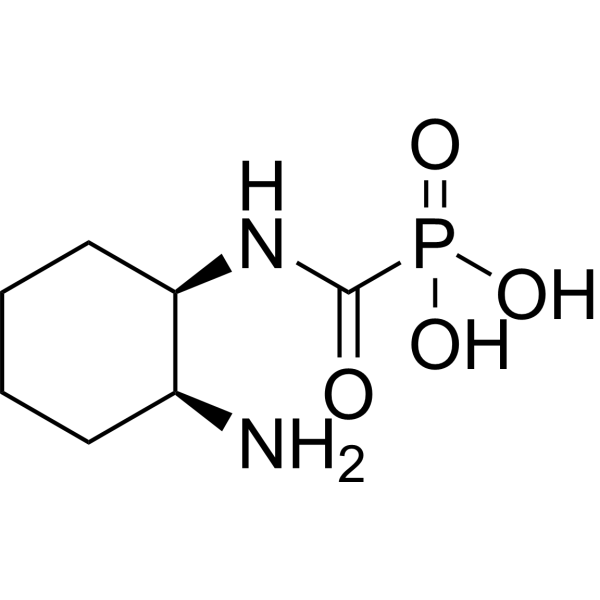
cis-ACCP is an orally active antimetastatic matrix metalloproteinase-2 (MMP-2) selective inhibitor. cis-ACCP can inhibit MMP-2 and MMP-9 with IC50 values of 4 μM and 20 μM, respectively. cis-ACCP can be used for the research of a variety of chronic diseases.
For research use only. We do not sell to patients.
- Purity : 97.0%
- CAS No.: 777075-44-2
- Formula: C7H15N2O4P
- Molecular Weight:222.18
-
Storage:Powder -20°C, 3 years ; In solvent -80°C, 6 months , -20°C, 1 month

To place orders, for customer services and technical support, please contact: MedChemExpress USA
Tel: 609-228-6898 E-mail: [email protected] [email protected]


-
 Biological Activity
-
Chemical Information
-
Solvent & Solubility
- Protocols
- Purity & Documentation
- References
-
 Help & FAQs


-
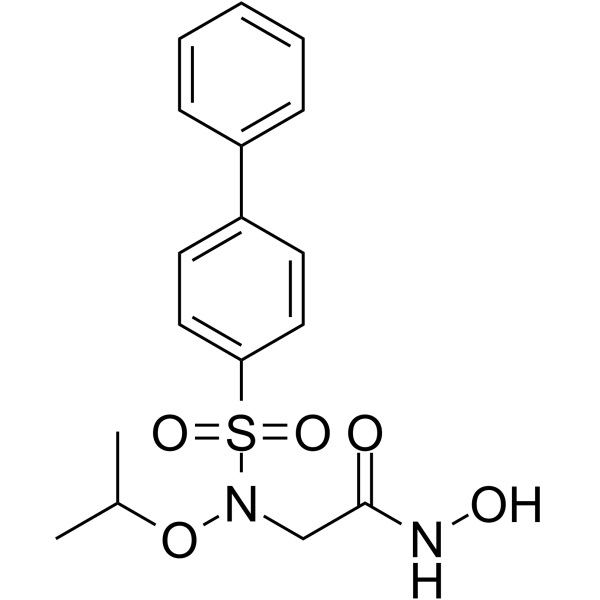
HY-103444
ARP-100MMP-2 Inhibitor -
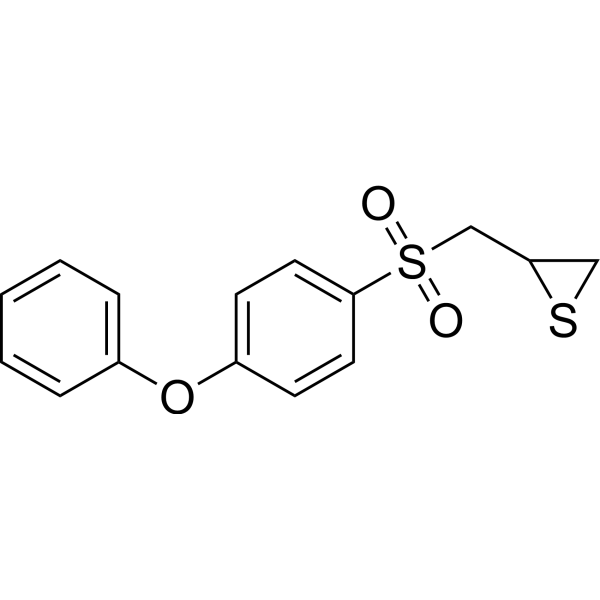
HY-12354
SB-3CTMMP2/9 Inhibitor -
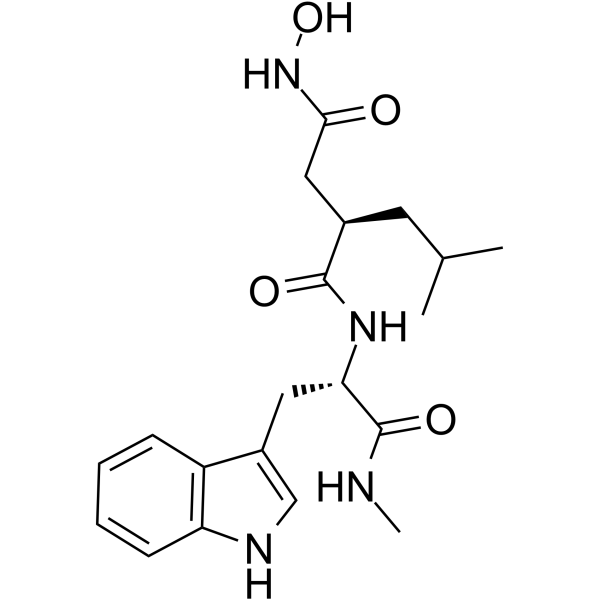
HY-15768
IlomastatMMP Inhibitor -
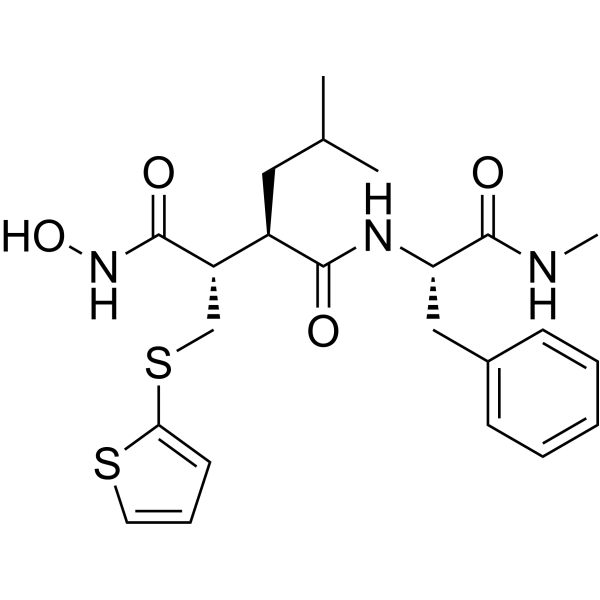
HY-13564
BatimastatMMP Inhibitor -
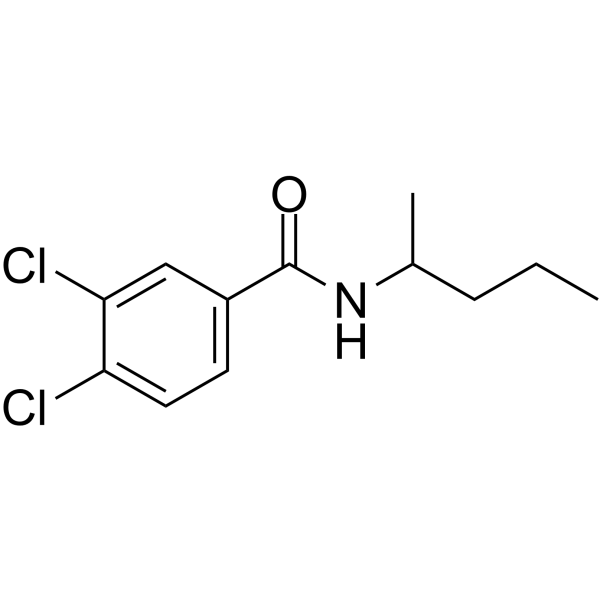
HY-15827
NSC 405020MMP14 Inhibitor -
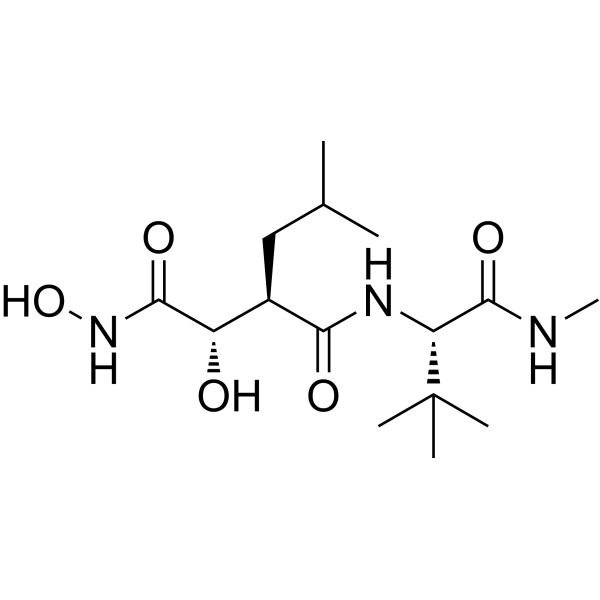
HY-12169
MarimastatMMP Inhibitor -
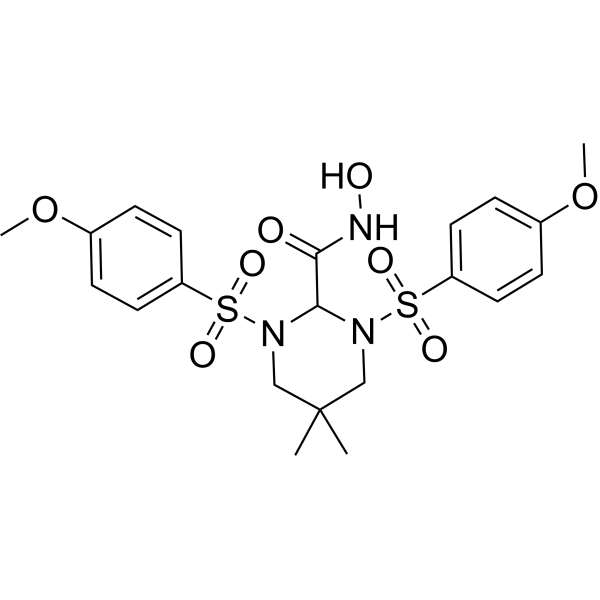
HY-119423
MMP Inhibitor IIMMP Inhibitor -
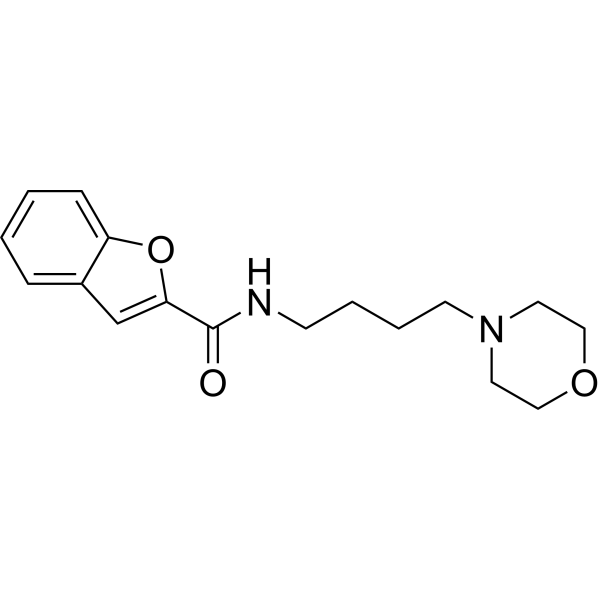
HY-100359
CL-82198MMP-13 Inhibitor -
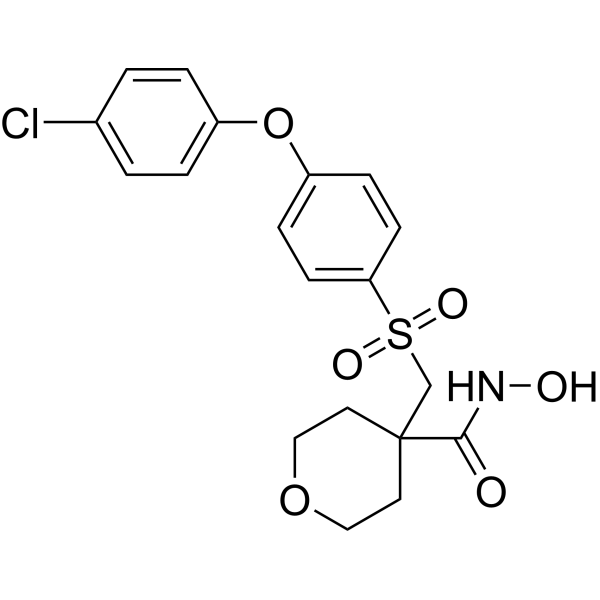
HY-10398
CTS-1027MMP Inhibitor -
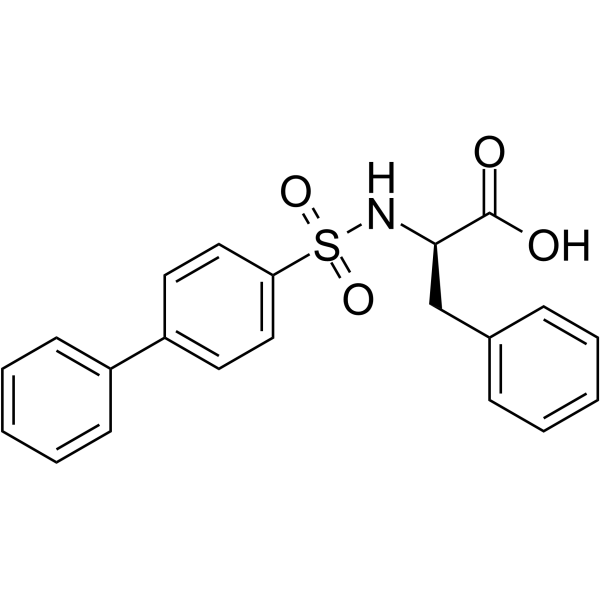
HY-116399
MMP-2/MMP-9-IN-1MMP-2/MMP-9 Inhibitor -
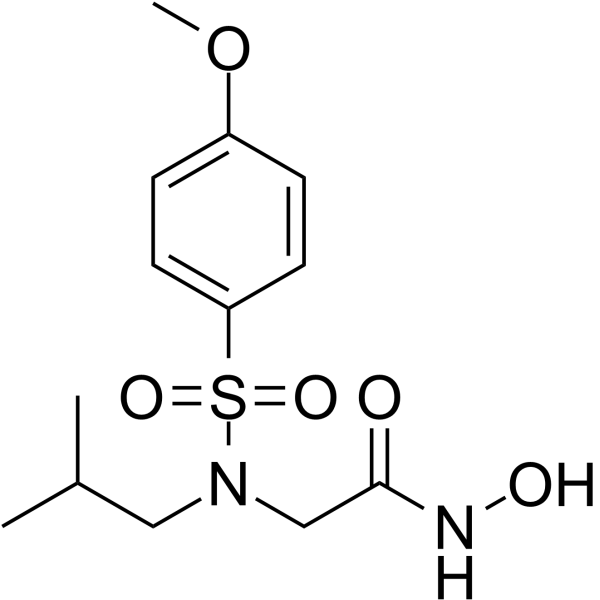
HY-119711
NNGHMMP-3 Inhibitor -
HY-125166
DB04760MMP Inhibitor


Biological Activity
Description
IC50 & Target
|
MMP-2 4 μM (IC50) |
MMP-9 20 μM (IC50) |
In Vitro
In Vivo
cis-ACCP (oral, i.v.,i.p.; 50, 150 mg/kg) only has distribution in the extracellular fluid[1].
Pharmacokinetic Parameters of cis-ACCP in rats[1].
| PK parameter | iv | PO | ip |
| AUC (min • µg/mL) | 7637 | 79 | 2677 |
| T1/2 (min) | 18.8 | 126 | 108 |
| Cmax(ng/mL) | 306000 | 712 | 144000 |
| CL (mL/min/kg) | 6.9 | - | - |
| Tmax(min) | - | 17.4 | 0.5 |
| Vss(mL/Kg) | 186 | - | - |
| F (%) | - | 0.35 | 11.8 |
| Fu (%) | 83.9 | 2.2 | 48 |
| Ttime over MIC (hr) | >4 | >6 | 24 |
MedChemExpress (MCE) has not independently confirmed the accuracy of these methods. They are for reference only.
-
Animal Model:C57BL mice[1]
-
Dosage:50, 250, 500 mg/kg; 12.5 to 50 mg/kg
-
Administration:Oral, intraperitoneal, daily for two weeks; daily, 21 days
-
Result:Showed no toxic effects and showed 50-85% inhibition of metastasis formation, depending on the dose.
-
Animal Model:Rats[1]
-
Dosage:50, 150 mg/kg
-
Administration:Oral, intravenous, intraperitoneal
-
Result:Showed 84% of the intravenously administered drug are excreted unchanged.


Chemical Information
-
CAS No. 777075-44-2
-
Appearance Solid
-
Molecular Weight 222.18
-
Formula C7H15N2O4P
-
Color White to off-white
-
SMILES
OP(O)(C(N[C@H]1[C@@H](N)CCCC1)=O)=O
-
Shipping
Room temperature in continental US; may vary elsewhere.
-
Storage
Powder -20°C 3 years In solvent -80°C 6 months -20°C 1 month


Solvent & Solubility
In Vitro:
H2O : 25 mg/mL (112.52 mM; ultrasonic and warming and heat to 60°C)
Please refer to the solubility information to select the appropriate solvent. Once prepared, please aliquot and store the solution to prevent product inactivation from repeated freeze-thaw cycles.
Storage method and period of stock solution: -80°C, 6 months; -20°C, 1 month. When stored at -80°C, please use it within 6 months. When stored at -20°C, please use it within 1 month.
* Note: If you choose water as the stock solution, please dilute it to the working solution, then filter and sterilize it with a 0.22 μm filter before use.
Please refer to the solubility information to select the appropriate solvent. Once prepared, please aliquot and store the solution to prevent product inactivation from repeated freeze-thaw cycles.
Storage method and period of stock solution: -80°C, 6 months; -20°C, 1 month. When stored at -80°C, please use it within 6 months. When stored at -20°C, please use it within 1 month.
* Note: If you choose water as the stock solution, please dilute it to the working solution, then filter and sterilize it with a 0.22 μm filter before use.
Concentration (start) × Volume (start) = Concentration (final) × Volume (final)

Protocols
-
Mitochondrial membrane-potential fluorescent assay
Mitochondrial membrane potential fluorescent assays estimate ΔΨm in living cells using lipophilic cationic dyes such as TMRM, TMRE, rhodamine 123, and JC-1, which accumulate in mitochondria according to membrane polarization; loss of signal after FCCP or CCCP treatment is interpreted as mitochondrial depolarization. TMRM/TMRE and rhodamine 123 are commonly used for semi-quantitative live-cell microscopy or flow cytometry, while JC-1 can report a shift from red aggregate fluorescence to green monomer fluorescence during depolarization; interpretation requires controls because dye concentration, quenching mode, cell type, dye efflux, and mitochondrial mass can affect fluorescence independently of ΔΨm.
-
Cell Cytotoxicity Assay
Cytotoxicity assays are usually based on the assessment of cell membrane damage, which can also be indirectly detected by measuring cell viability. Detection methods include MTT assay, CKK-8 assay, LDH assay and ATP assay, etc.
-
Mitochondrial membrane-potential and mitochondrial mass staining
Mitochondrial membrane potential staining measures the electrochemical polarization across the mitochondrial inner membrane in live cells using lipophilic cationic fluorescent probes; early rhodamine-based work showed that selective mitochondrial dye accumulation is lost when the mitochondrial transmembrane potential is dissipated. JC-1 reports mitochondrial polarization by shifting from green monomer fluorescence to red J-aggregate fluorescence as dye concentration increases within energized mitochondria; therefore, the red/green fluorescence ratio is used as a relative readout of mitochondrial membrane potential. TMRE or TMRM staining provides a single-channel relative readout because these cationic rhodamine esters accumulate in polarized mitochondria, and lower fluorescence indicates reduced mitochondrial polarization when acquisition and dye-loading conditions are controlled. Mitochondrial mass staining is commonly performed with MitoTracker Green FM or related MitoTracker dyes as


Purity & Documentation
-
Data Sheet (275 KB)
-
SDS (251 KB)
- English - EN (251 KB)
- Français - FR (251 KB)
- Deutsch - DE (251 KB)
- Norwegian - NO (251 KB)
- Español - ES (251 KB)
- Swedish - SV (251 KB)
- Italian - IT (251 KB)
- Korean - KR (251 KB)
- Portuguese - PT (251 KB)
-
Handling Instructions (2659 KB)
References
[1]. Hoffman, Amnon et al. Carbamoylphosphonate matrix metalloproteinase inhibitors 6: cis-2-aminocyclohexylcarbamoylphosphonic acid, a novel orally active antimetastatic matrix metalloproteinase-2 selective inhibitor--synthesis and pharmacodynamic and pharmacokinetic analysis. Journal of medicinal chemistry vol. 51,5 (2008): 1406-14. [Content Brief]


Complete Stock Solution Preparation Table
Please refer to the solubility information to select the appropriate solvent. Once prepared, please aliquot and store the solution to prevent product inactivation from repeated freeze-thaw cycles.
Storage method and period of stock solution: -80°C, 6 months; -20°C, 1 month. When stored at -80°C, please use it within 6 months. When stored at -20°C, please use it within 1 month.
| Optional Solvent | Concentration Solvent Mass | 1 mg | 5 mg | 10 mg | 25 mg |
|---|---|---|---|---|---|
| H2O | 1 mM | 4.5009 mL | 22.5043 mL | 45.0086 mL | 112.5214 mL |
| 5 mM | 0.9002 mL | 4.5009 mL | 9.0017 mL | 22.5043 mL | |
| 10 mM | 0.4501 mL | 2.2504 mL | 4.5009 mL | 11.2521 mL | |
| 15 mM | 0.3001 mL | 1.5003 mL | 3.0006 mL | 7.5014 mL | |
| 20 mM | 0.2250 mL | 1.1252 mL | 2.2504 mL | 5.6261 mL | |
| 25 mM | 0.1800 mL | 0.9002 mL | 1.8003 mL | 4.5009 mL | |
| 30 mM | 0.1500 mL | 0.7501 mL | 1.5003 mL | 3.7507 mL | |
| 40 mM | 0.1125 mL | 0.5626 mL | 1.1252 mL | 2.8130 mL | |
| 50 mM | 0.0900 mL | 0.4501 mL | 0.9002 mL | 2.2504 mL | |
| 60 mM | 0.0750 mL | 0.3751 mL | 0.7501 mL | 1.8754 mL | |
| 80 mM | 0.0563 mL | 0.2813 mL | 0.5626 mL | 1.4065 mL | |
| 100 mM | 0.0450 mL | 0.2250 mL | 0.4501 mL | 1.1252 mL |
* Note: If you choose water as the stock solution, please dilute it to the working solution, then filter and sterilize it with a 0.22 μm filter before use.


cis-ACCP Related Classifications
HY-131417 Related Classifications
 Powered by Bioz