



オレイン酸コレステロール
Based on 1 publication(s) in Google Scholar
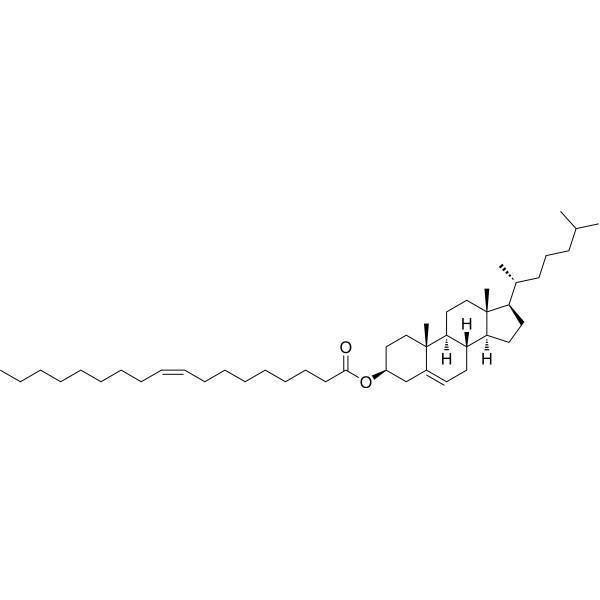
Cholesteryl oleate is an ester compound formed from Cholesterol (HY-N0322) and Oleic acid (HY-N1446), which is involved in lipid transport, storage and cell membrane formation in living organisms. Cholesteryl oleate may serve as a potential biomarker for prostate cancer. Cholesteryl oleate can also prepare cationic solid lipid nanoparticles (SLNs) for efficient gene silencing.
商品は「研究用試薬」です。人や動物の医療用・臨床診断用・食品用の製品ではありません。
研究用途以外に使用した場合、当社は一切の責任を負いかねます。
- 純度: 99.0%
- CAS 番号: 303-43-5
- 分子式: C45H78O2
- 分子量:651.10
-
保管条件:Pure form -20°C, 3 years ; In solvent -80°C, 6 months , -20°C, 1 month

To place orders, for customer services and technical support, please contact: MedChemExpress USA
Tel: 609-228-6898 E-mail: [email protected] [email protected]


-
 生物活性
生物活性
-
化学情報
-
溶剤 & 溶解度
- 純度とドキュメンテーション
- 参考文献
-
 Help & FAQs


-
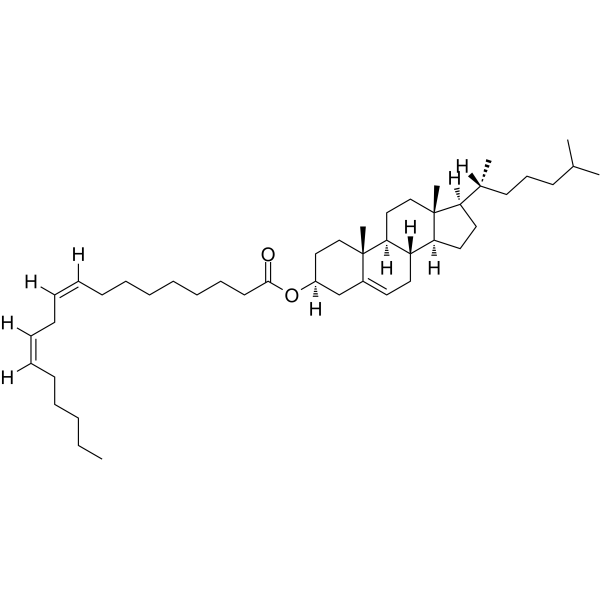
HY-W010697
Cholesteryl linoleate -
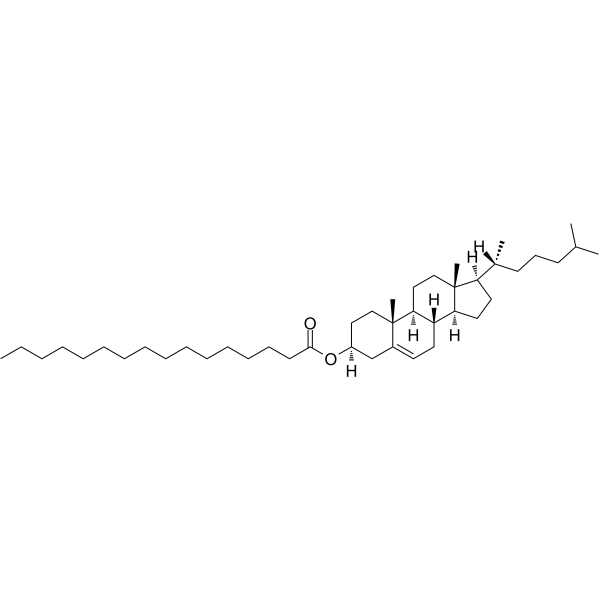
HY-W010708
Cholesteryl palmitate -
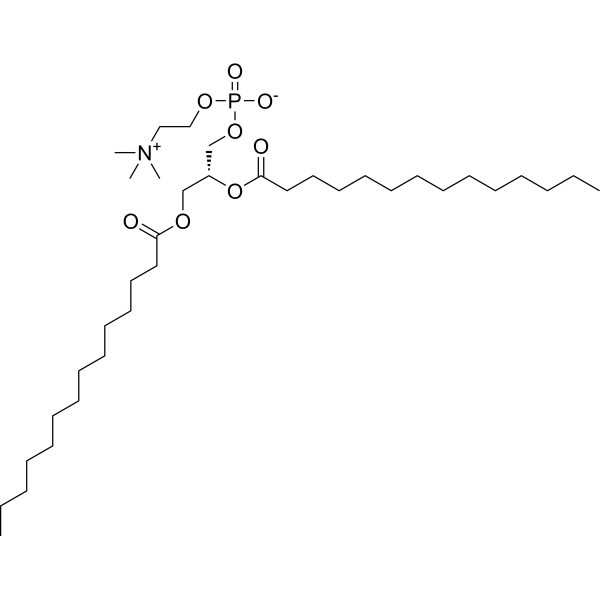
HY-109541
Colfosceril miristate -
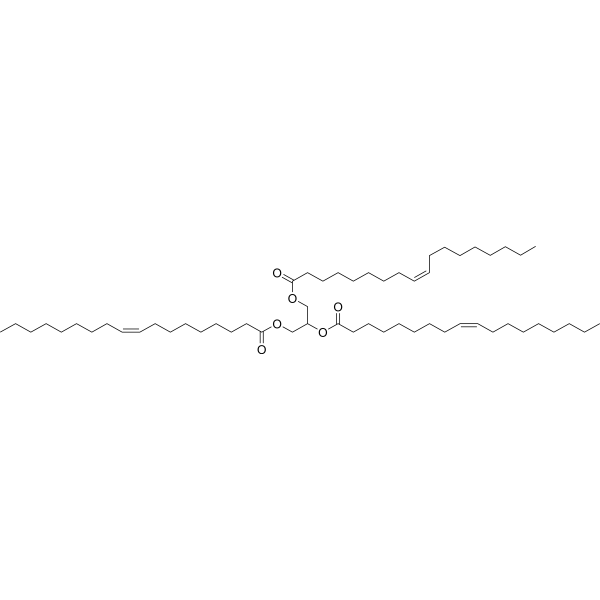
HY-N1981
Triolein -
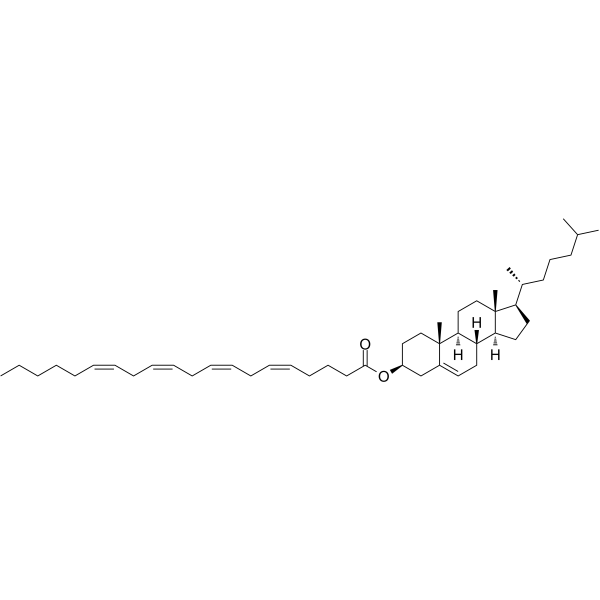
HY-113369
Cholesteryl arachidonate -
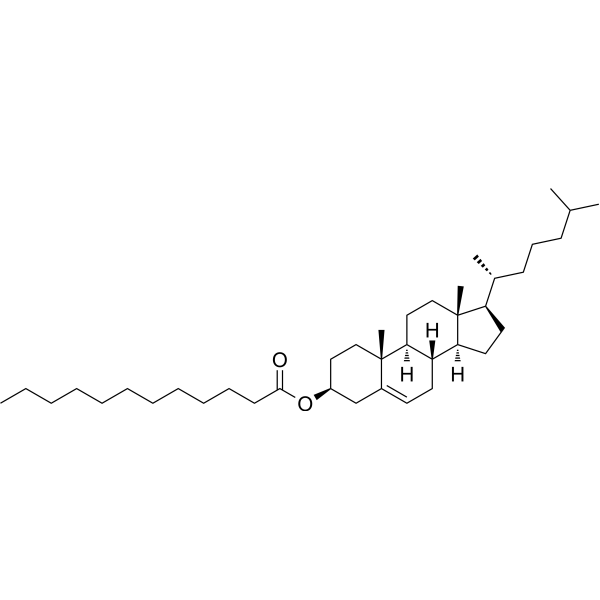
HY-W127400
Cholesteryl dodecanoate -
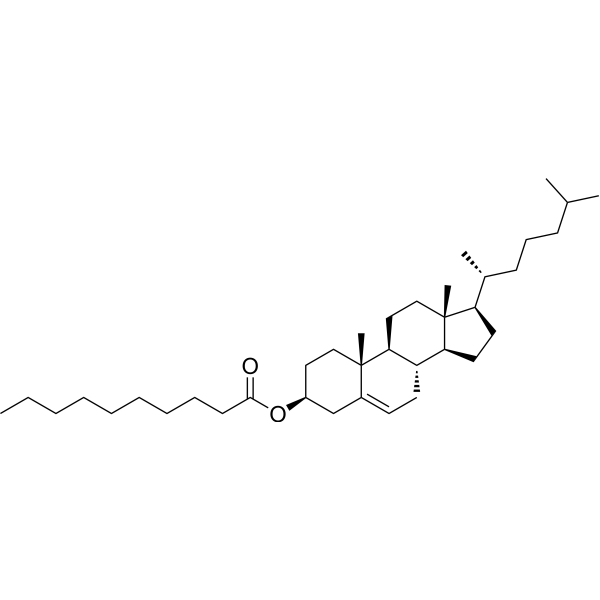
HY-W127351
Cholesterol decanoate -
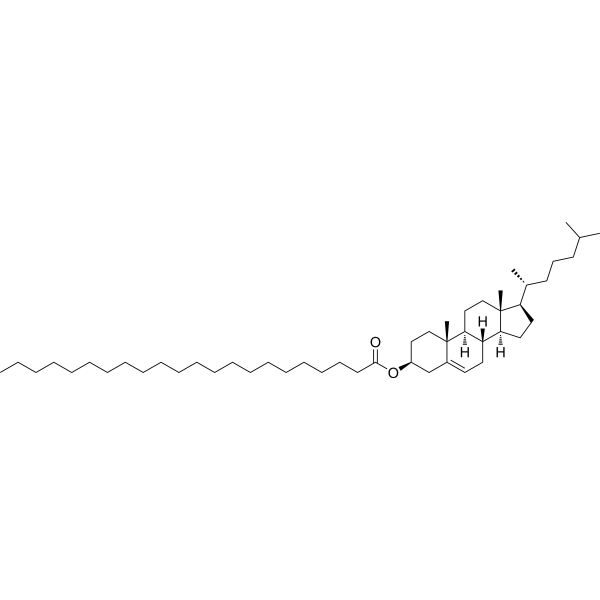
HY-N2339
Cholesteryl behenate -
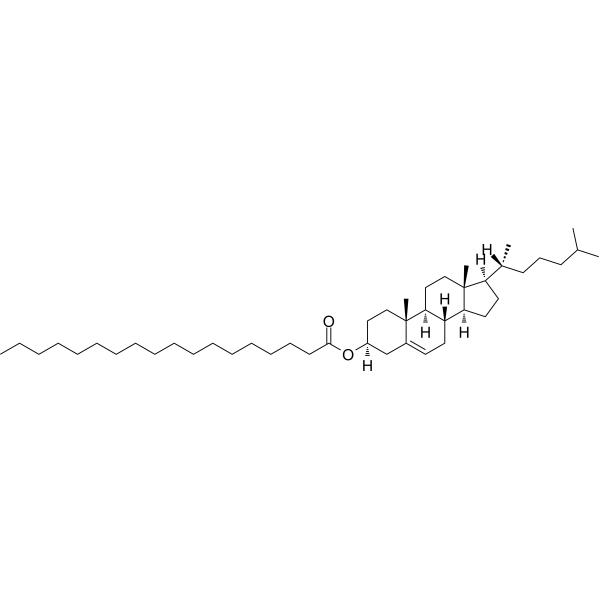
HY-W010695
Cholesteryl stearate -

HY-107823
Cholesteryl acetate -
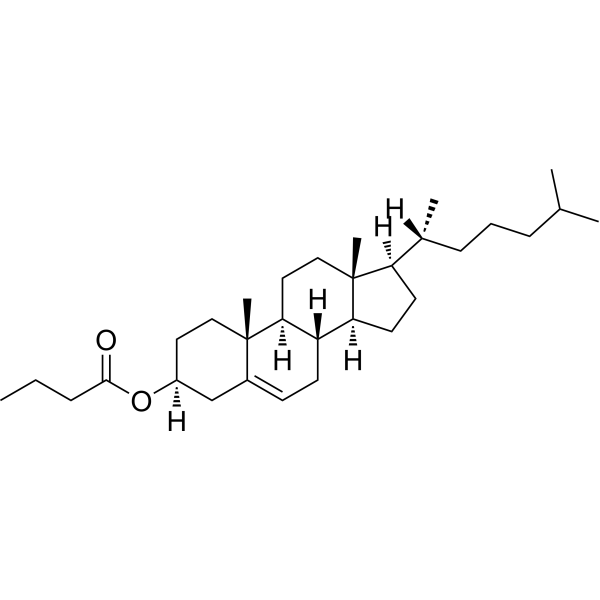
HY-W013122
Cholesteryl n-butyrate -
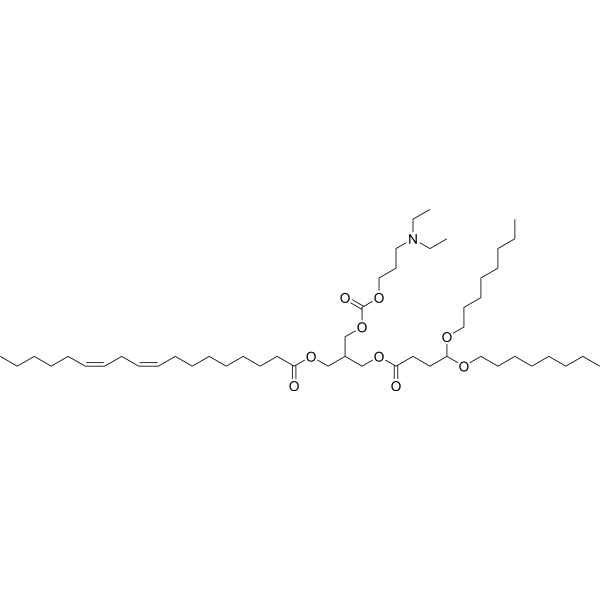
HY-46760
LP01
MedChemExpress(MCE)の使用を引用している文献 Cholesteryl oleate
MoreEndogenous Metabolite アイソフォーム固有の製品をすべて表示
More

生物活性
製品説明
IC50 & Target
|
Human Endogenous Metabolite |
体外実験
Cholesteryl oleate can be used to prepare SLNs. The obtained vector can efficiently deliver DNA or siRNA to cells without cytotoxicity and has good transfection efficiency[1].
MedChemExpress (MCE) has not independently confirmed the accuracy of these methods. They are for reference only.
体内実験
MedChemExpress (MCE) has not independently confirmed the accuracy of these methods. They are for reference only.


化学情報
-
CAS 番号 303-43-5
-
性状 <44°C Solid,>47°C Liquid
-
分子量 651.10
-
分子式 C45H78O2
-
Color White to off-white
-
SMILES
CC(C)CCC[C@@H](C)[C@H]1CC[C@@]2([H])[C@]3([H])CC=C4C[C@@H](OC(CCCCCCC/C=C\CCCCCCCC)=O)CC[C@]4(C)[C@@]3([H])CC[C@]12C
-
別名
Cholesteryl oleate
-
Structure Classification
-
Initial Source
-
輸送条件
Room temperature in continental US; may vary elsewhere.
-
保管条件
Pure form -20°C 3 years In solvent -80°C 6 months -20°C 1 month


Publications (1)
-
Journal Impact Factor
-
Most Recent
-
Arch Biochem Biophys
Selective mitochondrial damage and dysfunction in cholesterol-exposed neuronal cells: Role of mitochondrial lipid peroxidation. [Abstract]2026 Jun:780:110790. PMID: 41825807


溶剤 & 溶解度
体外:
Acetone : 50 mg/mL (76.79 mM; Need ultrasonic)
Ethanol : 12.5 mg/mL (19.20 mM; ultrasonic and warming and heat to 50°C)
Please refer to the solubility information to select the appropriate solvent. Once prepared, please aliquot and store the solution to prevent product inactivation from repeated freeze-thaw cycles.
Storage method and period of stock solution: -80°C, 6 months; -20°C, 1 month. When stored at -80°C, please use it within 6 months. When stored at -20°C, please use it within 1 month.
Please refer to the solubility information to select the appropriate solvent. Once prepared, please aliquot and store the solution to prevent product inactivation from repeated freeze-thaw cycles.
Storage method and period of stock solution: -80°C, 6 months; -20°C, 1 month. When stored at -80°C, please use it within 6 months. When stored at -20°C, please use it within 1 month.
濃度 (開始) × 体積 (開始) = 濃度 (終了) × 体積 (終了)
体内:
Select the appropriate dissolution method based on your experimental animal and administration route.
- For the following dissolution methods, please ensure to first prepare a clear stock solution using an In Vitro approach and then sequentially add co-solvents:
- To ensure reliable experimental results, the clarified stock solution can be appropriately stored based on storage conditions. As for the working solution for In Vivo experiments, it is recommended to prepare freshly and use it on the same day.
- The percentages shown for the solvents indicate their volumetric ratio in the final prepared solution. If precipitation or phase separation occurs during preparation, heat and/or sonication can be used to aid dissolution.
Add each solvent one by one: 10% EtOH 40% PEG300 5% Tween-80 45% Saline
Solubility: ≥ 1.25 mg/mL (1.92 mM); Clear solution
This protocol yields a clear solution of ≥ 1.25 mg/mL (saturation unknown).
Taking 1 mL working solution as an example, add 100 μL EtOH stock solution (12.5 mg/mL) to 400 μL PEG300, and mix evenly; then add 50 μL Tween-80 and mix evenly; then add 450 μL Saline to adjust the volume to 1 mL.
Preparation of Saline: Dissolve 0.9 g sodium chloride in ddH₂O and dilute to 100 mL to obtain a clear Saline solution.
Add each solvent one by one: 10% EtOH 90% (20% SBE-β-CD in Saline)
Solubility: 1.25 mg/mL (1.92 mM); Suspended solution; Need ultrasonic
This protocol yields a suspended solution of 1.25 mg/mL. Suspended solution can be used for oral and intraperitoneal injection.
Taking 1 mL working solution as an example, add 100 μL EtOH stock solution (12.5 mg/mL) to 900 μL 20% SBE-β-CD in Saline, and mix evenly.
Preparation of 20% SBE-β-CD in Saline (4°C, storage for one week): 2 g SBE-β-CD powder is dissolved in 10 mL Saline, completely dissolve until clear.
Add each solvent one by one: 10% EtOH 90% Corn Oil
Solubility: ≥ 1.25 mg/mL (1.92 mM); Clear solution
This protocol yields a clear solution of ≥ 1.25 mg/mL (saturation unknown). If the continuous dosing period exceeds half a month, please choose this protocol carefully.
Taking 1 mL working solution as an example, add 100 μL EtOH stock solution (12.5 mg/mL) to 900 μL Corn oil, and mix evenly.
Add each solvent one by one: 10% DMSO 40% PEG300 5% Tween-80 45% Saline
Solubility: ≥ 0.52 mg/mL (0.80 mM); Clear solution
This protocol yields a clear solution of ≥ 0.52 mg/mL (saturation unknown).
Taking 1 mL working solution as an example, add 100 μL DMSO stock solution (5.2 mg/mL) to 400 μL PEG300, and mix evenly; then add 50 μL Tween-80 and mix evenly; then add 450 μL Saline to adjust the volume to 1 mL.
Preparation of Saline: Dissolve 0.9 g sodium chloride in ddH₂O and dilute to 100 mL to obtain a clear Saline solution.
Add each solvent one by one: 10% DMSO 90% (20% SBE-β-CD in Saline)
Solubility: ≥ 0.52 mg/mL (0.80 mM); Clear solution
This protocol yields a clear solution of ≥ 0.52 mg/mL (saturation unknown).
Taking 1 mL working solution as an example, add 100 μL DMSO stock solution (5.2 mg/mL) to 900 μL 20% SBE-β-CD in Saline, and mix evenly.
Preparation of 20% SBE-β-CD in Saline (4°C, storage for one week): 2 g SBE-β-CD powder is dissolved in 10 mL Saline, completely dissolve until clear.
In Vivo Dissolution Calculator
Please enter the basic information of animal experiments:
-
-
-
-
Recommended: Prepare an additional quantity of animals to account for potential losses during experiments.
Working solution concentration: 0.22 mg/mL


純度とドキュメンテーション
-
データシート (274 KB)
-
SDS (393 KB)
- English - EN (393 KB)
- Français - FR (393 KB)
- Deutsch - DE (393 KB)
- Norwegian - NO (393 KB)
- Español - ES (393 KB)
- Swedish - SV (393 KB)
- Italian - IT (393 KB)
- Korean - KR (393 KB)
- Portuguese - PT (393 KB)
-
取扱説明書 (2659 KB)
参考文献
[1]. Suñé-Pou M, et, al. Cholesteryl oleate-loaded cationic solid lipid nanoparticles as carriers for efficient gene-silencing therapy. Int J Nanomedicine. 2018 May 30;13:3223-3233. [Content Brief]
[2]. Rudel LL, et al. Hepatic origin of cholesteryl oleate in coronary artery atherosclerosis in African green monkeys. Enrichment by dietary monounsaturated fat. J Clin Invest. 1997 Jul 1;100(1):74-83. [Content Brief]
[3]. Souza SL, et al. Study of the miscibility of cholesteryl oleate in a matrix of ceramide, cholesterol and fatty acid. Chem Phys Lipids. 2011 Oct;164(7):664-71. [Content Brief]
[4]. Li J, et al. Integration of lipidomics and transcriptomics unravels aberrant lipid metabolism and defines cholesteryl oleate as potential biomarker of prostate cancer. Sci Rep. 2016 Feb 11;6:20984. [Content Brief]


Complete Stock Solution Preparation Table
Please refer to the solubility information to select the appropriate solvent. Once prepared, please aliquot and store the solution to prevent product inactivation from repeated freeze-thaw cycles.
Storage method and period of stock solution: -80°C, 6 months; -20°C, 1 month. When stored at -80°C, please use it within 6 months. When stored at -20°C, please use it within 1 month.
| Optional Solvent | Concentration Solvent Mass | 1 mg | 5 mg | 10 mg | 25 mg |
|---|---|---|---|---|---|
| Ethanol / Acetone | 1 mM | 1.5359 mL | 7.6793 mL | 15.3586 mL | 38.3966 mL |
| 5 mM | 0.3072 mL | 1.5359 mL | 3.0717 mL | 7.6793 mL | |
| 10 mM | 0.1536 mL | 0.7679 mL | 1.5359 mL | 3.8397 mL | |
| 15 mM | 0.1024 mL | 0.5120 mL | 1.0239 mL | 2.5598 mL | |
| Acetone | 20 mM | 0.0768 mL | 0.3840 mL | 0.7679 mL | 1.9198 mL |
| 25 mM | 0.0614 mL | 0.3072 mL | 0.6143 mL | 1.5359 mL | |
| 30 mM | 0.0512 mL | 0.2560 mL | 0.5120 mL | 1.2799 mL | |
| 40 mM | 0.0384 mL | 0.1920 mL | 0.3840 mL | 0.9599 mL | |
| 50 mM | 0.0307 mL | 0.1536 mL | 0.3072 mL | 0.7679 mL | |
| 60 mM | 0.0256 mL | 0.1280 mL | 0.2560 mL | 0.6399 mL |


Cholesteryl oleate 関連分類
HY-113217 関連分類
 Powered by Bioz