



Doxapram
Based on 1 publication(s) in Google Scholar
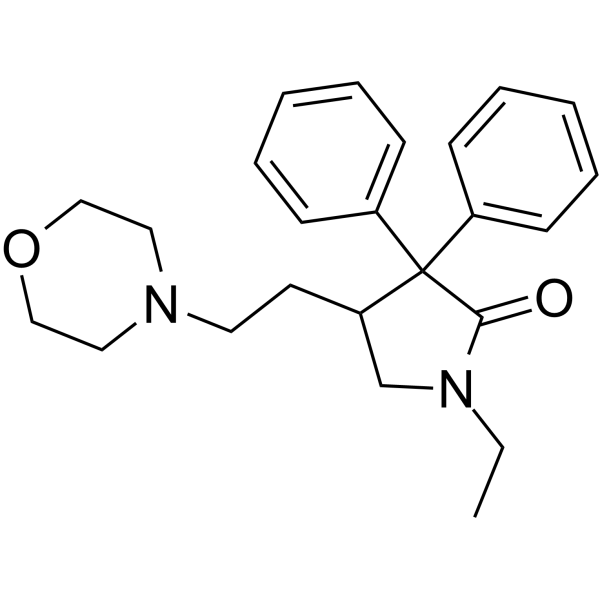
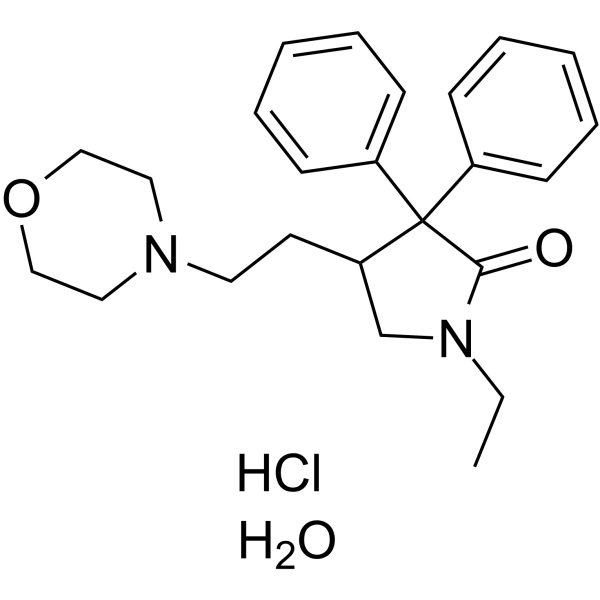
Doxapram is a respiratory stimulant. Doxapram increases breathing rate and depth by acting on the brain's respiratory centers and peripheral chemoreceptors. Doxapram inhibits TASK-1, TASK-3, TASK-1/TASK-3 heterodimeric channel function with EC50s of 410 nM, 37 μM, 9 μM, respectively. Doxapram inhibits the Ca²⁺-activated potassium current (IC50 ≈ 13 μM) and Ca²⁺-independent potassium current (IC50 ≈ 20 μM) in type I cells of the carotid body. Doxapram significantly prolongs the effective refractory period of the atrium and has an anti-arrhythmic effect. Doxapram can be used for the study of respiratory depression such as post-anesthesia respiratory depression, chronic obstructive pulmonary disease and apnea of prematurity.
商品は「研究用試薬」です。人や動物の医療用・臨床診断用・食品用の製品ではありません。
研究用途以外に使用した場合、当社は一切の責任を負いかねます。
- 純度 : 99.70%
- CAS 番号: 309-29-5
- 分子式: C24H30N2O2
- 分子量:378.51
-
保管条件:Powder -20°C, 3 years , 4°C, 2 years ; In solvent -80°C, 6 months , -20°C, 1 month

To place orders, for customer services and technical support, please contact: MedChemExpress USA
Tel: 609-228-6898 E-mail: [email protected] [email protected]


-
 生物活性
生物活性
-
化学情報
-
溶剤 & 溶解度
- 純度とドキュメンテーション
- 参考文献
-
 Help & FAQs


-
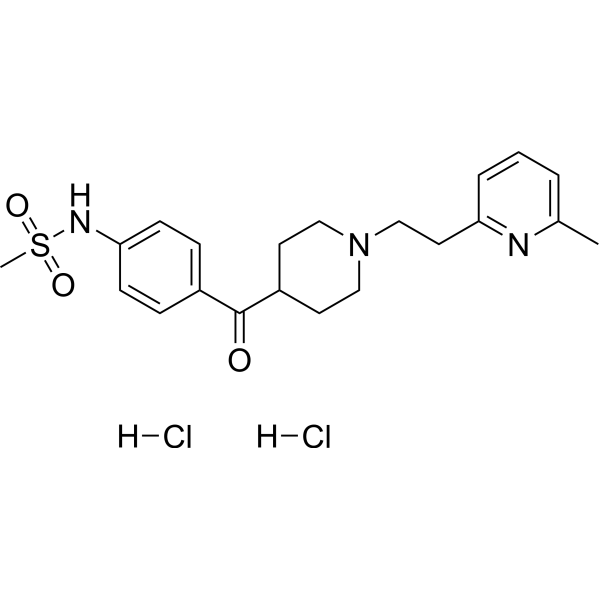
HY-15551
E-4031hERG Channels Blocker -
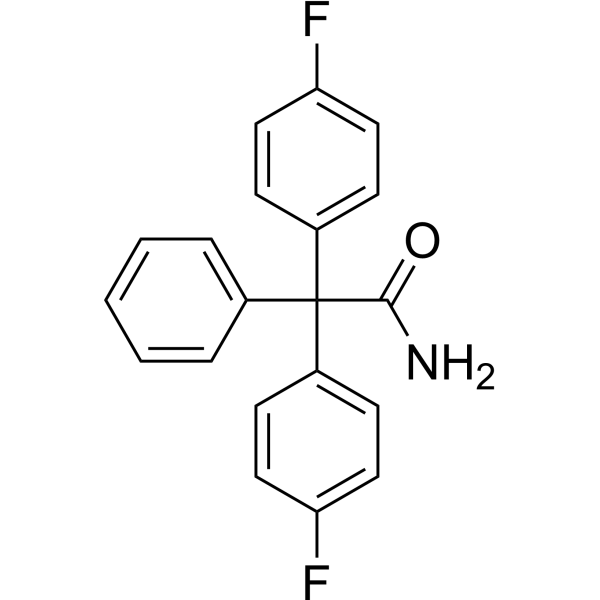
HY-50694
SenicapocGardos Channel Blocker -
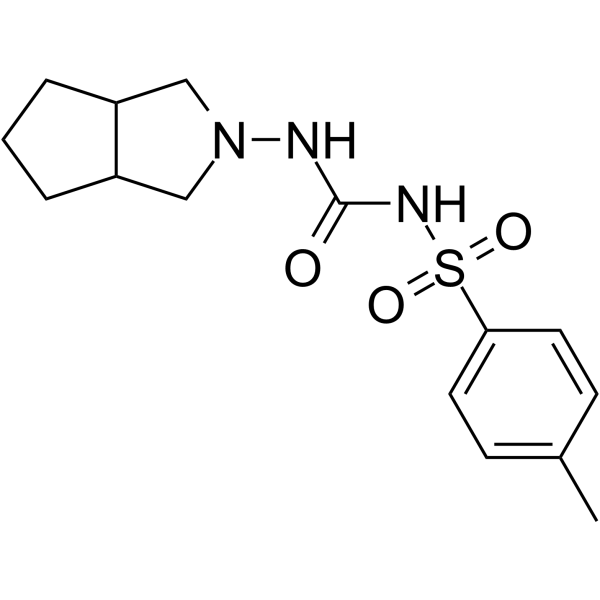
HY-B0753
GliclazidePotassium Currents Blocker -
HY-12345
ML365Potassium Channel Inhibitor -
HY-B0551A
Doxapram hydrochloride hydrateTASK-1 Inhibitor -
HY-12082A
GSK369796 DihydrochloridehERG Inhibitor -

HY-15551R
E-4031 (Standard)hERG Channels Blocker -
HY-B0112
MinoxidilEndogenous Metabolite -
HY-100381
Nigericin sodium saltNLRP3 Activator -
HY-D0143
QuinineAlkaloid -
HY-15707
NS6180KCa3.1 Channel Inhibitor
MedChemExpress(MCE)の使用を引用している文献 Doxapram
More

生物活性
製品説明
体外実験
Doxapram (0.01-100 μM, 10-30 min) inhibits human and porcine TASK-1 with IC50s of 0.88 and 0.93 μM in human and porcine atrial muscle cells[6].
MedChemExpress (MCE) has not independently confirmed the accuracy of these methods. They are for reference only.
体内実験
Doxapram (> 1 mg/kg, i.v.) stimulates the brainstem respiratory center rather than the peripheral chemoreceptors in dogs[4].
Doxapram (1-2 mg/kg, i.v., single dose or once daily for 14 days) has a specific anti-arrhythmic effect on the atrium in domestic pigs[6].
MedChemExpress (MCE) has not independently confirmed the accuracy of these methods. They are for reference only.
-
Animal Model:Acute atrial fibrillation and persistent atrial fibrillation models established in domestic pigs[6]
-
Dosage:1 and 2 mg/kg (single dose) and 2 mg/kg (continuous administration)
-
Administration:Intravenous injection (i.v.), single dose or once daily for 14 days
-
Result:Prolonged the effective refractory period of the atrium (AERP), but has no effect on ventricular repolarization.
Reversed the electrical remodeling associated with AF (increased TASK-1 current and shortened APD) in long-term treatment.


化学情報
-
CAS 番号 309-29-5
-
性状 Solid
-
分子量 378.51
-
分子式 C24H30N2O2
-
Color White to off-white
-
SMILES
O=C1N(CC)CC(CCN2CCOCC2)C1(C3=CC=CC=C3)C4=CC=CC=C4
-
輸送条件
Room temperature in continental US; may vary elsewhere.
-
保管条件
Powder -20°C 3 years 4°C 2 years In solvent -80°C 6 months -20°C 1 month


Publications (1)
-
Journal Impact Factor
-
Most Recent


溶剤 & 溶解度
体外:
DMSO : 50 mg/mL (132.10 mM; ultrasonic and warming and heat to 60°C; Hygroscopic DMSO has a significant impact on the solubility of product, please use newly opened DMSO)
Please refer to the solubility information to select the appropriate solvent. Once prepared, please aliquot and store the solution to prevent product inactivation from repeated freeze-thaw cycles.
Storage method and period of stock solution: -80°C, 6 months; -20°C, 1 month. When stored at -80°C, please use it within 6 months. When stored at -20°C, please use it within 1 month.
Please refer to the solubility information to select the appropriate solvent. Once prepared, please aliquot and store the solution to prevent product inactivation from repeated freeze-thaw cycles.
Storage method and period of stock solution: -80°C, 6 months; -20°C, 1 month. When stored at -80°C, please use it within 6 months. When stored at -20°C, please use it within 1 month.
濃度 (開始) × 体積 (開始) = 濃度 (終了) × 体積 (終了)
体内:
Select the appropriate dissolution method based on your experimental animal and administration route.
- For the following dissolution methods, please ensure to first prepare a clear stock solution using an In Vitro approach and then sequentially add co-solvents:
- To ensure reliable experimental results, the clarified stock solution can be appropriately stored based on storage conditions. As for the working solution for In Vivo experiments, it is recommended to prepare freshly and use it on the same day.
- The percentages shown for the solvents indicate their volumetric ratio in the final prepared solution. If precipitation or phase separation occurs during preparation, heat and/or sonication can be used to aid dissolution.
Add each solvent one by one: 10% DMSO 40% PEG300 5% Tween-80 45% Saline
Solubility: ≥ 2.5 mg/mL (6.60 mM); Clear solution
This protocol yields a clear solution of ≥ 2.5 mg/mL (saturation unknown).
Taking 1 mL working solution as an example, add 100 μL DMSO stock solution (25.0 mg/mL) to 400 μL PEG300, and mix evenly; then add 50 μL Tween-80 and mix evenly; then add 450 μL Saline to adjust the volume to 1 mL.
Preparation of Saline: Dissolve 0.9 g sodium chloride in ddH₂O and dilute to 100 mL to obtain a clear Saline solution.
Add each solvent one by one: 10% DMSO 90% (20% SBE-β-CD in Saline)
Solubility: ≥ 2.5 mg/mL (6.60 mM); Clear solution
This protocol yields a clear solution of ≥ 2.5 mg/mL (saturation unknown).
Taking 1 mL working solution as an example, add 100 μL DMSO stock solution (25.0 mg/mL) to 900 μL 20% SBE-β-CD in Saline, and mix evenly.
Preparation of 20% SBE-β-CD in Saline (4°C, storage for one week): 2 g SBE-β-CD powder is dissolved in 10 mL Saline, completely dissolve until clear.
In Vivo Dissolution Calculator
Please enter the basic information of animal experiments:
-
-
-
-
Recommended: Prepare an additional quantity of animals to account for potential losses during experiments.
Please enter your animal formula composition:
-
%DMSO +
Recommended: Keep the proportion of DMSO in working solution below 2% if your animal is weak.
-
%+
-
+%Tween-80 + +
-
%Saline +
The co-solvents required include: DMSO, . All of co-solvents are available by MedChemExpress (MCE). , Tween 80. All of co-solvents are available by MedChemExpress (MCE).
Working solution concentration: 0.22 mg/mL
Method for preparing stock solution: mg drug dissolved in μL DMSO. Stock solution concentration: mg/mL.
1. Take μL DMSO stock solution;
2. Add μL .
μL , mix evenly;
3. Then add μL Tween 80, mix evenly;
4. Then add μL
Please ensure that the stock solution in the first step is dissolved to a clear state, and add co-solvents in sequence. You can use ultrasonic heating (ultrasonic cleaner, recommended frequency 20-40 kHz), vortexing, etc. to assist dissolution.


純度とドキュメンテーション
-
データシート (282 KB)
-
SDS (393 KB)
- English - EN (393 KB)
- Français - FR (393 KB)
- Deutsch - DE (393 KB)
- Norwegian - NO (393 KB)
- Español - ES (393 KB)
- Swedish - SV (393 KB)
- Italian - IT (393 KB)
- Korean - KR (393 KB)
- Portuguese - PT (393 KB)
-
取扱説明書 (2659 KB)
参考文献
[1]. Cotten JF, et al. The ventilatory stimulant doxapram inhibits TASK tandem pore (K2P) potassium channel function but does not affect minimum alveolar anesthetic concentration. Anesth Analg, 2006, 102(3), 779-785. [Content Brief]
[2]. Peers, C., Effects of doxapram on ionic currents recorded in isolated type I cells of the neonatal rat carotid body. Brain Res, 1991. 568(1-2): p. 116-22. [Content Brief]
[3]. Anderson-Beck, R., et al., Doxapram stimulates dopamine release from the intact rat carotid body in vitro. Neurosci Lett, 1995. 187(1): p. 25-8. [Content Brief]
[4]. Yost CS. A new look at the respiratory stimulant doxapram. CNS Drug Rev. 2006 Fall-Winter;12(3-4):236-49. [Content Brief]
[5]. Vliegenthart RJ, et al. Doxapram Treatment for Apnea of Prematurity: A Systematic Review. Neonatology. 2017;111(2):162-171. doi: 10.1159/000448941. Epub 2016 Oct 20. [Content Brief]
[6]. Wiedmann F, et al. Treatment of atrial fibrillation with doxapram: TASK-1 potassium channel inhibition as a novel pharmacological strategy. Cardiovasc Res. 2022 Jun 22;118(7):1728-1741. [Content Brief]


Complete Stock Solution Preparation Table
Please refer to the solubility information to select the appropriate solvent. Once prepared, please aliquot and store the solution to prevent product inactivation from repeated freeze-thaw cycles.
Storage method and period of stock solution: -80°C, 6 months; -20°C, 1 month. When stored at -80°C, please use it within 6 months. When stored at -20°C, please use it within 1 month.
| Optional Solvent | Concentration Solvent Mass | 1 mg | 5 mg | 10 mg | 25 mg |
|---|---|---|---|---|---|
| DMSO | 1 mM | 2.6419 mL | 13.2097 mL | 26.4194 mL | 66.0485 mL |
| 5 mM | 0.5284 mL | 2.6419 mL | 5.2839 mL | 13.2097 mL | |
| 10 mM | 0.2642 mL | 1.3210 mL | 2.6419 mL | 6.6048 mL | |
| 15 mM | 0.1761 mL | 0.8806 mL | 1.7613 mL | 4.4032 mL | |
| 20 mM | 0.1321 mL | 0.6605 mL | 1.3210 mL | 3.3024 mL | |
| 25 mM | 0.1057 mL | 0.5284 mL | 1.0568 mL | 2.6419 mL | |
| 30 mM | 0.0881 mL | 0.4403 mL | 0.8806 mL | 2.2016 mL | |
| 40 mM | 0.0660 mL | 0.3302 mL | 0.6605 mL | 1.6512 mL | |
| 50 mM | 0.0528 mL | 0.2642 mL | 0.5284 mL | 1.3210 mL | |
| 60 mM | 0.0440 mL | 0.2202 mL | 0.4403 mL | 1.1008 mL | |
| 80 mM | 0.0330 mL | 0.1651 mL | 0.3302 mL | 0.8256 mL | |
| 100 mM | 0.0264 mL | 0.1321 mL | 0.2642 mL | 0.6605 mL |


Doxapram 関連分類
HY-B0551 関連分類
 Powered by Bioz