



KT195
KT195 is a serine hydrolase inhibitor that targets ABHD6 (IC50 = 10 nM) and ABHD2, with no significant activity against DAGLβ. KT195 inhibits endoplasmic reticulum calcium release and mitochondrial calcium uptake by targeting ABHD2, thereby blocking A23187 (HY-N6687) and H2O2-induced necrotic cell death and apoptosis. By inhibiting ABHD6 activity, KT195 significantly induces 2-AG accumulation in Neuro2A cells and reduces IL-1β secretion in lipopolysaccharide-treated macrophages. KT195 has been used as a negative control probe for DAGLβ and can be applied in studies of ABHD6 and ABHD2 in calcium signaling, lipid metabolism, neuronal function, and inflammatory.
商品は「研究用試薬」です。人や動物の医療用・臨床診断用・食品用の製品ではありません。
研究用途以外に使用した場合、当社は一切の責任を負いかねます。
- CAS 番号: 1402612-58-1
- 分子式: C27H26N4O2
- 分子量:438.52
-
保管条件:
Please store the product under the recommended conditions in the Certificate of Analysis.


To place orders, for customer services and technical support, please contact: MedChemExpress USA
Tel: 609-228-6898 E-mail: [email protected] [email protected]


-
 生物活性
生物活性
-
化学情報
- プロトコル
- 純度とドキュメンテーション
- 参考文献
-
 Help & FAQs


-
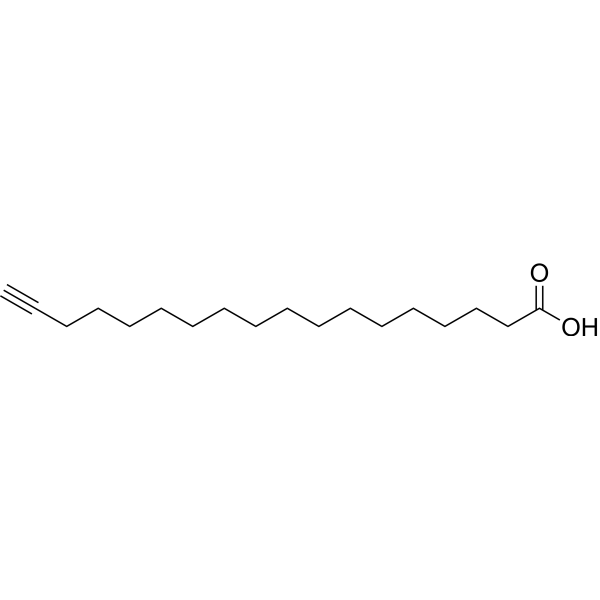
HY-101016
17-ODYACYP450 ω-Hydroxylase Inhibitor -
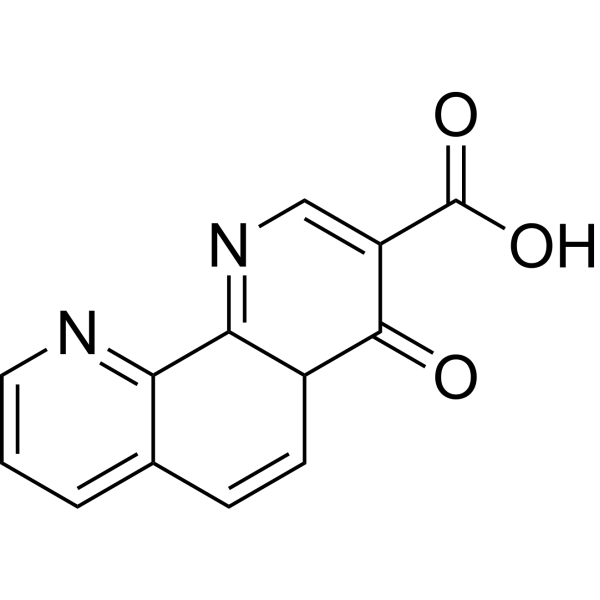
HY-121172
1,4-DPCAProlyl-4-hydroxylase Inhibitor -
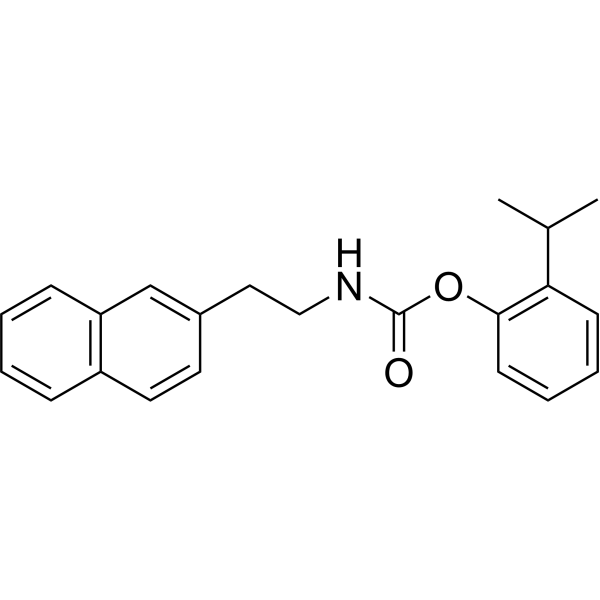
HY-107582
JW480KIAA1363/AADACL1 Inhibitor -

HY-101016R
17-ODYA (Standard)CYP450 ω-Hydroxylase Inhibitor -

HY-107582R
JW480 (Standard)Reference Standard -

HY-125775
12(S)-Hydroxy-16-heptadecynoic acidP450 ω-Hydroxylase Inhibitor -
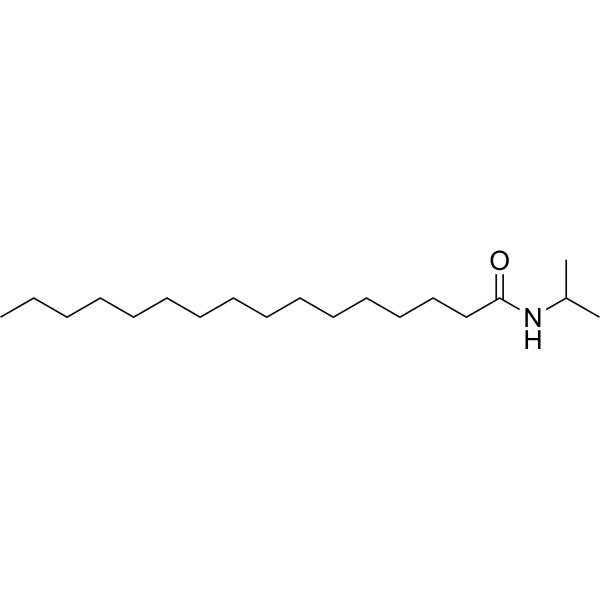
HY-103324
PalmitoylisopropylamideAnandamide Metabolism Inhibitor


生物活性
製品説明
|
ABHD6 10 nM (IC50) |
ABHD2 |
体外実験
KT195 (0.2-2 μM; pretreated for 30 min) significantly inhibits 50 μMH2O2-induced apoptosis in MLF cells, partially inhibits 1 mM H2O2-induced [3H]arachidonic acid release and LDH release, and inhibits MPTP formation; in IMLF α⁻/⁻ cells, it concentration-dependently inhibits A23187-induced [3H]arachidonic acid release and LDH release (IC50 ≈ 0.7 μM); but it shows no inhibitory effect on 250 nM Staurosporine (HY-15141)-induced apoptosis[1][2].
KT195-alkyne (0.2-10 μM; 1 h) labels ABHD2 and ABHD6 in a concentration-dependent manner in the IMLF cell membrane proteome[1].
KT195-alkyne (30 min) inhibits A23187 (HY-N6687)-induced necrotic cell death in IMLF cells, with an IC50 of approximately 1.5 μM, comparable to unmodified KT195 (IC50 0.7 μM)[1].
KT195 (10 μM) competitively blocks the binding of KT195-alkyne to ABHD2 in IMLF cells, indicating that ABHD2 is a target of KT195[1].
KT195 (2 μM; pretreated for 30 min + co-incubated with A23187 for 30 min) still inhibits A23187-induced [3H]arachidonic acid release and LDH release in ABHD6-knockdown IMLF α⁻/⁻ cells, indicating that its anti-necrotic effect is independent of ABHD6[2].
KT195 (0.025-2 μM) completely blocks HT-01 probe binding to ABHD6 in IMLF α⁻/⁻ cells and concentration-dependently inhibits HT-01 probe binding to ABHD6 in the IMLF α⁻/⁻ membrane proteome, with an IC50 of approximately 25 nM[2].
KT195 (pretreated for 30 min + co-incubated with A23187 for 30 min) completely blocks mitochondrial calcium uptake in IMLF α⁻/⁻ cells, but only partially reduces cytosolic calcium elevation[2].
KT195 (2 μM; pretreated for 30 min + co-incubated with 20 μMThapsigargin for 60 min) shows no significant inhibitory effect on Thapsigargin-induced [3H]arachidonic acid release and LDH release in IMLF α⁻/⁻ cells[2].
KT195 (2 μMor 10 μM; pretreated for 30 min then washed out) fails to inhibit [3H]arachidonic acid release and LDH release in IMLF α⁻/⁻ cells when stimulated with A23187 30 min after washout, indicating that its inhibitory effect is reversible or requires continuous target occupancy[2].
KT195 (0.0032-10 μM; 4 h) shows potent inhibitory activity against ABHD6 in recombinant proteomes, tissue proteomes, Neuro2A cells, and PC3 cells (ex vivo IC50 = 10 nM; in situ IC50 ≈ 1 nM), but shows no activity against DAGLβ or other detected serine hydrolases (DAGLβ IC50 > 10 μM); it does not affect SAG, 2-AG, or arachidonic acid levels in Neuro2A and PC3 cells, but induces significant accumulation of 2-AG[3].
KT195 (2 μM; pretreated for 30 min) fully binds and inhibits ABHD6 in rat primary cortical neurons, but shows no significant inhibitory effect on NMDA (100 μM, 15 min)-induced excitotoxic cell death and mitochondrial calcium elevation[4].
MedChemExpress (MCE) has not independently confirmed the accuracy of these methods. They are for reference only.
-
Cell Line:MLF cells
-
Concentration:2 μM
-
Incubation Time:30 min pretreatment + 6 h stimulation (with 50 μMH2O2)
-
Result:Significantly inhibited apoptosis (decreased Annexin V-positive cells) induced by 50 μMH2O2, but showed no inhibition against 250 nM staurosporine-induced apoptosis.
-
Cell Line:IMLF α⁻/⁻ cells
-
Concentration:0.2, 1 and 2 μM
-
Incubation Time:30 min pretreatment + 30 min stimulation (with A23187)
-
Result:Significantly inhibited [3H]arachidonic acid release and LDH release (necrotic cell death) induced by A23187 (1 μg/ml), with an IC50 of ~0.7 μM(determined from concentration-response curve).
-
Cell Line:ABHD6-knockdown IMLF α⁻/⁻ cells and MLF α+/+ /α⁻/⁻ cells
-
Concentration:2 μM
-
Incubation Time:30 min pretreatment + 30 min stimulation (with A23187) for ABHD6-knockdown cells; 30 min pretreatment + 18 h stimulation (with H2O2) for MLF cells
-
Result:Still inhibited A23187-induced [3H]arachidonic acid release and LDH release in ABHD6-knockdown IMLF cells; partially inhibited H2O2-induced [3H]arachidonic acid release (~36–44% in MLF α+/+ ; ~55% in MLF α⁻/⁻) and LDH release (~45–50%) in MLF cells, and inhibited MPTP formation (calcein fluorescence quenching). These results indicate that its anti-necrotic effect is independent of ABHD6.
-
Cell Line:IMLF α⁻/⁻ cells
-
Concentration:2 μM or 10 μM
-
Incubation Time:30 min pretreatment + 30 min stimulation (with A23187)
-
Result:Failed to inhibit [3H]arachidonic acid release or LDH release induced by A23187 (1 μg/ml) when cells were washed to remove the inhibitor after pretreatment, indicating that its inhibitory effect requires continuous target occupancy.
-
Cell Line:IMLF α⁻/⁻ cells
-
Concentration:2 μM
-
Incubation Time:30 min pretreatment + 60 min stimulation (with Thapsigargin)
-
Result:Showed no significant inhibition of [3H]arachidonic acid release or LDH release induced by Thapsigargin (20 μM).
-
Cell Line:Rat primary cortical neurons
-
Concentration:2 μM
-
Incubation Time:30 min pretreatment + 15 min NMDA stimulation + 24 h recovery
-
Result:Showed no significant inhibition of NMDA (100 μM)-induced excitotoxic cell death (LDH release).
体内実験
MedChemExpress (MCE) has not independently confirmed the accuracy of these methods. They are for reference only.
-
Animal Model:Female C57BL/6 mice (6-8 weeks old) were intraperitoneally injected with 4% (w/v) thioglycollate medium (2.5 mL per mouse) to induce peritoneal macrophage recruitment, and compound treatment was administered 4 days later[3].
-
Dosage:0.1, 0.5, 1, 5, 10 mg/kg (dose-response study); 5 mg/kg (time-course, metabolomics, and cytokine studies); 2 or 5 mg/kg (ABPP-MudPIT study)
-
Administration:Intraperitoneal injection (i.p.); single dose
-
Result:Showed no inhibitory activity against DAGLβ at any dose tested (0.1-10 mg/kg) as measured by gel-based competitive ABPP with the HT-01 probe.
Showed dose-dependent inhibition of ABHD6 at ≥0.5 mg/kg, with complete inhibition observed at 5 mg/kg.
Showed no inhibition of DAGLβ across the entire time course (1-16 h) at 5 mg/kg.
ABPP-MudPIT analysis at 5 mg/kg for 4 h confirmed inhibition of ABHD6 but not DAGLβ; also inhibited off-targets CES3, CES2G, and PLA2G15 (activity reduced by ~50-80%).
At 5 mg/kg for 4 h, showed no significant effects on 2-AG, SAG (C18:0/C20:4 DAG), arachidonic acid, PGE₂, or PGD₂ levels in peritoneal macrophages.
At 5 mg/kg for 2 h, macrophages were isolated and stimulated with LPS (5 μg/mL, 90 min); showed no significant inhibition of TNF-α release.


化学情報
-
CAS 番号 1402612-58-1
-
分子量 438.52
-
分子式 C27H26N4O2
-
SMILES
O=C(N1CCCCC1C2=CC=CC=C2)N3N=NC(C4=CC=C(C5=CC=C(OC)C=C5)C=C4)=C3
-
輸送条件
Room temperature in continental US; may vary elsewhere.
-
保管条件
Please store the product under the recommended conditions in the Certificate of Analysis.


純度とドキュメンテーション
参考文献
[1]. Yun B, et al. Regulation of calcium release from the endoplasmic reticulum by the serine hydrolase ABHD2. Biochem Biophys Res Commun. 2017 Sep 2;490(4):1226-1231. [Content Brief]
[2]. Yun B, et al. Serine hydrolase inhibitors block necrotic cell death by preventing calcium overload of the mitochondria and permeability transition pore formation. J Biol Chem. 2014 Jan 17;289(3):1491-504. [Content Brief]
[3]. Hsu KL, et al. DAGLβ inhibition perturbs a lipid network involved in macrophage inflammatory responses. Nat Chem Biol. 2012 Dec;8(12):999-1007. [Content Brief]
[4]. Manterola A, et al. Re-examining the potential of targeting ABHD6 in multiple sclerosis: Efficacy of systemic and peripherally restricted inhibitors in experimental autoimmune encephalomyelitis. Neuropharmacology. 2018 Oct;141:181-191. [Content Brief]

Calculators
濃度 (開始) × 体積 (開始) = 濃度 (終了) × 体積 (終了)


KT195 関連分類
HY-18542 関連分類
 Powered by Bioz
Keywords
- KT195
- 1402612-58-1
- KT 195
- KT-195
- Lipase
- ABHD2
- ABHD6
- DAGLβ
- DAGLα
- CES3
- CES2G
- PLA2G15
- MLF
- IMLF
- MLF α?/?
- ABHD2 KD IMLF
- ABHD6 KD IMLF
- Rat cortical neurons
- Neuro2A
- PC3
- ER Ca2? release
- Mitochondrial Ca2? uptake
- MPTP
- Necrosis
- Apoptosis
- Arachidonic acid release
- LDH release
- Caspase activation
- Annexin V
- Calcein quenching
- Rhod-2
- Fura Red
- G-CEPIAer
- CEPIA2mt
- 2-AG
- SAG
- PGE2
- PGD2
- TNF-α
- Excitotoxicity
- NMDA excitotoxicity
- In situ IC50
- ABPP-SILAC
- Metabolomics
- ABPP
- Click chemistry
- KT195-alkyne
- Streptavidin pull-down
- LC-MS/MS
- HT-01
- FP-Rh
- Gel-based ABPP
- ABPP-MudPIT
- A23187
- H2O2
- Staurosporine
- Thapsigargin
- NMDA
- Thioglycollate-elicited peritoneal macrophages
- Inhibitor
- inhibitor
- inhibit