



Ligustrazine (Standard)

Based on 1 Customer Validation
Ligustrazine (Standard) (Chuanxiongzine (Standard)) is the analytical standard of Ligustrazine (HY-N0264). This product is intended for research and analytical applications. Ligustrazine (Chuanxiongzine) is an orally active, blood-brain barrier-permeable alkaloid. It can be isolated from Ligusticum striatum DC. Ligustrazine reduces ROS, upregulates the levels of p-Akt/Akt and p-eNOS/eNOS, and decreases ALT and AST. It inhibits glutamate excitotoxicity, calcium overload, oxidative stress, ischemia-reperfusion injury and atherosclerotic plaque progression, enhances synaptic plasticity, and improves neurological function, cerebral infarct volume and brain water content. Ligustrazine possesses anti-inflammatory, antioxidant, lipid-lowering, endothelial protective and hepatoprotective activities. It can be used in studies related to ischemic stroke, cerebral ischemia-reperfusion injury and atherosclerosis.
商品は「研究用試薬」です。人や動物の医療用・臨床診断用・食品用の製品ではありません。
研究用途以外に使用した場合、当社は一切の責任を負いかねます。
- 純度 : 99.99%
- CAS 番号: 1124-11-4
- 分子式: C8H12N2
- 分子量:136.19
-
保管条件:
Please store the product under the recommended conditions in the Certificate of Analysis.


To place orders, for customer services and technical support, please contact: MedChemExpress USA
Tel: 609-228-6898 E-mail: [email protected] [email protected]


-
 Product Information
-
化学情報
- 純度とドキュメンテーション
-
 Help & FAQs


-
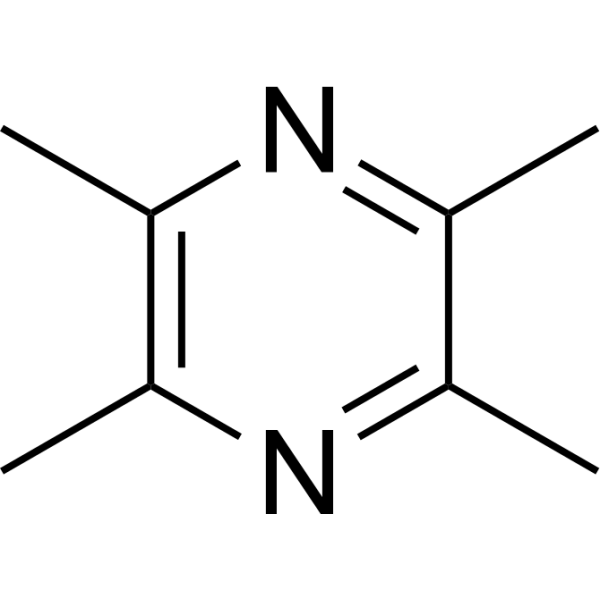
HY-N0264
LigustrazineNeuroprotective Agent/Lipid Lowering Agent -
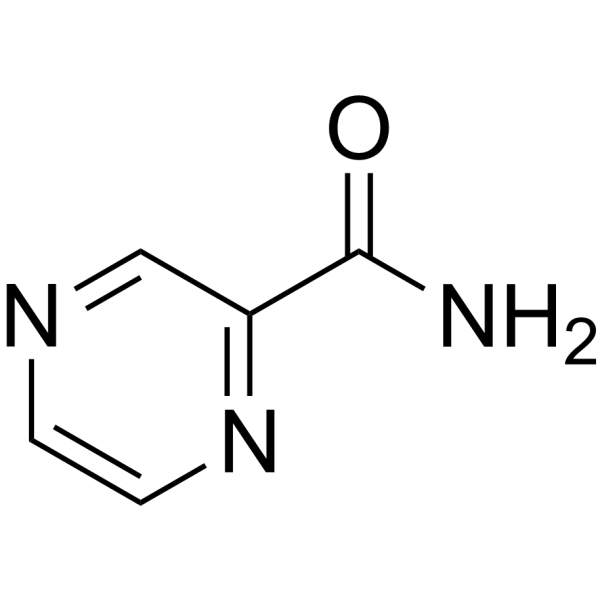
HY-B0271
PyrazinamideAntitubercular Antibiotic -

HY-76353R
2-Pyrazinecarboxylic acid (Standard)Biochemical Reagent -
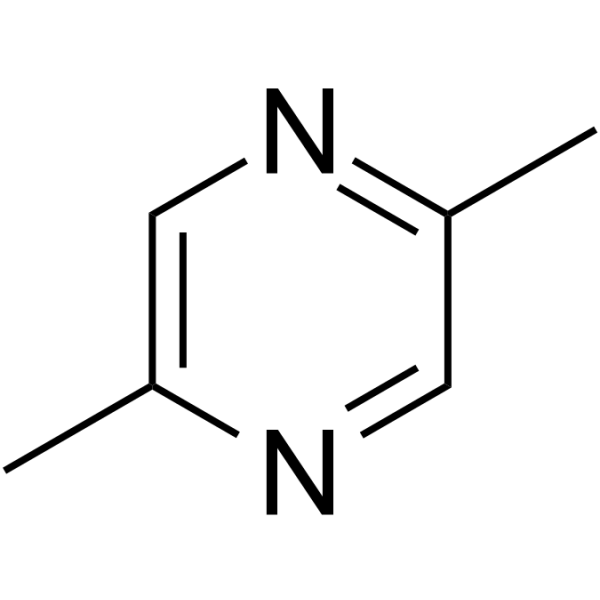
HY-34439
2,5-DimethylpyrazineFlavor Compound -

HY-B0271R
Pyrazinamide (Standard)Antitubercular Antibiotic -
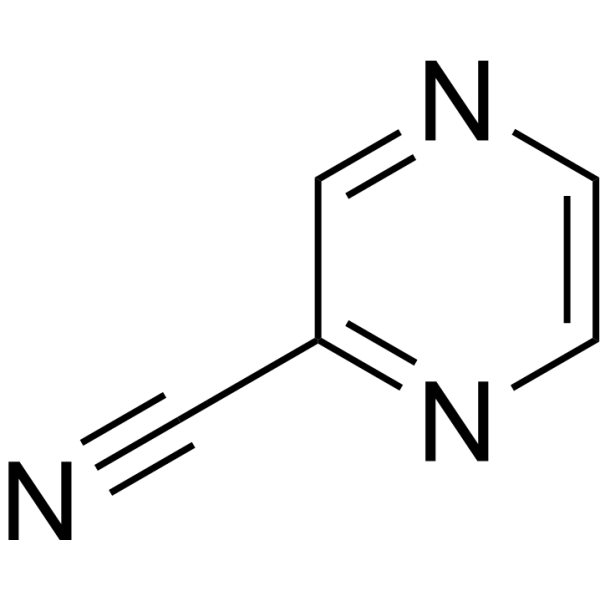
HY-Y0131
Pyrazine-2-carbonitrileAlbumin Binder, Gold Nanoparticle Binder -
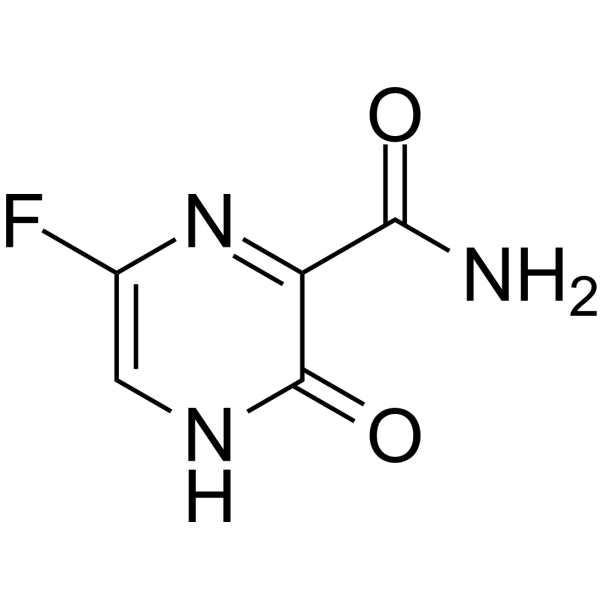
HY-14768
FavipiravirRNA Polymerase Inhibitor -
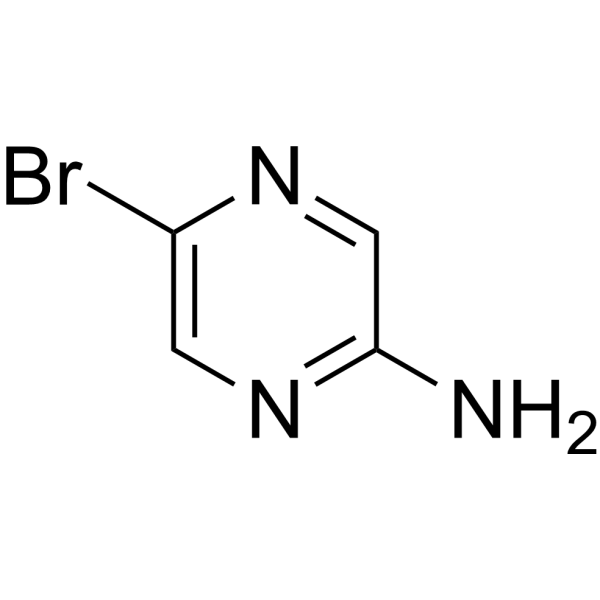
HY-59261
2-Amino-5-bromopyrazineOrganic Synthesis Intermediate -
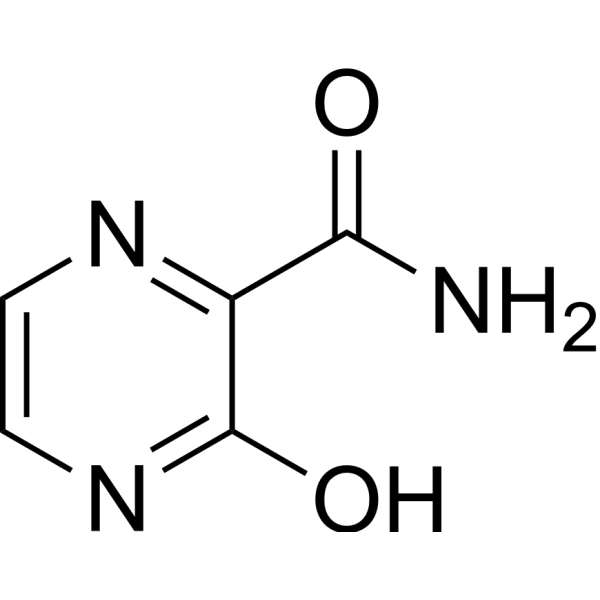
HY-W015764
T-1105Polymerase Inhibitor -
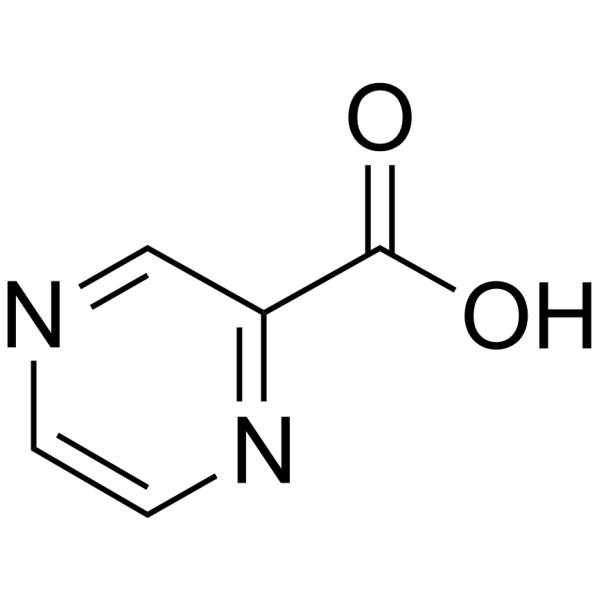
HY-76353
2-Pyrazinecarboxylic acidBiochemical Reagent -
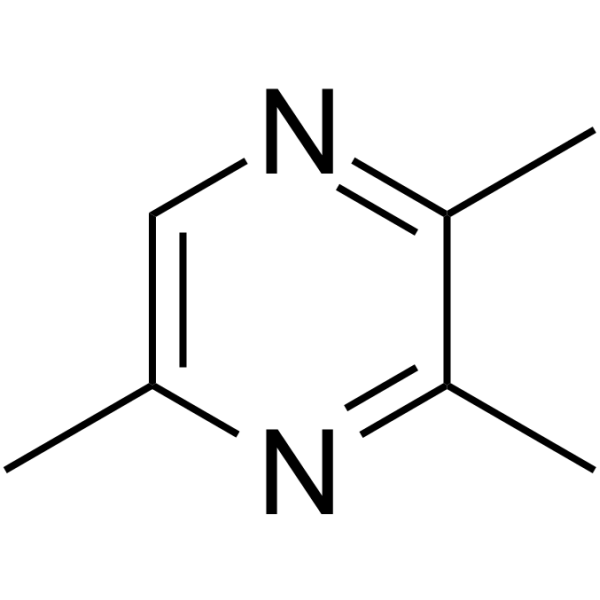
HY-W010476
2,3,5-TrimethylpyrazineOR5K1 Activator -
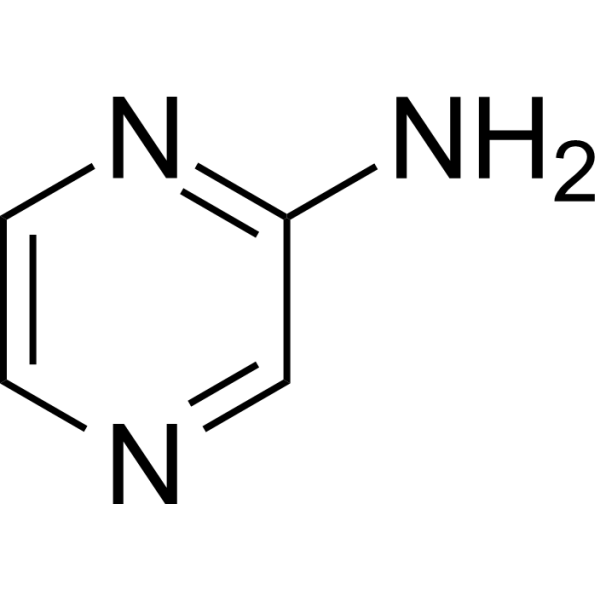
HY-34068
PyrazinamineBiochemical Reagent


Product Information
説明
アプリケーション
The compound is the grade of analytical standard, which is the reference standard supplied assay. It is commonly used in qualitative, quantitative and methodological research experiments in HPLC, GC and MS.


化学情報
-
CAS 番号 1124-11-4
-
性状 Solid
-
分子量 136.19
-
分子式 C8H12N2
-
Color White to off-white
-
SMILES
CC1=C(C)N=C(C)C(C)=N1
-
別名
Chuanxiongzine (Standard); Tetramethylpyrazine (Standard)
-
Structure Classification
-
輸送条件
Room temperature in continental US; may vary elsewhere.
-
保管条件
Please store the product under the recommended conditions in the Certificate of Analysis.


純度とドキュメンテーション
-
SDS (252 KB)
- Français - FR (252 KB)
- Deutsch - DE (252 KB)
- Norwegian - NO (252 KB)
- Español - ES (252 KB)
- Swedish - SV (252 KB)
- Italian - IT (252 KB)
- Korean - KR (252 KB)
- Portuguese - PT (252 KB)
-
取扱説明書 (2659 KB)
参考文献
[1]. Wang Z, et al. The protective effects of ligustrazine on ischemic stroke: a systematic review and meta-analysis of preclinical evidence and possible mechanisms. Front Pharmacol. 2024;15:1373663. Published 2024 Mar 13. [Content Brief]
[2]. Ding Y, et al. The protective effect of ligustrazine on rats with cerebral ischemia-reperfusion injury via activating PI3K/Akt pathway. Hum Exp Toxicol. 2019;38(10):1168-1177. [Content Brief]
[3]. Jiang F, et al. Ligustrazine improves atherosclerosis in rat via attenuation of oxidative stress. Pharm Biol. 2011;49(8):856-863. [Content Brief]

Calculators
濃度 (開始) × 体積 (開始) = 濃度 (終了) × 体積 (終了)


Ligustrazine (Standard) 関連分類
HY-N0264R 関連分類
 Powered by Bioz
Keywords
- Ligustrazine (Standard)
- 1124-11-4
- Chuanxiongzine (Standard)
- Tetramethylpyrazine (Standard)
- Reference Standards
- Reactive Oxygen Species (ROS)
- Akt
- NO Synthase
- Aminotransferases (Transaminases)
- PI3K/Akt
- human amniotic epithelial cells
- Kunming mouse
- MMP-9
- caspase-3
- C57BL/6 mouse
- claudin-5
- JAK/STAT
- calcium channels
- Wistar rats
- Inhibitor
- inhibitor
- inhibit