



Antileukinate
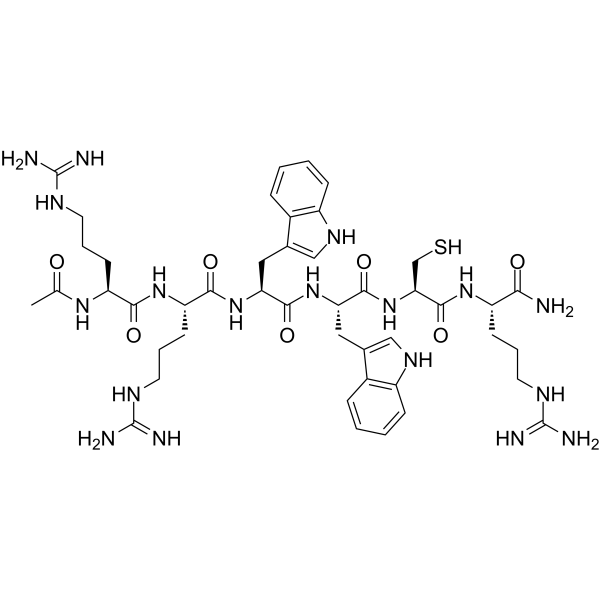
Antileukinate, a hexapeptide, is a potent inhibitor of CXC-chemokine receptor (CXCR). Antileukinate inhibits neutrophil chemotaxis and activation. Antileukinate can be used for the research of acute inflammation and injury.
연구목적의 판매만을 진행합니다. 환자를 대상으로 한 판매는 하지 않습니다.
- CAS No.: 138559-60-1
- 화학식: C45H66N18O7S
- 분자량:1003.19
-
보관:
Please store the product under the recommended conditions in the Certificate of Analysis.

To place orders, for customer services and technical support, please contact: MedChemExpress USA
Tel: 609-228-6898 E-mail: [email protected] [email protected]


-
 Biological Activity
-
Chemical Information
- 순도&문서
- References
-
 Help & FAQs




Biological Activity
Antileukinate inhibits the binding of human eotaxin to human eosinophils with an IC50 of 8.2 μM[2].
Antileukinate (10-100 μM; 2 hours) significantly suppresses eosinophil chemotaxis to human eotaxin[2].
MedChemExpress (MCE) has not independently confirmed the accuracy of these methods. They are for reference only.
Antileukinate (5mg/kg; s.c.) inhibits the interaction between murine eotaxin and murine eosinophil[2].
MedChemExpress (MCE) has not independently confirmed the accuracy of these methods. They are for reference only.
-
Animal Model:Swiss mice (20-25g)[1]
-
Dosage:52.63 mg/kg
-
Administration:Subcutaneous injection
-
Result:Reduced pancreatic edema induced by Caerulein (50 μg/kg).


Chemical Information
-
CAS No. 138559-60-1
-
분자량 1003.19
-
화학식 C45H66N18O7S
-
Sequence Shortening
Ac-RRWWCR-NH2
-
선적
Room temperature in continental US; may vary elsewhere.
-
보관
Please store the product under the recommended conditions in the Certificate of Analysis.


순도&문서
References
[1]. Madhav Bhatia, et al. Treatment with antileukinate, a CXCR2 chemokine receptor antagonist, protects mice against acute pancreatitis and associated lung injury. Regul Pept. 2007 Jan 10;138(1):40-8. [Content Brief]
[2]. Yuji Fukuno, et al. Chemokine receptor inhibitor, Antileukinate, suppressed ovalbumin-induced eosinophilic inflammation in the airway. Cytokine. 2003 Jun 7;22(5):116-25. [Content Brief]
[3]. S HayashiY, et al. Antileukinate, a hexapeptide inhibitor of CXC-chemokine receptor, suppresses bleomycin-induced acute lung injury in mice. Lung. 2002;180(6):339-48. [Content Brief]

Calculators
Concentration (start) × Volume (start) = Concentration (final) × Volume (final)


Antileukinate Related Classifications
HY-125567 Related Classifications
 Powered by Bioz