



CMX-8933

Based on 1 Customer Validation
CMX-8933 is an octapeptide fragment of the goldfish brain neurotrophic factor ependymin. CMX-8933 increases the enzymatic activity of c-Jun N-terminal kinase (JNK), increases the phosphorylation of JNK and c-Jun proteins, and increases the cellular levels of c-Jun and c-Fos mRNA. CMX-8933 can be used to study the role of ependymin in neuroplasticity, learning, memory formation, and neural regeneration.
연구목적의 판매만을 진행합니다. 환자를 대상으로 한 판매는 하지 않습니다.
- Purity : 99.77%
- CAS No.: 146877-90-9
- 화학식: C47H80N14O13
- 분자량:1049.22
-
보관:
Sealed storage, away from moisture.
Powder -80°C, 2 years , -20°C, 1 year* In solvent : -80°C, 6 months; -20°C, 1 month (sealed storage, away from moisture)


To place orders, for customer services and technical support, please contact: MedChemExpress USA
Tel: 609-228-6898 E-mail: [email protected] [email protected]


-
 Biological Activity
-
Chemical Information
-
용액&용해도
- Protocol
- 순도&문서
- References
-
 Help & FAQs


-
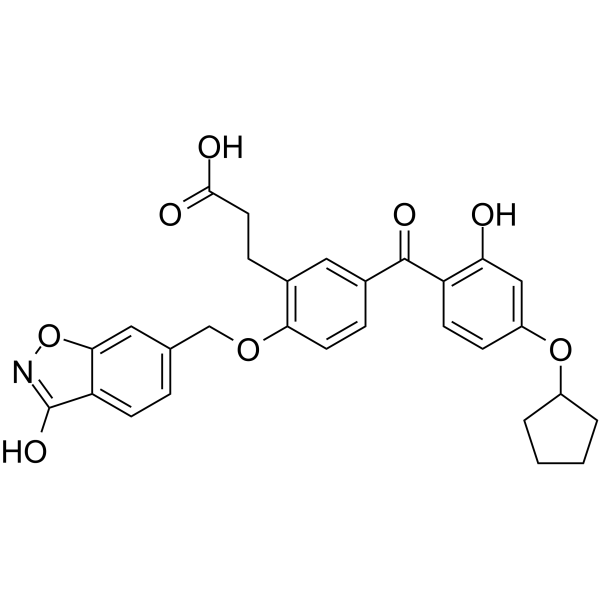
HY-12270
T-5224c-Fos/AP-1 Inhibitor -
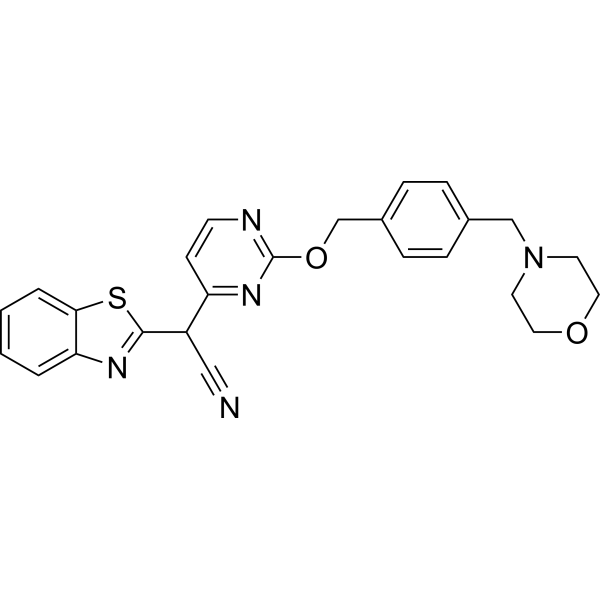
HY-14761
BentamapimodJNK Inhibitor -
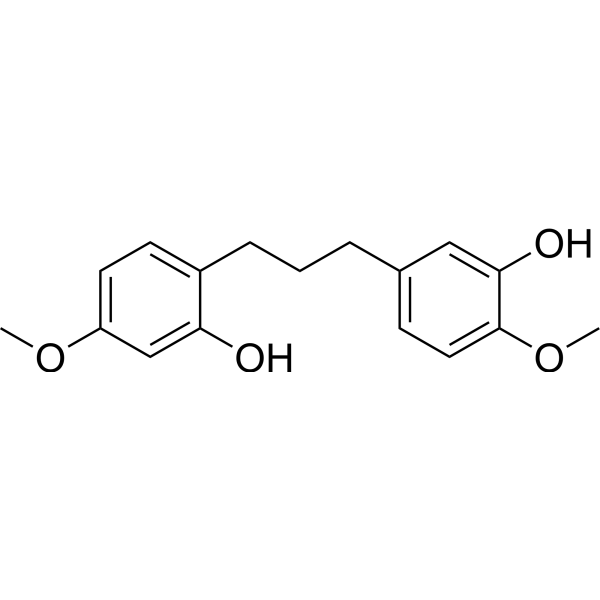
HY-N2963
Broussonin EERK/p38 MAPK Inhibitor -
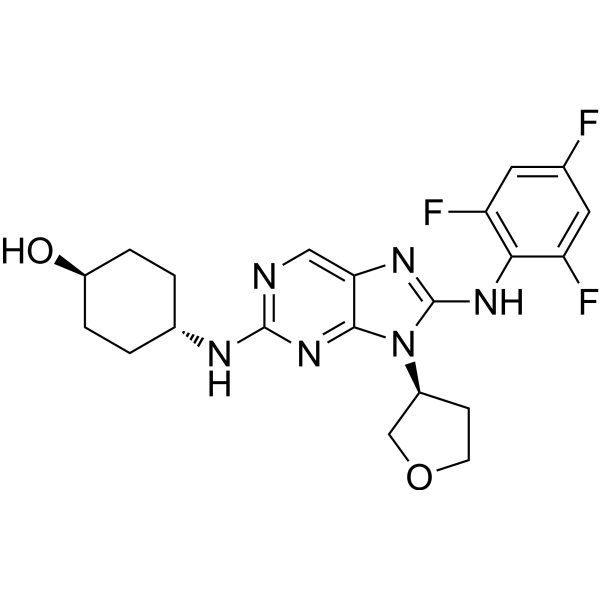
HY-15495
Tanzisertib -
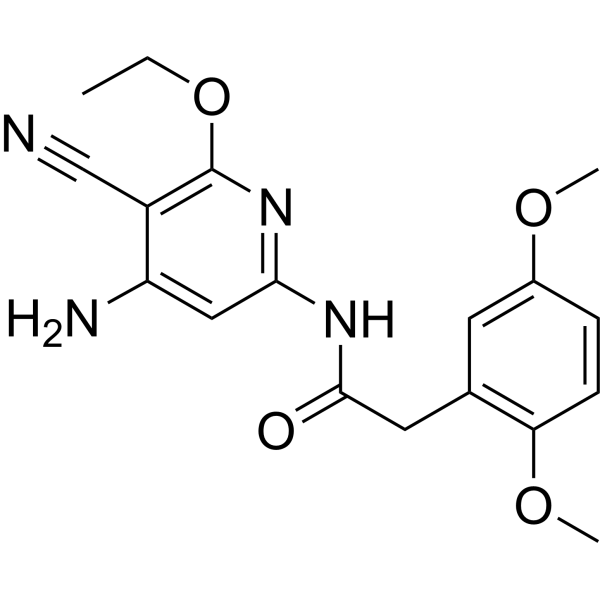
HY-107598
JNK Inhibitor VIIIJNK Inhibitor -
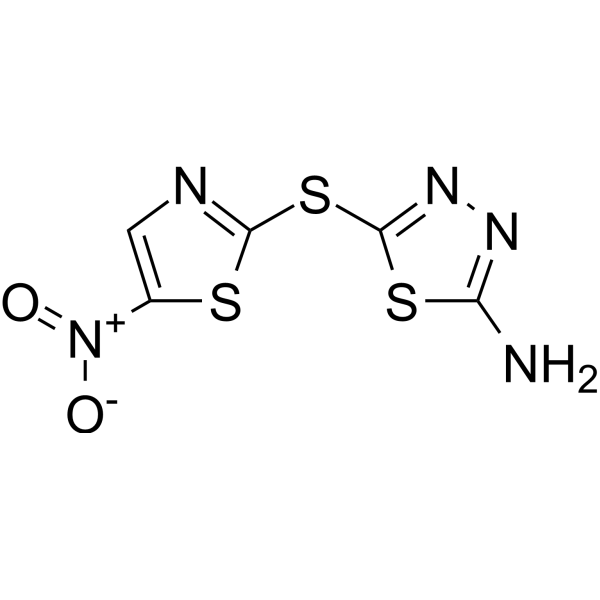
HY-107597
HalicinJNK Inhibitor -
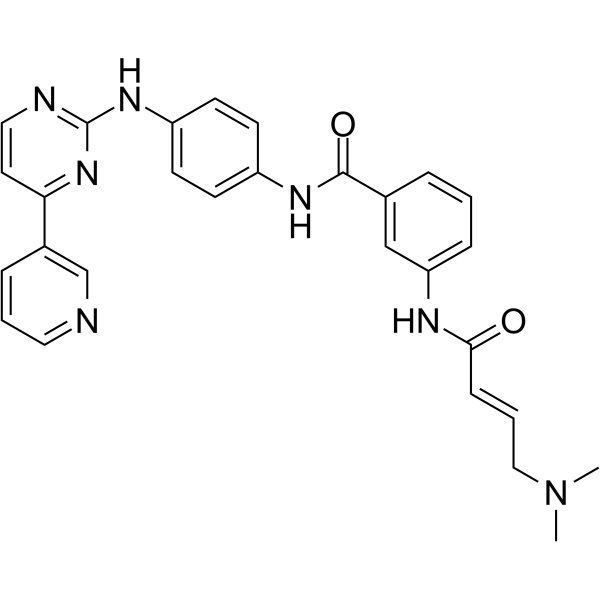
HY-15617
JNK-IN-7JNK Inhibitor -
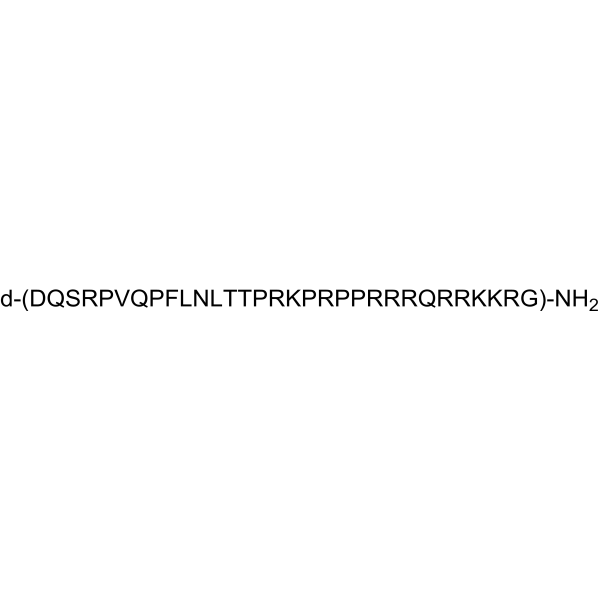
HY-P0069
D-JNKI-1 -
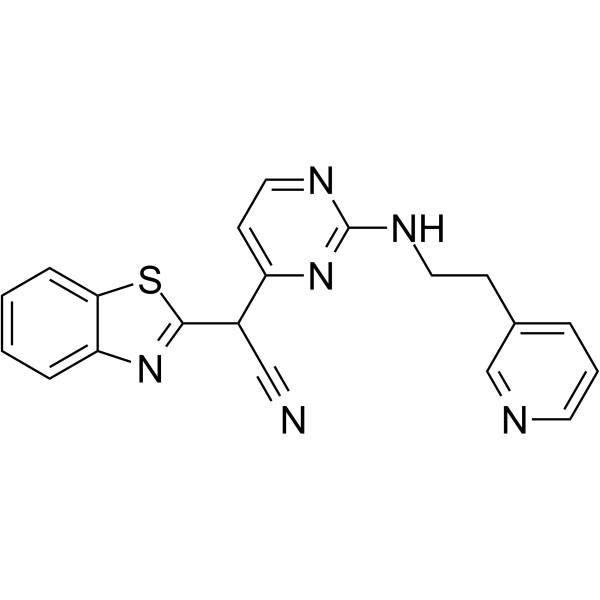
HY-11010
AS601245JNK Inhibitor -
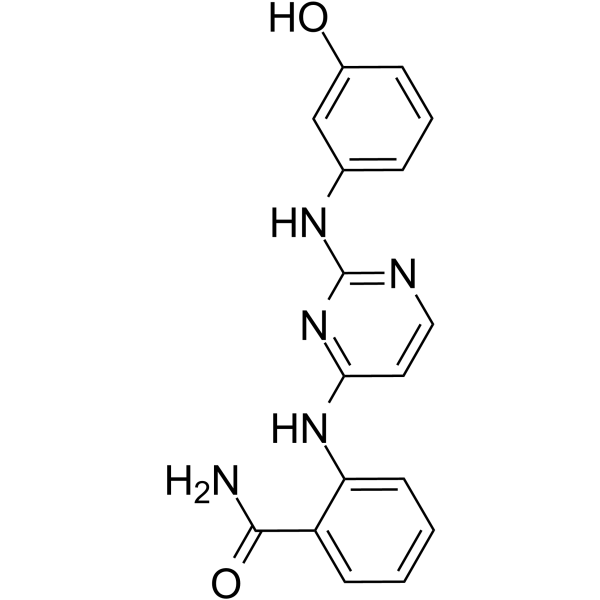
HY-15737
DB07268JNK Inhibitor -
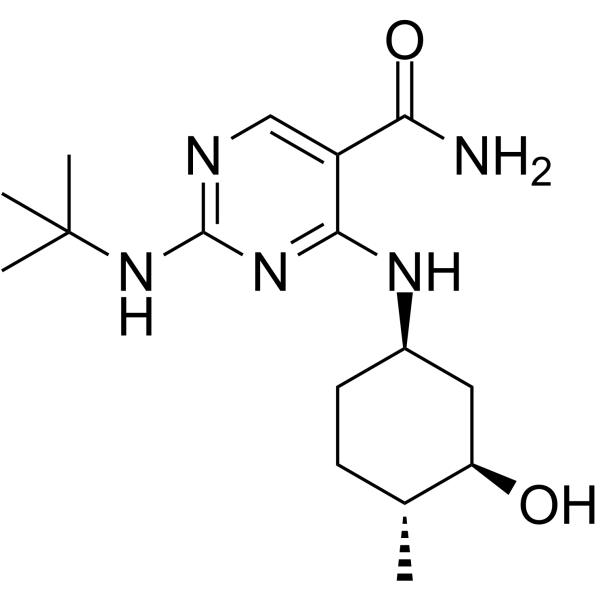
HY-138304
CC-90001JNK Inhibitor -
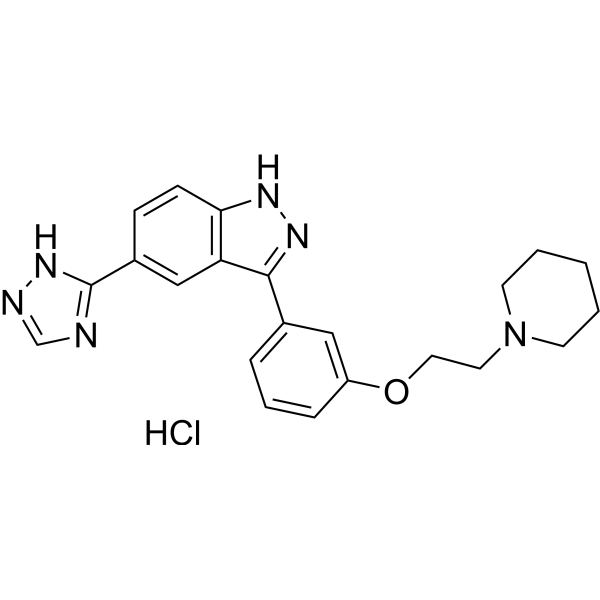
HY-13022
CC-401 hydrochlorideJNK Inhibitor


Biological Activity
제품 설명


Chemical Information
-
CAS No. 146877-90-9
-
Appearance Solid
-
분자량 1049.22
-
화학식 C47H80N14O13
-
Color White to off-white
-
Sequence
Lys-Lys-Glu-Thr-Leu-Gln-Phe-Arg
-
Sequence Shortening
KKETLQFR
-
선적
Room temperature in continental US; may vary elsewhere.
-
보관
Sealed storage, away from moisture
Powder -80°C 2 years -20°C 1 year * In solvent : -80°C, 6 months; -20°C, 1 month (sealed storage, away from moisture)


용액&용해도
In Vitro:
H2O : 30 mg/mL (28.59 mM; Need ultrasonic and warming)
Please refer to the solubility information to select the appropriate solvent. Once prepared, please aliquot and store the solution to prevent product inactivation from repeated freeze-thaw cycles.
Storage method and period of stock solution: -80°C, 6 months; -20°C, 1 month (sealed storage, away from moisture). When stored at -80°C, please use it within 6 months. When stored at -20°C, please use it within 1 month.
* Note: If you choose water as the stock solution, please dilute it to the working solution, then filter and sterilize it with a 0.22 μm filter before use.
Please refer to the solubility information to select the appropriate solvent. Once prepared, please aliquot and store the solution to prevent product inactivation from repeated freeze-thaw cycles.
Storage method and period of stock solution: -80°C, 6 months; -20°C, 1 month (sealed storage, away from moisture). When stored at -80°C, please use it within 6 months. When stored at -20°C, please use it within 1 month.
* Note: If you choose water as the stock solution, please dilute it to the working solution, then filter and sterilize it with a 0.22 μm filter before use.
Concentration (start) × Volume (start) = Concentration (final) × Volume (final)


순도&문서
-
Data Sheet (271 KB)
-
SDS (252 KB)
- English - EN (252 KB)
- Français - FR (252 KB)
- Deutsch - DE (252 KB)
- Norwegian - NO (252 KB)
- Español - ES (252 KB)
- Swedish - SV (252 KB)
- Italian - IT (252 KB)
- Korean - KR (252 KB)
- Portuguese - PT (252 KB)
-
Handling Instructions (2659 KB)
References


Complete Stock Solution Preparation Table
Please refer to the solubility information to select the appropriate solvent. Once prepared, please aliquot and store the solution to prevent product inactivation from repeated freeze-thaw cycles.
Storage method and period of stock solution: -80°C, 6 months; -20°C, 1 month (sealed storage, away from moisture). When stored at -80°C, please use it within 6 months. When stored at -20°C, please use it within 1 month.
| Optional Solvent | Concentration Solvent Mass | 1 mg | 5 mg | 10 mg | 25 mg |
|---|---|---|---|---|---|
| H2O | 1 mM | 0.9531 mL | 4.7654 mL | 9.5309 mL | 23.8272 mL |
| 5 mM | 0.1906 mL | 0.9531 mL | 1.9062 mL | 4.7654 mL | |
| 10 mM | 0.0953 mL | 0.4765 mL | 0.9531 mL | 2.3827 mL | |
| 15 mM | 0.0635 mL | 0.3177 mL | 0.6354 mL | 1.5885 mL | |
| 20 mM | 0.0477 mL | 0.2383 mL | 0.4765 mL | 1.1914 mL | |
| 25 mM | 0.0381 mL | 0.1906 mL | 0.3812 mL | 0.9531 mL |
* Note: If you choose water as the stock solution, please dilute it to the working solution, then filter and sterilize it with a 0.22 μm filter before use.


CMX-8933 Related Classifications
HY-P10506 Related Classifications
 Powered by Bioz