



Phthalocyanine

Based on 1 Customer Validation
Phthalocyanine is a type of pigment and Photosensitizer. Upon irradiation, Phthalocyanine generates ROS or converts light energy into heat, inducing oxidative damage, cytotoxicity, and photodynamic killing of bacterial biofilms. Phthalocyanine produces chemiluminescence when oxidized. It can be used in studies related to cancer, bacterial infections, and photodynamic approaches.
연구목적의 판매만을 진행합니다. 환자를 대상으로 한 판매는 하지 않습니다.
- Purity : 98.0%
- CAS No.: 574-93-6
- 화학식: C32H18N8
- 분자량:514.54
-
보관:
4°C, protect from light, stored under nitrogen
* In solvent : -80°C, 6 months; -20°C, 1 month (protect from light, stored under nitrogen)


To place orders, for customer services and technical support, please contact: MedChemExpress USA
Tel: 609-228-6898 E-mail: [email protected] [email protected]


-
 Biological Activity
-
Chemical Information
-
용액&용해도
- Protocol
- 순도&문서
- References
-
 Help & FAQs


-
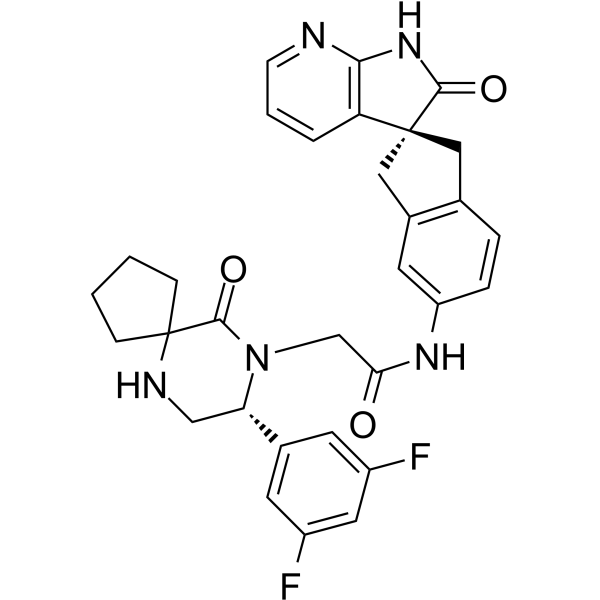
HY-10301
MK-3207CGRP Receptor Antagonist -

HY-D0005
BathocuproineCu(I) Chelating Agent -
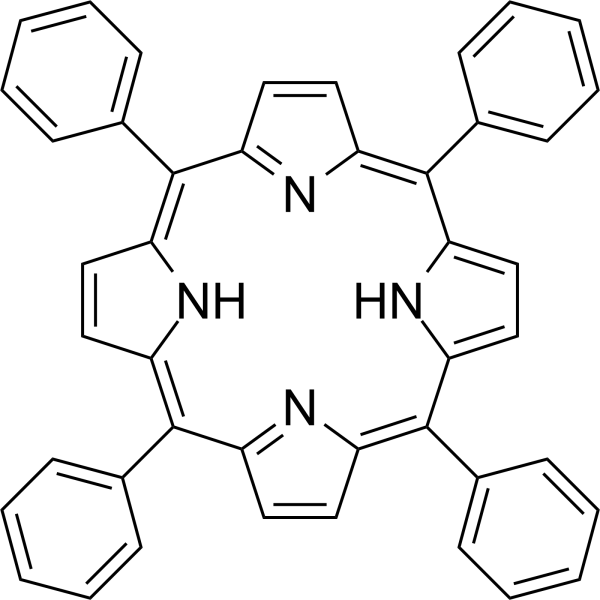
HY-103656
TetraphenylporphyrinPorphyrin-Based Compound -

HY-W007596
Tris(2-phenylpyridinato-C2,N)iridium(III)Biochemical Assay Reagent -
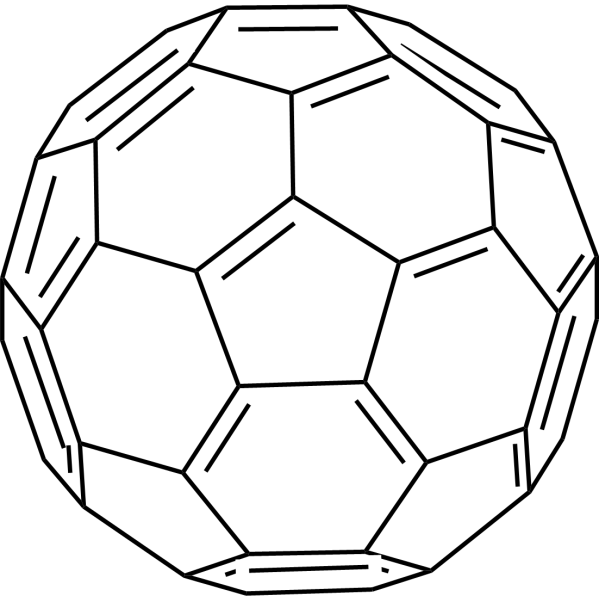
HY-W020768
Fullerene-C60 -
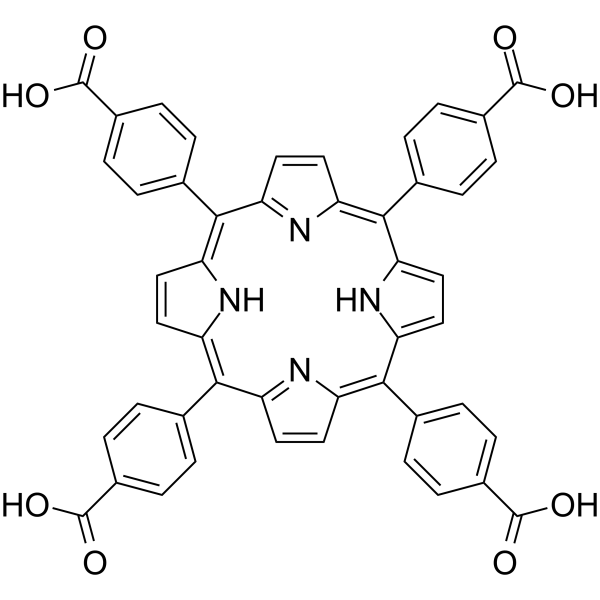
HY-W008852
Tetrakis (4-carboxyphenyl) porphyrinMetal Remover -
HY-B1727
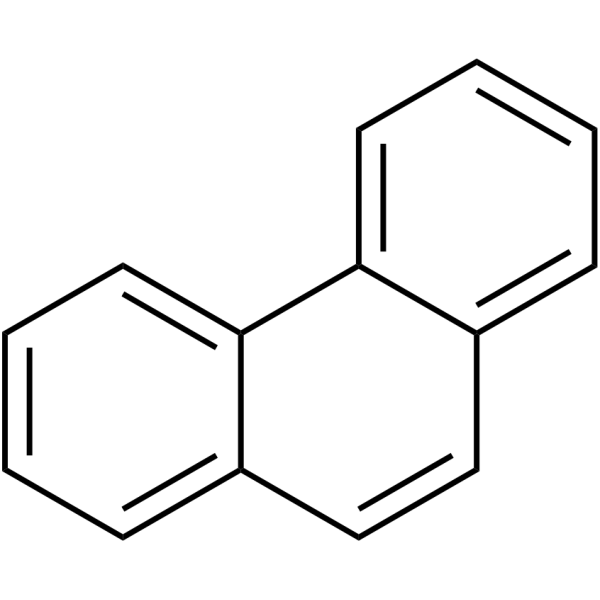
PhenanthrenePolycyclic Aromatic Hydrocarbon -

HY-W008874
meso-Tetra(4-pyridyl)porphineTop1 Inhibitor -

HY-W025445
Spiro-MeOTADHole Transport Layer Material -

HY-W013973
p-TerphenylBiochemical Assay Reagent -
HY-W035140
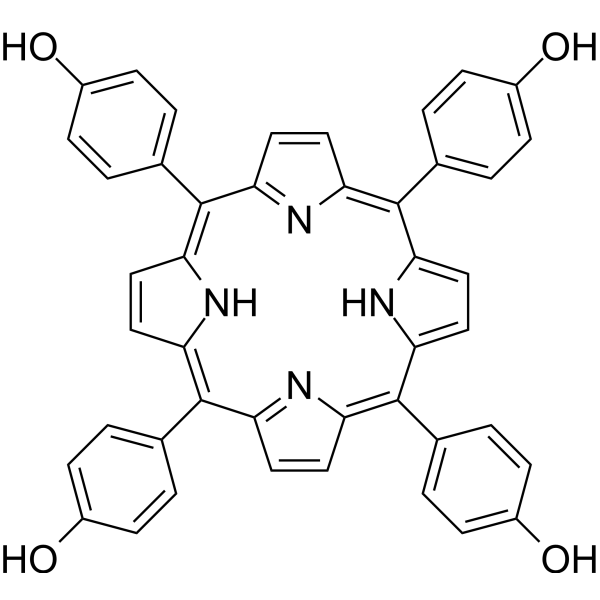
5,10,15,20-Tetrakis(4-hydroxyphenyl)porphyrinBiochemical Assay Reagent -

HY-W008860
5,10,15,20-Tetra(4-methoxyphenyl)-21H,23H-porphyrinIntermediate


Biological Activity
제품 설명
In Vitro
Phthalocyanine exhibits photodynamic cytotoxicity in unspecified cancer cells, with a light IC50 of 0.55 μM, a singlet oxygen quantum yield of 0.57, and extremely low dark cytotoxicity (dark IC50 >100 μM)[1].
Phthalocyanine exerts photodynamic cytotoxicity against HUVEC, breast cancer cell lines MCF-7 and MDA-MB-231, with IC50 values of 45.6 μM, 69.1 μM and 89.3 μM under light exposure[1].
MedChemExpress (MCE) has not independently confirmed the accuracy of these methods. They are for reference only.
Clinical Trial
| NCT Number | Sponsor | Condition | Start Date |
Phase

|
|---|---|---|---|---|
| NCT01329991 | 2011-05 | PHASE1 |


Chemical Information
-
CAS No. 574-93-6
-
Appearance Solid
-
분자량 514.54
-
화학식 C32H18N8
-
Color Dark purple to black
-
SMILES
[H]N1C2=C3C=CC=CC3=C1/N=C4C5=C(C(/N=C6C7=C(/C(N/6[H])=N/C8=N/C(C9=C8C=CC=C9)=N\2)C=CC=C7)=N/4)C=CC=C5
-
선적
Room temperature in continental US; may vary elsewhere.
-
보관
4°C, protect from light, stored under nitrogen
* In solvent : -80°C, 6 months; -20°C, 1 month (protect from light, stored under nitrogen)


용액&용해도
In Vitro:
Acetone : < 1 mg/mL (insoluble)
DMF : < 1 mg/mL (insoluble)
Concentration (start) × Volume (start) = Concentration (final) × Volume (final)
In Vivo Dissolution Calculator
Please enter the basic information of animal experiments:
-
-
-
-
Recommended: Prepare an additional quantity of animals to account for potential losses during experiments.
Working solution concentration: 0.22 mg/mL


순도&문서


References
[1]. Rennie CC, et al. Targeted cancer phototherapy using phthalocyanine-anticancer drug conjugates. Dalton transactions (Cambridge, England : 2003). 2022 Sep 13;51(35):13157-13175. [Content Brief]
[3]. Spesia MB, et al. Evolution of Phthalocyanine Structures as Photodynamic Agents for Bacteria Inactivation. Chem Rec. 2022 Apr;22(4):e202100292. [Content Brief]
[4]. Jiang Z, et al. Pharmaceutical development, composition and quantitative analysis of phthalocyanine as the photosensitizer for cancer photodynamic therapy. J Pharm Biomed Anal. 2014 Jan;87:98-104. [Content Brief]
Hot Topics
-
All
-
Topics
-
Most Recent
-
Oldest
-
Topics Photodynamic Therapy: Past, Current, Future
Photodynamic therapy (PDT) is a light-activated therapeutic modality that combines photosensitizers, oxygen, and specific light wavelengths to generate reactive oxygen species for selective cellular destruction.
2026-06-02


Phthalocyanine Related Classifications
HY-121310 Related Classifications
 Powered by Bioz
Keywords
- Phthalocyanine
- 574-93-6
- Bacterial
- Photosensitizer
- Reactive Oxygen Species (ROS)
- Biochemical Assay Reagents
- E. coli
- S. aureus
- S. mitis
- MDA-MB-231 human breast adenocarcinoma cells
- P. aeruginosa
- E. seriolicida
- HUVECs
- HepG2 human hepatocellular carcinoma cells
- MCF-7 human breast adenocarcinoma cells
- EMRSA
- Inhibitor
- inhibitor
- inhibit