2438 Results for "

decrease

" in MedChemExpress (MCE) Product Catalog:
Products (2438)

2438 Results for "decrease" in MCE Product Catalog:

Cat. No.: HY-184268
Target:  

Pim

연구분야:  

Cancer

Pim-1 kinase-IN-17 is a non-orthosteric inhibitor of PIM-1 onco-protein. Pim-1 kinase-IN-17 physically interacts with PIM-1 via a non-orthosteric binding site (Kd of 1.38 μM), does not inhibit PIM-1 kinase function, and decreases PIM-1 concentration under cellular conditions. Pim-1 kinase-IN-17 reduces tumor burden. Pim-1 kinase-IN-17 can be used for the research of triple-negative breast cancer .
loading...
    loading...
Cat. No.: HY-184374
CAS No.: 4904-00-1
Target:  

Histamine Receptor

연구분야:  

Neurological Disease

Cyprolidol is an orally active inhibitor of acetylcholine receptor and histamine receptor with potential antidepressant activity. Cyprolidol inhibits acetylcholine-induced hypotensive response, histamine-induced systolic blood pressure decrease, tyramine-induced systolic blood pressure increase, serotonin-induced systolic blood pressure response in anesthetized animals, and bretylium-induced systolic blood pressure increase in anesthetized cats. Cyprolidol potentiates norepinephrine-induced systolic blood pressure increase, slightly potentiates epinephrine-induced systolic blood pressure increase, and enhances the anesthetic depth of barbiturates. Cyprolidol can be used in the research of depression .
loading...
    loading...
Cat. No.: HY-187365
Target:  

Glycosidase

연구분야:  

Inflammation/Immunology

UCM-17017 is a tetrasubstituted cyclohexene inhibitor that inhibits the activity of senescent cell SA-β-gal with an IC50 of 0.4 μM. UCM-17017 selectively reduces the viability of senescent cancer cells, and this effect is stronger than its impact on proliferating cells. UCM-17017 binds to human serum albumin with a KD of 230 μM. UCM-17017 reduces collagen deposition and decreases the expression of the inflammatory marker Ccl2 in a mouse model of pulmonary fibrosis. UCM-17017 can be used in studies related to senescence and pulmonary fibrosis .
loading...
    loading...
Cat. No.: HY-187514
MAHS-4 is an inhibitor of thymidylate synthase (TS) and dihydrofolate reductase (DHFR), with IC50 values of 1.918 μM and 83.53 μM, respectively. MAHS-4 inhibits thymidylate biosynthesis, reduces tetrahydrofolate pool maintenance, and interferes with extracellular matrix remodeling. MAHS-4 induces G2/M phase cell cycle arrest, activates endogenous caspase-dependent apoptosis, decreases MMP protein levels, inhibits cell migration, increases intracellular NO levels, and promotes autophagy activity. MAHS-4 is applicable for cancer-related research .
loading...
    loading...
Cat. No.: HY-189637
연구분야:  

Cancer

PLK2-IN-1 is a selective PLK2 inhibitor (IC50 0.78 μM). PLK2-IN-1 induces Apoptosis and cell cycle arrest, reduces AKT and mTOR phosphorylation, and decreases Cyclin E expression as well as downregulates the CDK2/Rb/E2F1 axis. PLK2-IN-1 inhibits tumor growth in colorectal cancer xenograft models. PLK2-IN-1 can be used for research on colorectal cancer .
loading...
    loading...
Cat. No.: HY-18981S
Synonyms: (+)-Decursin-d6
Decursin-d6 ((+)-Decursin-d6) is the deuterium labeled Decursin (HY-18981). Decursin ((+)-Decursin) is a potent anti-tumor agent. Decursin also is a cytotoxic agent and a potent protein kinase C activator. Decursin induces apoptosis and cell cycle arrest at G1 phase. Decursin decreases the expression of CDK2, CDK4, CDK6, cyclin D1 protein at 48 h. Decursin inhibits cell proliferation and migration. Decursin shows anti-tumor, anti-inflammatory and analgesic activities .
loading...
    loading...
Cat. No.: HY-191394
Target:  

FXR

연구분야:  

Metabolic Disease

FXR antagonist 5 is an orally active FXR antagonist with an IC50 of 11.79 μM. FXR antagonist 5 stimulates GLP-1 secretion in enteroendocrine cells and decreases NR0B2 mRNA expression. FXR antagonist 5 improves glycemic control in HFD/STZ-induced diabetic mice and shows a trend toward improved glucose tolerance, increases circulating GLP-1 and insulin levels, and ameliorates dyslipidemia as well as markers of hepatic and renal injury. FXR antagonist 5 can be used for research on type 2 diabetes .
loading...
    loading...
Cat. No.: HY-34154R
CAS No.: 619-60-3
Target:  

Reference Standards

연구분야:  

Others

4-(Dimethylamino)phenol (Standard) is the analytical standard of 4-(Dimethylamino)phenol. This product is intended for research and analytical applications. 4-(Dimethylamino)phenol is a potent cyanide antidote. 4-(Dimethylamino)phenol increases the extracellular lactate dehydrogenase (LDH) without markedly affecting gluconeogenesis. 4-(Dimethylamino)phenol cannot decreases the ATP content until the membrane becomes permeable to LDH. 4-(Dimethylamino)phenol’s toxicity is related to its reaction with glutathione and formation of covalent complexes, leading to impaired cellular function .
loading...
    loading...
Cat. No.: HY-B0239R
CAS No.: 56-75-7
Chloramphenicol (Standard) is the analytical standard of Chloramphenicol. This product is intended for research and analytical applications. Chloramphenicol is an orally active, potent and broad-spectrum antibiotic. Chloramphenicol shows antibacterial activity. Chloramphenicol represses the oxygen-labile transcription factor and hypoxia inducible factor-1 alpha (HIF-1α) in hypoxic A549 and H1299 cells. Chloramphenicol suppresses the mRNA levels of vascular endothelial growth factor (VEGF) and glucose transporter 1, eventually decreasing VEGF release. Chloramphenicol can be used for anaerobic infections and lung cancer research .
loading...
    loading...
Cat. No.: HY-B0239S2
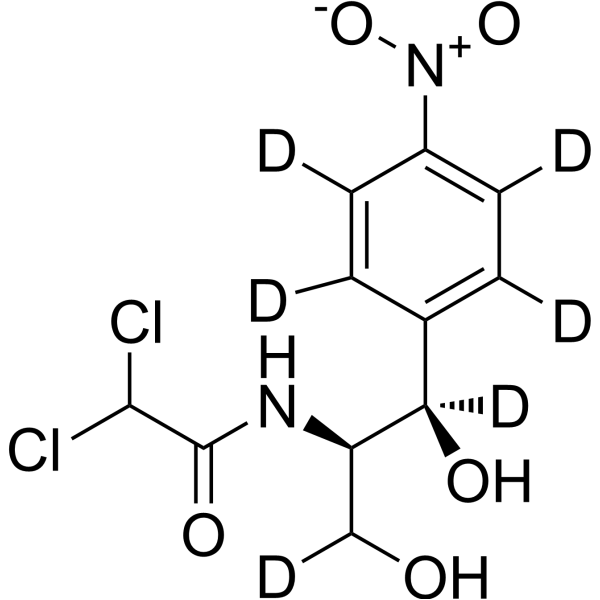
Threo-Chloramphenicol-d6 is the deuterium labeled Chloramphenicol . Chloramphenicol is an orally active, potent and broad-spectrum antibiotic. Chloramphenicol shows antibacterial activity. Chloramphenicol represses the oxygen-labile transcription factor and hypoxia inducible factor-1 alpha (HIF-1α) in hypoxic A549 and H1299 cells. Chloramphenicol suppresses the mRNA levels of vascular endothelial growth factor (VEGF) and glucose transporter 1, eventually decreasing VEGF release. Chloramphenicol can be used for anaerobic infections and lung cancer research .
loading...
    loading...
Cat. No.: HY-B0579R
CAS No.: 59865-13-3
Synonyms: Cyclosporine A (Standard); Ciclosporin A (Standard); CsA (Standard)
Cyclosporin A (Standard) (Cyclosporine A (Standard)) is the analytical standard of Cyclosporin A (HY-B0579). This product is intended for research and analytical applications. Cyclosporin A (Cyclosporine A) is an immunosuppressant which binds to the cyclophilin and inhibits phosphatase activity of protein phosphatase 2B (PP2B/calcineurin) with an IC50 of 5 nM . Cyclosporin A is a molecular glue, binds to cyclophilin and calcineurin, leading to inactivation of nuclear Factor of activated T Cells (NFAT) and a subsequent decrease in the immune response. Cyclosporin A also inhibits CD11a/CD18 adhesion .
loading...
    loading...
Cat. No.: HY-B0579S1
CAS No.: 222295-76-3
Synonyms: Cyclosporine A-d3; Ciclosporin A-d3; CsA-d3
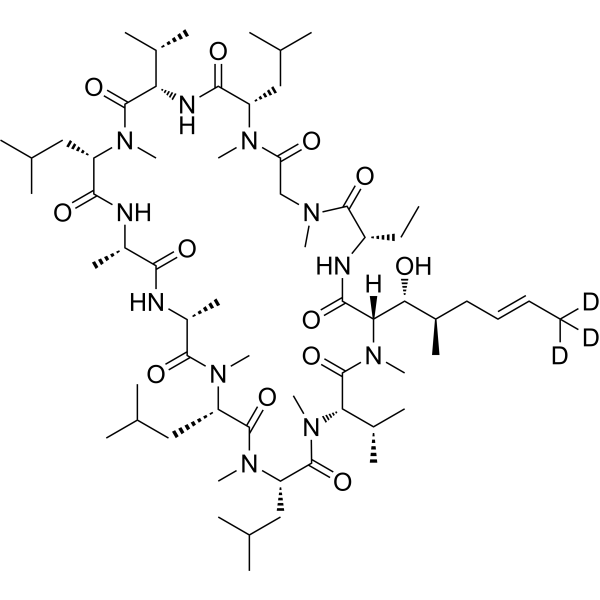
Cyclosporin A-d3 (Cyclosporine A-d3) is the deuterated-labeled Cyclosporin A (HY-B0579). Cyclosporin A (Cyclosporine A) is an immunosuppressant which binds to the cyclophilin and inhibits phosphatase activity of protein phosphatase 2B (PP2B/calcineurin) with an IC50 of 5 nM . Cyclosporin A is a molecular glue, binds to cyclophilin and calcineurin, leading to inactivation of nuclear Factor of activated T Cells (NFAT) and a subsequent decrease in the immune response. Cyclosporin A also inhibits CD11a/CD18 adhesion .
loading...
    loading...
Cat. No.: HY-B0579S2
Synonyms: Cyclosporine A acetate-d4; Ciclosporin A acetate-d4; CsA acetate-d4
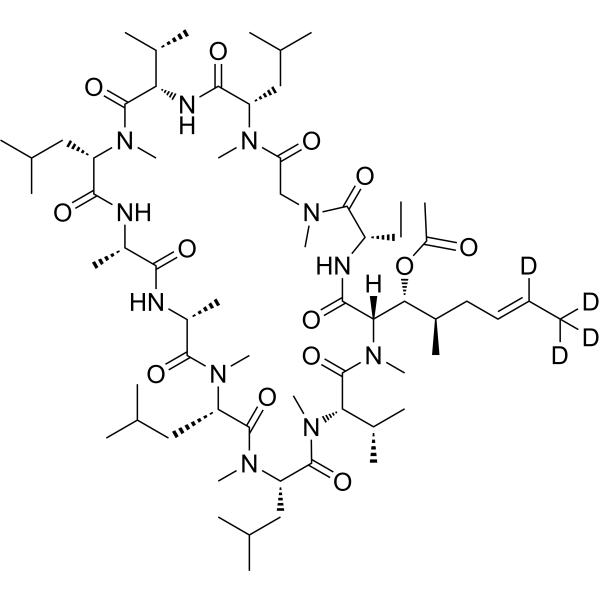
Cyclosporin A acetate-d4 (Cyclosporine A acetate-d4) is the deuterated-labeled Cyclosporin A (HY-B0579). Cyclosporin A (Cyclosporine A) is an immunosuppressant which binds to the cyclophilin and inhibits phosphatase activity of protein phosphatase 2B (PP2B/calcineurin) with an IC50 of 5 nM . Cyclosporin A is a molecular glue, binds to cyclophilin and calcineurin, leading to inactivation of nuclear Factor of activated T Cells (NFAT) and a subsequent decrease in the immune response. Cyclosporin A also inhibits CD11a/CD18 adhesion .
loading...
    loading...
Cat. No.: HY-B0579S5
Synonyms: Cyclosporine A-d12; Ciclosporin A-d12; CsA-d12
Cyclosporin A-d12 (Cyclosporine A-d12) is the deuterated-labeled Cyclosporin A (HY-B0579). Cyclosporin A (Cyclosporine A) is an immunosuppressant which binds to the cyclophilin and inhibits phosphatase activity of protein phosphatase 2B (PP2B/calcineurin) with an IC50 of 5 nM . Cyclosporin A is a molecular glue, binds to cyclophilin and calcineurin, leading to inactivation of nuclear Factor of activated T Cells (NFAT) and a subsequent decrease in the immune response. Cyclosporin A also inhibits CD11a/CD18 adhesion .
loading...
    loading...
Cat. No.: HY-B0678S
CAS No.: 1192812-66-0
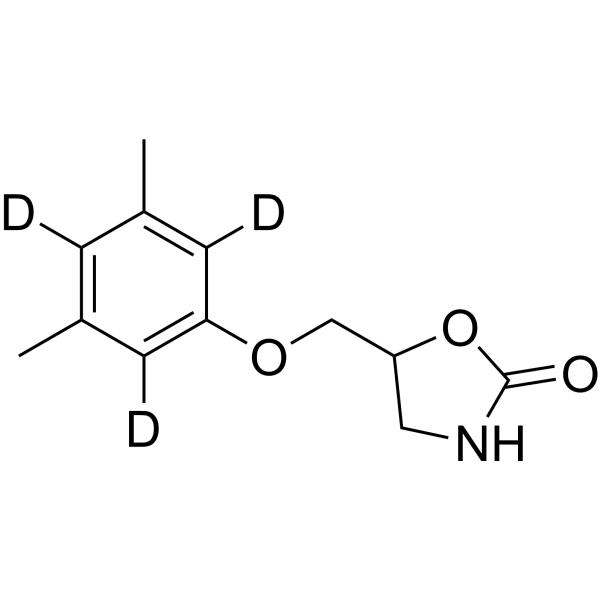
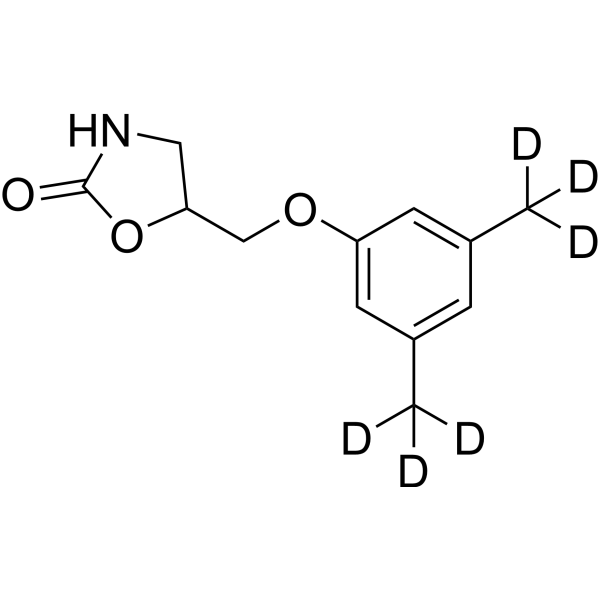
Metaxalone-d3 is the deuterium labeled Metaxalone. Metaxalone (AHR438; NSC170959) is an FDA-approved muscle relaxant. Metaxalone acts mainly on the central nervous system and achieves muscle relaxation by inhibiting polysynaptic reflex arcs. In addition, Metaxalone is an inhibitor of MAO-A, which has anti-inflammatory and antioxidant effects. Metaxalone inhibits IL-1β-induced inflammatory phenotype, modulates NF-κB and other related signaling pathways, and decreases MAO-A expression and activity in IL-1β-treated microglia .
loading...
    loading...
Cat. No.: HY-B0678S1
CAS No.: 1189944-95-3
Synonyms: AHR438-d6; NSC170959-d6
Metaxalone-d6 is deuterium labeled Metaxalone. Metaxalone (AHR438; NSC170959) is an FDA-approved muscle relaxant. Metaxalone acts mainly on the central nervous system and achieves muscle relaxation by inhibiting polysynaptic reflex arcs. In addition, Metaxalone is an inhibitor of MAO-A, which has anti-inflammatory and antioxidant effects. Metaxalone inhibits IL-1β-induced inflammatory phenotype, modulates NF-κB and other related signaling pathways, and decreases MAO-A expression and activity in IL-1β-treated microglia .
loading...
    loading...
Cat. No.: HY-B0920R
CAS No.: 1156-19-0
Synonyms: U-17835 (Standard)
Tolazamide (U-17835) (Standard) is the analytical standard of Tolazamide. This product is intended for research and analytical applications. Tolazamide is an orally active sulfonylurea agent that inhibits sulfonylurea receptor 1 (SUR1) linked to the inwardly rectifying potassium channel (IC50 = 4.2 µM in HEK293 cells transfected with the human receptor). Tolazamide has anti-diabetic properties. Tolazamide can lower blood glucose in sulfonylurea class. Tolazamide decreases insulin dose while continuing to maintain adequate metabolic control. Tolazamide is able to improve or normalize hyperglycemia and HbA .
loading...
    loading...
Cat. No.: HY-B1232R
CAS No.: 54-36-4
Synonyms: Su-4885 (Standard)
Metyrapone (Standard) is the analytical standard of Metyrapone. This product is intended for research and analytical applications. Metyrapone (Su-4885) is a potent and orally active 11β-hydroxylase inhibitor and an autophagy activator, also inhibits the production of aldosterone. Metyrapone inhibits synthesis of endogenous adrenal corticosteroid, decreases glucocorticoid levels, and also affects behavior and emotion. In addition, Metyrapone increases the efficiency of autophagic process via downregulation of mTOR pathway, and interacts with Pseudomonas putida cytochrome P-450. Metyrapone can be used for researching Cushing's syndrome and depression .
loading...
    loading...
Cat. No.: HY-B1295R
CAS No.: 6080-58-6
Synonyms: Litarex tetrahydrate (Standard)
Lithium citrate (tetrahydrate) (Standard) is the analytical standard of Lithium citrate (tetrahydrate). This product is intended for research and analytical applications. Lithium citrate (Litarex) tetrahydrate is a natural preservative and food tartness enhancer. Lithium citrate tetrahydrate induces apoptosis and cell cycle arrest at G2/M phase and S phase in HaCaT cells. Lithium citrate tetrahydrate cause oxidative damage of the liver by means of the decrease of antioxidative enzyme activities. Lithium citrate tetrahydrate is also an acidulant, emulsifier, sequestrant and buffering agent widely used across many industries .
loading...
    loading...
Cat. No.: HY-B2013
CAS No.: 71283-80-2
연구분야:  

Others

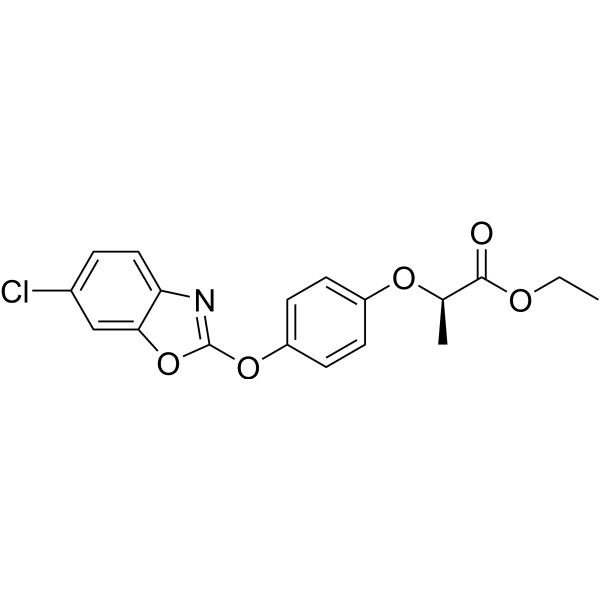
Fenoxaprop-P-ethyl is an acetyl-CoA carboxylase (ACC) inhibitor and post-emergence herbicide. Fenoxaprop-P-ethyl inhibits the conversion of acetyl-CoA to malonyl-CoA, reduces malonyl-CoA synthesis and disrupts fatty acid synthesis. Fenoxaprop-P-ethyl disrupts lipid homeostasis through cascaded inhibition of lipid metabolism, decreases total lipid content, downregulates fatty acid elongase genes and inhibits their activity. Fenoxaprop-P-ethyl disrupts fatty acid synthesis in rice seedlings and controls annual monocotyledonous weeds in wheat, durum wheat, rye, triticale and barley fields .
loading...
    loading...

