



L-165041 (Standard)
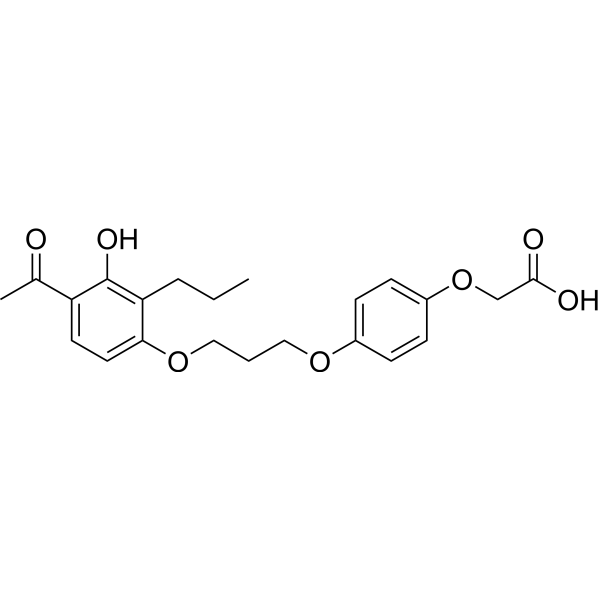
L-165041 (Standard) is the analytical standard of L-165041. This product is intended for research and analytical applications. L-165041 is a cell permeable PPARδ agonist, with Kis of 6 nM and appr 730 nM for PPARδ and PPARγ, respectively, and induces adipocyte differentiation in NIH-PPARδ cells.
For research use only. We do not sell to patients.
- CAS No.: 79558-09-1
- Formula: C22H26O7
- Molecular Weight:402.44
-
Storage:
Please store the product under the recommended conditions in the Certificate of Analysis.


To place orders, for customer services and technical support, please contact: MedChemExpress USA
Tel: 609-228-6898 E-mail: [email protected] [email protected]


-
 Product Information
-
Chemical Information
- Purity & Documentation
-
 Help & FAQs


-
HY-16578
GW9662PPARγ Antagonist -
HY-16995
Pirinixic acidPPAR Agonist -
HY-20019
L-165041PPAR Agonist -
HY-13956
PioglitazonePPARγ Agonist -
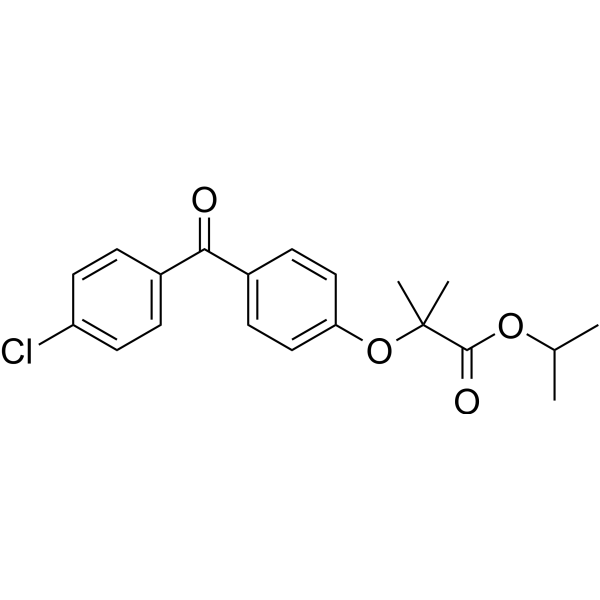
HY-17356
Fenofibrate -
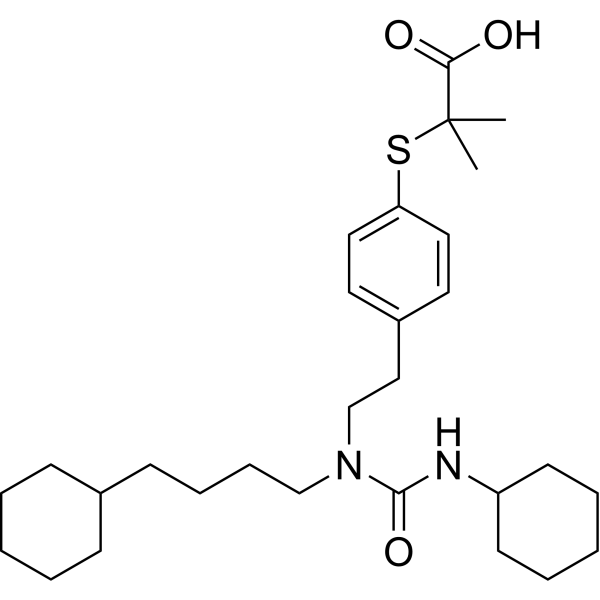
HY-13861
GW7647PPAR Agonist -
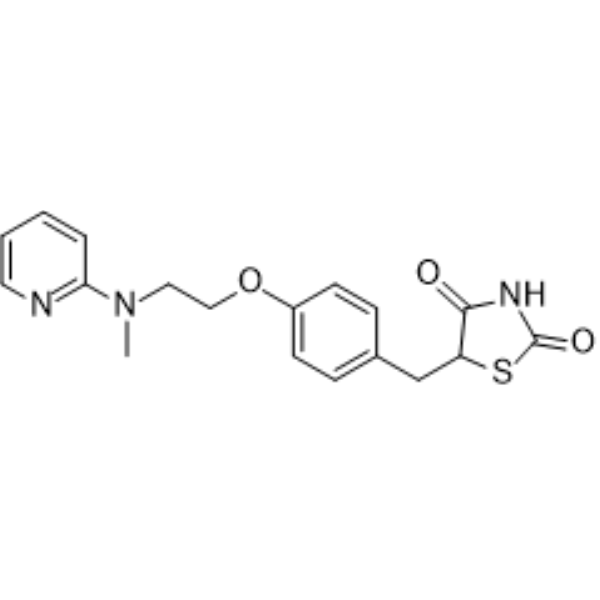
HY-17386
RosiglitazonePPARγ Agonist -
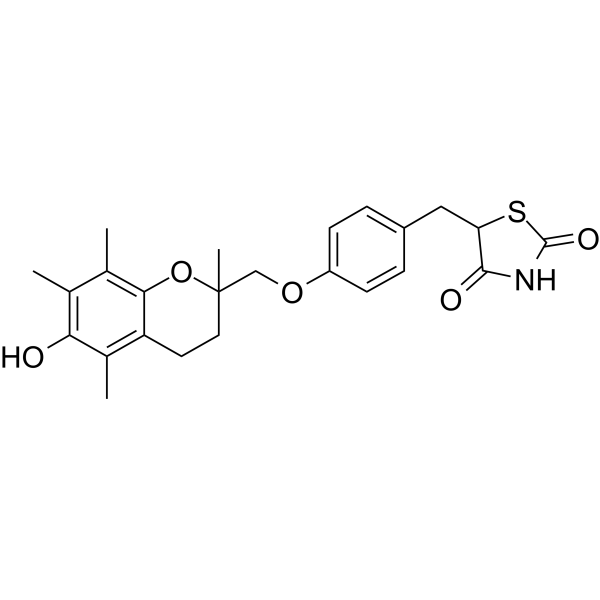
HY-50935
TroglitazonePPARγ Agonist -
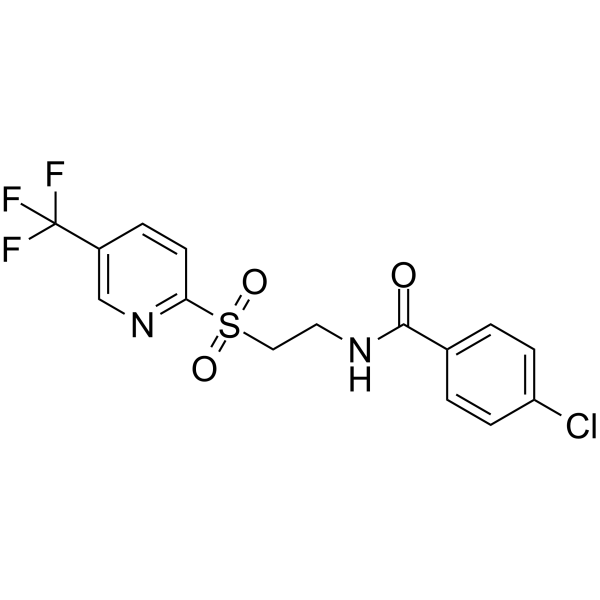
HY-15577
GSK3787PPARδ Antagonist -
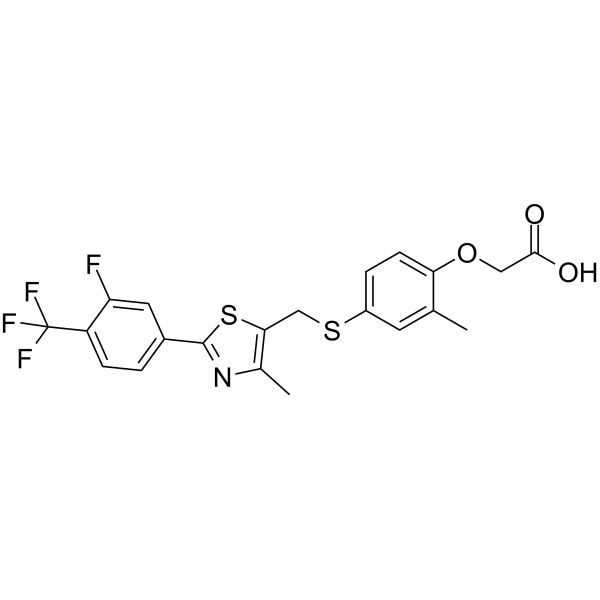
HY-13928
GW0742PPAR Agonist -
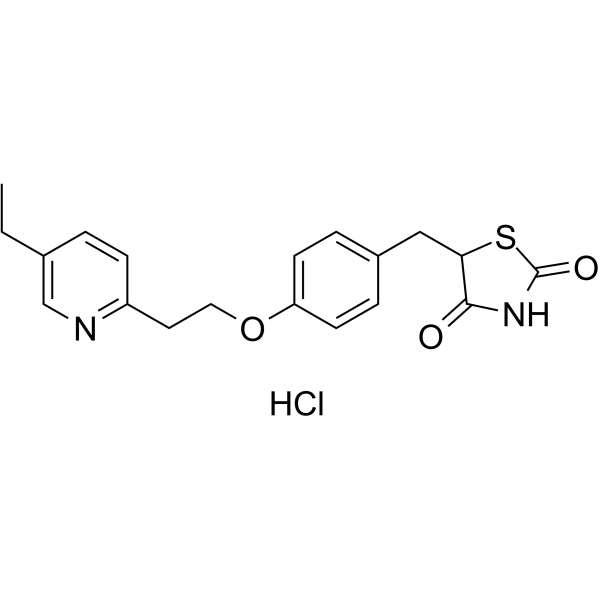
HY-14601
Pioglitazone hydrochloridePPARγ Agonist -
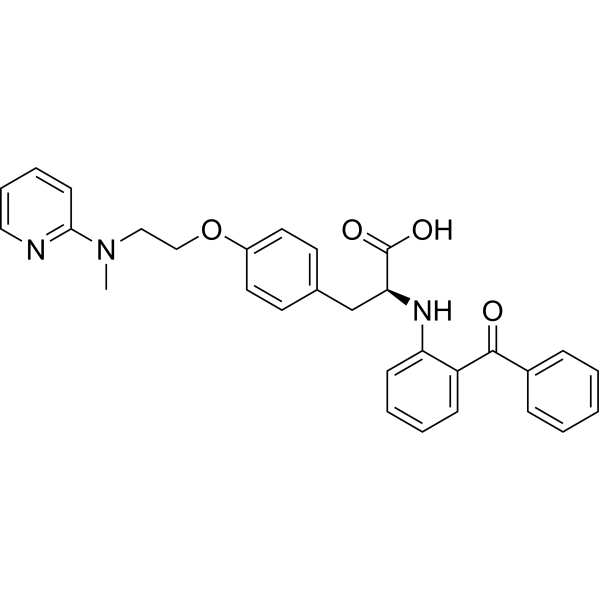
HY-15655
GW1929PPARγ Agonist


Product Information
Information
Application
The compound is the grade of analytical standard, which is the reference standard supplied assay. It is commonly used in qualitative, quantitative and methodological research experiments in HPLC, GC and MS.


Chemical Information
-
CAS No. 79558-09-1
-
Molecular Weight 402.44
-
Formula C22H26O7
-
SMILES
O=C(O)COC(C=C1)=CC=C1OCCCOC2=CC=C(C(C)=O)C(O)=C2CCC
-
Shipping
Room temperature in continental US; may vary elsewhere.
-
Storage
Please store the product under the recommended conditions in the Certificate of Analysis.


Purity & Documentation
References
[1]. Berger J, et al. Novel peroxisome proliferator-activated receptor (PPAR) gamma and PPARdelta ligands produce distinct biological effects. J Biol Chem. 1999 Mar 5;274(10):6718-25. [Content Brief]
[2]. Park, Jin-Hee., et al. The PPARδ ligand L-165041 inhibits vegf-induced angiogenesis, but the antiangiogenic effect is not related to PPARδ. Journal of Cellular Biochemistry (2012), 113(6), 1947-1954. [Content Brief]
[3]. Lim, Hyun-Joung., et al. PPARδ ligand L-165041 ameliorates Western diet-induced hepatic lipid accumulation and inflammation in LDLR-/- mice. European Journal of Pharmacology (2009), 622(1-3), 45-51. [Content Brief]
[4]. Lim, Hyun-Joung., et al. PPARδ agonist L-165041 inhibits rat vascular smooth muscle cell proliferation and migration via inhibition of cell cycle. Atherosclerosis (Amsterdam, Netherlands) (2009), 202(2), 446-454. [Content Brief]

Calculators
Concentration (start) × Volume (start) = Concentration (final) × Volume (final)


L-165041 (Standard) Related Classifications
HY-20019R Related Classifications
 Powered by Bioz