



Waxes
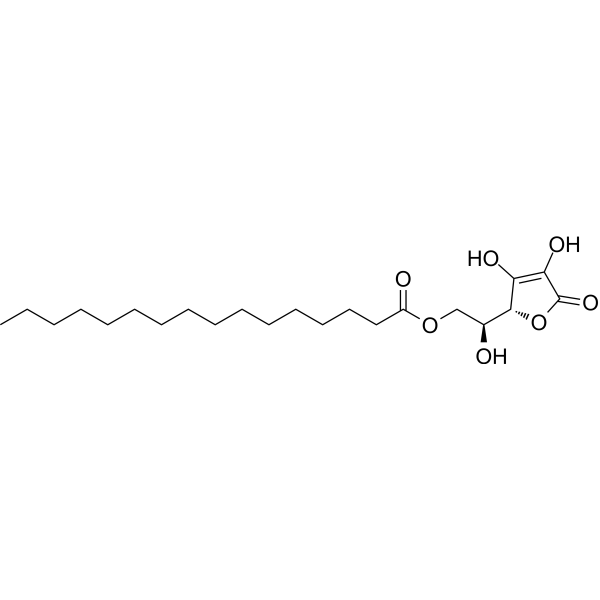
- Formula: C22H38O7
- Molecular Weight: 414.53
Ascorbyl palmitate is an orally active ester formed from ascorbic acid and palmitic acid, used as an antioxidant and food additive. Ascorbyl palmitate in preventing fat and oil oxidation is more efficient than Butylated hydroxyanisole (HY-B1066) and Butylated hydroxytoluene (HY-Y0172). Ascorbyl palmitate mitigates inhibition of collagen synthesis by select calcium and sodium channel blockers. Ascorbyl palmitate induces Apoptosis in human umbilical vein endothelial cells (HUVECs). Ascorbyl palmitate ameliorates inflammatory diseases by inhibition of NLRP3 inflammasome.
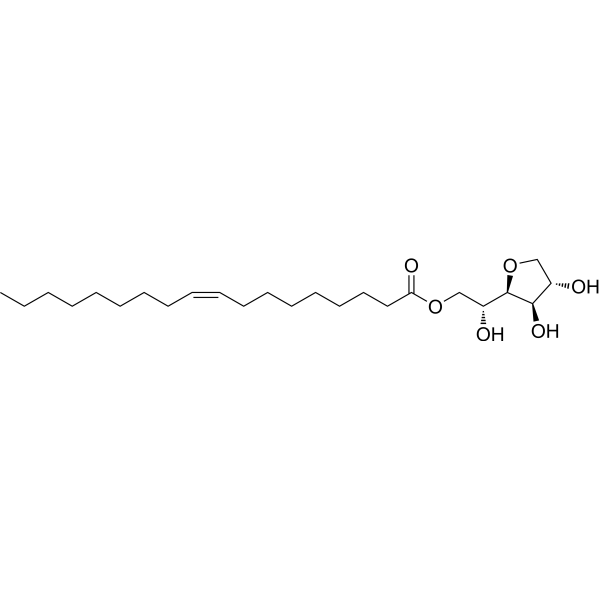

- Formula: C9H20ClNO2
- Molecular Weight: 209.71
Butyrylcholine (chloride) is a biochemical assay reagent.

- Formula: C32H64O2
- Molecular Weight: 480.86
Hexadecyl palmitate is an organic compound commonly used in the cosmetic industry as an emollient, thickener and skin conditioning agent. Cetyl palmitate is derived from a mixture of cetyl alcohol (a fatty alcohol) and palmitic acid (a saturated fatty acid). It is often used in skin care products such as moisturizers, lotions, and creams to improve their texture and Helps them glide smoothly on the skin. In addition to its use in cosmetics, cetyl palmitate is used in other industries including pharmaceuticals, food additives and lubricants. Overall, it's considered safe for use in personal care products, but like any other ingredient, it may cause irritation or an allergic reaction in some people.

- Formula: C22H40O4
- Molecular Weight: 368.55
Monostearyl maleate (Octadecyl fumarate) is a monomeric lipid synthesized from maleic anhydride and stearyl alcohol. Monostearyl maleate can be found in the ethanol extract of Citrullus colocynthis fruits. Monostearyl maleate can be used to prepare terpolymers for application as a viscosity reducer for heavy oil.

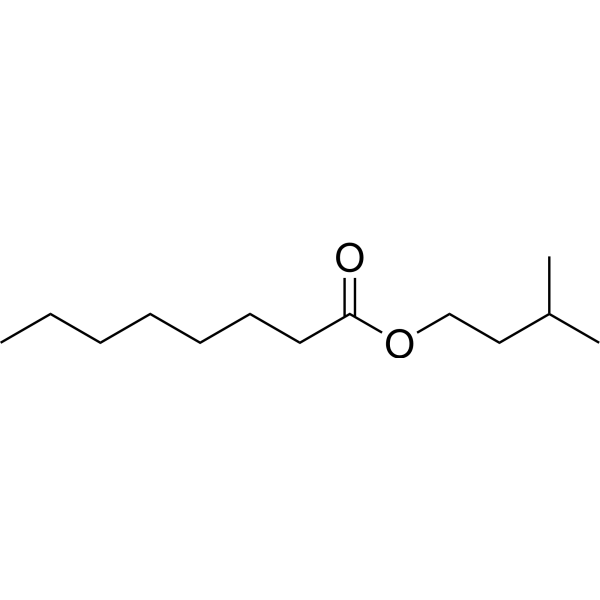
- Formula: C13H26O2
- Molecular Weight: 214.35
Isopentyl octanoate is a class of esters formed by the esterification of branched-chain isoamyl alcohol, also known as isoamyl alcohol, with octanoylate. The compound has a fruity smell and is commonly used as a flavoring in foods such as baked goods, candy and beverages. It can also be used as a fragrance ingredient in personal care products, and as a solvent or plasticizer in various industrial applications. In addition, Isopentyl octanoate can be used as a starting material for the synthesis of other organic compounds.
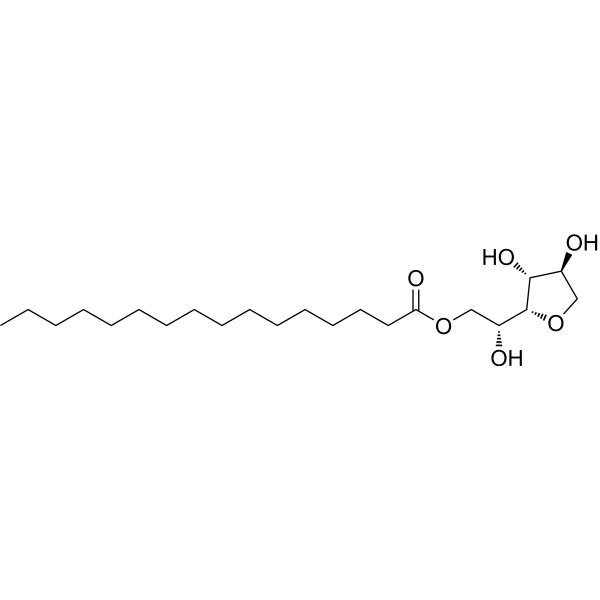
Sorbitan monopalmitate is a food-grade, non-ionic emulsifier that exhibits oral activity. Sorbitan monopalmitate functions as a crystallization modifier, promoting the aggregation of spherical mango butter crystals, introducing lattice defects, and regulating the crystallization rate of mango butter. Sorbitan monopalmitate serves as a component of precursor vesicle gels, enabling the controlled and sustained release of drugs and facilitating the preparation of stable transdermal delivery formulations.

- Formula: C34H68O2
- Molecular Weight: 508.90
Stearyl palmitate is a biochemical reagent that can be used as a biological material or organic compound for life science related research.

- Formula: C36H72O2
- Molecular Weight: 536.96
Stearyl StearateIt is an organic compound belonging to esters. It is formed from the reaction between stearyl alcohol and stearic acid and has a mild fatty odor. Stearyl stearate has several applications in the cosmetic and personal care industries, especially as an emollient and conditioning agent in skin and hair care products. Additionally, it is used as a lubricant and surfactant in industrial settings.

- Formula: C38H76O2
- Molecular Weight: 565.01
Stearyl arachidate is a biochemical reagent that can be used as a biological material or organic compound for life science related research.
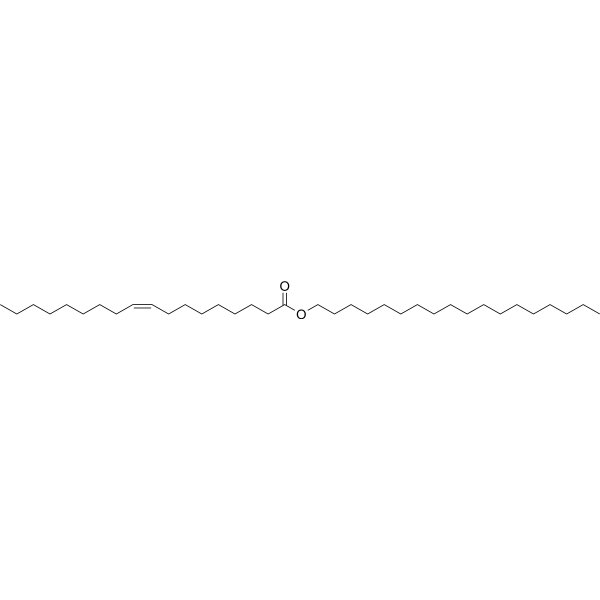
- Formula: C36H70O2
- Molecular Weight: 534.94
Stearyl oleate is a biochemical reagent that can be used as a biological material or organic compound for life science related research.
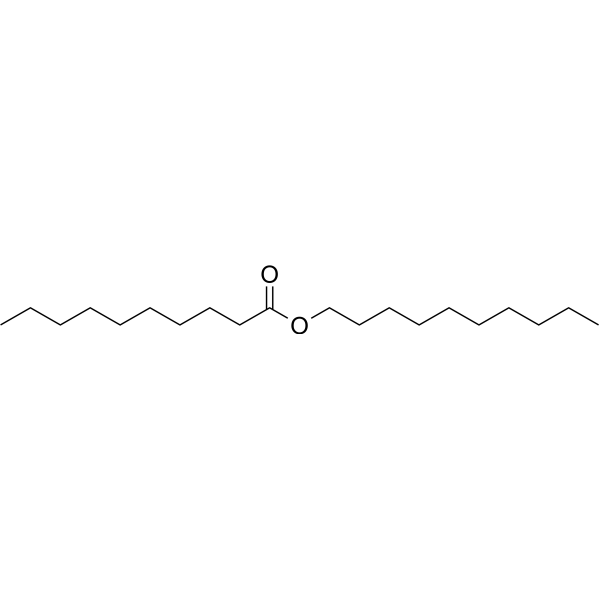
- Formula: C20H40O2
- Molecular Weight: 312.53
Decyl Decanoate is a biochemical reagent that can be used as a biological material or organic compound for life science related research.
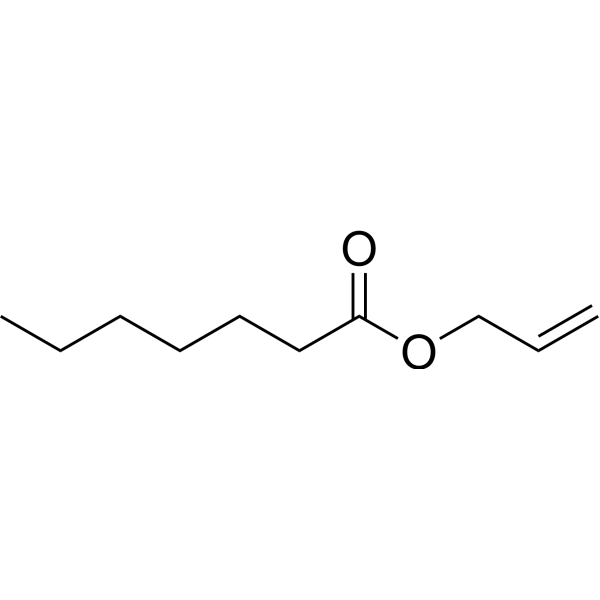
- Formula: C10H18O2
- Molecular Weight: 170.25
Allyl heptanoate is an ester that is formed by the esterification of medium-chain fatty acids, heptanoic acid and allyl alcohol. The compound has a fruity smell and is commonly used as a flavoring in foods such as baked goods, candy and beverages.

- Formula: C40H76O2
- Molecular Weight: 589.03
Behenyl linoleate (Docosyl (9Z,12Z)-9,12-octadecadienoate), a wax ester, is an evaporation retardant.

- Formula: C30H60O2
- Molecular Weight: 452.80
Tetradecyl palmitate (Myristyl palmitate) is an ester product.

- Formula: C30H60O2
- Molecular Weight: 452.80
Palmityl myristate (Hexadecyl tetradecanoate) is an ester product.

- Formula: C38H74O2
- Molecular Weight: 562.99
Oleyl arachidate is an ester product.

- Formula: C24H48O2
- Molecular Weight: 368.64
Lauryl laurate (Dodecyl dodecanoate) is an ester product.

- Formula: C10H20O2
- Molecular Weight: 172.27
Isoamyl isovalerate is an ester and flavor compound. Isoamyl isovalerate has a unique apple-like flavor. Isoamyl isovalerate can be isolated from fruits such as bananas and apples. Isoamyl isovalerate can be used as a flavor compound in beverages, convenience foods and desserts.



