



PROTAC — Future of Drug Molecules from Modular Construction
2022-06-28
Many traditional small molecule drugs competitively occupy the substrate binding site of target protein, and they could play an inhibitory (or exciting) role, such as nonsteroidal anti-inflammatory drug COX-2 inhibitor Paracetamol , lipid-lowering drug HMG-CoA reductase inhibitor Simvastatin , and many tinib anticancer drugs.
Nevertheless, more than 80% of protein targets cannot be developed into drugs with such a simple logic for complicated reasons [1].
Reasons could be: the protein itself lacks a corresponding binding cavity, the protein resides in the cell and drugs cannot reach there, the endogenous substrates show high intrinsic affinity and concentration, the pathogenic mechanism of protein does not depend on catalytic activity or protein-protein interaction, etc. For example, endogenous substrates of KRAS are GTP and GDP. Both of them have high concentrations in human body, and KRAS also strongly combines to them. The solution to this problem is irreversible covalent binding of KRAS-G12C mutant pocket published in Nature in 2013 by Shokat et al, which eventually brought Sotorasib (AMG-510) [2].
It is true that covalent inhibition is an effective way to target many undruggable targets, but its safety and bioactivity evaluation need to be optimized. In contrast, PROTACs not only solve the problem of undruggability but they also have other advantages compared to traditional drug targeting strategies.
PROTAC, stands for Proteolysis-Targeting Chimeras, is a heterozygous bi-functional small molecule composed of three parts: Target protein ligands, Linker ligands, and E3 ligands, which exploit the ubiquitin-proteasome pathway to specifically degrade target proteins by bringing the target protein closer to the intracellular E3 ubiquitin ligase [3].
Protein degradation by PROTAC is an event-driven procedure. Each ligand connect to its corresponding target i.e. E3 ligand connect to E3 ligase and the other ligand connect to target protein simultaneously, so that optimum activity of PROTAC is achieved. If the PROTAC concentration is too high, the formation of binary complexes either of E3 ligase-PROTAC and Target protein-PROTAC will lead to decline in the efficiency of PROTAC because of low concentration of free protein and E3 ligase[4].
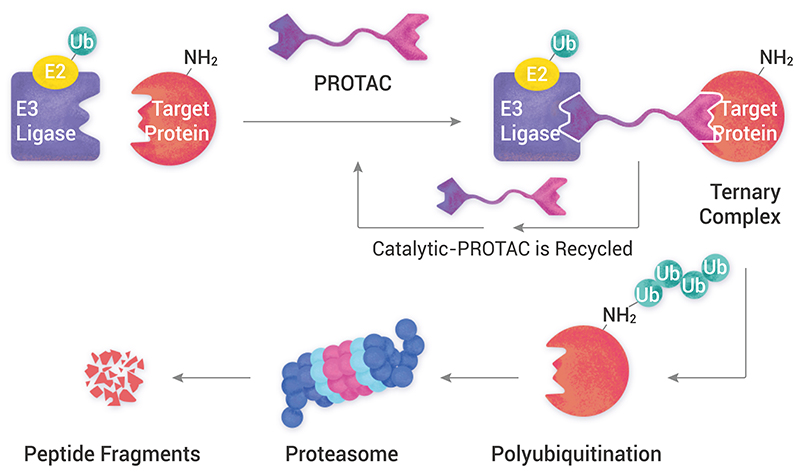
Compared to traditional small molecules which are designed according to mechanism of target protein, PROTAC ignores the mechanism of target protein and directly degrades the target protein by promoting its labeling with ubiquitin. In addition, due to its unique mechanism, PROTAC requires less effective concentration, often at the nanomolar level, that’s why special assays are needed to evaluate its safety and activity. However, conventional PROTAC drugs also face problems of less solubility and bioavailability. Below is a detailed comparison of PROATCs and traditional small molecules.
| PROTACs | Traditional small molecules | |
|---|---|---|
| Advantage |
• Conventional ligands can function without competitive sites; • Degradation of target protein, no drug resistance; • Event-driven, low dose, low toxicity; • Improve the druggability of many tumor-related intracellular proteins and nucleoproteins. |
• Small molecular weight, good bioavailability and metabolic distribution; • Competitive mechanism, mature evaluation of activity and safety. |
| Disadvantage |
• Large molecular weight, poor bioavailability; • Degradation mechanisms need to be based on high selectivity; • Immature evaluation of activity and safety. |
• Targeted to competitive site, screening results may be invalid. • Drug resistance. |
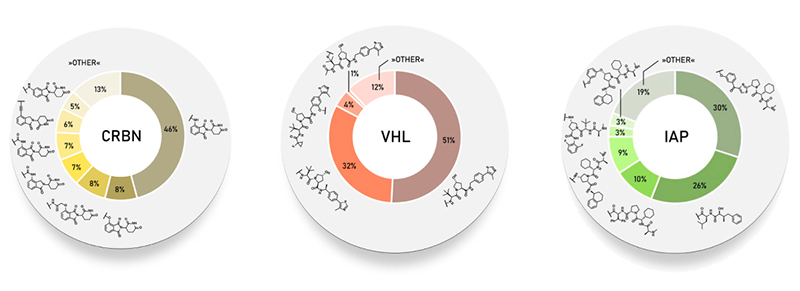
E3 ligase is usually divided into different families such as RING, HECT, RBR, and each family includes many sub-categories [5]. Currently, there are more than 600 known E3 ligases, but there are only four commonly used Ligands for E3 ligase in PROTAC, named CRBN, VHL, IAP, MDM2. In addition, a few more E3 ligases are reported but not often used, like DCF15, RNF114, DCAF16, KEAP1, FEM1B, etc [6]. Below are the common E3 ligase ligands and their corresponding PROTACs.
| E3 ligand type | Common Structure | Feature | PROTACs |
|---|---|---|---|
| CRBN ligand | Domine derivatives | Mostly used; Small molecular weight; Good druggability | ARV-471 ARV-110 |
| VHL ligand | Endogenous ligand peptide-like compounds | Second choice;Modest molecular weight;Good druggability | ARV-766 LC-2 |
| IAP ligand | Endogenous ligand peptide-like compounds | IAP itself promotes cancer in cancer cells; The ligand itself can promote the dimerization and degradation of IAP | SNIPER-1 SNIPER-020 |
| MDM2 ligand | Nutlin derivatives | E3 ligand for the first PROTAC molecule; Its overexpression in cancer cells inhibits the inhibitory effect of p53 | A1874 PROTAC ERRα Degrader-1 |
The ubiquitin-proteasome pathway degrades target proteins such as cyclins, fusion-associated proteins, cell surface receptors, transcription factors, tumor suppressors, oncogene products, intracellular denatured proteins and abnormal proteins under stress. Currently, selection of PROTAC ligands is based on known inhibitors/agonists, and most of the targets are cancer-related proteins. This indicates that the research on PROTAC is still in early stage. The target protein ligands can be selected by virtual screening and high-throughput screening without considering whether it occupies competitive binding site or not. Likewise, target protein degraders for neurodegenerative diseases and auto-immune diseases can also be developed through this way.
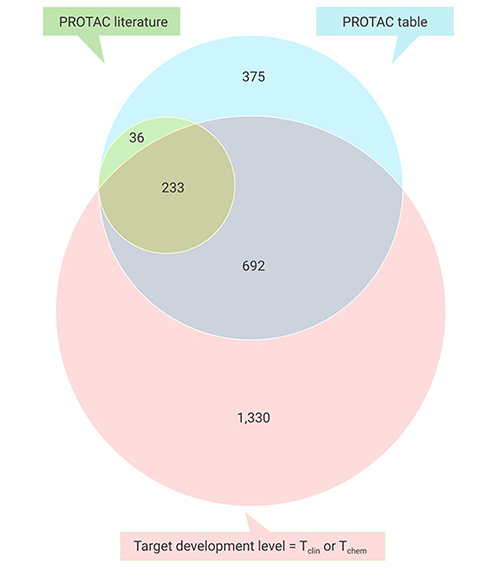
On July 20, 2021, Nature Reviews Drug Discovery published an article using PROTACtability method to evaluate the ability of protein targets for obtaining corresponding PROTAC. It showed that kinases (MEK, KRAS, CDK and Bcr/Abl), transcription factors (such as p53, STAT, RAR, ER and AR), epigenetic factors (such as HDAC and BET bromine domain) and E3 ligase itself (such as MDM2) were good candidates for protacification [7].
Linker is used to connect E3 ligase ligand with target protein ligand. Chain length is the most important parameter for a linker. Too short chain length will hinder the formation of ternary complexes due to spatial collisions, whereas too long chain length will increase binding entropy [8].
The common linker is PEG or straight-chain alkane, and the connection is commonly established by esterification, amidation, and click reaction, etc. On this basis, PROTAC molecules are further modified to improve their overall performance by introducing aryl groups to increase hydrophobicity and rigidity, adding a connecting chain to limit molecular torsion, and using photoswitch groups to shield active sites in advance[9] . Each linker motifs have corresponding characteristics, as shown in the figure below:
| Structure | Linker type | Key points |
|---|---|---|
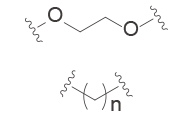 |
Alkyl/PEG |
- High syntheic accessibility and commercial availability - Enable fine-tuning of linker length - Flexible |
 |
Rigidifying groups |
- Potential potency improvement - More favourable pgysical properities - Conformational restriction |
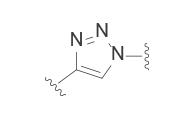 |
Clickable groups |
- Facilitates library synthesis - High-yielding synthesis - Potential H-bond interactions in the TC |
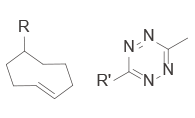 |
CLIPTACs |
- Assembled from lower MW precursors - More favourable physical properties - Compounds must be administered separately to avoid clicking |
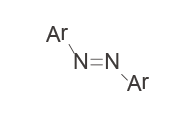 |
Photoswitches |
- High spatiotemporal control - May alleviate toxicity - Continuous irradiation may be required if photostates are not bistable |
In addition to linkers mentioned above, there are also special linkers which can connect two target protein ligands. In the article Rational Design and Synthesis of Novel Dual PROTACs for Simultaneous Degradation of EGFR and PARP, With the introduction of amino acids with three functional groups (threonine, serine, etc.) in the middle, PROTAC molecules can play a dual role of simultaneously degrading two target proteins [10].
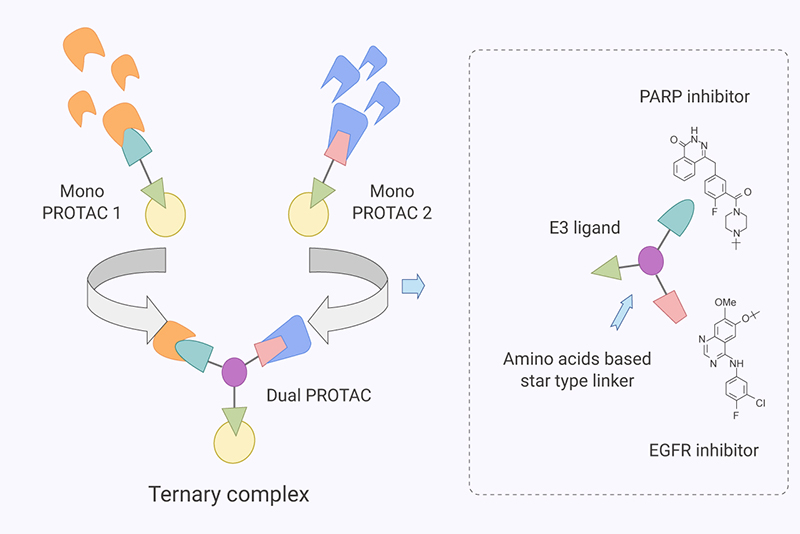
PROTAC technology is in full bloom at present. It can solve the undruggability problem of many target proteins, but problems such as solubility, membrane permeability and selectivity are a matter of concern. Overcoming these problems may require the discovery of new E3 ligands and the innovation of linker motifs, which is both an opportunity and a challenge.
In addition to PROTAC, there are many similar technologies; such as LYTAC, AUTAC and ATTEC which degrade membrane proteins and endocytosis proteins, "molecular glue" which degrades IKZF protein using the same ubiquitin-proteasome pathway, and PAC drugs which attach PROTAC to antibodies based on antibody-conjugated drug technology. At present, they all provide a new direction for the development of PROTAC technology.
No matter what is ahead, roads are made by travelers. The modular construction of PROTAC shortens the discovery and design cycle of small molecule drugs, which can be called as a frontier technology in the field of small molecule drugs.
MCE is global leading supplier of research chemical and biochemical reagents. We are equipped with a strong technical team and state of the art equipment. For PROTAC products, we have rich experience in R&D and production.
MCE can provide scientists with Building blocks related to PROTAC. Currently, we have 3700+ PROTAC products online, and the number is increasing.
MCE keeps making breakthroughs and innovations, and can also provide customized PROTAC products. We can synthesize different types of PROTAC products according to customers' requirements, and ensure the effectiveness and consistency of products. In addition, we provide information on the structural characterization, physical and chemical properties and drug impurities of all customized products.
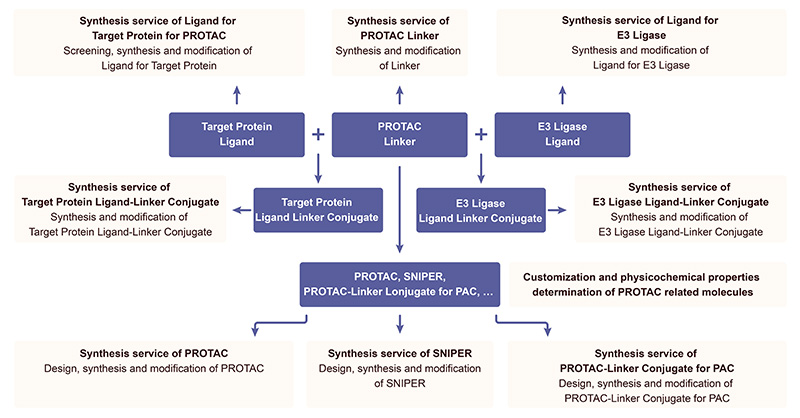
| Product Name | Description | |
|---|---|---|
| E3 ligase ligand linker conjugate | N-Descyclopropanecarbaldehyde Olaparib | N-Descyclopropanecarbaldehyde Olaparib is an analogue of Olaparib containing DOTA moiety. N-Descyclopropanecarbaldehyde Olaparib is a CRBN-based ligand for synthesizing novel dual EGFR and PARP PROTAC, DP-C-4. N-Descyclopropanecarbaldehyde Olaparib can be radiolabeled F-18 or fluorophore for positron emission tomography (PET) or optical imaging in several types of tumor. |
| Pomalidomide 4'-alkylC5-acid | Pomalidomide 4'-alkylC5-acid is a synthesized E3 ligase ligand-linker conjugate that incorporates the Pomalidomide based cereblon ligand and a PEG linker used in PROTAC technology. | |
| Target protein ligand linker conjugate | FAK ligand-Linker Conjugate 1 | FAK ligand-Linker Conjugate 1 incorporates a ligand for FAK, and a PROTAC linker, which recruit E3 ligases (such as VHL, CRBN, MDM2, and IAP). FAK ligand-Linker Conjugate 1 can be extensively used for PROTAC-mediated protein degradation. |
| K-Ras ligand-Linker Conjugate 4 | K-Ras ligand-Linker Conjugate 4 incorporates a ligand for K-Ras recruiting moiety, and a PROTAC linker, which recruit E3 ligases (such as VHL, CRBN, MDM2, and IAP). K-Ras ligand-Linker Conjugate 4 can be used in the synthesis of PROTAC K-Ras Degrader-1 (HY-129523), which is potent PROTAC K-Ras degrader that exhibits ≥70% degradation efficacy in SW1573 cells. | |
| PROTAC | dBET6 | dBET6 is a highly potent, selective and cell-permeable PROTAC connected by ligands for Cereblon and BET, with an IC50 of 14 nM, and has antitumor activity. |
| PROTAC K-Ras Degrader-1 | PROTAC K-Ras Degrader-1 (Compound 518) is potent K-Ras degrader based on Cereblon E3 ligand, exhibits ≥70% degradation efficacy in SW1573 cells. | |
| SNIPER | SNIPER(ABL)-020 | SNIPER(ABL)-020 conjugating Dasatinib (ABL inhibitor) to Bestatin (IAP ligand) with a linker, induces the reduction of BCR-ABL protein. |
| PROTAC-linker Conjugate for PAC | PROTAC BRD4 Degrader-5-CO-PEG3-N3 | PROTAC BRD4 Degrader-5-CO-PEG3-N3 (Compound 2) is a PROTAC-linker Conjugate for PAC, comprises the BRD4 degrader GNE-987 and PEG-based linker. |
| PROTAC BRD4 degrader for PAC-1 | PROTAC BRD4 degrader for PAC-1 (compound 5), a PROTAC-linker Conjugate for PAC, comprises the chimeric BET degrader GNE-987 and disulfide-containing linker. |
[2] News: Arvinas and Pfizer Announce Global Collaboration to Develop and Commercialize PROTAC Protein Degrader ARV-471.
[3] Zou Y, Ma D, Wang Y. The PROTAC technology in drug development. Cell Biochem Funct. 2019 Jan;37(1):21-30.
[4] Pettersson M, Crews CM. PROteolysis TArgeting Chimeras (PROTACs) - Past, present and future. Drug Discov Today Technol. 2019 Apr;31:15-27.
[5] Dale B, Cheng M, Park KS, Kaniskan HÜ, Xiong Y, Jin J. Advancing targeted protein degradation for cancer therapy. Nat Rev Cancer. 2021 Jun 15;1-17.
[6] Schneider M, Radoux CJ, Hercules A, Ochoa D, Dunham I, Zalmas LP, Hessler G, Ruf S, Shanmugasundaram V, Hann MM, Thomas PJ, Queisser MA, Benowitz AB, Brown K, Leach AR. The PROTACtable genome. Nat Rev Drug Discov. 2021 Jul 20.
[7] Morreale FE, Walden H. Types of Ubiquitin Ligases. Cell. 2016 Mar 24; 165(1): 248-248.e1.
[8] Bricelj A, Steinebach C, Kuchta R, Gütschow M, Sosič I. E3 Ligase Ligands in Successful PROTACs: An Overview of Syntheses and Linker Attachment Points. Front Chem. 2021 Jul 5;9:707317.
[9] Bemis TA, La Clair JJ, Burkart MD. Unraveling the Role of Linker Design in Proteolysis Targeting Chimeras. J Med Chem. 2021 Jun 24;64(12):8042-8052.
[10] Troup RI, Fallan C, Baud MGJ. Current strategies for the design of PROTAC linkers: a critical review. Explor Target Antitumor Ther. 2020;1:273-312.
 LinkedIn
 Researchgate
 Instagram
 X
X Facebook
 WhatsApp
 Reddit
 Mail
Mail