



LX7101 monohydrochloride
Based on 3 publication(s) in Google Scholar
LX7101 monohydrochloride is a potent LIM-kinase, ROCK and PKA inhibitor with IC50s of 24 nM, 1.6 nM, 10 nM and <1 nM for LIMK1, LIMK2, ROCK2 and PKA, respectively. LX7101 monohydrochloride proves significantly selective for LIMK2 with IC50 values of 4.3 nM and 32 nM for LIMK2 and LIMK1 at 2 μM ATP, respectively. LX7101 monohydrochloride has the potential for ocular hypertension and associated glaucoma research.
For research use only. We do not sell to patients.
- CAS No.: 2319882-48-7
- Formula: C23H30ClN7O3
- Molecular Weight:487.98
-
Storage:
Please store the product under the recommended conditions in the Certificate of Analysis.


To place orders, for customer services and technical support, please contact: MedChemExpress USA
Tel: 609-228-6898 E-mail: [email protected] [email protected]


-
 Biological Activity
-
Chemical Information
- Protocols
- Purity & Documentation
- References
-
 Help & FAQs


-
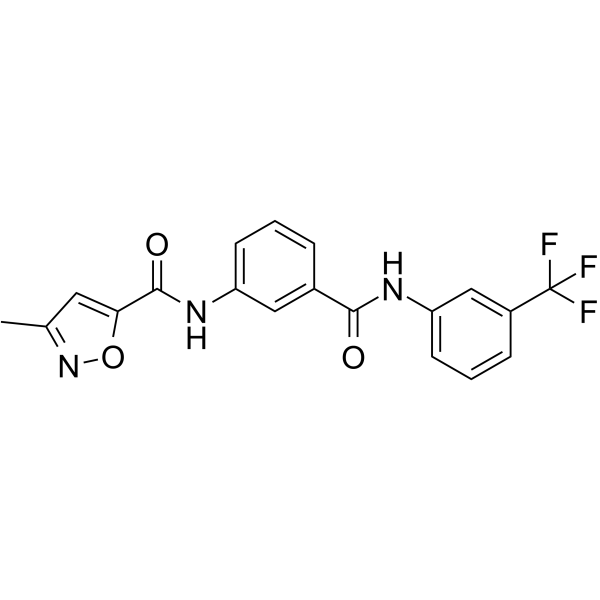
HY-19352
T56-LIMKiLIMK Inhibitor -
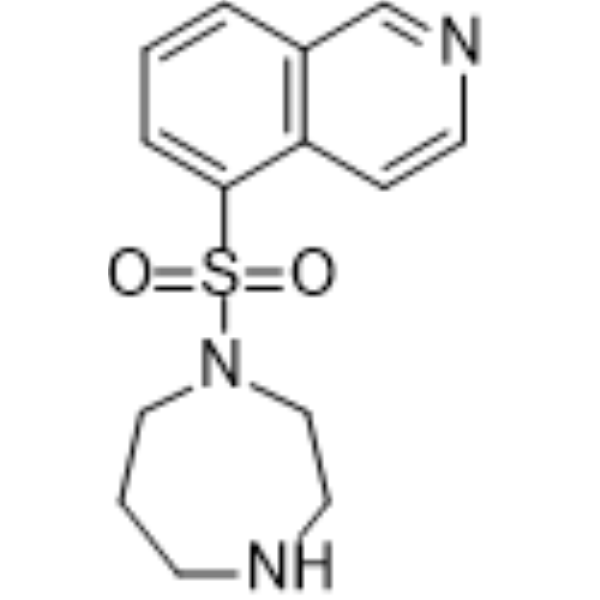
HY-10341A
FasudilRhoA/ROCK Inhibitor -
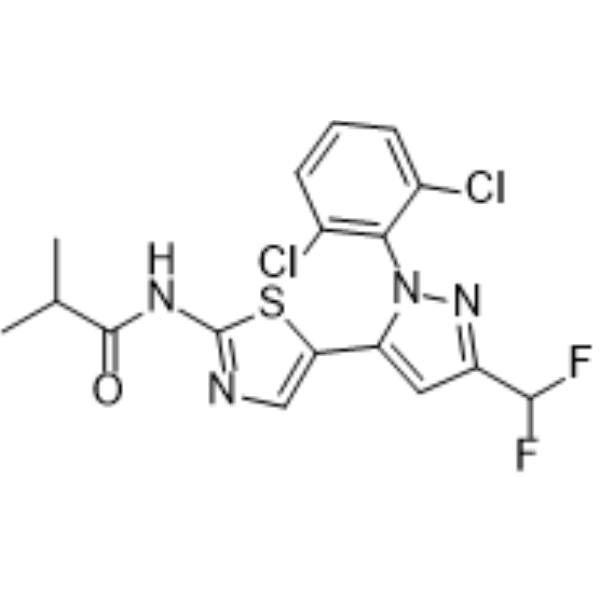
HY-18305
BMS-5LIMK1/2 Inhibitor -
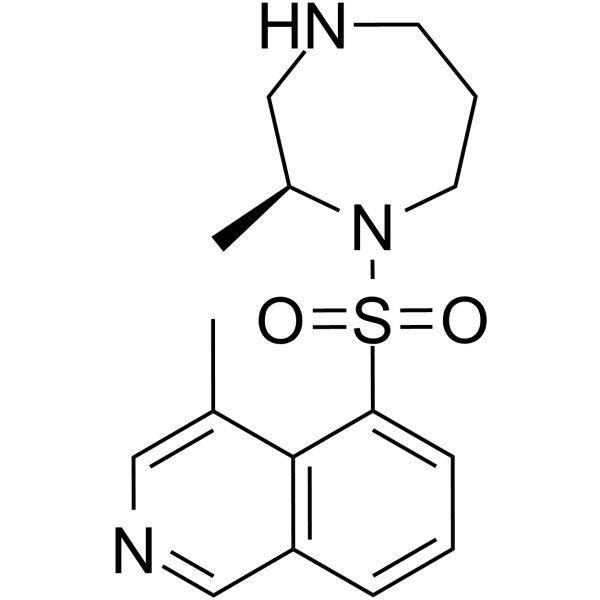
HY-15720
H-1152ROCK Inhibitor -
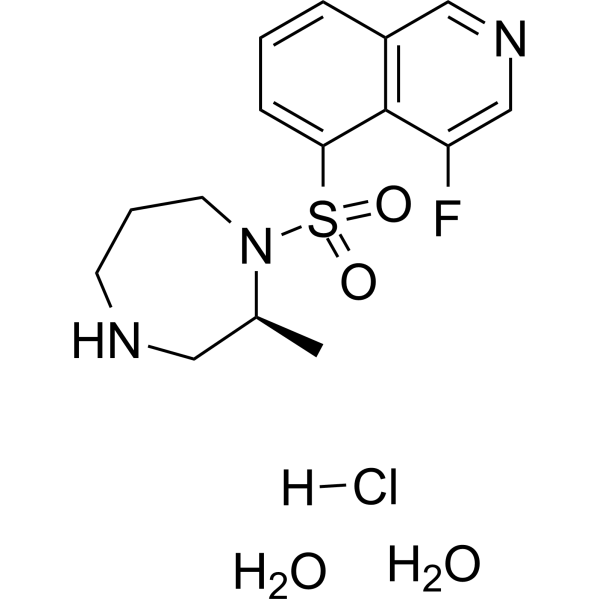
HY-15685
RipasudilROCK Inhibitor -
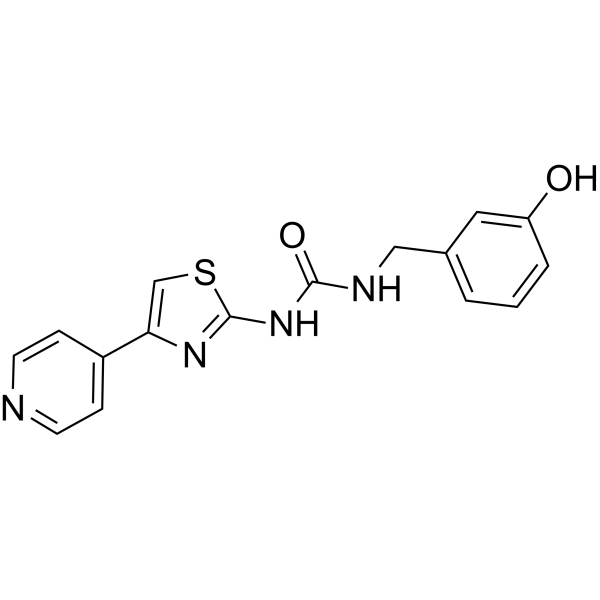
HY-15755
RKI-1447ROCK1/2 Inhibitor -
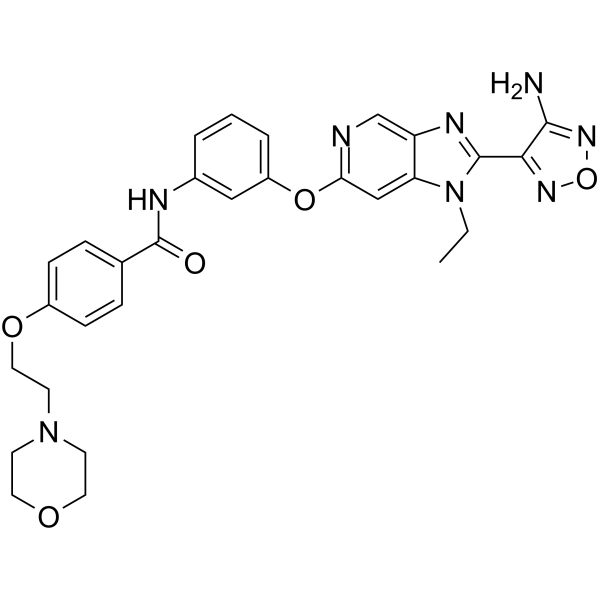
HY-15556
GSK269962AROCK Inhibitor -
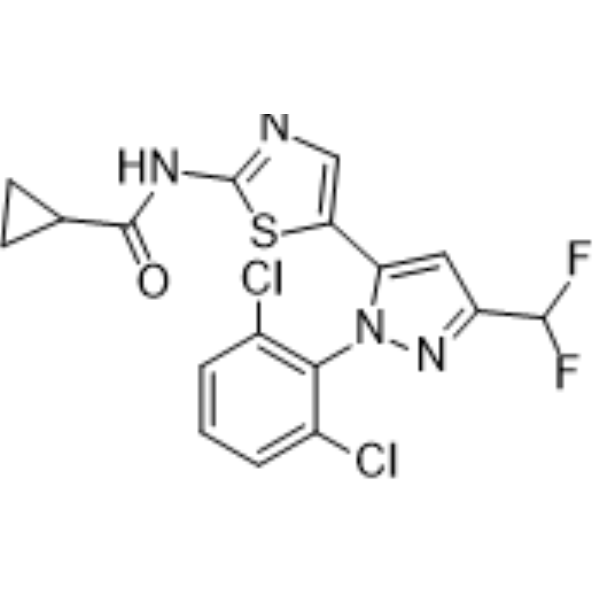
HY-18304
BMS-3LIMK Inhibitor -
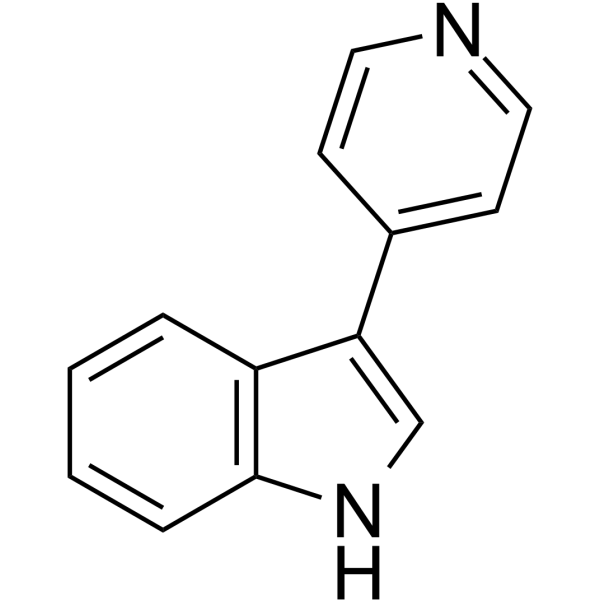
HY-112362
3-(4-Pyridyl)indoleRho-kinase Inhibitor -
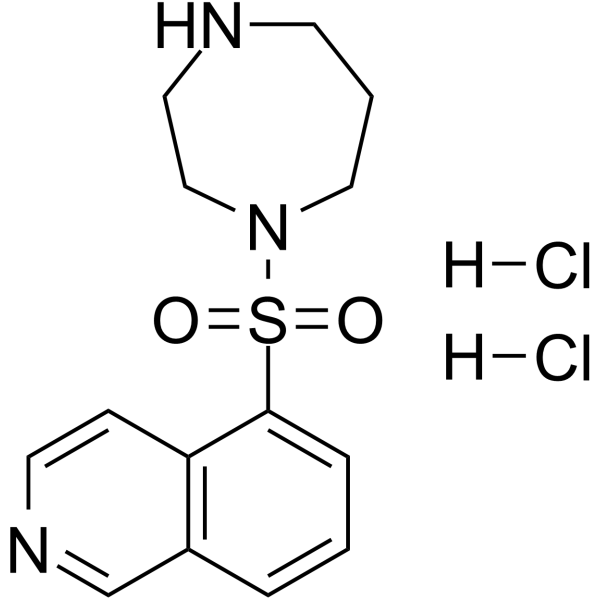
HY-10341C
Fasudil dihydrochlorideRhoA/ROCK Inhibitor -
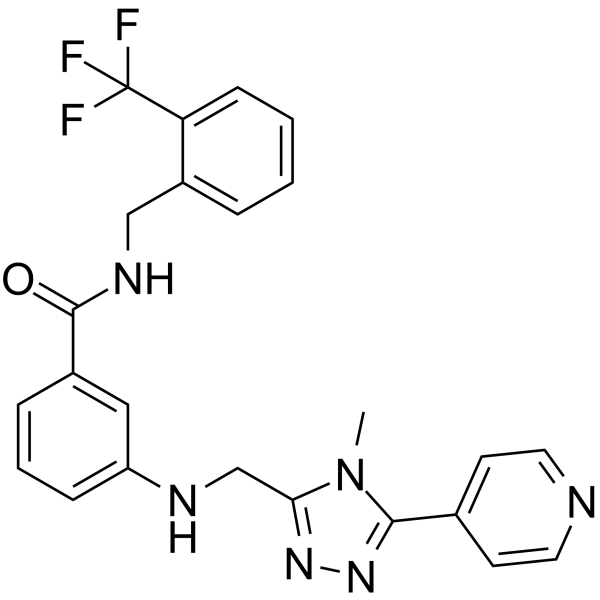
HY-103045
CMPD101GRK2/3 Inhibitor -
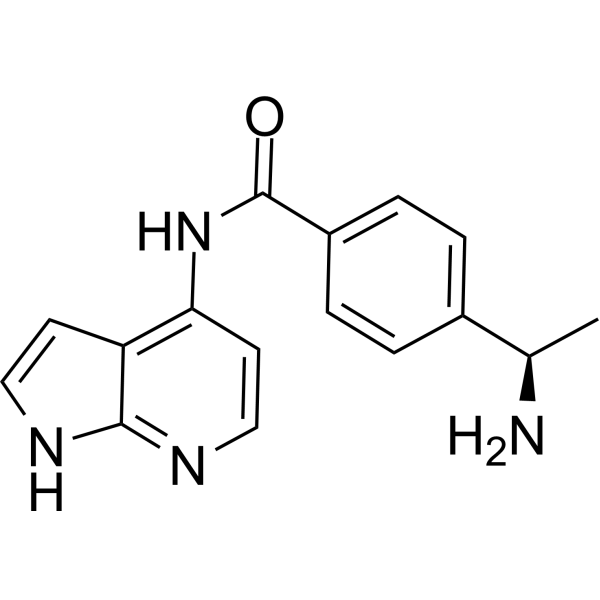
HY-10067
Y-33075ROCK Inhibitor
Publications Citing Use of MedChemExpress (MCE) LX7101 monohydrochloride
More Customer Validation & Images

-
Cell Proliferation/Viability Assay
-
WB
-
WB


Biological Activity
Description
IC50 & Target
[1]|
LIMK1 24 nM (IC50) |
LIMK2 1.6 nM (IC50) |
ROCK2 10 nM (IC50) |
PKA <1 nM (IC50) |
In Vivo
MedChemExpress (MCE) has not independently confirmed the accuracy of these methods. They are for reference only.


Chemical Information
-
CAS No. 2319882-48-7
-
Molecular Weight 487.98
-
Formula C23H30ClN7O3
-
SMILES
NCC1(C(NC2=CC(OC(N(C)C)=O)=CC=C2)=O)CCN(C3=C4C(NC=C4C)=NC=N3)CC1.Cl
-
Shipping
Room temperature in continental US; may vary elsewhere.
-
Storage
Please store the product under the recommended conditions in the Certificate of Analysis.


Publications (3)
-
Journal Impact Factor
-
Most Recent
-
Oncogene
LIMK2 promotes melanoma tumor growth and metastasis through G3BP1-ESM1 pathway-mediated apoptosis inhibition. [Abstract]2023 May;42(18):1478-1491. PMID: 36922679
LX7101 monohydrochloride purchased from MedChemExpress. Usage Cited in: Oncogene. 2023 May;42(18):1478-1491. [Abstract]
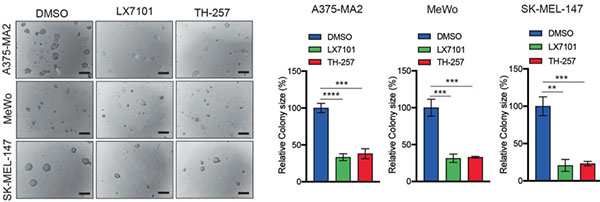
Both LX7101 (5 μM) and TH-257 (5 μM) inhibits the colony-forming ability of melanoma cells (A375-MA2, MeWo, and SK-MEL-147 cells) in soft-agar.
LX7101 monohydrochloride purchased from MedChemExpress. Usage Cited in: Oncogene. 2023 May;42(18):1478-1491. [Abstract]
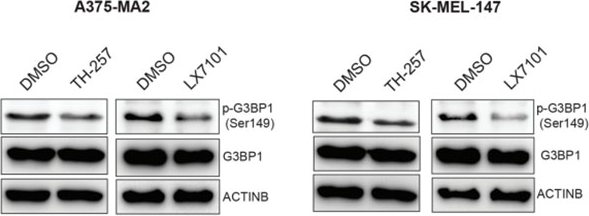
Both LX7101 (5 μM; 24 h) and TH-257 (5 μM; 24 h) reduces the phosphorylation of G3BP1 in A375-MA2 and SK-MEL-147 cells.
-
Sci Rep
Loss of the fragile X mental retardation protein causes aberrant differentiation in human neural progenitor cells. [Abstract]2018 Aug 2;8(1):11585. PMID: 30072797
LX7101 monohydrochloride purchased from MedChemExpress. Usage Cited in: Sci Rep. 2018 Aug 2;8(1):11585. [Abstract]
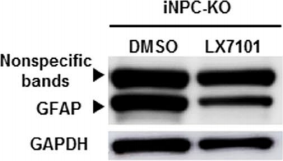
Western blot analysis of GFAP protein levels in LX7101 and DMSO-treated iNPC-KO lines. GAPDH is used as a loading control.
-

Protocols
-
Cell Cytotoxicity Assay
Cytotoxicity assays are usually based on the assessment of cell membrane damage, which can also be indirectly detected by measuring cell viability. Detection methods include MTT assay, CKK-8 assay, LDH assay and ATP assay, etc.
-
Research Protocol for Cardiovascular Diseases
Cardiovascular disease can be modeled as maladaptive cardiac remodeling, where ischemic injury or pressure overload activates inflammatory signaling, fibroblast activation, extracellular-matrix deposition, cardiomyocyte hypertrophy, vascular remodeling, and progressive ventricular dysfunction. The TGF-β/SMAD axis is a central profibrotic pathway after myocardial injury and pressure overload, while innate immune and cytokine pathways regulate leukocyte recruitment, scar formation, and adverse remodeling. Key unresolved questions include which inflammatory signals are reparative versus harmful, when fibrosis is protective versus maladaptive, and whether pathway inhibition improves function without weakening necessary infarct healing or compensatory remodeling.


Purity & Documentation
References
[1]. Boland S, et al. Design, synthesis and biological characterization of selective LIMK inhibitors. Bioorganic & Medicinal Chemistry Letters (2015), 25(18), 4005-4010. [Content Brief]
[2]. Harrison BA, et al. Discovery and Development of LX7101, a Dual LIM-Kinase and ROCK Inhibitor for the Treatment of Glaucoma. ACS Medicinal Chemistry Letters (2015), 6(1), 84-88. [Content Brief]

Calculators
Concentration (start) × Volume (start) = Concentration (final) × Volume (final)


LX7101 monohydrochloride Related Classifications
HY-12659B Related Classifications
 Powered by Bioz