



Misonidazole
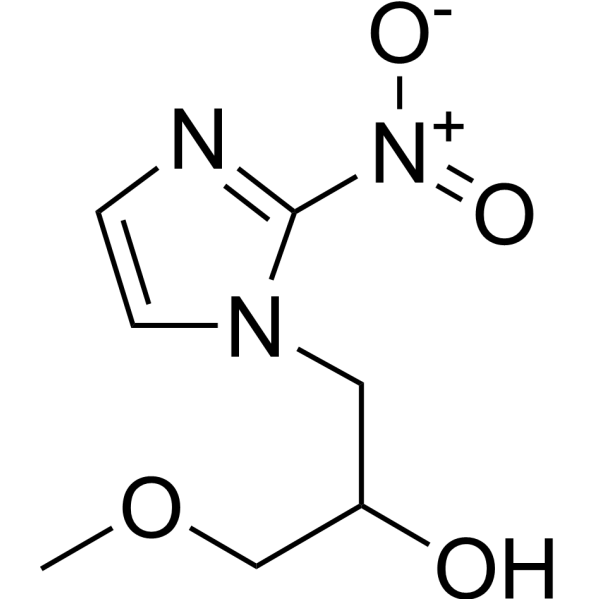
Misonidazole (Ro 7-0582; SR 1354) is a hypoxic tumor cell radiosensitizer. Misonidazole also has antimicrobial effects.
Nos produits utilisent uniquement pour la recherche. Nous ne vendons pas aux patients.
- CAS No.: 13551-87-6
- Formule: C7H11N3O4
- Masse moléculaire:201.18
-
Stockage:Powder -20°C, 3 years , 4°C, 2 years ; In solvent -80°C, 6 months , -20°C, 1 month

To place orders, for customer services and technical support, please contact: MedChemExpress USA
Tel: 609-228-6898 E-mail: [email protected] [email protected]


-
 Activité biologique
-
Chemical Information
- Protocole
- Pureté et documentation
- Références
-
 Help & FAQs


-

HY-132179
FucoidanAnticoagulant/Cancer Agent -
HY-N0738
Stachydrine hydrochlorideEndogenous Metabolite -
HY-10447
TerameprocolSp1 Inhibitor -
HY-12406
VLX600OXPHOS Inhibitor/Iron Chelator -
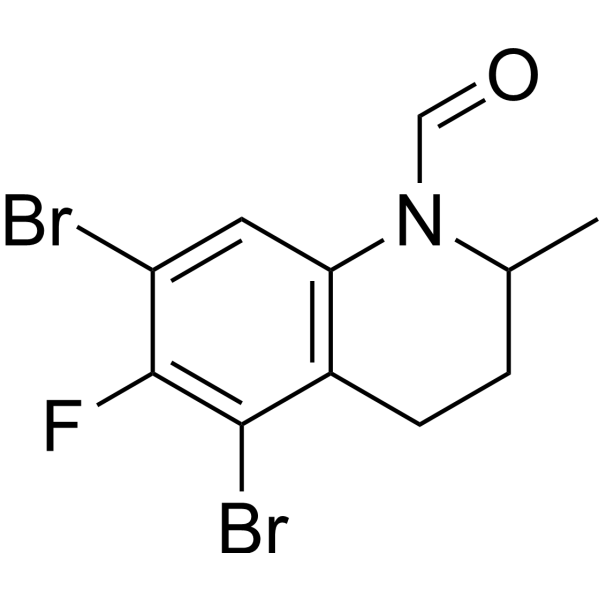
HY-108539
CE3F4Epac1 Antagonist -

HY-108539R
CE3F4 (Standard)Reference Standard -

HY-P1053
β-Amyloid (10-20)β-Amyloid Peptide Fragment -
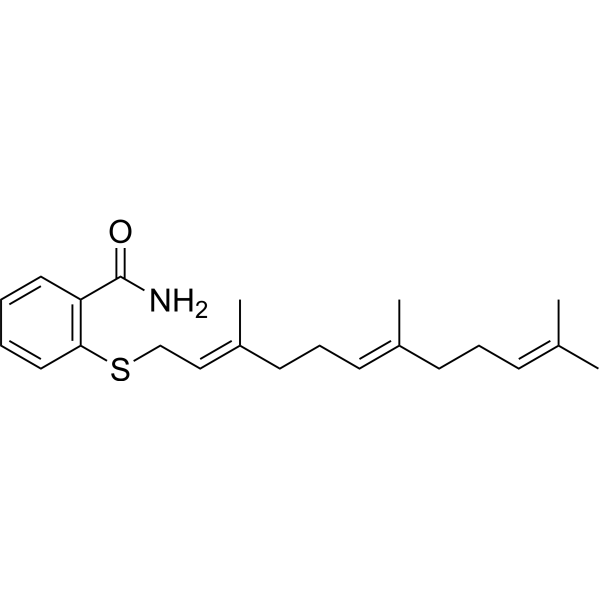
HY-112666
Farnesyl thiosalicylic acid amideFarnesyl Thiosalicylic Acid Derivative -
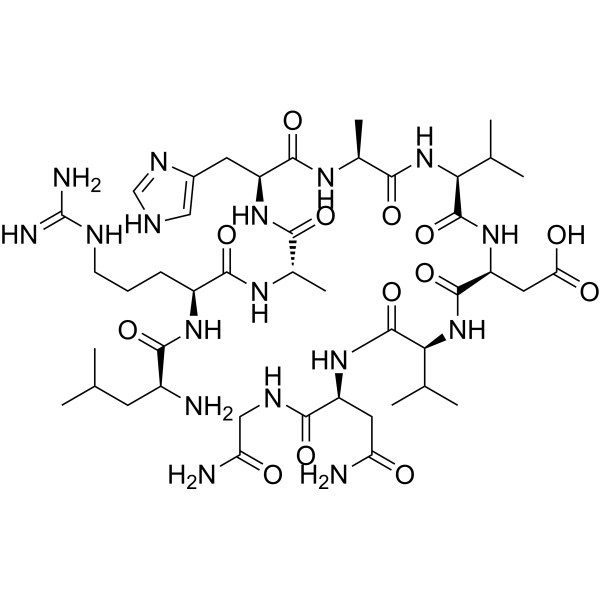
HY-P1086
Cadherin Peptide, avianPeptide
Voir tous les produits spécifiques à Isoform Parasite
More

Activité biologique
Description
Cellular Effect
|
Cell Line

|
Type | Value | Description | References |
|---|---|---|---|---|
| CHO-AA8 | IC50 |
12 mM
Compound: 1
|
Aerobic growth inhibition in Chinese hamster cell line AA8
Aerobic growth inhibition in Chinese hamster cell line AA8
|
[PMID: 7783125] |
| CHO-AA8 | IC50 |
12.1 mM
Compound: 1
|
Concentration required to reduce AA8 cell numbers to 50% of controls in a growth inhibition microassay
Concentration required to reduce AA8 cell numbers to 50% of controls in a growth inhibition microassay
|
[PMID: 8308864] |
| CHO-AA8 | IC50 |
12080 μM
Compound: 1 (misonidazole)
|
Growth inhibition in CHO subline AA8 cells exposed for 18 hr under aerobic(air) conditions
Growth inhibition in CHO subline AA8 cells exposed for 18 hr under aerobic(air) conditions
|
[PMID: 1479583] |
| HCT-116 | IC50 |
0.53 mM
Compound: 1
|
Cytotoxicity against human HCT116 cells incubated for 4 hrs under anaerobic condition measured after 5 days by sulforhodamine B assay
Cytotoxicity against human HCT116 cells incubated for 4 hrs under anaerobic condition measured after 5 days by sulforhodamine B assay
|
[PMID: 29253343] |


Chemical Information
-
CAS No. 13551-87-6
-
Appearance Solid
-
Masse moléculaire 201.18
-
Formule C7H11N3O4
-
Color Off-white to yellow
-
SMILES
COCC(O)CN1C([N+]([O-])=O)=NC=C1
-
Synonyms
Ro 7-0582; SR 1354
-
Livraison
Room temperature in continental US; may vary elsewhere.
-
Stockage
Powder -20°C 3 years 4°C 2 years In solvent -80°C 6 months -20°C 1 month


Pureté et documentation
-
Fiche technique (272 KB)
-
SDS (393 KB)
- English - EN (393 KB)
- Français - FR (393 KB)
- Deutsch - DE (393 KB)
- Norwegian - NO (393 KB)
- Español - ES (393 KB)
- Swedish - SV (393 KB)
- Italian - IT (393 KB)
- Korean - KR (393 KB)
- Portuguese - PT (393 KB)
-
Instruction de manipulation (2659 KB)
Références
[1]. Bibo Li, et al. Preparation, Characterization, and In Vitro pH-sensitivity Evaluation of Superparamagnetic Iron Oxide Nanoparticle- Misonidazole pH-sensitive Liposomes. Curr Drug Deliv. 2019;16(3):254-267. [Content Brief]
[2]. R C Knight, et al. Mechanism of action of nitroimidazole antimicrobial and antitumour radiosensitizing drugs. Effects of reduced misonidazole on DNA. Int J Radiat Biol Relat Stud Phys Chem Med. 1979 Oct;36(4):367-77. [Content Brief]

Calculators
Concentration (start) × Volume (start) = Concentration (final) × Volume (final)


Misonidazole Related Classifications
HY-105061 Related Classifications
 Powered by Bioz