



NF-κΒ activator 2
Based on 7 publication(s) in Google Scholar
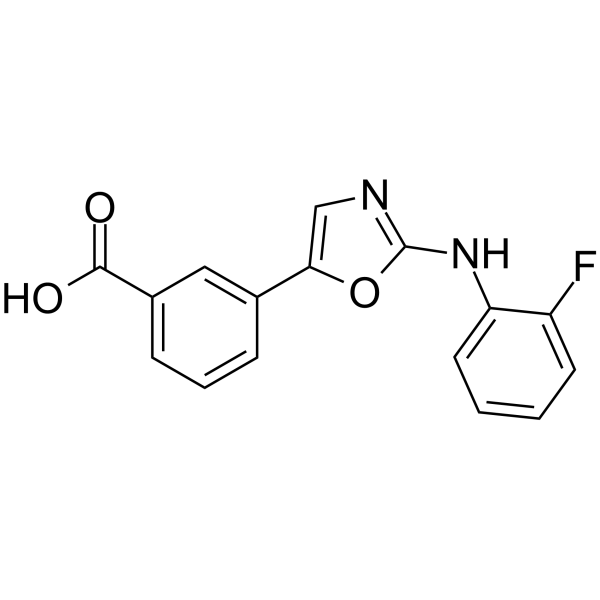
NF-κΒ activator 2 is a potent and orally active NF- B activator, with an EC50 of 1.58 μM. NF-κΒ activator 2 induces SOD2 through increasing NF- B expression and activation. NF-κΒ activator 2 can be used for the research of amyotrophic lateral sclerosis (ALS).
For research use only. We do not sell to patients.
- Purity : 99.76%
- CAS No.: 2375281-44-8
- Formula: C16H11FN2O3
- Molecular Weight:298.27
-
Storage:Powder -20°C, 3 years , 4°C, 2 years ; In solvent -80°C, 6 months , -20°C, 1 month

To place orders, for customer services and technical support, please contact: MedChemExpress USA
Tel: 609-228-6898 E-mail: [email protected] [email protected]


-
 Biological Activity
-
Chemical Information
-
Solvent & Solubility
- Protocols
- Purity & Documentation
- References
-
 Help & FAQs


-
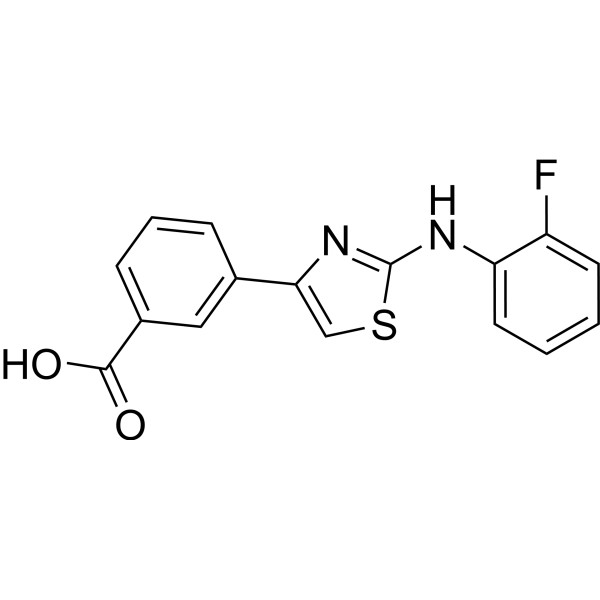
HY-134476
NF-κΒ activator 1NF-κB Activator -
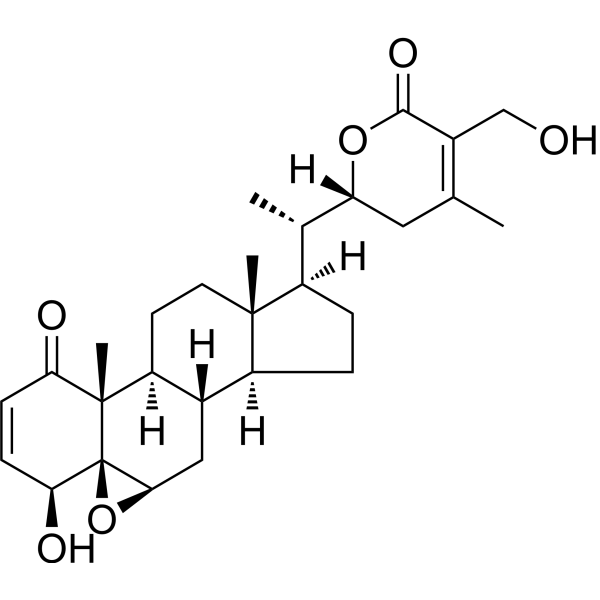
HY-N2065
Withaferin ANF-κB Inhibitor -
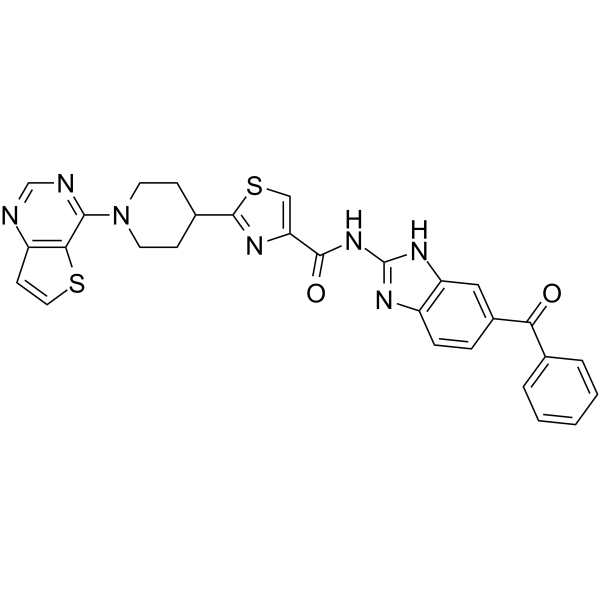
HY-10496
SC75741NF-κB Inhibitor -
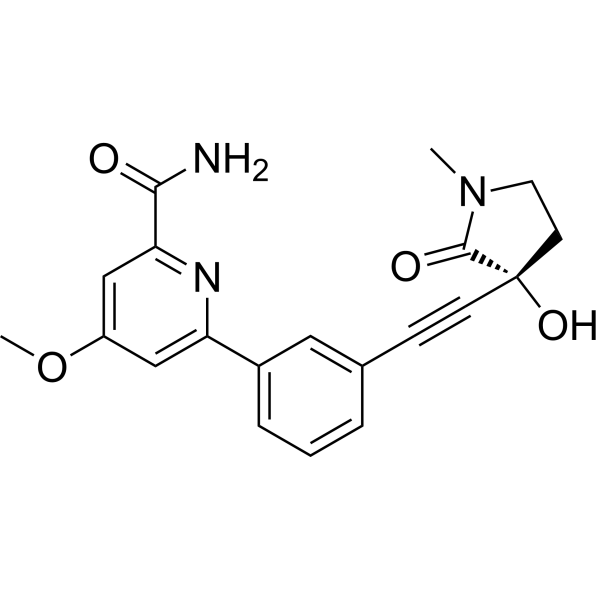
HY-112433
NIK SMI1NF-κB Inhibitor -
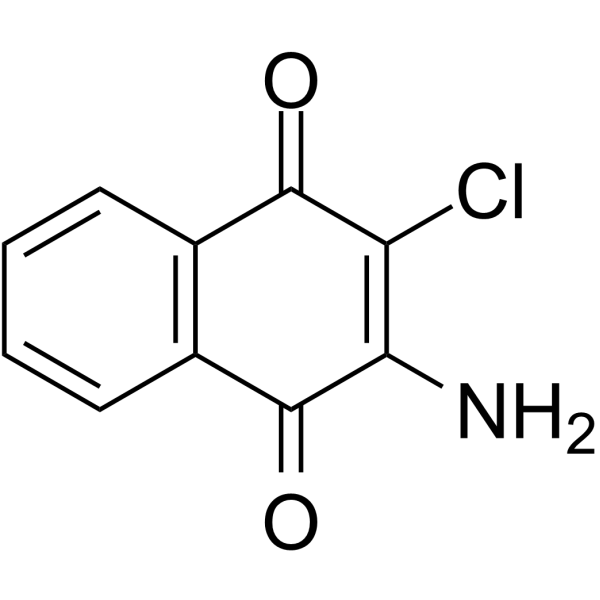
HY-121632
QuinoclamineNF-κB Inhibitor -

HY-N2065R
Withaferin A (Standard)NF-κB Inhibitor -
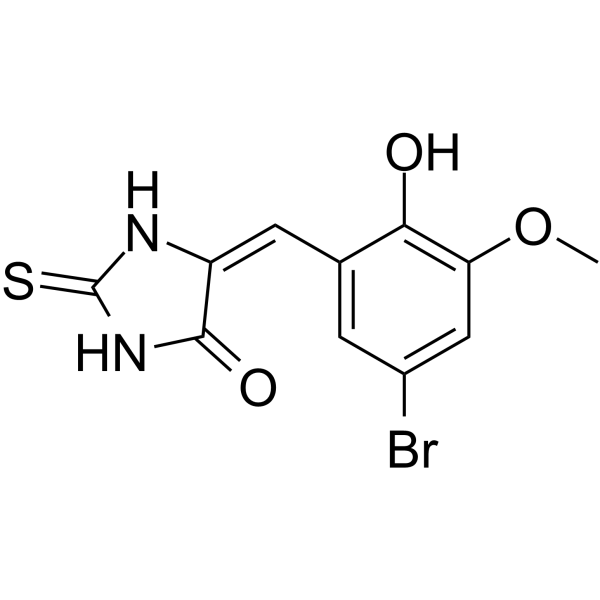
HY-121508
(E/Z)-IT-603IĸBα/c-Rel Inhibitor -
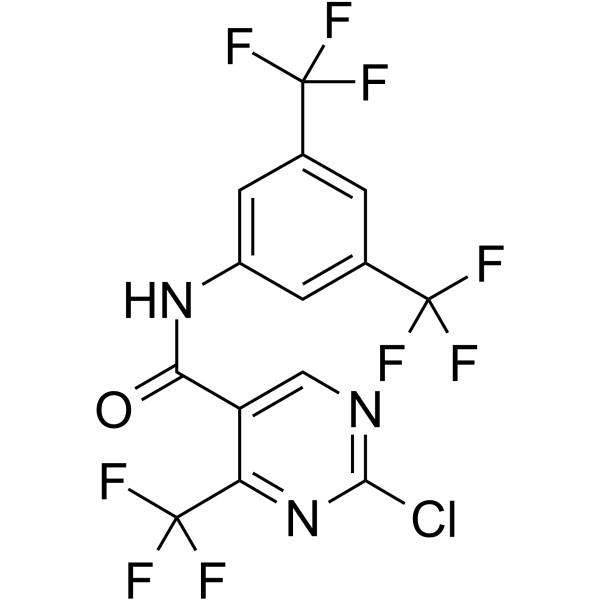
HY-110177
SP-100030NF-κB/AP-1 Inhibitor -
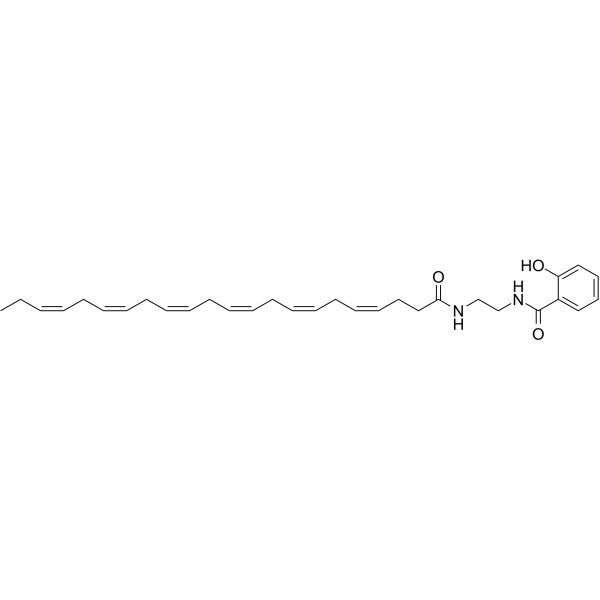
HY-17630
Edasalonexent -
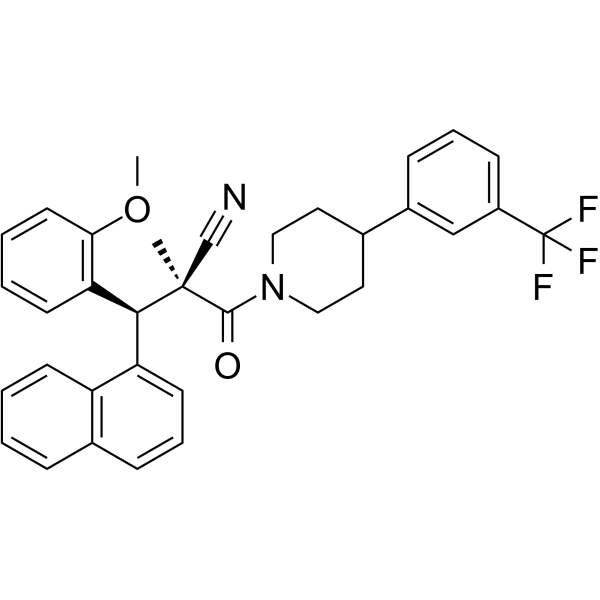
HY-19498
WAY-204688NF-κB Inhibitor -

HY-121632R
Quinoclamine (Standard)NF-κB Inhibitor
Publications Citing Use of MedChemExpress (MCE) NF-κΒ activator 2
More- Cell Death Dis. 2023 Nov 15;14(11):743. [Abstract]
- Cell Commun Signal. 2025 Jan 31;23(1):58. [Abstract]
- Phytomedicine. 2025 Feb:137:156378. [Abstract]
- J Transl Med. 2024 Jun 5;22(1):535. [Abstract]
- Antioxidants (Basel). 2026 Aug 24;15(9):1055.
- J Inflamm Res. 2024 Apr 9:17:2147-2158. [Abstract]
- Cancer Med. 2026 Apr;15(4):e71822. [Abstract]


Biological Activity
Description
IC50 & Target
[1]|
NF-κB 1.58 μM (EC50) |
Cellular Effect
|
Cell Line

|
Type | Value | Description | References |
|---|---|---|---|---|
| SH-SY5Y | EC50 |
1.03 μM
Compound: Example 40
|
Activation of NF-KappaB (unknown origin) expressed in SH-SY5Y cells co-transfected with pNFkappaB-Luc plasmid measured after 24 hrs by Bright-Glo luciferase assay
Activation of NF-KappaB (unknown origin) expressed in SH-SY5Y cells co-transfected with pNFkappaB-Luc plasmid measured after 24 hrs by Bright-Glo luciferase assay
|
[PMID: 31857831] |
In Vitro
NF-κΒ activator 2 (compound 61) (1 μM, 6 h) induces SOD2 mRNA expression in SH-SY5Y neuroblastoma cells[1].
MedChemExpress (MCE) has not independently confirmed the accuracy of these methods. They are for reference only.
In Vivo
NF-κΒ activator 2 (5 mg/kg; p.o.) displays a comparable half-life (2.86 h), oral bioavailability (15.6%), and Cmax (92 ng/mL)[1].
MedChemExpress (MCE) has not independently confirmed the accuracy of these methods. They are for reference only.


Chemical Information
-
CAS No. 2375281-44-8
-
Appearance Solid
-
Molecular Weight 298.27
-
Formula C16H11FN2O3
-
Color White to off-white
-
SMILES
O=C(O)C1=CC=CC(C2=CN=C(NC3=CC=CC=C3F)O2)=C1
-
Shipping
Room temperature in continental US; may vary elsewhere.
-
Storage
Powder -20°C 3 years 4°C 2 years In solvent -80°C 6 months -20°C 1 month


Publications (7)
-
Journal Impact Factor
-
Most Recent
-
Cell Death Dis
BRISC is required for optimal activation of NF-κB in Kupffer cells induced by LPS and contributes to acute liver injury. [Abstract]2023 Nov 15;14(11):743. PMID: 37968261 -
Cell Commun Signal
Ionizing radiation-induced disruption of Rela-Bclaf1-spliceosome regulatory axis in primary spermatocytes causing spermatogenesis dysfunction. [Abstract]2025 Jan 31;23(1):58. PMID: 39891142 -
Phytomedicine
Danshensu enhances autophagy and reduces inflammation by downregulating TNF-α to inhibit the NF-κB signaling pathway in ischemic flaps. [Abstract]2025 Feb:137:156378. PMID: 39818119 -
J Transl Med
S1PR3 inhibition protects against LPS-induced ARDS by inhibiting NF-κB and improving mitochondrial oxidative phosphorylation. [Abstract]2024 Jun 5;22(1):535. PMID: 38840216 -
-
J Inflamm Res
TAK-3 Inhibits Lipopolysaccharide-Induced Neuroinflammation in Traumatic Brain Injury Rats Through the TLR-4/NF-κB Pathway. [Abstract]2024 Apr 9:17:2147-2158. PMID: 38617382 -
Cancer Med
2026 Apr;15(4):e71822. PMID: 41987392


Solvent & Solubility
In Vitro:
DMSO : 250 mg/mL (838.17 mM; Need ultrasonic; Hygroscopic DMSO has a significant impact on the solubility of product, please use newly opened DMSO)
Please refer to the solubility information to select the appropriate solvent. Once prepared, please aliquot and store the solution to prevent product inactivation from repeated freeze-thaw cycles.
Storage method and period of stock solution: -80°C, 6 months; -20°C, 1 month. When stored at -80°C, please use it within 6 months. When stored at -20°C, please use it within 1 month.
Please refer to the solubility information to select the appropriate solvent. Once prepared, please aliquot and store the solution to prevent product inactivation from repeated freeze-thaw cycles.
Storage method and period of stock solution: -80°C, 6 months; -20°C, 1 month. When stored at -80°C, please use it within 6 months. When stored at -20°C, please use it within 1 month.
Concentration (start) × Volume (start) = Concentration (final) × Volume (final)
In Vivo:
Select the appropriate dissolution method based on your experimental animal and administration route.
- For the following dissolution methods, please ensure to first prepare a clear stock solution using an In Vitro approach and then sequentially add co-solvents:
- To ensure reliable experimental results, the clarified stock solution can be appropriately stored based on storage conditions. As for the working solution for In Vivo experiments, it is recommended to prepare freshly and use it on the same day.
- The percentages shown for the solvents indicate their volumetric ratio in the final prepared solution. If precipitation or phase separation occurs during preparation, heat and/or sonication can be used to aid dissolution.
Add each solvent one by one: 10% DMSO 40% PEG300 5% Tween-80 45% Saline
Solubility: ≥ 2.08 mg/mL (6.97 mM); Clear solution
This protocol yields a clear solution of ≥ 2.08 mg/mL (saturation unknown).
Taking 1 mL working solution as an example, add 100 μL DMSO stock solution (20.8 mg/mL) to 400 μL PEG300, and mix evenly; then add 50 μL Tween-80 and mix evenly; then add 450 μL Saline to adjust the volume to 1 mL.
Preparation of Saline: Dissolve 0.9 g sodium chloride in ddH₂O and dilute to 100 mL to obtain a clear Saline solution.
In Vivo Dissolution Calculator
Please enter the basic information of animal experiments:
-
-
-
-
Recommended: Prepare an additional quantity of animals to account for potential losses during experiments.
Please enter your animal formula composition:
-
%DMSO +
Recommended: Keep the proportion of DMSO in working solution below 2% if your animal is weak.
-
%+
-
+%Tween-80 + +
-
%Saline +
The co-solvents required include: DMSO, . All of co-solvents are available by MedChemExpress (MCE). , Tween 80. All of co-solvents are available by MedChemExpress (MCE).
Working solution concentration: 0.22 mg/mL
Method for preparing stock solution: mg drug dissolved in μL DMSO. Stock solution concentration: mg/mL.
1. Take μL DMSO stock solution;
2. Add μL .
μL , mix evenly;
3. Then add μL Tween 80, mix evenly;
4. Then add μL
Please ensure that the stock solution in the first step is dissolved to a clear state, and add co-solvents in sequence. You can use ultrasonic heating (ultrasonic cleaner, recommended frequency 20-40 kHz), vortexing, etc. to assist dissolution.


Purity & Documentation
-
Data Sheet (275 KB)
-
SDS (393 KB)
- English - EN (393 KB)
- Français - FR (393 KB)
- Deutsch - DE (393 KB)
- Norwegian - NO (393 KB)
- Español - ES (393 KB)
- Swedish - SV (393 KB)
- Italian - IT (393 KB)
- Korean - KR (393 KB)
- Portuguese - PT (393 KB)
-
Handling Instructions (2659 KB)
References


Complete Stock Solution Preparation Table
Please refer to the solubility information to select the appropriate solvent. Once prepared, please aliquot and store the solution to prevent product inactivation from repeated freeze-thaw cycles.
Storage method and period of stock solution: -80°C, 6 months; -20°C, 1 month. When stored at -80°C, please use it within 6 months. When stored at -20°C, please use it within 1 month.
| Optional Solvent | Concentration Solvent Mass | 1 mg | 5 mg | 10 mg | 25 mg |
|---|---|---|---|---|---|
| DMSO | 1 mM | 3.3527 mL | 16.7633 mL | 33.5267 mL | 83.8167 mL |
| 5 mM | 0.6705 mL | 3.3527 mL | 6.7053 mL | 16.7633 mL | |
| 10 mM | 0.3353 mL | 1.6763 mL | 3.3527 mL | 8.3817 mL | |
| 15 mM | 0.2235 mL | 1.1176 mL | 2.2351 mL | 5.5878 mL | |
| 20 mM | 0.1676 mL | 0.8382 mL | 1.6763 mL | 4.1908 mL | |
| 25 mM | 0.1341 mL | 0.6705 mL | 1.3411 mL | 3.3527 mL | |
| 30 mM | 0.1118 mL | 0.5588 mL | 1.1176 mL | 2.7939 mL | |
| 40 mM | 0.0838 mL | 0.4191 mL | 0.8382 mL | 2.0954 mL | |
| 50 mM | 0.0671 mL | 0.3353 mL | 0.6705 mL | 1.6763 mL | |
| 60 mM | 0.0559 mL | 0.2794 mL | 0.5588 mL | 1.3969 mL | |
| 80 mM | 0.0419 mL | 0.2095 mL | 0.4191 mL | 1.0477 mL | |
| 100 mM | 0.0335 mL | 0.1676 mL | 0.3353 mL | 0.8382 mL |


NF-κΒ activator 2 Related Classifications
HY-134477 Related Classifications
 Powered by Bioz