



Tectorigenin
Based on 7 publication(s) in Google Scholar
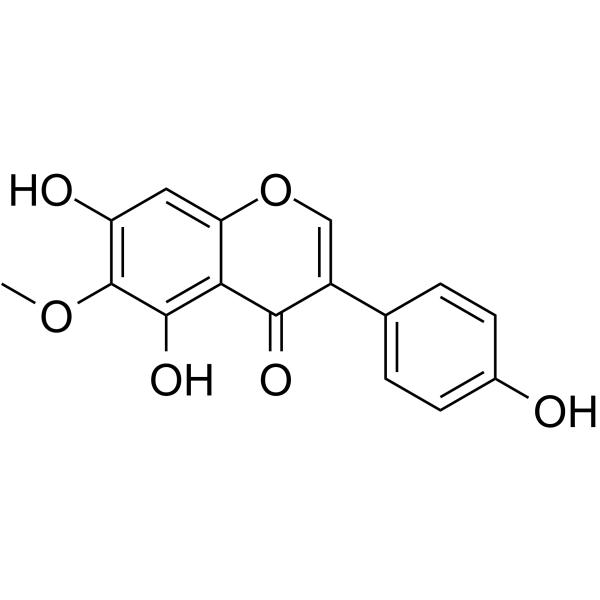
Tectorigenin is a plant isoflavonoid originally isolated from the dried flower of Pueraria lobate Benth.
For research use only. We do not sell to patients.
- Purity : 99.89%
- CAS No.: 548-77-6
- Formula: C16H12O6
- Molecular Weight:300.26
-
Storage:Powder -20°C, 3 years , 4°C, 2 years ; In solvent -80°C, 2 years , -20°C, 1 year

To place orders, for customer services and technical support, please contact: MedChemExpress USA
Tel: 609-228-6898 E-mail: [email protected] [email protected]


-
 Biological Activity
-
Chemical Information
-
Solvent & Solubility
- Purity & Documentation
- References
-
 Help & FAQs


-
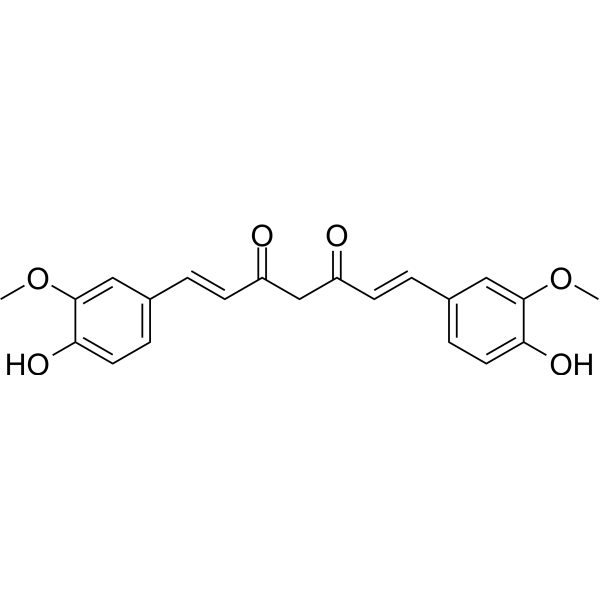
HY-N0005
Curcuminp300 Histone Acetylatransferase Inhibitor -
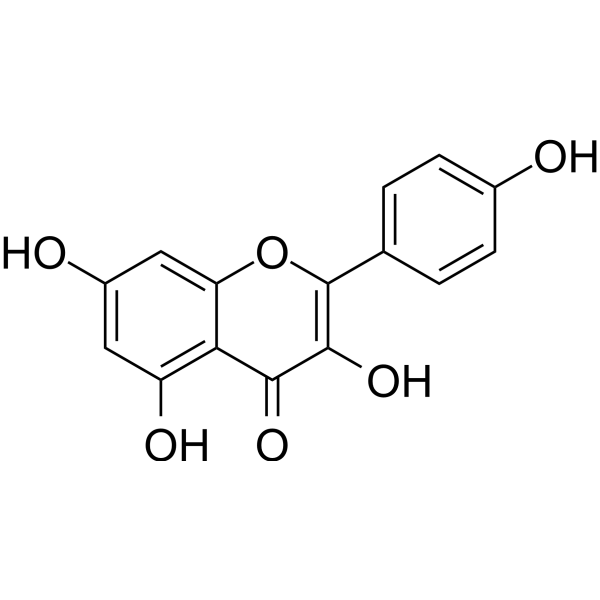
HY-14590
KaempferolEstrogen Receptor α Inhibitor -
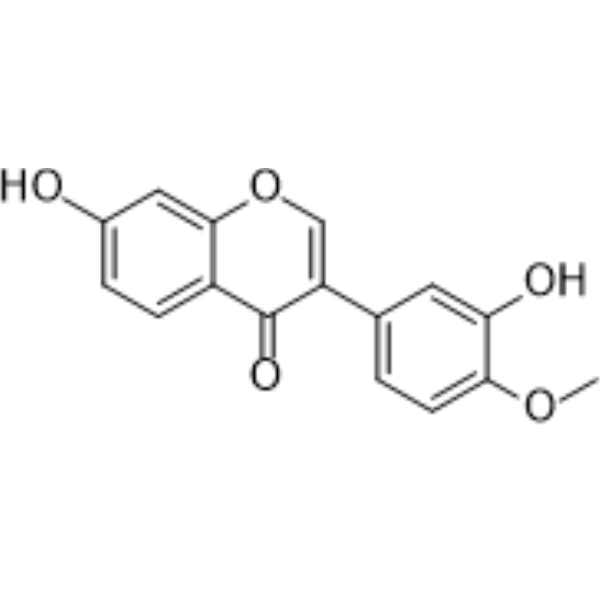
HY-N0519
CalycosinPhytoestrogen -

HY-D1056
Lipopolysaccharides, from E. coli O55:B5Endotoxin -

HY-N0792R
Tectorigenin (Standard)Plant Isoflavonoid -
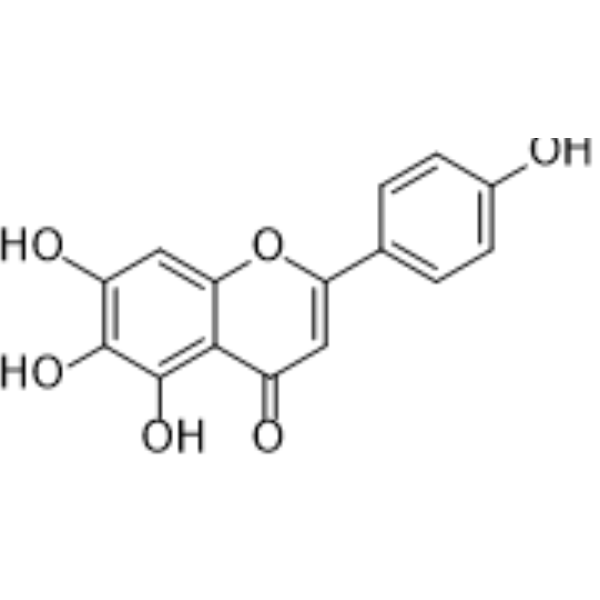
HY-N0752
ScutellareinAutophagy Inducer -
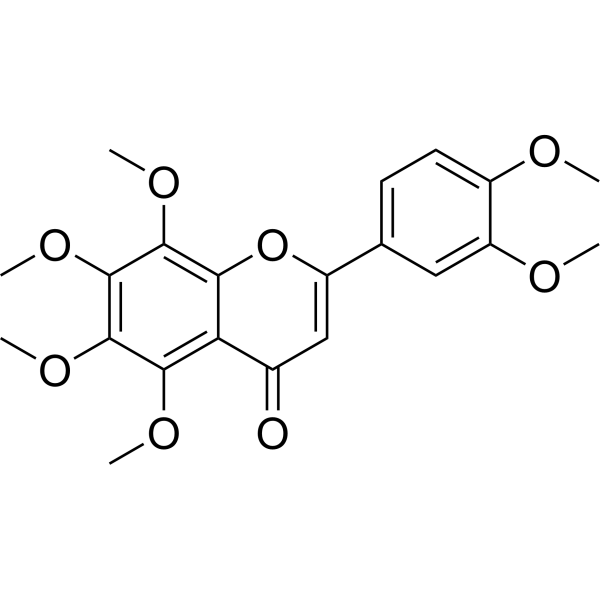
HY-N0155
NobiletinROR Agonist -
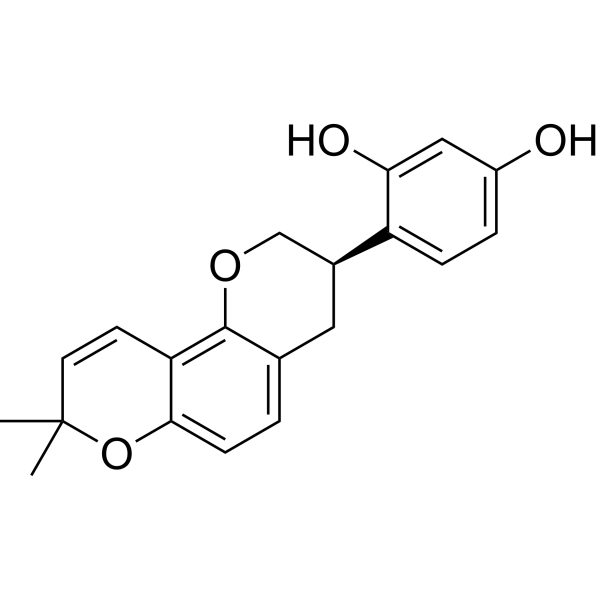
HY-N0393
GlabridinPPARγ Activator -
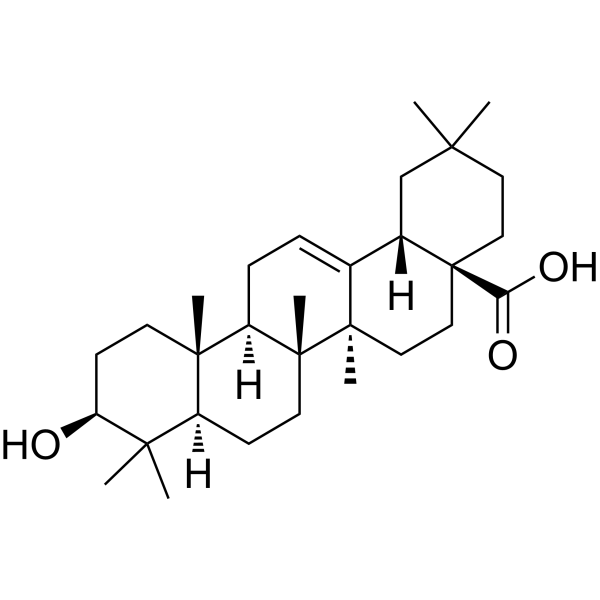
HY-N0156
Oleanolic acidAutophagy Inducer -
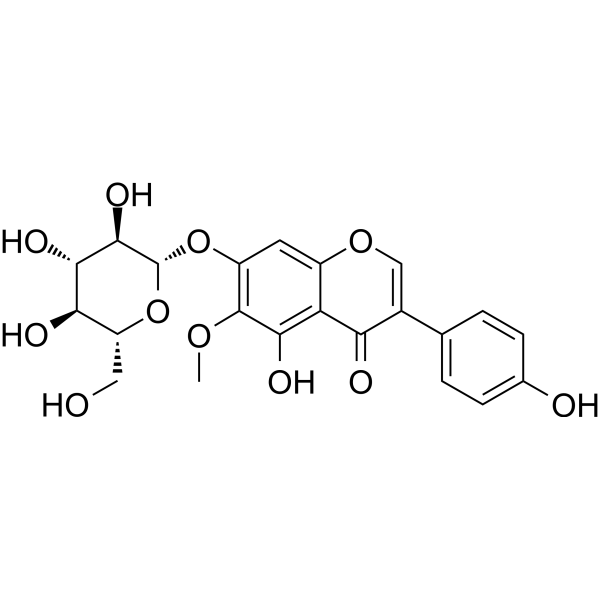
HY-N0791
TectoridinPhytoestrogen -
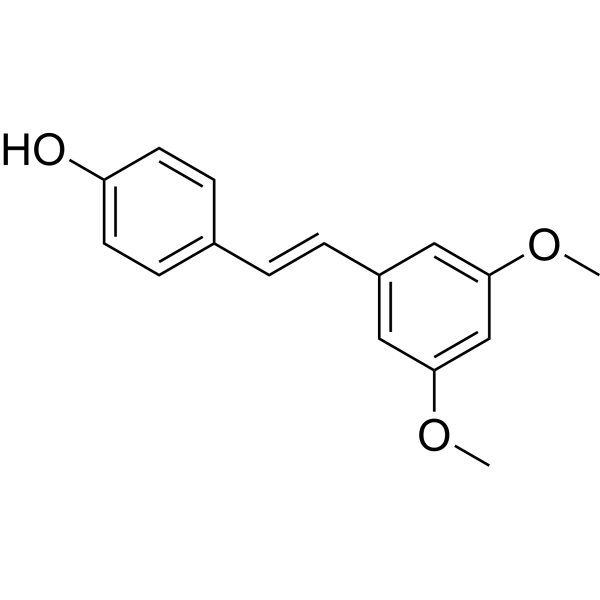
HY-N0828
PterostilbeneAutophagy Inducer -
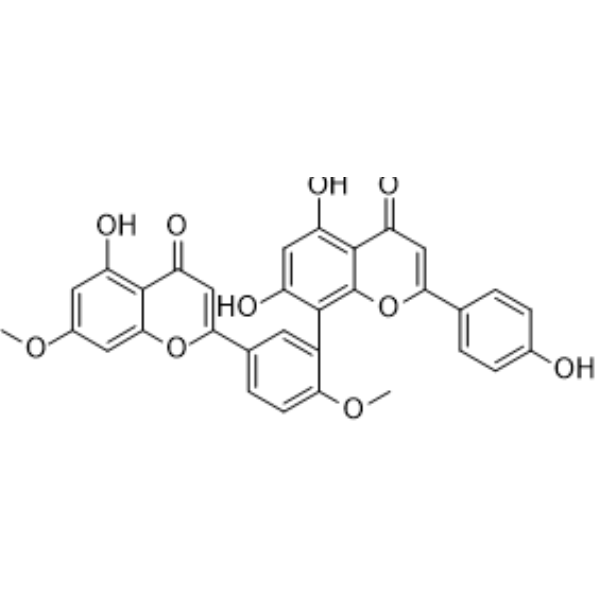
HY-N0889
GinkgetinAutophagy Inducer
Publications Citing Use of MedChemExpress (MCE) Tectorigenin
More- Food Chem. 2025 Dec 30:497:146992. [Abstract]
- Food Chem. 2025 Oct 15:489:144992. [Abstract]
- Br J Pharmacol. 2021 Jun;178(12):2443-2460. [Abstract]
- Ind Crops Prod. 2025 Dec 11;239:122458.
- Int Immunopharmacol. 2025 Oct 30:164:115300. [Abstract]
- Toxicol Appl Pharmacol. 2026 Apr:509:117733. [Abstract]
- SSRN. 2025 Jul 8.
 Customer Validation & Images

-
ELISA
-
Histological Imaging/Staining
-
Histological Imaging/Staining
-
Bio/Physico-chemical Assay
-
WB


Biological Activity
Description
In Vitro
Tectorigenin is a plant isoflavonoid originally isolated from the dried flower of Pueraria thomsonii Benth. Palmitic acid (PA)-stimulated ROS production is abolished by treatment with Tectorigenin for HUVECs in a dose-dependent manner (0.1, 1, 10 μM). Treatment with Tectorigenin attenuates enhanced IKKβ phosphorylation and effectively blocks NF-κB activation by inhibition of p65 phosphorylation at concentrations ranging from 0.1 to 10 μM. Tectorigenin treatment also effectively inhibits PA-augmented TNF-α and IL-6 production in a concentration dependent manner[1]. The number of viable HepG2 cells treated by Tectorigenin decreases in a concentration- and time-dependent manner. When HepG2 cells are treated with Tectorigenin at 5, 10 and 20 mg/L for 24 h, the viability rate is 91%, 79% and 62%, respectively[2].
MedChemExpress (MCE) has not independently confirmed the accuracy of these methods. They are for reference only.


Chemical Information
-
CAS No. 548-77-6
-
Appearance Solid
-
Molecular Weight 300.26
-
Formula C16H12O6
-
Color Light yellow to yellow
-
SMILES
O=C1C(C2=CC=C(O)C=C2)=COC3=CC(O)=C(OC)C(O)=C13
-
Structure Classification
-
Shipping
Room temperature in continental US; may vary elsewhere.
-
Storage
Powder -20°C 3 years 4°C 2 years In solvent -80°C 2 years -20°C 1 year


Publications (7)
-
Journal Impact Factor
-
Most Recent
-
Food Chem
Effects of sun drying combined with baking processes on the flavor quality of Chongqing Tuocha raw tea. [Abstract]2025 Dec 30:497:146992. PMID: 41285060 -
Food Chem
Flavonoid-mediated metabolic underpinning quality variation in red bud-sport pear mutants. [Abstract]2025 Oct 15:489:144992. PMID: 40466530 -
Br J Pharmacol
Tectorigenin alleviates intrahepatic cholestasis by inhibiting hepatic inflammation and bile accumulation via activation of PPARγ. [Abstract]2021 Jun;178(12):2443-2460. PMID: 33661551
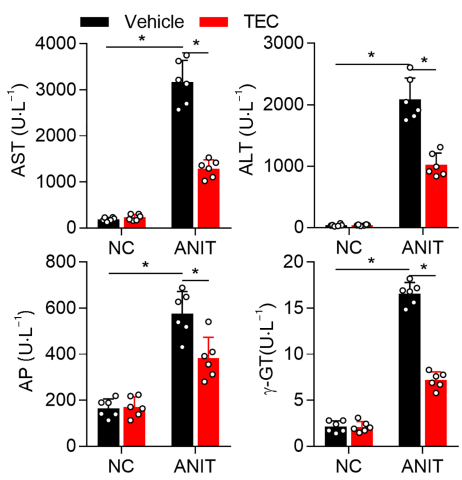
Tectorigenin purchased from MedChemExpress. Usage Cited in: Br J Pharmacol. 2021 Jun;178(12):2443-2460. [Abstract]
C57BL/6J mice were treated with ANIT and/or Tectorigenin (TEC). Serum levels of AST, ALT, γ-GT, and AP were measured by ELISA kits, n = 6. The results showed that Tectorigenin (75 mg/kg; oral gavage; once daily for 5 days) significantly alleviated the reduction of liver function markers induced by ANIT in an ANIT-induced mouse model of intrahepatic cholestasis.
Tectorigenin purchased from MedChemExpress. Usage Cited in: Br J Pharmacol. 2021 Jun;178(12):2443-2460. [Abstract]
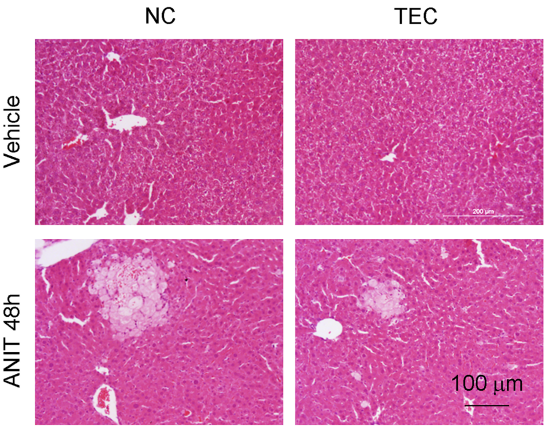
C57BL/6J mice were treated with ANIT and/or Tectorigenin (TEC). Representative images of hepatic HE staining were shown. The results showed that Tectorigenin (75 mg/kg; oral gavage; once daily for 5 days) significantly ameliorated extensive tissue necrosis induced by ANIT in an ANIT-induced mouse model of intrahepatic cholestasis.
Tectorigenin purchased from MedChemExpress. Usage Cited in: Br J Pharmacol. 2021 Jun;178(12):2443-2460. [Abstract]
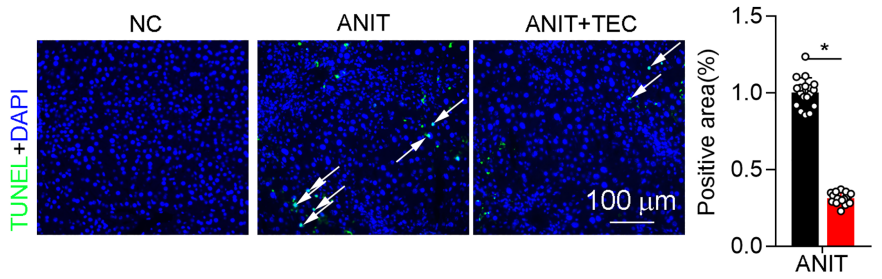
C57BL/6J mice were treated with ANIT and/or Tectorigenin (TEC). Representative images of hepatic TUNEL staining (left) and quantitative statistics (right) were shown in the figure, n = 6. The results showed that Tectorigenin (TEC) (75 mg/kg; oral gavage; once daily for 5 days) inhibited ANIT-induced apoptotic cell death, as shown by fewer positive areas after TUNEL staining.
Tectorigenin purchased from MedChemExpress. Usage Cited in: Br J Pharmacol. 2021 Jun;178(12):2443-2460. [Abstract]
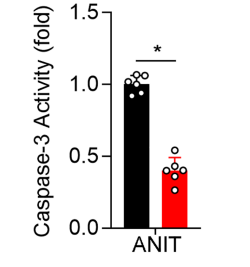
C57BL/6J mice were treated with ANIT and/or Tectorigenin (TEC). The hepatic activity of caspase-3 was determined. The results showed that Tectorigenin (TEC) (75 mg/kg; oral gavage; once daily for 5 days) inhibited ANIT-induced apoptotic cell death, as shown by reduced caspase-3 activity.
Tectorigenin purchased from MedChemExpress. Usage Cited in: Br J Pharmacol. 2021 Jun;178(12):2443-2460. [Abstract]
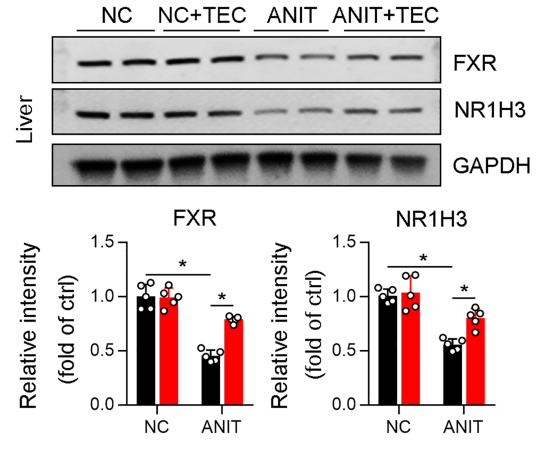
Western blot analysis was performed to determine the protein level of FXR and NR1H3 in mouse liver, and quantitative statistics are shown in the right panel, n = 5. The results showed that Tectorigenin (TEC) (75 mg/kg; oral gavage; once daily for 5 days) treatment restored the ANIT-induced decrease in the protein levels of FXR and NR1H3.
-
-
Int Immunopharmacol
Tectorigenin could alleviate SA-AKI via reducing M1-like polarization of macrophages through KLF4/NF-κB pathway. [Abstract]2025 Oct 30:164:115300. PMID: 40829320 -
Toxicol Appl Pharmacol
Identification of key targets and mechanisms of isoorientin in osteoporosis treatment through integrated network pharmacology and experimental validation. [Abstract]2026 Apr:509:117733. PMID: 41580162 -


Solvent & Solubility
In Vitro:
DMSO : 100 mg/mL (333.04 mM; Need ultrasonic; Hygroscopic DMSO has a significant impact on the solubility of product, please use newly opened DMSO)
Please refer to the solubility information to select the appropriate solvent. Once prepared, please aliquot and store the solution to prevent product inactivation from repeated freeze-thaw cycles.
Storage method and period of stock solution: -80°C, 2 years; -20°C, 1 year. When stored at -80°C, please use it within 2 years. When stored at -20°C, please use it within 1 year.
Please refer to the solubility information to select the appropriate solvent. Once prepared, please aliquot and store the solution to prevent product inactivation from repeated freeze-thaw cycles.
Storage method and period of stock solution: -80°C, 2 years; -20°C, 1 year. When stored at -80°C, please use it within 2 years. When stored at -20°C, please use it within 1 year.
Concentration (start) × Volume (start) = Concentration (final) × Volume (final)
In Vivo:
Select the appropriate dissolution method based on your experimental animal and administration route.
- For the following dissolution methods, please ensure to first prepare a clear stock solution using an In Vitro approach and then sequentially add co-solvents:
- To ensure reliable experimental results, the clarified stock solution can be appropriately stored based on storage conditions. As for the working solution for In Vivo experiments, it is recommended to prepare freshly and use it on the same day.
- The percentages shown for the solvents indicate their volumetric ratio in the final prepared solution. If precipitation or phase separation occurs during preparation, heat and/or sonication can be used to aid dissolution.
Add each solvent one by one: 10% DMSO 40% PEG300 5% Tween-80 45% Saline
Solubility: ≥ 2.08 mg/mL (6.93 mM); Clear solution
This protocol yields a clear solution of ≥ 2.08 mg/mL (saturation unknown).
Taking 1 mL working solution as an example, add 100 μL DMSO stock solution (20.8 mg/mL) to 400 μL PEG300, and mix evenly; then add 50 μL Tween-80 and mix evenly; then add 450 μL Saline to adjust the volume to 1 mL.
Preparation of Saline: Dissolve 0.9 g sodium chloride in ddH₂O and dilute to 100 mL to obtain a clear Saline solution.
Add each solvent one by one: 10% DMSO 90% (20% SBE-β-CD in Saline)
Solubility: ≥ 2.08 mg/mL (6.93 mM); Clear solution
This protocol yields a clear solution of ≥ 2.08 mg/mL (saturation unknown).
Taking 1 mL working solution as an example, add 100 μL DMSO stock solution (20.8 mg/mL) to 900 μL 20% SBE-β-CD in Saline, and mix evenly.
Preparation of 20% SBE-β-CD in Saline (4°C, storage for one week): 2 g SBE-β-CD powder is dissolved in 10 mL Saline, completely dissolve until clear.
In Vivo Dissolution Calculator
Please enter the basic information of animal experiments:
-
-
-
-
Recommended: Prepare an additional quantity of animals to account for potential losses during experiments.
Please enter your animal formula composition:
-
%DMSO +
Recommended: Keep the proportion of DMSO in working solution below 2% if your animal is weak.
-
%+
-
+%Tween-80 + +
-
%Saline +
The co-solvents required include: DMSO, . All of co-solvents are available by MedChemExpress (MCE). , Tween 80. All of co-solvents are available by MedChemExpress (MCE).
Working solution concentration: 0.22 mg/mL
Method for preparing stock solution: mg drug dissolved in μL DMSO. Stock solution concentration: mg/mL.
1. Take μL DMSO stock solution;
2. Add μL .
μL , mix evenly;
3. Then add μL Tween 80, mix evenly;
4. Then add μL
Please ensure that the stock solution in the first step is dissolved to a clear state, and add co-solvents in sequence. You can use ultrasonic heating (ultrasonic cleaner, recommended frequency 20-40 kHz), vortexing, etc. to assist dissolution.


Purity & Documentation
-
Data Sheet (278 KB)
-
SDS (393 KB)
- English - EN (393 KB)
- Français - FR (393 KB)
- Deutsch - DE (393 KB)
- Norwegian - NO (393 KB)
- Español - ES (393 KB)
- Swedish - SV (393 KB)
- Italian - IT (393 KB)
- Korean - KR (393 KB)
- Portuguese - PT (393 KB)
-
Handling Instructions (2659 KB)
References
[1]. Wang Q, et al. Tectorigenin Attenuates Palmitate-Induced Endothelial Insulin Resistance via Targeting ROS-Associated Inflammation and IRS-1 Pathway. PLoS One. 2013 Jun 19;8(6):e66417. [Content Brief]
[2]. Jiang CP, et al. Pro-apoptotic effects of tectorigenin on human hepatocellular carcinoma HepG2 cells. World J Gastroenterol. 2012 Apr 21;18(15):1753-64. [Content Brief]


Complete Stock Solution Preparation Table
Please refer to the solubility information to select the appropriate solvent. Once prepared, please aliquot and store the solution to prevent product inactivation from repeated freeze-thaw cycles.
Storage method and period of stock solution: -80°C, 2 years; -20°C, 1 year. When stored at -80°C, please use it within 2 years. When stored at -20°C, please use it within 1 year.
| Optional Solvent | Concentration Solvent Mass | 1 mg | 5 mg | 10 mg | 25 mg |
|---|---|---|---|---|---|
| DMSO | 1 mM | 3.3304 mL | 16.6522 mL | 33.3045 mL | 83.2612 mL |
| 5 mM | 0.6661 mL | 3.3304 mL | 6.6609 mL | 16.6522 mL | |
| 10 mM | 0.3330 mL | 1.6652 mL | 3.3304 mL | 8.3261 mL | |
| 15 mM | 0.2220 mL | 1.1101 mL | 2.2203 mL | 5.5507 mL | |
| 20 mM | 0.1665 mL | 0.8326 mL | 1.6652 mL | 4.1631 mL | |
| 25 mM | 0.1332 mL | 0.6661 mL | 1.3322 mL | 3.3304 mL | |
| 30 mM | 0.1110 mL | 0.5551 mL | 1.1101 mL | 2.7754 mL | |
| 40 mM | 0.0833 mL | 0.4163 mL | 0.8326 mL | 2.0815 mL | |
| 50 mM | 0.0666 mL | 0.3330 mL | 0.6661 mL | 1.6652 mL | |
| 60 mM | 0.0555 mL | 0.2775 mL | 0.5551 mL | 1.3877 mL | |
| 80 mM | 0.0416 mL | 0.2082 mL | 0.4163 mL | 1.0408 mL | |
| 100 mM | 0.0333 mL | 0.1665 mL | 0.3330 mL | 0.8326 mL |


Tectorigenin Related Classifications
HY-N0792 Related Classifications
 Powered by Bioz