



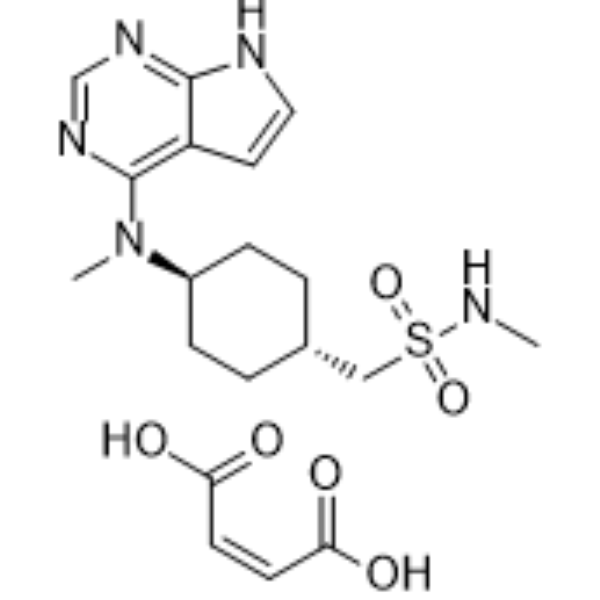
Oclacitinib monomaleate
Based on 4 publication(s) in Google Scholar
Oclacitinib maleate (PF-03394197 maleate) is a novel JAK inhibitor. Oclacitinib maleate (PF-03394197 maleate) is most potent at inhibiting JAK1 (IC50=10 nM).
For research use only. We do not sell to patients.
- Purity : 99.87%
- CAS No.: 1640292-55-2
- Formula: C19H27N5O6S
- Molecular Weight:453.51
-
Storage:
4°C, sealed storage, away from moisture
* In solvent : -80°C, 6 months; -20°C, 1 month (sealed storage, away from moisture)

To place orders, for customer services and technical support, please contact: MedChemExpress USA
Tel: 609-228-6898 E-mail: [email protected] [email protected]


-
 Biological Activity
-
Chemical Information
-
Solvent & Solubility
- Protocols
- Purity & Documentation
- References
-
 Help & FAQs


-
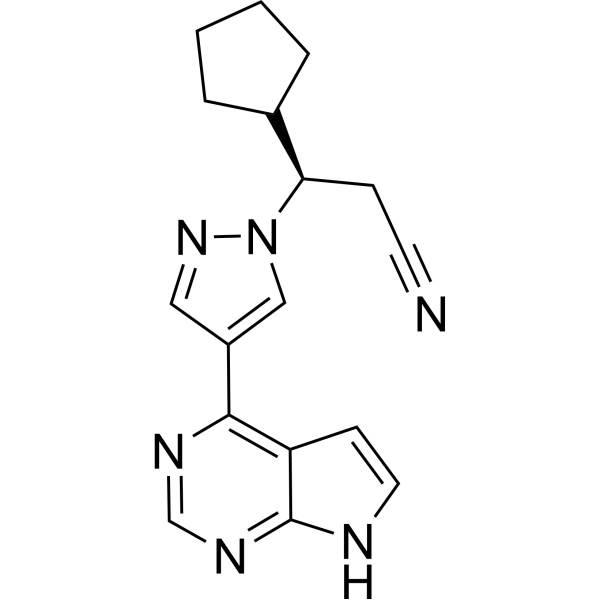
HY-50856
RuxolitinibJAK1/2 Inhibitor -
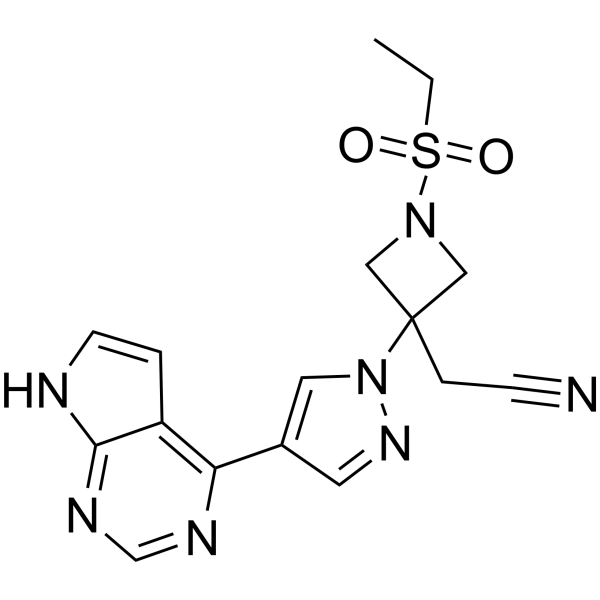
HY-15315
BaricitinibJAK1/2 Inhibitor -
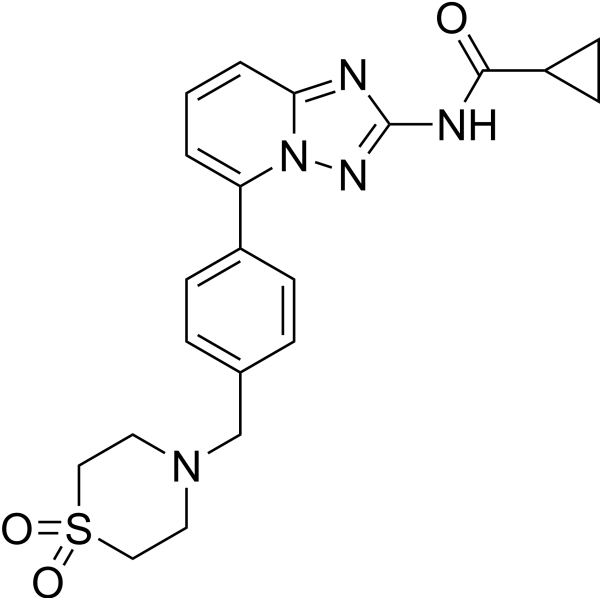
HY-18300
FilgotinibJAK1 Inhibitor -
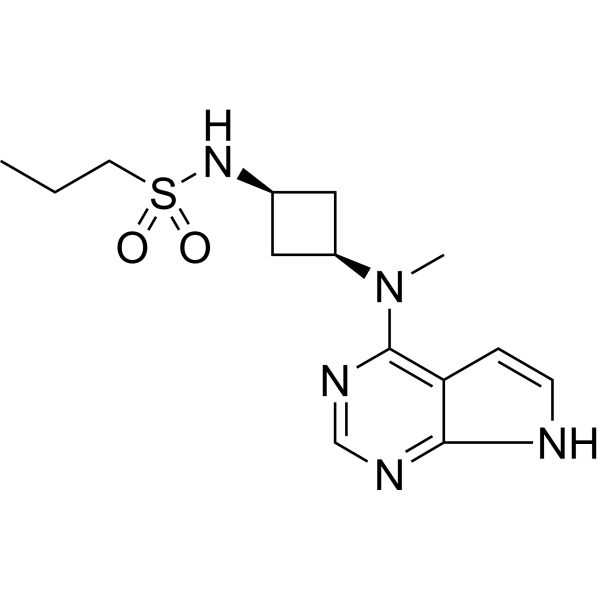
HY-107429
AbrocitinibJAK1 Inhibitor -
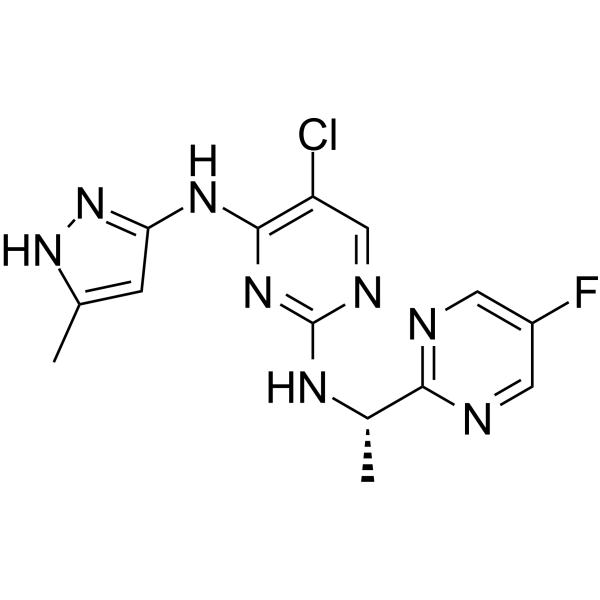
HY-10193
AZD-1480JAK1/2 Inhibitor -
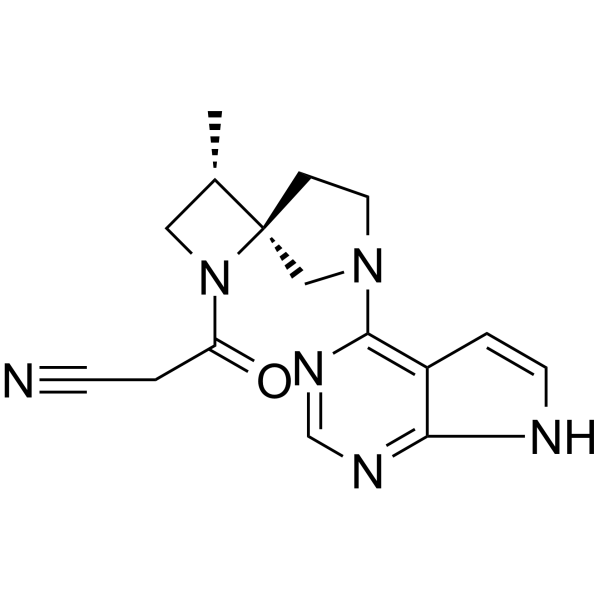
HY-109053
DelgocitinibJAK Inhibitor -
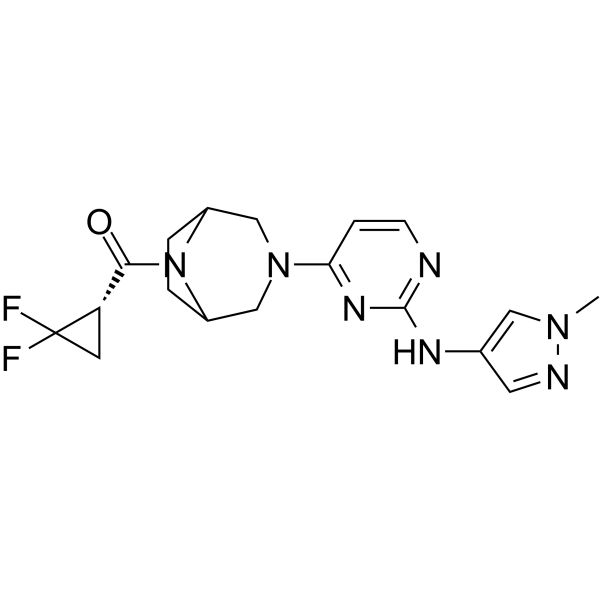
HY-112708
BrepocitinibJAK1/TYK2 Inhibitor -
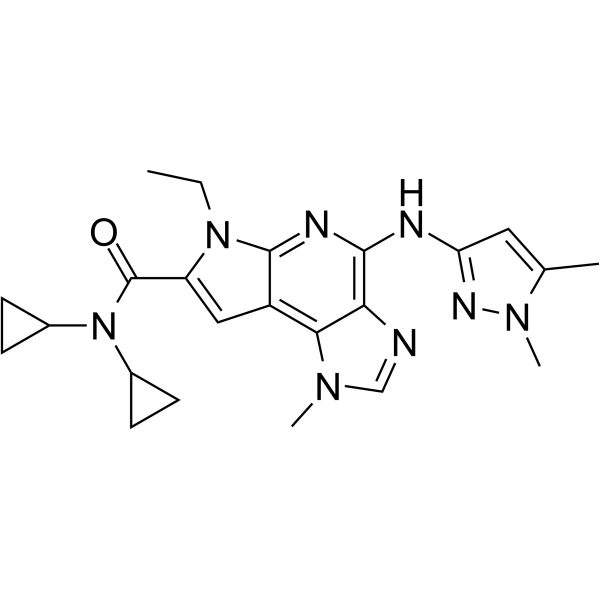
HY-15270
BMS-911543JAK2 Inhibitor -

HY-50856R
Ruxolitinib (Standard)JAK1/2 Inhibitor -
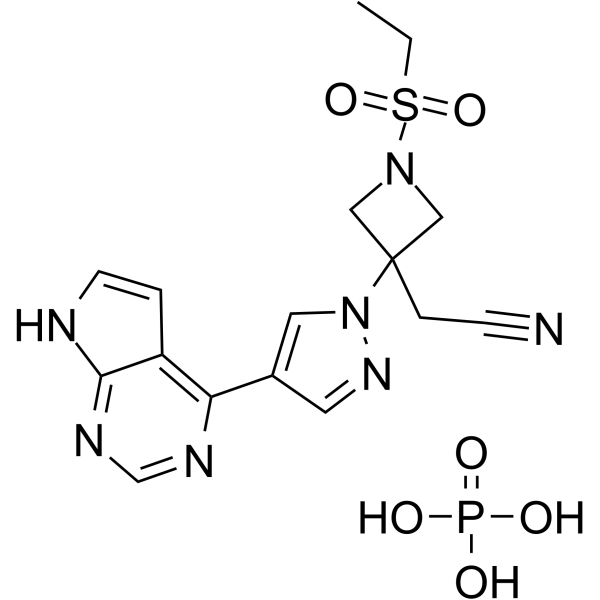
HY-15315A
Baricitinib phosphateJAK1/2 Inhibitor -
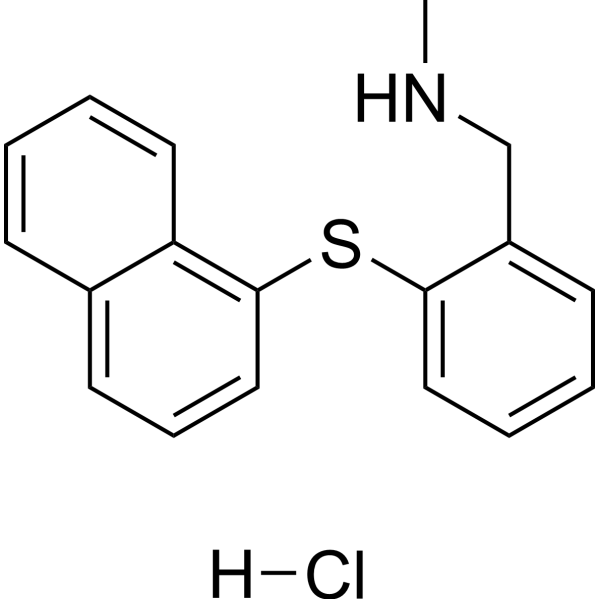
HY-12836A
IFN alpha-IFNAR-IN-1 hydrochlorideIFN alpha-IFNAR Inhibitor -
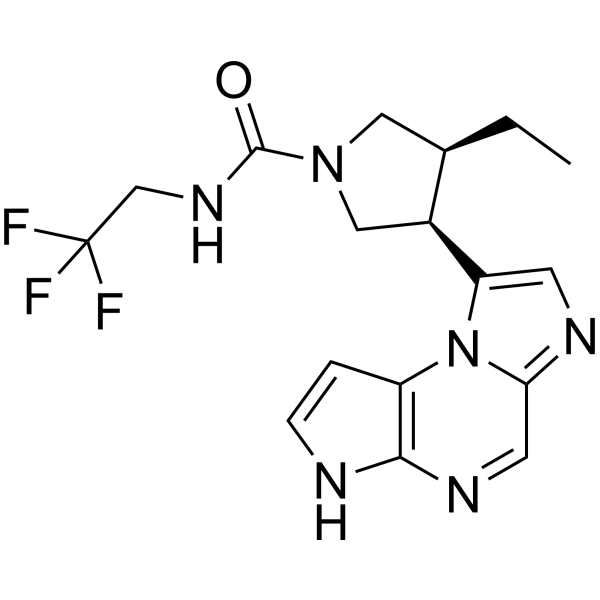
HY-19569
UpadacitinibJAK1 Inhibitor
Publications Citing Use of MedChemExpress (MCE) Oclacitinib monomaleate
More

Biological Activity
Description
IC50 & Target
[1]|
JAK1 10 nM (IC50) |
JAK2 18 nM (IC50) |
Tyk2 84 nM (IC50) |
JAK3 99 nM (IC50) |
In Vitro
Using isolated enzyme systems and in vitro human or canine cell models, potency and selectivity of Oclacitinib is determined against JAK family members and cytokines that trigger JAK activation in cells. Inhibitory activity of Oclacitinib against JAK family members is determined in isolated enzyme systems. Oclacitinib inhibits JAK1, JAK2, JAK3, and TYK2 by 50% at concentrations (IC50's) of 10, 18, 99, and 84 nM, respectively. Oclacitinib is most potent against the JAK1 enzyme, showing a 1.8-fold selectivity for JAK1 vs. JAK2 and 9.9-fold selectivity toward JAK1 vs. JAK3. Oclacitinib inhibits JAK family members by 50% at concentrations (IC50's) ranging from 10 to 99 nM and does not inhibit a panel of 38 non-JAK kinases (IC50's >1000 nM). Oclacitinib also inhibits the function of JAK1-dependent cytokines involved in allergy and inflammation (IL-2, IL-4, IL-6, and IL-13) as well as pruritus (IL-31) at IC50's ranging from 36 to 249 nM. Oclacitinib has minimal effects on cytokines that does not activate the JAK1 enzyme in cells (erythropoietin, granulocyte/macrophage colony-stimulating factor, IL-12, IL-23; IC50's >1000 nM)[1].Topical treatment with Tofacitinib (0.1%) and Oclacitinib (0.1%) leads to significant reduction of cell migration from mouse ear explants compared with vehicle-treated ears (all P < 0.05). The cell counts of MHC class II positive cells (that is, Langerhans cells) are significantly lower in vehicle-treated compared with each JAK inhibitor–treated epidermis (all P<0.01)[2].
MedChemExpress (MCE) has not independently confirmed the accuracy of these methods. They are for reference only. Further protocols information, click here.
In Vivo
MedChemExpress (MCE) has not independently confirmed the accuracy of these methods. They are for reference only.


Chemical Information
-
CAS No. 1640292-55-2
-
Appearance Solid
-
Molecular Weight 453.51
-
Formula C19H27N5O6S
-
Color White to off-white
-
SMILES
O=S(C[C@H]1CC[C@H](N(C)C2=C3C(NC=C3)=NC=N2)CC1)(NC)=O.O=C(O)/C=C\C(O)=O
-
Synonyms
PF-03394197 monomaleate
-
Shipping
Room temperature in continental US; may vary elsewhere.
-
Storage
4°C, sealed storage, away from moisture
* In solvent : -80°C, 6 months; -20°C, 1 month (sealed storage, away from moisture)


Publications (4)
-
Journal Impact Factor
-
Most Recent
-
Mol Ther Oncol
Enhancement of radio-sensitivity by inhibition of Janus kinase signaling with oclacitinib in canine tumor cell lines. [Abstract]2025 Feb 3;33(1):200946. PMID: 40051504 -
Virulence
2024 Dec;15(1):2435372. PMID: 39611624 -
Dev Comp Immunol
Evolutional conservation of molecular structure and antiviral function of a type I interferon, IFN-kappa, in poultry. [Abstract]2018 Dec:89:44-53. PMID: 30092316 -


Solvent & Solubility
In Vitro:
DMSO : 250 mg/mL (551.26 mM; Need ultrasonic; Hygroscopic DMSO has a significant impact on the solubility of product, please use newly opened DMSO)
H2O : 25 mg/mL (55.13 mM; Need ultrasonic)
Please refer to the solubility information to select the appropriate solvent. Once prepared, please aliquot and store the solution to prevent product inactivation from repeated freeze-thaw cycles.
Storage method and period of stock solution: -80°C, 6 months; -20°C, 1 month (sealed storage, away from moisture). When stored at -80°C, please use it within 6 months. When stored at -20°C, please use it within 1 month.
* Note: If you choose water as the stock solution, please dilute it to the working solution, then filter and sterilize it with a 0.22 μm filter before use.
Please refer to the solubility information to select the appropriate solvent. Once prepared, please aliquot and store the solution to prevent product inactivation from repeated freeze-thaw cycles.
Storage method and period of stock solution: -80°C, 6 months; -20°C, 1 month (sealed storage, away from moisture). When stored at -80°C, please use it within 6 months. When stored at -20°C, please use it within 1 month.
* Note: If you choose water as the stock solution, please dilute it to the working solution, then filter and sterilize it with a 0.22 μm filter before use.
Concentration (start) × Volume (start) = Concentration (final) × Volume (final)
In Vivo:
Select the appropriate dissolution method based on your experimental animal and administration route.
- For the following dissolution methods, please ensure to first prepare a clear stock solution using an In Vitro approach and then sequentially add co-solvents:
- To ensure reliable experimental results, the clarified stock solution can be appropriately stored based on storage conditions. As for the working solution for In Vivo experiments, it is recommended to prepare freshly and use it on the same day.
- The percentages shown for the solvents indicate their volumetric ratio in the final prepared solution. If precipitation or phase separation occurs during preparation, heat and/or sonication can be used to aid dissolution.
Add each solvent one by one: 10% DMSO 90% (20% SBE-β-CD in Saline)
Solubility: ≥ 2.5 mg/mL (5.51 mM); Clear solution
This protocol yields a clear solution of ≥ 2.5 mg/mL (saturation unknown).
Taking 1 mL working solution as an example, add 100 μL DMSO stock solution (25.0 mg/mL) to 900 μL 20% SBE-β-CD in Saline, and mix evenly.
Preparation of 20% SBE-β-CD in Saline (4°C, storage for one week): 2 g SBE-β-CD powder is dissolved in 10 mL Saline, completely dissolve until clear.
Add each solvent one by one: 10% DMSO 40% PEG300 5% Tween-80 45% Saline
Solubility: ≥ 2.08 mg/mL (4.59 mM); Clear solution
This protocol yields a clear solution of ≥ 2.08 mg/mL (saturation unknown).
Taking 1 mL working solution as an example, add 100 μL DMSO stock solution (20.8 mg/mL) to 400 μL PEG300, and mix evenly; then add 50 μL Tween-80 and mix evenly; then add 450 μL Saline to adjust the volume to 1 mL.
Preparation of Saline: Dissolve 0.9 g sodium chloride in ddH₂O and dilute to 100 mL to obtain a clear Saline solution.
In Vivo Dissolution Calculator
Please enter the basic information of animal experiments:
-
-
-
-
Recommended: Prepare an additional quantity of animals to account for potential losses during experiments.
Working solution concentration: 0.22 mg/mL
This product has good water solubility, please refer to the measured solubility data in water/PBS/Saline for details.

Protocols
-
Cell Cytotoxicity Assay
Cytotoxicity assays are usually based on the assessment of cell membrane damage, which can also be indirectly detected by measuring cell viability. Detection methods include MTT assay, CKK-8 assay, LDH assay and ATP assay, etc.


Purity & Documentation
-
Data Sheet (286 KB)
-
SDS (394 KB)
- English - EN (394 KB)
- Français - FR (394 KB)
- Deutsch - DE (394 KB)
- Norwegian - NO (394 KB)
- Español - ES (394 KB)
- Swedish - SV (394 KB)
- Italian - IT (394 KB)
- Korean - KR (394 KB)
- Portuguese - PT (394 KB)
-
Handling Instructions (2659 KB)
References
[1]. Gonzales AJ, et al. Oclacitinib is a novel Janus kinase inhibitor with activity against cytokines involved in allergy. J Vet Pharmacol Ther. 2014 Aug;37(4):317-24. [Content Brief]
[2]. Fukuyama T, et al. Topically Administered Janus-Kinase Inhibitors Tofacitinib and Oclacitinib Display Impressive Antipruritic and Anti-Inflammatory Responses in a Model of Allergic Dermatitis. J Pharmacol Exp Ther. 2015 Sep;354(3):394-405. [Content Brief]
[3]. Cosgrove SB, et al. Efficacy and safety of oclacitinib for the control of pruritus and associated skin lesions in dogs with canine allergic dermatitis. Vet Dermatol. 2013 Oct;24(5):479-e114. [Content Brief]


Complete Stock Solution Preparation Table
Please refer to the solubility information to select the appropriate solvent. Once prepared, please aliquot and store the solution to prevent product inactivation from repeated freeze-thaw cycles.
Storage method and period of stock solution: -80°C, 6 months; -20°C, 1 month (sealed storage, away from moisture). When stored at -80°C, please use it within 6 months. When stored at -20°C, please use it within 1 month.
| Optional Solvent | Concentration Solvent Mass | 1 mg | 5 mg | 10 mg | 25 mg |
|---|---|---|---|---|---|
| H2O / DMSO | 1 mM | 2.2050 mL | 11.0251 mL | 22.0502 mL | 55.1256 mL |
| 5 mM | 0.4410 mL | 2.2050 mL | 4.4100 mL | 11.0251 mL | |
| 10 mM | 0.2205 mL | 1.1025 mL | 2.2050 mL | 5.5126 mL | |
| 15 mM | 0.1470 mL | 0.7350 mL | 1.4700 mL | 3.6750 mL | |
| 20 mM | 0.1103 mL | 0.5513 mL | 1.1025 mL | 2.7563 mL | |
| 25 mM | 0.0882 mL | 0.4410 mL | 0.8820 mL | 2.2050 mL | |
| 30 mM | 0.0735 mL | 0.3675 mL | 0.7350 mL | 1.8375 mL | |
| 40 mM | 0.0551 mL | 0.2756 mL | 0.5513 mL | 1.3781 mL | |
| 50 mM | 0.0441 mL | 0.2205 mL | 0.4410 mL | 1.1025 mL | |
| DMSO | 60 mM | 0.0368 mL | 0.1838 mL | 0.3675 mL | 0.9188 mL |
| 80 mM | 0.0276 mL | 0.1378 mL | 0.2756 mL | 0.6891 mL | |
| 100 mM | 0.0221 mL | 0.1103 mL | 0.2205 mL | 0.5513 mL |
* Note: If you choose water as the stock solution, please dilute it to the working solution, then filter and sterilize it with a 0.22 μm filter before use.


Oclacitinib monomaleate Related Classifications
HY-13577A Related Classifications
 Powered by Bioz