



OLHHA
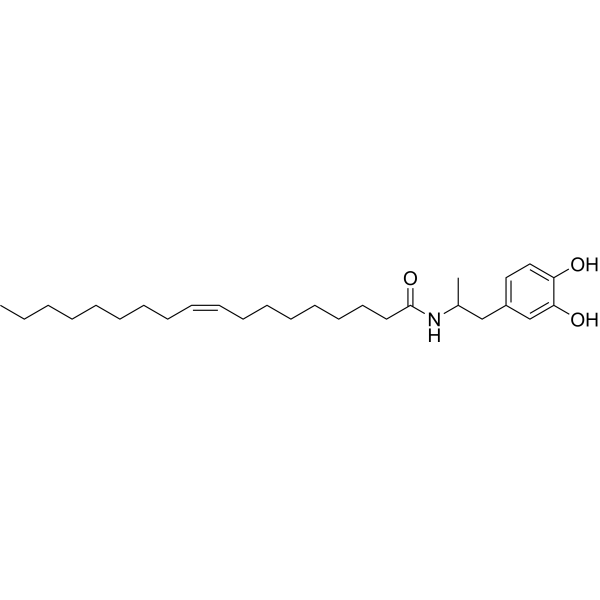
OLHHA is a dual CB1 receptor antagonist and PPARα agonist. OLHHA also is a alcohol intake inhibitor with an EC50 value of 0.2 mg/kg. OLHHA reduces both hepatic lipid accumulation and circulating triglyceride levels. OLHHA shows anti-steatotic activity and has the potential for the research of non-alcoholic fatty liver disease (NAFLD).
For research use only. We do not sell to patients.
- CAS No.: 1258011-97-0
- Formula: C27H45NO3
- Molecular Weight:431.65
-
Storage:
Please store the product under the recommended conditions in the Certificate of Analysis.

To place orders, for customer services and technical support, please contact: MedChemExpress USA
Tel: 609-228-6898 E-mail: [email protected] [email protected]


-
 Biological Activity
-
Chemical Information
- Protocols
- Purity & Documentation
- References
-
 Help & FAQs


-
HY-10863
AnandamideCB1/2 Agonist -

HY-110016
DocosatetraenylethanolamideCB1 Agonist -
HY-110004
ACEABiochemical Assay Reagent -

HY-113421
Linoleoyl ethanolamideFatty Acid Ethanolamide -
HY-139394
Arachidonoyl-1-thio-glycerolNonretinoid Ligand -
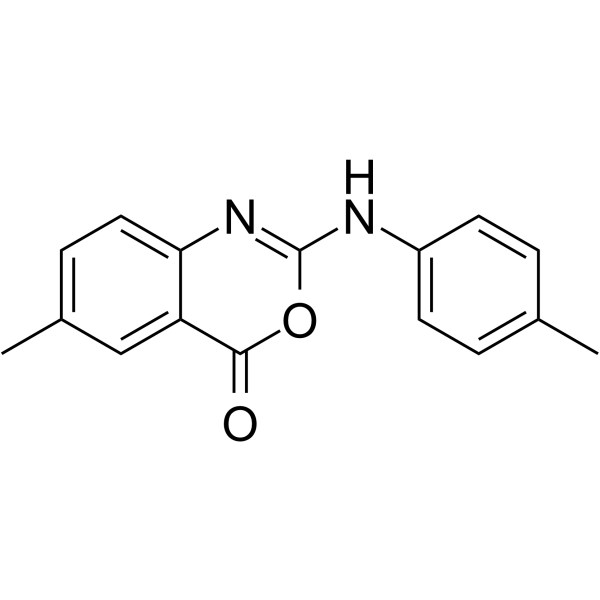
HY-121517
URB754MGL Inhibitor -

HY-130567
1-Monoarachidin2-arachidonoylglycerol derivative -

HY-110003
ArachidonylcyclopropylamideCB1 Receptors Agonist -
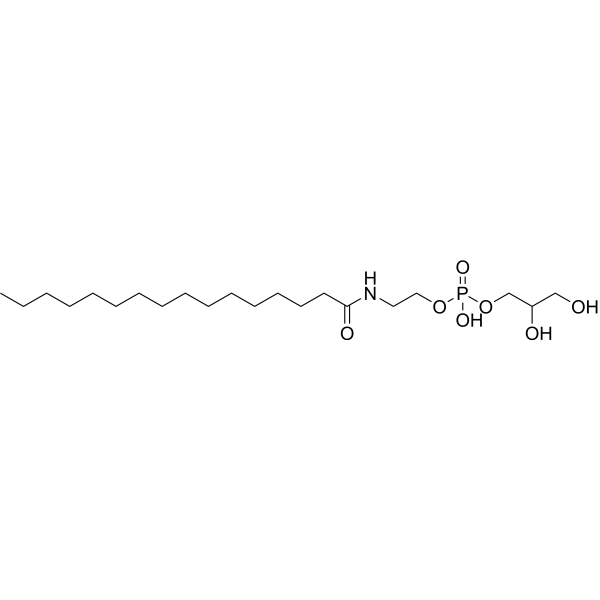
HY-112528
Glycerophospho-N-palmitoyl ethanolamineEndogenous Metabolite -

HY-113070
Dihomo-γ-Linolenoyl EthanolamideCannabinoid Receptor Agonist -

HY-121476
Arachidonoyl SerinolMAGL Inhibitor -

HY-124089S
Eicosapentaenoyl ethanolamide-d4Stable Isotope


Biological Activity
Description
In Vivo
MedChemExpress (MCE) has not independently confirmed the accuracy of these methods. They are for reference only.
-
Animal Model:8- to 9-week-old male Zucker rats (genetic obesity)[2]
-
Dosage:5 mg/kg
-
Administration:I.p.; daily for 15 days
-
Result:Reduced the liver fat content and plasma triglyceride levels, and this was accompanied by a general improvement in the profile of plasma parameters related to liver damage in the obese rats, significantly reduced the body weight gain and decreased in the relative expression of CB1 in lean rats.


Chemical Information
-
CAS No. 1258011-97-0
-
Molecular Weight 431.65
-
Formula C27H45NO3
-
SMILES
CCCCCCCC/C=C\CCCCCCCC(NC(C)CC1=CC=C(O)C(O)=C1)=O
-
Shipping
Room temperature in continental US; may vary elsewhere.
-
Storage
Please store the product under the recommended conditions in the Certificate of Analysis.

Protocols
-
3T3-L1 preadipocyte-to-adipocyte differentiation
3T3-L1 preadipocytes are induced to differentiate after growth arrest using adipogenic media containing insulin, dexamethasone, and IBMX; differentiation is assessed by lipid-droplet accumulation, triglyceride increase, Oil Red O staining, and adipocyte-marker induction such as PPARγ and C/EBPα.
-
Research Protocol for Metabolic Diseases
AMP-activated protein kinase, AMPK, is a conserved cellular energy sensor that responds to reduced cellular energy status and coordinates metabolism by increasing ATP-generating catabolic pathways while suppressing ATP-consuming anabolic processes. In metabolic disease research, the AMPK pathway is experimentally relevant because it regulates hepatic lipid synthesis, fatty acid oxidation, glucose production, skeletal-muscle glucose disposal, mTORC1-linked biosynthesis, autophagy, mitochondrial homeostasis, and whole-body energy balance. The central pathway logic is that energy stress, metformin, exercise-like stimulation, or direct AMPK activators increase AMPKα Thr172 phosphorylation and downstream substrate phosphorylation, including ACC and RAPTOR. Phosphorylation of ACC suppresses lipogenesis and supports fatty acid oxidation, whereas phosphorylation of RAPTOR suppresses mTORC1 signaling and links cellular energy status to growth and protein synthesis control. The pathway is linked
-
Lipid Droplets: Oil Red O/Sudan Dye Lipid Staining
Lipid droplets are intracellular organelles with a neutral-lipid core that stores triacylglycerols and sterol esters, and Oil Red O or Sudan dyes detect these hydrophobic lipid deposits by partitioning into retained lipids in fresh or frozen specimens. Oil Red O stains neutral triglycerides and lipids in frozen tissue sections or air-dried cytologic preparations, while Sudan Black B has also been used as a histochemical fat stain for lipid-rich tissue structures.


Purity & Documentation
References
[1]. Alen F, et al. PPARα/CB1 receptor dual ligands as a novel therapy for alcohol use disorder: Evaluation of a novel oleic acid conjugate in preclinical rat models. Biochem Pharmacol. 2018 Nov;157:235-243. [Content Brief]
[2]. Decara JM, et al. Treatment with a novel oleic-acid-dihydroxyamphetamine conjugation ameliorates non-alcoholic fatty liver disease in obese Zucker rats. Dis Model Mech. 2015 Oct 1;8(10):1213-25. [Content Brief]

Calculators
Concentration (start) × Volume (start) = Concentration (final) × Volume (final)


OLHHA Related Classifications
HY-139230 Related Classifications
 Powered by Bioz