



Buffer Reagents

Buffer solutions are generally composed of mixtures of weak acids or weak bases and their corresponding salts,commonly used to maintain the stability of the pH value of the reaction system and ensure the integrity of biomolecules and reactions.
MCE provides a range of high-purity grade raw materials that can be used to prepare various buffer solutions such as inorganic salt buffers, zwitterionic buffers and PCR buffers.
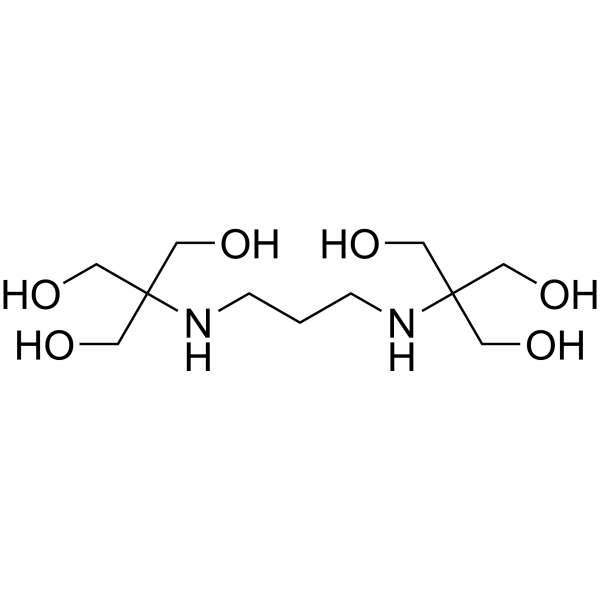
- Formula: C11H26N2O6
- Molecular Weight: 282.33
Bis-tris propane (BTP) is a water-soluble buffer substance. Bis-tris propane can be used as a suitable buffer for polymerase chain reaction (PCR). Bis-tris propane can enhance the stability or activity of restriction enzymes.

- Formula: Na4P2O7
- Molecular Weight: 265.90
Tetrasodium pyrophosphate is a water-soluble inorganic salt commonly used as a buffering agent, emulsifier, and sequestrant. Tetrasodium pyrophosphate is an antimicrobial agent that can reduce microbial colonization. Tetrasodium pyrophosphate blocks IPP translocation, enhances astaxanthin, phenol, flavonoid, and H2O2 levels, activates PAL and DPPH scavenging activity. Tetrasodium pyrophosphate can be used for the research of alleviating symptoms post COVID-19.
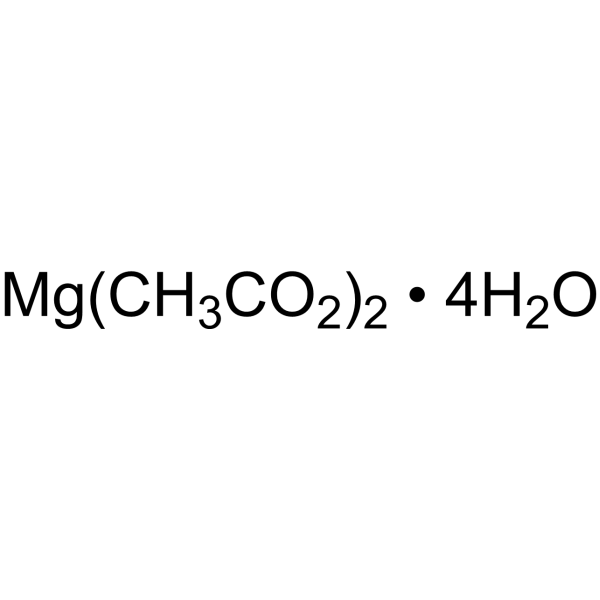
- Formula: C4H14MgO8
- Molecular Weight: 214.45
Magnesium acetate tetrahydrate is a carboxylic acid and short-chain fatty acid (SCFAs). Magnesium acetate tetrahydrate activates AMPK, increases ROS, cleaved caspase 9, PPARα, downregulates SREBP-1c, ChREBP expression. Magnesium acetate tetrahydrate exhibits antifungal activity against Saccharomyces cerevisiae W303-1A. Magnesium acetate tetrahydrate regulates energy metabolism. Magnesium acetate tetrahydrate has anticancer activity against gastric cancer. Magnesium acetate tetrahydrate induces writhing reaction and ulcerative colitis. Magnesium acetate tetrahydrate can be used in the researches for gastric cancer, ulcerative colitis, hepatic steatosis, and pain.

- Formula: K4Fe(CN)6.3H2O
- Molecular Weight: 422.39
Potassium ferrocyanide trihydrate, 98.5% is a biochemical reagent. Potassium ferrocyanide trihydrate, 98.5% can be used as a food additive.
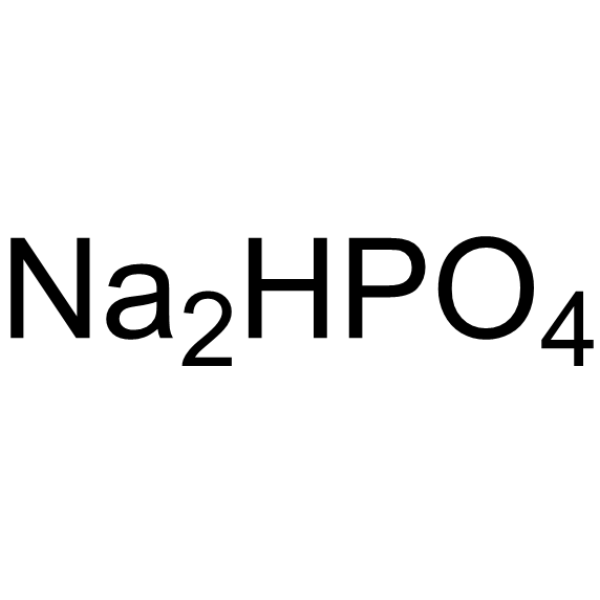
- Formula: Na2HPO4
- Molecular Weight: 141.96
Sodium phosphate dibasic (Disodium hydrogen phosphate), for cell culture is a buffer and chelating agent. Sodium phosphate dibasic is used to adjust the pH of liquids. Sodium phosphate dibasic can be used in cell culture.
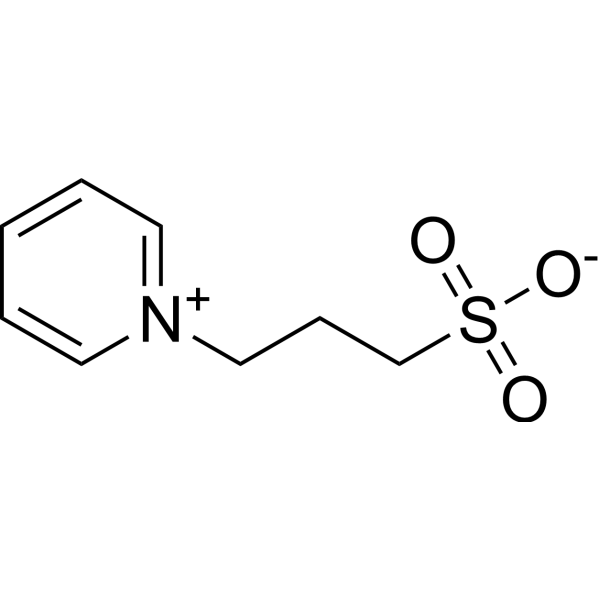
- Formula: C8H11NO3S
- Molecular Weight: 201.25
NDSB-201 consists of a pyridine group attached to a propane chain, which in turn is attached to a sulfonate group. This compound is commonly used as a buffer in biochemical and biological research, especially in electrophoretic applications. It maintains a stable pH in aqueous solutions and has low UV absorption, making it suitable for use in the UV spectrum. Furthermore, due to its ability to form stable complexes with DNA and other biomolecules, 3-(pyridin-1-ium-1-yl)propane-1-sulfonate has been investigated for its potential in drug delivery and genetic research.
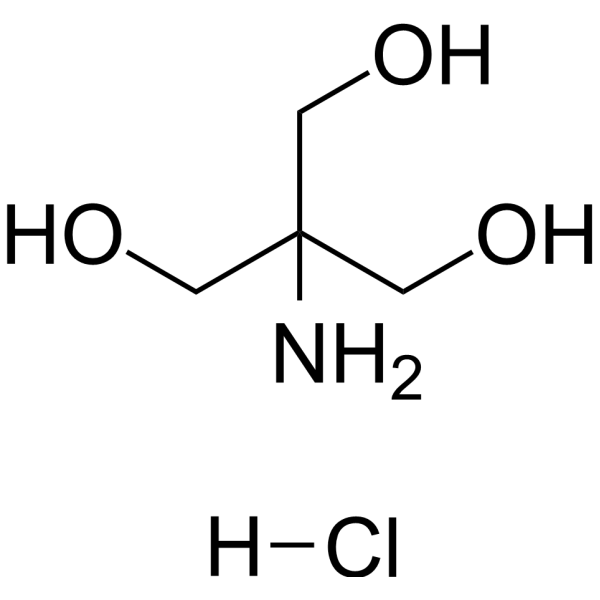
- Formula: C4H12ClNO3
- Molecular Weight: 157.60
THAM hydrochloride (≥99%, reagent grade), also known as Tris-HCl, is a buffer commonly used in various biochemical and molecular biology applications to maintain a stable pH environment. Tris-HCl has unique chemical properties that allow it to resist changes in pH when acidic or basic substances are added, which makes it useful for stabilizing biological samples or reagents. It is commonly used in electrophoresis and protein purification procedures.
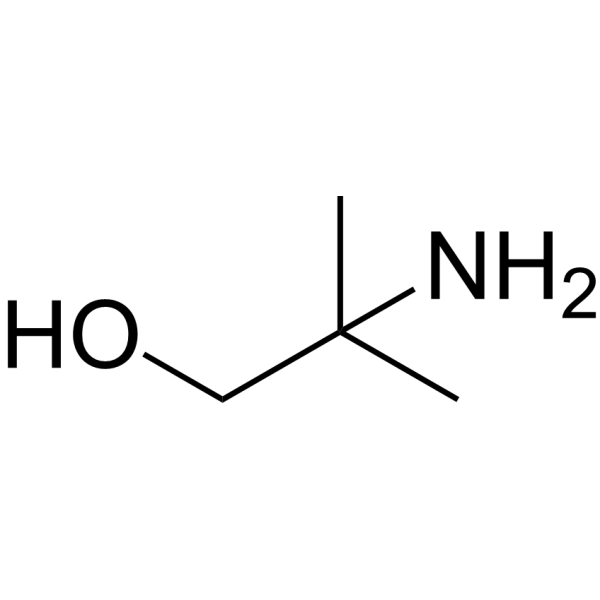
- Formula: C4H11NO
- Molecular Weight: 89.14
2-Amino-2-methyl-1-propanol (AMP) is a neutralizer, buffer and surfactant. 2-Amino-2-methyl-1-propanol inhibits gelatinous product formation. 2-Amino-2-methyl-1-propanol is used for carbon dioxide absorption.

- Formula: MgCl2
- Molecular Weight: 95.21
Magnesium chloride anhydrous, suitable for insect cell culture is an inorganic salt and cell culture medium component that can be used to prepare Tris buffer. Magnesium chloride anhydrous, suitable for insect cell culture is a component of Hunter's Thrips medium, which supports the in vitro culture of western flower thrip embryonic cells, and promotes the adhesion of tissue fragments/cells as well as the growth of fibroblast-like and epithelial-like cells.
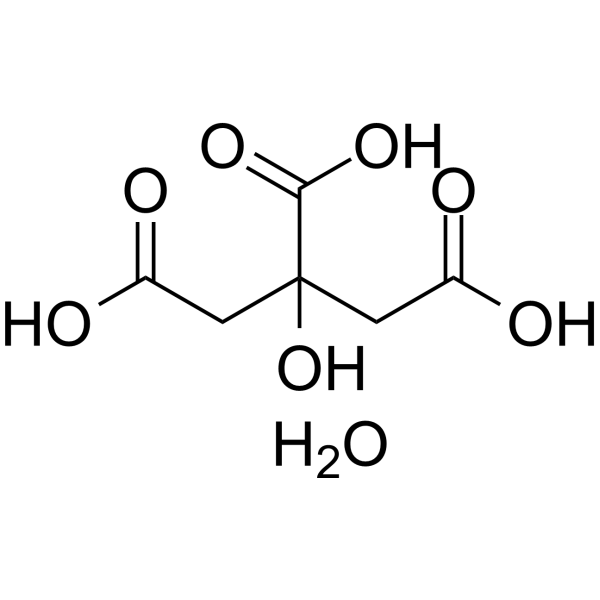
- Formula: C6H10O8
- Molecular Weight: 210.14
Citric acid monohydrate is a natural preservative and food tartness enhancer. Citric acid monohydrate induces apoptosis and cell cycle arrest at G2/M phase and S phase in HaCaT cells. Citric acid monohydrate cause oxidative damage of the liver by means of the decrease of antioxidative enzyme activities. Citric acid monohydrate is also an acidulant, emulsifier, sequestrant and buffering agent widely used across many industries.
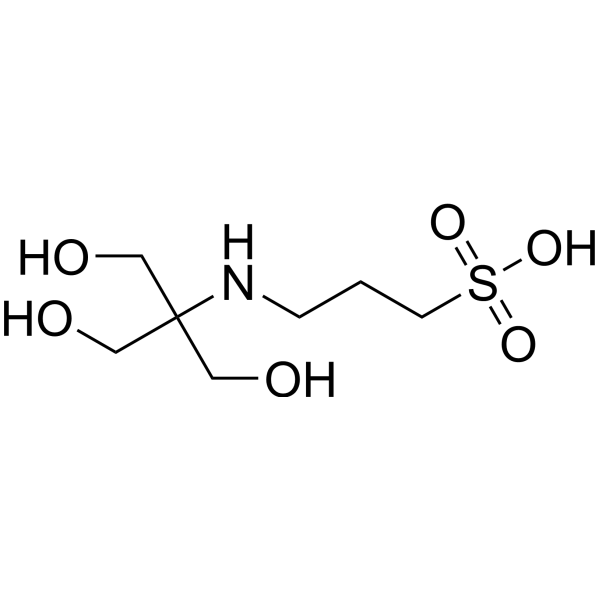
- Formula: C7H17NO6S
- Molecular Weight: 243.28
TAPS is an aminosulfonate-based lysozyme stabilizer and connexin channel inhibitor. TAPS maintains the native structure of lysozyme in aqueous solution at pH 7.0 and significantly protects it from heat-induced denaturation. TAPS directly inhibits the activity of heteromeric connexin 32/connexin 26 channels (Cx32/Cx26) via its protonated form, and this inhibitory effect is dependent on the presence of connexin 26. TAPS reduces connexin channel-mediated solute exchange in a recombinant liposome system, resulting in a decreased degree of liposome density shift in transport-specific separation assays. TAPS is a critical compound for investigating the structure and function of connexin channels.
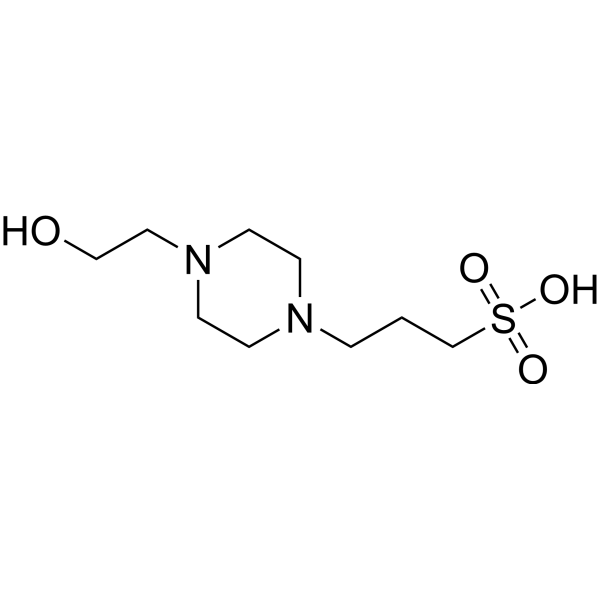
- Formula: C9H20N2O4S
- Molecular Weight: 252.33
HEPPS (EPPS) is a buffering agent with the useful pH range from 7.3 ~ 8.7. HEPPS reduces Aβ-aggregate-induced memory deficits and rescues cognitive deficits in mice. EPPS is orally active and penetrates the blood-brain barrier.

- Formula: CH3COOK
- Molecular Weight: 98.14
Acetic acid potassium 99% (Potassium acetate) is a potassium salt employed to replenish electrolytes, for restoration of water-electrolyte balance. Acetic acid potassium 99% can employ in DNA and protein purification. Acetic acid potassium 99% has been used to prepare neutralizing solution for alkaline lysis of bacteria and activated carbon.
Sodium Citrate Buffer, 0.5M, pH 5.0 is a commonly used buffer composed of citric acid and sodium citrate. Sodium Citrate Buffer, 0.5M, pH 5.0 is widely used in molecular biology, immunohistochemistry (IHC), and biochemistry.
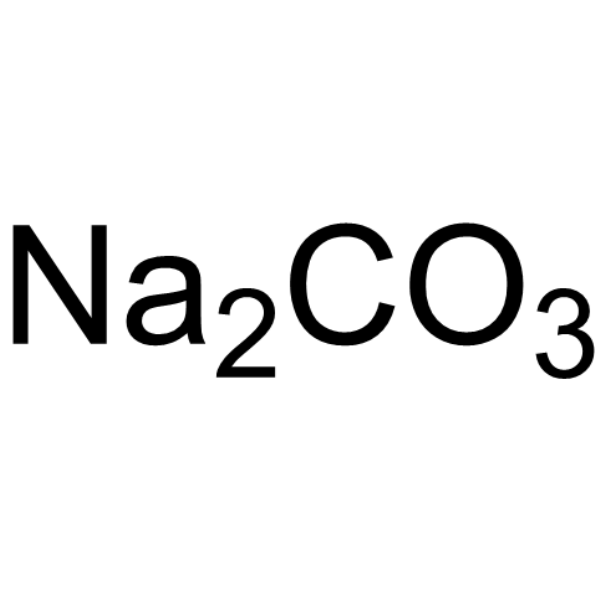
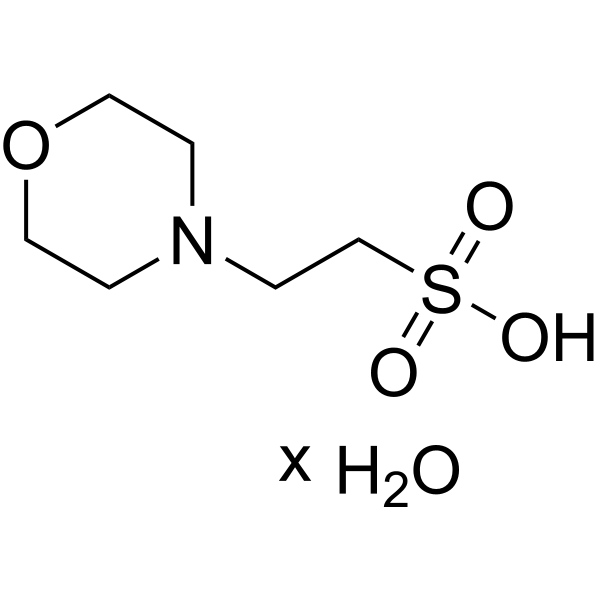
- Formula: C6H13NO4S.xH2O
MES (2-Morpholinoethanesulphonic acid) hydrate is a kind of amphoteric ion buffer, the buffer capacity ranging pH 5.5-7.0. As a Good's buffer, MES hydrate is widely used in biochemistry and molecular biology experiments, such as cell culture, enzyme activity determination, electrophoresis and protein studies.

- Formula: KBr
- Molecular Weight: 119.00
Potassium bromide, 99% is a salt, widely used as an anticonvulsant and a sedative. Potassium bromide is a redox reagent that can be used to remove peripheral membrane proteins in molecular biology.

- Formula: Na3PO4
- Molecular Weight: 163.94
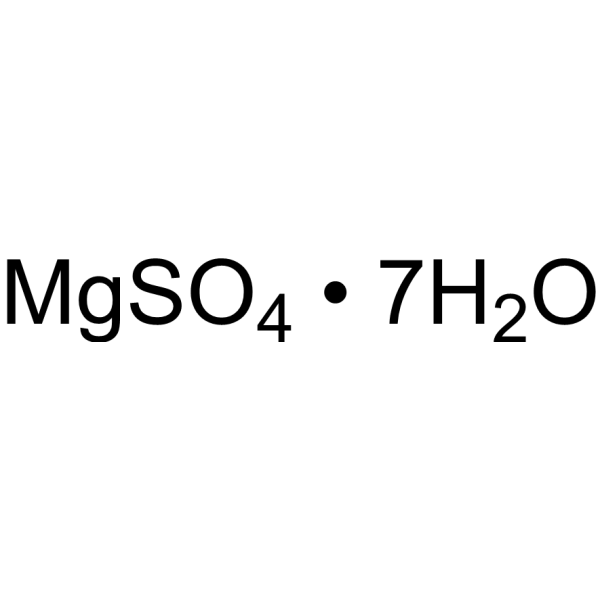
- Formula: MgSO4.7H2O
- Molecular Weight: 246.47
Magnesium sulfate heptahydrate, for cell culture (Epsom salts, for cell culture) is a hydrate of magnesium sulfate (HY-Y1267) suitable for cell culture applications. Magnesium sulfate is a calcium antagonist and a potent L-type calcium channel inhibitor, as well as a tocolytic. Magnesium sulfate has anti-inflammatory, anticonvulsant, vasodilatory, and neuroprotective effects. Magnesium sulfate can be used in the research of diseases such as preeclampsia/eclampsia.

- Formula: MgSO4
- Molecular Weight: 120.37
Magnesium sulfate, for cell culture is a bioreagent. Magnesium sulfate is a calcium antagonist and a potent L-type calcium channel inhibitor, as well as a tocolytic. Magnesium sulfate has anti-inflammatory, anticonvulsant, vasodilatory, and neuroprotective effects. Magnesium sulfate can be used in the research of diseases such as preeclampsia/eclampsia.



