



Perfluoroheptanesulfonic acid

Based on 1 Customer Validation
Perfluoroheptanesulfonic acid (1-Perfluoroheptanesulfonic acid; Perfluoroheptanesulphonic acid; PFHpS) is a per- and polyfluoroalkyl substance (PFAS) that penetrates the skin and induces systemic toxicity and immunotoxicity. Perfluoroheptanesulfonic acid reduces the expression of PPARδ in liver tissue; it induces hepatocyte hypertrophy and necrosis in liver tissue and alters serum biochemical markers associated with liver injury. Perfluoroheptanesulfonic acid upregulates genes related to fatty acid metabolism, cell necrosis and inflammation, reduces the relative weights of the spleen and thymus, suppresses humoral immune responses, and alters the composition of immune cell subsets in the spleen and skin. The plasma concentration of Perfluoroheptanesulfonic acid correlates with food intake. Perfluoroheptanesulfonic acid and perfluorooctanesulfonic acid exhibit synchronous pulse events in influent samples from wastewater treatment plants. Perfluoroheptanesulfonic acid can be used in studies related to liver injury and immune system damage.
For research use only. We do not sell to patients.
- Purity : 97.68%
- CAS No.: 375-92-8
- Formula: C7HF15O3S
- Molecular Weight:450.12
-
Storage:Pure form -20°C, 3 years ; In solvent -80°C, 6 months , -20°C, 1 month


To place orders, for customer services and technical support, please contact: MedChemExpress USA
Tel: 609-228-6898 E-mail: [email protected] [email protected]


-
 Biological Activity
-
Chemical Information
-
Solvent & Solubility
- Protocols
- Purity & Documentation
- References
-
 Help & FAQs


-

HY-21197
Perfluoroenanthic acidPollutant -

HY-21193
Perfluoropentanoic acidPerfluorinated Compound -

HY-W142432
Perfluoroundecanoic acidOxidative Stress Inducer -

HY-121265
Bendiocarb -
HY-W018749
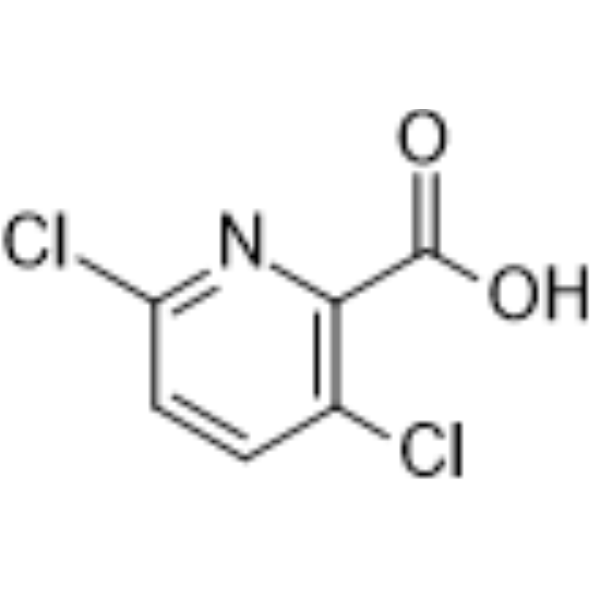
ClopyralidHerbicide -
HY-W018749R
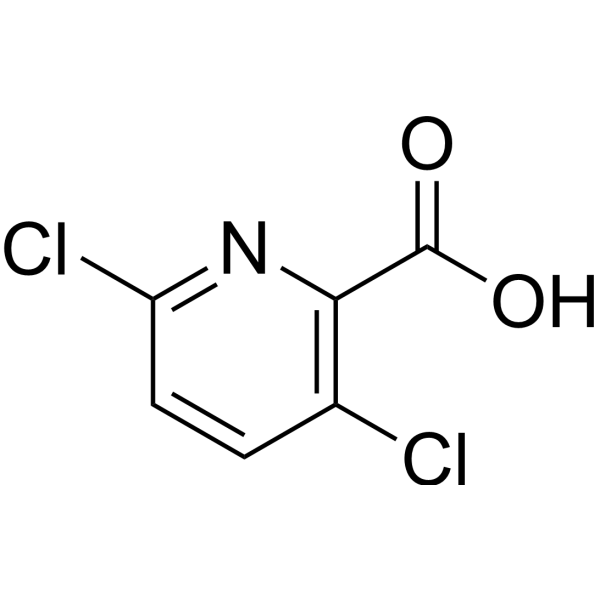
Clopyralid (Standard)Herbicide -

HY-109540
PerfluorohexaneHIFU Enhancer -

HY-121265R
Bendiocarb (Standard) -
HY-B1559
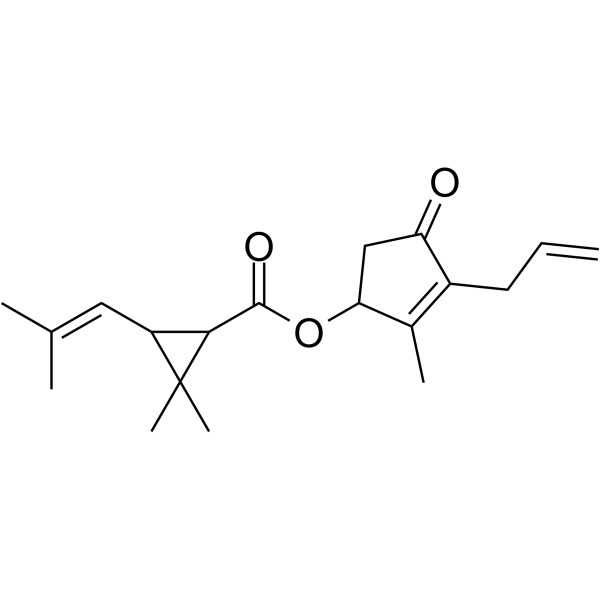
AllethrinPyrethroid Insecticide -

HY-113958
DifethialoneAnti-coagulant Rodenticide -

HY-121139
FlupropanateHerbicide -

HY-W517092
1,2,3,4,7,8,9-HeptachlorodibenzofuranCYP1A1 Inducer


Biological Activity
Description
IC50 & Target
[1]|
PPARδ |
In Vitro
Perfluoroheptanesulfonic acid (PFHpS) can reach a peak concentration of 18 ng/L during pulse discharge events in influent water of wastewater treatment plants; to reliably detect its concentration fluctuations, at least 9 random hourly grab samples need to be collected per day[2].
MedChemExpress (MCE) has not independently confirmed the accuracy of these methods. They are for reference only. Further protocols information, click here.
In Vivo
Perfluoroheptanesulfonic acid (0.625-2.5% w/v; topical; daily; 10 days) suppresses the spleen humoral immune response to sheep red blood cells (with up to 62.3% reduced total IgM activity) and alters splenic immune cell populations in female B6C3F1 mice[1].
MedChemExpress (MCE) has not independently confirmed the accuracy of these methods. They are for reference only.
-
Animal Model:B6C3F1 (female, 7-8 weeks old)[1]
-
Dosage:0.3125% w/v; 0.625% w/v; 1.25% w/v
-
Administration:topical; daily; 28 days
-
Result:Elevated systemic PFHpS burdens in serum and urine following dermal exposure across gradient dosage groups.
Altered organ relative weights for liver, spleen and thymus in a dose‑dependent manner.
Disrupted serum biochemical profiles involving lipid, glucose and liver‑injury markers.
Produced hepatic histopathological injuries including hepatocellular hypertrophy and focal necrosis.
Triggered skin histological changes such as epidermal hyperplasia and disturbed skin‑barrier‑related gene transcription.
Remodeled transcriptional profiles of hepatic lipid‑metabolism, necrosis‑related genes under high‑dose conditions.
Disturbed immune‑cell subset composition in skin, draining lymph nodes and spleen.
Induced modest transcriptional changes of innate‑immunity‑associated genes within splenic tissue.
-
Animal Model:B6C3F1 (female, 7-8 weeks old)[1]
-
Dosage:0.625% w/v; 1.25% w/v; 2.5% w/v
-
Administration:topical; daily; 10 days
-
Result:Suppressed splenic IgM‑mediated humoral immune responses without altering circulating anti‑SRBC IgM levels.
Augmented NK‑cell cytotoxic function at high dosages.
Remodeled multiple splenic immune‑cell populations and up‑regulated surface activation‑associated molecular expression on immune cells.


Chemical Information
-
CAS No. 375-92-8
-
Appearance Oil
-
Molecular Weight 450.12
-
Formula C7HF15O3S
-
Color Colorless to light yellow
-
SMILES
O=S(C(F)(F)C(F)(F)C(F)(F)C(F)(F)C(F)(F)C(F)(F)C(F)(F)F)(O)=O
-
Synonyms
1-Perfluoroheptanesulfonic acid; Perfluoroheptanesulphonic acid; PFHpS
-
Shipping
Room temperature in continental US; may vary elsewhere.
-
Storage
Pure form -20°C 3 years In solvent -80°C 6 months -20°C 1 month


Solvent & Solubility
In Vitro:
DMSO : 10 mg/mL (22.22 mM; Need ultrasonic and warming; Hygroscopic DMSO has a significant impact on the solubility of product, please use newly opened DMSO)
Please refer to the solubility information to select the appropriate solvent. Once prepared, please aliquot and store the solution to prevent product inactivation from repeated freeze-thaw cycles.
Storage method and period of stock solution: -80°C, 6 months; -20°C, 1 month. When stored at -80°C, please use it within 6 months. When stored at -20°C, please use it within 1 month.
Please refer to the solubility information to select the appropriate solvent. Once prepared, please aliquot and store the solution to prevent product inactivation from repeated freeze-thaw cycles.
Storage method and period of stock solution: -80°C, 6 months; -20°C, 1 month. When stored at -80°C, please use it within 6 months. When stored at -20°C, please use it within 1 month.
Concentration (start) × Volume (start) = Concentration (final) × Volume (final)

Protocols
-
RNA extraction experimental
By lysing cells, releasing RNA, and removing impurities such as proteins and DNA, high-purity RNA products are finally obtained. The commonly used traditional method is the guanidine isothiocyanate/phenol/chloroform method (Trizol), which is suitable for a variety of animal materials including animal tissues, microorganisms, cultured cells, etc., and most plant materials.
-
Subchronic/Chronic Toxicity Study
A subchronic/chronic oral toxicity study detects systemic adverse effects caused by repeated administration of a test article, using mortality, clinical signs, body weight, food/water intake, ophthalmology, urinalysis, hematology, serum biochemistry, organ weights, gross necropsy, and histopathology as integrated readouts. The readout reflects dose-related physiological injury, target-organ pathology, reversibility after recovery, and derivation of NOAEL, LOAEL, or related point-of-departure values when the dataset supports them.
-
Protocol for Pharmacokinetic Study
Pharmacokinetic studies quantify how an organism handles a drug over time through absorption, distribution, metabolism, and excretion, and the core experimental readout is the concentration-time profile of parent drug and, when relevant, metabolites in biological matrices such as plasma, whole blood, urine, bile, or tissue. Pharmacokinetic analysis links dose, route, exposure, clearance, half-life, distribution, bioavailability, and systemic exposure to drug efficacy and toxicity hypotheses rather than measuring a signaling pathway directly. The literature links pharmacokinetics to drug-development phenotypes by showing that drug metabolism and pharmacokinetics influence compound progression, exposure-response interpretation, safety margins, dosing strategy, and failure risk during discovery and development. DMPK science contributes to compound optimization by integrating physicochemical properties, in vitro metabolism, transporter behavior, in vivo exposure, and pharmacodynamic contex
-
Research Protocol for Inflammation-related Diseases
The NLRP3 inflammasome is a cytosolic innate immune signaling platform that integrates priming signals and danger-signal activation to promote caspase-1 activation, maturation of IL-1β and IL-18, and gasdermin D-mediated pyroptotic cell death. The core experimental logic is to determine whether inflammatory disease phenotypes are driven by increased NLRP3 expression, ASC-containing inflammasome assembly, caspase-1 cleavage, GSDMD cleavage, and extracellular release of IL-1β/IL-18 rather than by nonspecific cell injury alone. The pathway is strongly linked to inflammation-related disease phenotypes because monosodium urate crystals activate NALP3/NLRP3 inflammasome signaling in gout-like crystal inflammation, cholesterol crystals activate NLRP3 inflammasomes in atherogenesis models, and DSS-induced intestinal inflammation has been reported to involve NLRP3 inflammasome activity. However, experimental colitis studies also show context-dependent protective effects of NLRP3 inflammasome co
-
Acute Systemic Toxicity Study
Acute systemic toxicity studies evaluate adverse effects occurring after a single exposure, or repeated exposure within a short acute window, and the main in vivo readouts are mortality, moribund condition, clinical signs, body-weight change, and gross pathological findings; acute oral toxicity methods were developed to replace classical LD50 testing with reduced-animal designs such as fixed-dose procedure, acute toxic class method, and up-and-down procedure. The fixed-dose procedure classifies acute toxicity by administering predefined dose levels and observing evident toxicity rather than using death as the primary endpoint, whereas the acute toxic class method uses sequential groups of three animals per step and the up-and-down procedure doses animals sequentially to estimate an LD50 with fewer animals than conventional LD50 testing.


Purity & Documentation
-
Data Sheet (287 KB)
-
SDS (701 KB)
- English - EN (701 KB)
- Français - FR (701 KB)
- Deutsch - DE (701 KB)
- Norwegian - NO (701 KB)
- Español - ES (701 KB)
- Swedish - SV (701 KB)
- Italian - IT (701 KB)
- Korean - KR (701 KB)
- Portuguese - PT (701 KB)
-
Handling Instructions (2659 KB)
References


Complete Stock Solution Preparation Table
Please refer to the solubility information to select the appropriate solvent. Once prepared, please aliquot and store the solution to prevent product inactivation from repeated freeze-thaw cycles.
Storage method and period of stock solution: -80°C, 6 months; -20°C, 1 month. When stored at -80°C, please use it within 6 months. When stored at -20°C, please use it within 1 month.
| Optional Solvent | Concentration Solvent Mass | 1 mg | 5 mg | 10 mg | 25 mg |
|---|---|---|---|---|---|
| DMSO | 1 mM | 2.2216 mL | 11.1081 mL | 22.2163 mL | 55.5407 mL |
| 5 mM | 0.4443 mL | 2.2216 mL | 4.4433 mL | 11.1081 mL | |
| 10 mM | 0.2222 mL | 1.1108 mL | 2.2216 mL | 5.5541 mL | |
| 15 mM | 0.1481 mL | 0.7405 mL | 1.4811 mL | 3.7027 mL | |
| 20 mM | 0.1111 mL | 0.5554 mL | 1.1108 mL | 2.7770 mL |


Perfluoroheptanesulfonic acid Related Classifications
HY-21200 Related Classifications
 Powered by Bioz
Keywords